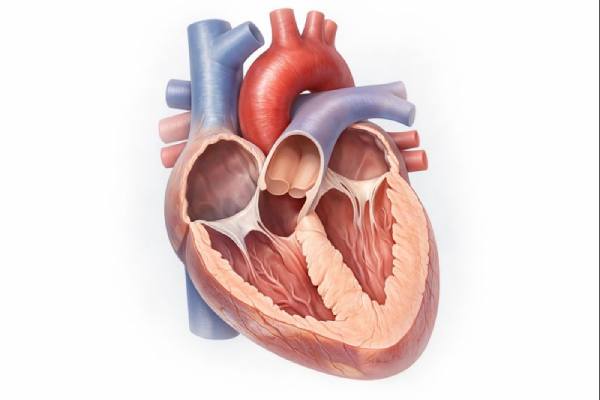
A bulboventricular foramen defect is a rare congenital heart problem seen mainly in “single-ventricle” heart anatomies, such as double-inlet left ventricle or tricuspid atresia with unusual great-artery connections. The bulboventricular foramen is the narrow passage that connects the main pumping chamber to a smaller outlet chamber that leads to one of the great arteries. If that opening is too small, becomes restrictive over time, or is positioned in a way that limits blood flow, the heart can struggle to deliver enough blood to the body or lungs. Symptoms may appear in the newborn period or develop later as the child grows and the circulation changes. Because management often involves staged surgeries and lifelong follow-up, families benefit from a clear map of what the defect means, how risk is assessed, and what treatment choices usually look like.
Table of Contents
- What the defect is and how it affects blood flow
- Why it happens and what anatomy is involved
- Risk factors and associated conditions
- Symptoms and complications across life stages
- How it is diagnosed
- Treatment and management
What the defect is and how it affects blood flow
The bulboventricular foramen (BVF) is an internal opening that connects two ventricular regions in certain congenital heart structures. In many hearts with a functionally single ventricle, there is a dominant pumping chamber (often left-ventricle–like) and a smaller outlet chamber (often right-ventricle–like). The BVF is the “doorway” between them.
A bulboventricular foramen defect generally refers to a BVF that is too small, poorly positioned, or becomes progressively restrictive, limiting the amount of blood that can pass from the dominant ventricle into the outlet chamber and then into a great artery. The exact physiologic problem depends on which great artery arises from the outlet chamber:
- If the aorta is reached through the outlet chamber, a restrictive BVF can create systemic outflow obstruction (often discussed as “subaortic obstruction” in single-ventricle physiology). This can reduce blood flow to the body and strain the ventricle.
- If the pulmonary artery depends on flow across the BVF, restriction can worsen pulmonary blood flow and increase cyanosis (low oxygen levels).
Why can the BVF “get smaller” over time? In growing children, the heart’s chambers remodel in response to pressure and volume changes. If a circulation strategy changes loading conditions—such as after pulmonary artery banding or as pulmonary vascular resistance falls after birth—the relative size of the BVF may become inadequate for the child’s body size. In other words, a BVF that was “good enough” in a newborn can become restrictive months later.
This defect is not simply a hole like a typical ventricular septal defect (VSD) in an otherwise normal two-ventricle heart. The BVF is part of a complex architecture where surgery is planned around how blood can be routed through a single effective pumping chamber. That is why clinicians focus on practical questions:
- Is systemic output adequate today?
- Is there a measurable pressure gradient across the BVF?
- Is the restriction stable, or is it likely to progress?
- Does the BVF limitation change the safest surgical pathway?
Understanding the BVF as a “critical internal bottleneck” helps families make sense of why treatment plans may shift quickly if obstruction worsens and why careful imaging follow-up is essential even when a baby initially appears stable.
Why it happens and what anatomy is involved
A bulboventricular foramen defect occurs because of how the fetal heart forms the ventricles and the outflow pathways. Early in development, the heart’s pumping chambers and outflow tract undergo complex looping, septation, and alignment. In certain congenital patterns, the result is a dominant single ventricular chamber paired with a smaller outlet chamber, with the BVF serving as the connecting pathway between them.
The BVF is most often discussed in the setting of single-ventricle anatomies, especially:
- Double-inlet left ventricle (DILV): both atria connect primarily to a left-ventricle–type chamber, with a smaller outlet chamber present.
- Tricuspid atresia with ventriculoarterial discordance: the right-sided inflow is absent or severely limited, and outflow may rely on a pathway through the outlet chamber.
- Single ventricle with transposed great arteries: where the relative connections of the aorta and pulmonary artery can make the BVF a key pathway for systemic output.
A particularly important scenario is when the aorta is “behind” a narrow pathway, meaning systemic blood flow must pass from the dominant ventricle through the BVF into the outlet chamber and then into the aorta. In that setting, even moderate BVF restriction can create a high-pressure gradient and a “traffic jam” before blood reaches the body.
Clinicians also distinguish a true BVF-related obstruction from look-alike problems:
- Aortic arch obstruction or coarctation: can reduce systemic blood flow even if the BVF is adequate.
- Valve-level stenosis: narrowing at the aortic or pulmonary valve can mimic outflow obstruction symptoms.
- Dynamic obstruction from physiology changes: after birth, falling pulmonary resistance can shift flow patterns and unmask gradients that were not obvious immediately.
In many infants, the BVF is not “born narrow” so much as born borderline—and then becomes functionally restrictive as the heart adapts to postnatal circulation or to early surgical choices. This is one reason clinicians monitor BVF size and Doppler gradients over time rather than relying on a single early measurement.
From a treatment perspective, the anatomy matters because it influences whether surgeons aim to:
- Bypass the restrictive pathway (for example, connecting outflows so the dominant ventricle can supply the aorta without squeezing through a small opening), or
- Enlarge the BVF surgically (which can be effective but carries specific conduction-system risks), or
- Choose an early pathway that reduces the chance of the BVF becoming restrictive later.
In short, BVF defects are best understood as a structural “bottleneck” within a larger single-ventricle blueprint. The defect’s significance is defined less by a label and more by the direction of blood flow, the great-artery connections, and how quickly restriction is progressing.
Risk factors and associated conditions
Most bulboventricular foramen defects are sporadic, meaning they occur without a clear single cause identified in a family. The strongest “risk factor” is not a lifestyle exposure, but the presence of a broader congenital heart pattern—especially single-ventricle anatomy in which the BVF is a necessary pathway for outflow.
Who is most likely to be affected
BVF defects are most commonly identified in infants and children with:
- Double-inlet left ventricle
- Tricuspid atresia with certain great-artery alignments
- Single-ventricle physiology with transposition or systemic outflow obstruction pathways
Because the BVF is an internal connection within these anatomies, many children are first recognized as having a “single ventricle” diagnosis, and the BVF is then evaluated as one of the key determinants of surgical strategy and timing.
Potential contributors to congenital heart differences
For most families, clinicians cannot point to one definite cause. Still, certain factors are broadly associated with congenital heart disease risk and may also be present in families affected by BVF-related anatomy:
- Genetic variants and chromosomal conditions: Some single-ventricle patterns can occur alongside genetic syndromes or copy-number changes. Genetic testing is considered when there are additional findings such as abnormal facial features, growth concerns, immune problems, or developmental differences.
- Family history of congenital heart disease: Even when the exact defect differs, a history of congenital heart disease in a close relative may raise suspicion and supports fetal screening in future pregnancies.
- Maternal conditions and exposures: Poorly controlled pre-gestational diabetes, certain infections, and some medications are linked to higher congenital heart disease risk in general. In most BVF cases, these are not direct “causes,” but they can be part of the risk conversation in prenatal counseling.
Risk factors for developing obstruction over time
A practical clinical focus is not only who develops the anatomy, but who develops progressive BVF restriction. Factors that can increase concern include:
- A BVF that is small relative to body size early on
- A measurable Doppler gradient across the BVF that rises on follow-up
- Circulation strategies that alter ventricular geometry and loading (for example, situations where the ventricle’s shape changes as the child transitions between staged procedures)
- Associated lesions that increase systemic workload (such as arch obstruction), which can magnify the impact of even mild BVF narrowing
Associated conditions families should expect to hear about
Because BVF defects sit inside complex anatomy, clinicians often screen for related issues that influence outcomes and timing:
- Aortic arch narrowing or coarctation
- Valve abnormalities (aortic or pulmonary)
- Abnormal pulmonary blood flow balance (too much or too little)
- Arrhythmias and conduction-system vulnerability (especially relevant if BVF enlargement is considered)
The most useful mindset for families is this: risk is assessed in layers. The underlying anatomy establishes baseline complexity, and then BVF size, flow direction, and progression rate help determine whether the child needs earlier intervention or closer monitoring.
Symptoms and complications across life stages
Symptoms from a bulboventricular foramen defect depend on whether the restriction limits systemic output, pulmonary blood flow, or both. Some infants show signs in the first days of life, while others appear relatively stable at first and develop symptoms as the BVF becomes more restrictive or as circulation changes.
Newborn and infant symptoms
Common early signs include:
- Fast breathing and increased work of breathing
- Poor feeding, tiring during feeds, or sweating with feeds
- Poor weight gain or failure to thrive
- Bluish color (cyanosis), especially if pulmonary blood flow is limited
- Pale, cool extremities or weak pulses, especially if systemic output is obstructed
- Irritability or lethargy, which can be subtle signs of inadequate perfusion
If systemic blood flow depends on a ductus arteriosus pathway (a temporary fetal vessel that normally closes after birth), symptoms can worsen rapidly as the duct closes. In that scenario, a baby may deteriorate over hours, with escalating acidosis, poor urine output, and shock-like features.
Symptoms in children after early palliation
After initial surgical or catheter-based palliation, the symptom profile often shifts to reflect changes in flow balance:
- Persistent cyanosis if pulmonary blood flow remains limited
- Breathlessness with activity if oxygen delivery is low or ventricular function is strained
- Worsening fatigue and reduced exercise tolerance
- Feeding problems and growth challenges, especially in the interstage period
A key concern is that BVF restriction can become clinically important during growth spurts. Parents may notice that a child who was “doing okay” suddenly struggles more with activity, has cooler feet or hands, or has lower oxygen saturations than usual.
Major complications clinicians watch for
- Progressive systemic outflow obstruction: can lead to ventricular hypertrophy, reduced cardiac output, and higher operative risk if not addressed promptly.
- Ventricular dysfunction: chronic pressure load or poor coronary perfusion can weaken the dominant ventricle over time.
- Arrhythmias: both atrial and ventricular rhythm problems can occur in single-ventricle physiology and may worsen with scarring from surgeries.
- End-organ effects: long-term low output or cyanosis can affect growth, kidney function, liver health, and neurodevelopment.
- Thrombosis and stroke risk: altered flow patterns and surgical pathways can increase clot risk in some patients.
- Complications related to Fontan circulation (in those who reach it): fluid retention, exercise limitation, protein-losing enteropathy, liver disease, and rhythm disturbances may appear years later.
When symptoms should be treated as urgent
Seek urgent medical evaluation for:
- Rapidly increasing breathing difficulty, gray color, or poor responsiveness
- Sudden drop in oxygen saturation compared with the child’s baseline
- Fainting, seizure-like episodes, or sustained palpitations
- Signs of dehydration with poor perfusion (dry mouth, low urine output, extreme sleepiness)
Because BVF obstruction can evolve, symptom changes—even if they seem mild—often deserve early contact with the congenital cardiology team. In this condition, small shifts in flow can produce large changes in how a child looks and feels.
How it is diagnosed
Diagnosis of a bulboventricular foramen defect is primarily imaging-based and is usually made in the context of a broader congenital heart diagnosis. The goal is not only to name the anatomy, but to measure whether the BVF is limiting blood flow now and whether it is likely to become restrictive as the child grows.
Prenatal diagnosis
Many complex single-ventricle anatomies are detected during pregnancy through:
- Screening ultrasound that shows abnormal chamber size or outflow alignment
- Fetal echocardiography, which can map ventricular connections, great-artery relationships, and suspected outflow bottlenecks
Prenatal diagnosis allows delivery planning at a center equipped for immediate newborn cardiac care, which matters if systemic or pulmonary blood flow may become duct-dependent.
Newborn and infant evaluation
After birth, clinicians often begin with:
- Pulse oximetry to detect low oxygen levels
- Physical exam for murmurs, weak pulses, liver enlargement, or signs of heart failure
- Electrocardiogram (ECG) to assess rhythm and chamber strain patterns
- Chest imaging to evaluate heart size and pulmonary blood flow patterns
The definitive tool is transthoracic echocardiography. Echocardiography can:
- Define the dominant ventricle and outlet chamber relationship
- Measure BVF size and assess flow through it
- Estimate pressure gradients across the BVF using Doppler
- Identify associated lesions (arch narrowing, valve stenosis, pulmonary artery anatomy)
- Assess ventricular function and atrioventricular valve regurgitation
Advanced imaging and catheterization
When the anatomy is complex or surgical planning requires more detail, teams may use:
- Cardiac MRI to quantify flow, ventricular volumes, and anatomy without radiation (often used more as children grow).
- CT angiography when rapid, high-resolution vessel mapping is needed or MRI is not feasible.
- Cardiac catheterization to measure pressures directly, define vascular resistance, evaluate collateral vessels, and sometimes perform interventions.
How clinicians decide if the BVF is “significant”
A BVF defect becomes clinically significant when it creates a meaningful bottleneck. Clinicians look for:
- Rising Doppler gradients across the BVF over serial studies
- Evidence of systemic outflow limitation (poor perfusion, ventricular hypertrophy, low output signs)
- Worsening oxygen delivery patterns that match the outflow pathway
- A BVF size that is small relative to body surface area and growth trajectory
Diagnostic pitfalls to avoid
Because these hearts are rare and highly individualized, teams also work to avoid mislabeling:
- Aortic arch obstruction as BVF obstruction
- Valve-level stenosis as BVF restriction
- Temporary physiologic changes (such as dehydration or fever) as structural progression
A careful diagnosis is longitudinal. Families often hear the same phrase repeatedly for a reason: “We do not just measure it once—we track it.” In BVF defects, trend data is often what turns uncertainty into a clear surgical plan.
Treatment and management
Treatment is individualized, but most children with a clinically significant bulboventricular foramen defect are managed within a single-ventricle palliation pathway. The strategy depends on whether the BVF restricts systemic output, pulmonary blood flow, or both, and on which surgical steps best reduce risk over time.
Newborn stabilization and early medical management
In the neonatal period, priorities are oxygen delivery and stable circulation. Common measures include:
- Prostaglandin infusion when systemic or pulmonary blood flow is duct-dependent, to keep the ductus arteriosus open until a definitive plan is in place
- Diuretics if pulmonary overcirculation causes heart failure symptoms
- Careful oxygen use, because high oxygen can increase pulmonary blood flow and “steal” output from the body in some single-ventricle physiologies
- Nutrition support, including higher-calorie feeds or tube feeding when needed
Surgical pathways and BVF-focused interventions
Children may undergo staged surgery, commonly moving through:
- Stage 1 palliation (varies by anatomy): may include systemic-to-pulmonary shunt, pulmonary artery banding, arch reconstruction, or other tailored steps to balance blood flow.
- Bidirectional Glenn (superior cavopulmonary connection) in infancy.
- Fontan procedure later in childhood, routing venous blood to the lungs without passing through a ventricle.
When the BVF creates systemic outflow obstruction, surgeons may choose one of two main approaches:
- Bypass the bottleneck using an outflow connection strategy (commonly a Damus-type connection in appropriate anatomies), allowing the dominant ventricle to supply the aorta without being limited by a restrictive BVF.
- Enlarge the BVF directly (bulboventricular foramen enlargement or resection). This can relieve obstruction but requires meticulous planning because the conduction system can be nearby, raising the risk of heart block in some anatomies.
The choice is not purely technical; it reflects a risk trade-off:
- Bypass procedures can reduce gradients and protect systemic output but add surgical complexity and long-term considerations.
- BVF enlargement can be effective when anatomy is favorable but is approached cautiously due to conduction and reintervention risks.
Catheter-based and supportive interventions
Even with surgery, many patients need additional procedures over time, such as:
- Ballooning or stenting for vessel narrowings in selected locations
- Coil closure of unwanted collateral vessels
- Rhythm monitoring and treatment, including medications or pacing when needed
Long-term management and when to seek care
Long-term care is lifelong and typically includes:
- Regular congenital cardiology follow-up, even in adulthood
- Monitoring of oxygen saturation trends, growth, exercise tolerance, and ventricular function
- End-organ surveillance in later stages (especially for Fontan-associated liver and lymphatic issues)
- A clear emergency plan for sudden cyanosis, fainting, or signs of low output
Seek urgent care if there is:
- A sudden, sustained drop in oxygen saturation from baseline
- Rapid breathing, gray color, poor feeding, or unusual sleepiness in an infant
- Fainting, sustained palpitations, chest pain, or seizure-like collapse
- Signs of dehydration with poor perfusion (low urine output, cool mottled skin, extreme fatigue)
The most effective management is proactive: families who track baseline saturation, feeding tolerance, and energy levels often identify trouble earlier—when it is easier to treat and before the circulation reaches a crisis point.
References
- 2020 ESC Guidelines for the management of adult congenital heart disease 2021 (Guideline)
- Single Ventricle—A Comprehensive Review 2021 (Review)
- Improved Long-term Outcome of Damus-Kaye-Stansel Procedure Without Previous Pulmonary Artery Banding 2022 (Cohort Study)
- Association of Bulboventricular Foramen Size and Need for Pulmonary Outflow Intervention in Tricuspid Atresia and Double-Inlet Left Ventricle With Normally Related Great Arteries 2023 (Observational Study)
- Comparing palliation strategies for single-ventricle anatomy with transposed great arteries and systemic outflow obstruction 2023 (Cohort Study)
Disclaimer
This article is for educational purposes only and does not provide medical advice, diagnosis, or treatment. Bulboventricular foramen defects occur in complex congenital heart anatomies and require individualized evaluation by a pediatric cardiologist and, when appropriate, a congenital cardiac surgery team. If an infant or child develops rapid breathing, bluish or gray color, poor feeding, fainting, severe lethargy, or a sudden drop in oxygen levels, seek urgent medical care. For decisions about surgery timing, medications, activity, and long-term follow-up into adulthood, consult a licensed clinician who specializes in congenital heart disease.
If you found this article helpful, please share it on Facebook, X (formerly Twitter), or any platform you prefer, and follow us on social media. Your support through sharing helps our team continue producing quality content.