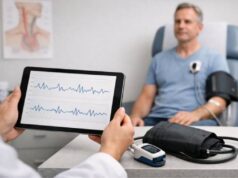
A bundle branch block (BBB) is an electrical “traffic delay” inside the heart, not a blockage in the blood vessels. The signal that normally travels down the right and left bundle branches (wiring pathways in the ventricles) slows or detours, so the ventricles do not activate in the usual sequence. Many people feel nothing and discover BBB on a routine ECG. In other cases, it is a clue that the heart muscle, valves, coronary arteries, or lungs are under strain. The most important questions are practical: Is this new or long-standing? Is there an underlying condition that needs treatment? Does it increase the risk of fainting or heart failure? This guide explains how BBB affects the body, what causes it, how clinicians evaluate it, and what treatment and day-to-day management typically look like.
Table of Contents
- What bundle branch block means
- What causes it and who is at risk
- Symptoms and possible complications
- How it is diagnosed and evaluated
- Treatment options and what to expect
- Management, prevention, and when to seek care
What bundle branch block means
The heart’s electrical system starts in the sinus node, passes through the atria, and then travels through a relay station called the atrioventricular (AV) node into the His-Purkinje system. The His bundle splits into two main branches: the right bundle branch (supplying the right ventricle) and the left bundle branch (supplying the left ventricle, often through fascicles). A bundle branch block happens when one of these branches conducts slowly or not at all. The impulse still reaches both ventricles, but it arrives by a slower “cell-to-cell” route in the blocked side, widening the QRS complex on an ECG.
Clinicians usually describe BBB by type:
- Right bundle branch block (RBBB): delayed activation of the right ventricle. It can be benign when isolated, but it also appears with lung disease, pulmonary embolism, congenital heart disease, or right-sided strain.
- Left bundle branch block (LBBB): delayed activation of the left ventricle. LBBB more often signals underlying structural heart disease and can create mechanical “dyssynchrony,” where different parts of the left ventricle squeeze out of sequence.
- Incomplete BBB: ECG features suggest a block pattern, but the QRS is not as wide as in complete block. This is common in some healthy people, including athletes, and can also reflect early disease.
- Bifascicular and trifascicular patterns: combinations such as RBBB with left anterior fascicular block. These matter because they can indicate more widespread conduction system disease and a higher chance of progressing to higher-grade AV block in some settings.
A key point: BBB is not the same as an arrhythmia like atrial fibrillation. Many people with BBB have a normal rhythm; the issue is the path the signal takes through the ventricles. Also, BBB does not automatically mean the heart is weak. It is a pattern that must be interpreted alongside symptoms, blood pressure, oxygen levels, medications, family history, and imaging (especially echocardiography).
Why BBB matters clinically depends on context. A long-standing, stable RBBB in an otherwise healthy person is often low-risk. A new LBBB in someone with chest pain, fainting, or new shortness of breath can be a red flag that warrants urgent evaluation.
What causes it and who is at risk
BBB is best thought of as a sign—sometimes of normal variation, often of stress or disease affecting the heart’s wiring. The conduction system can be damaged by reduced blood supply, inflammation, scarring, stretching of the heart chambers, or age-related fibrosis.
Common causes and associations include:
- Coronary artery disease and heart attack: reduced blood flow can injure the conduction pathways. A new BBB (especially new LBBB) can appear with acute coronary syndromes.
- High blood pressure and left ventricular hypertrophy: chronic pressure overload thickens the heart muscle and increases fibrosis, which can slow conduction.
- Cardiomyopathies: dilated cardiomyopathy, hypertrophic cardiomyopathy, and infiltrative diseases (such as amyloidosis) may involve the conduction system.
- Valve disease: aortic stenosis and other valve problems can remodel the heart and contribute to conduction delays.
- Congenital heart disease: atrial septal defect and other structural issues are classic associations with RBBB patterns.
- Right-sided strain and lung disease: chronic obstructive pulmonary disease, pulmonary hypertension, and pulmonary embolism can stress the right ventricle and produce RBBB.
- Myocarditis and systemic inflammation: inflammation can disrupt conduction transiently or permanently.
- Procedures and device-related causes: valve interventions (including transcatheter aortic valve implantation), cardiac surgery, and some catheter procedures can injure conduction tissue.
- Degenerative conduction disease: age-related fibrosis of the His-Purkinje system becomes more common with advancing age and can cause BBB without a single clear trigger.
Risk factors that increase the chance BBB reflects meaningful disease include:
- Older age (particularly for LBBB and bifascicular patterns)
- Known heart failure, prior heart attack, or cardiomyopathy
- Long-standing hypertension, diabetes, chronic kidney disease
- Significant valve disease or prior valve intervention
- Family history of unexplained sudden death, inherited cardiomyopathy, or conduction disorders
- Symptoms such as syncope (fainting), near-syncope, exertional chest pain, or progressive shortness of breath
An “original insight” that helps patients: the same ECG pattern can mean different things depending on timing. For example, an RBBB that appears only during fast heart rates (rate-related BBB) may point toward conduction tissue that is borderline but not completely damaged; it may also influence stress test interpretation. Similarly, a BBB that is new after a valve procedure may be expected but still needs monitoring because progression to AV block can occur in a subset of patients.
Symptoms and possible complications
Many people with BBB have no symptoms, especially when the block is isolated and discovered incidentally. When symptoms occur, they usually come from one of two sources: (1) the underlying condition that caused the BBB, or (2) the electrical delay affecting pumping efficiency or progressing to more serious conduction disease.
Possible symptoms include:
- Fatigue or reduced exercise tolerance: can reflect heart failure, poor conditioning, anemia, lung disease, or less efficient ventricular contraction in some LBBB cases.
- Shortness of breath: especially with exertion or lying flat, often due to heart failure or lung disease rather than BBB alone.
- Palpitations: BBB itself does not usually cause palpitations, but it can coexist with atrial fibrillation, ectopic beats, or tachycardias.
- Dizziness, near-fainting, or fainting (syncope): raises concern for intermittent high-grade AV block, pauses, or ventricular arrhythmias—particularly in people with bifascicular patterns or known structural disease.
- Chest discomfort: may reflect coronary disease; BBB can complicate ECG interpretation during ischemia, which is why clinicians may use specific algorithms and additional testing.
Potential complications depend on the type and context:
- Progression to higher-grade conduction block: Some patients—especially with bifascicular disease, degenerative conduction disease, or post-procedure BBB—can progress to second- or third-degree AV block, which may require pacing.
- Heart failure and dyssynchrony (mainly LBBB): LBBB can cause the left ventricle to contract out of sequence. Over time, in susceptible people, this can worsen symptoms or contribute to a potentially reversible form of cardiomyopathy when treated with resynchronization or conduction system pacing.
- Diagnostic masking: LBBB can obscure classic ECG patterns of a heart attack. This does not mean heart attacks cannot be detected; it means clinicians often rely more on symptoms, serial ECGs, cardiac biomarkers, and imaging.
- Procedure-related risks: New BBB after aortic valve interventions is clinically important because it can predict a higher likelihood of needing a pacemaker during follow-up.
- Arrhythmia risk: BBB does not automatically mean dangerous rhythms, but when it coexists with scarred or weakened heart muscle, overall arrhythmic risk can rise.
A useful way to interpret symptoms is to ask: Are symptoms episodic and sudden (suggesting electrical pauses or arrhythmias), or gradual and exertional (suggesting pump or lung limitations)? That distinction guides whether monitoring (Holter/event recorder), imaging, or urgent evaluation is most appropriate.
How it is diagnosed and evaluated
BBB is diagnosed on a 12-lead electrocardiogram (ECG). The ECG shows a widened QRS complex and specific patterns that indicate whether the right or left bundle is delayed. Clinicians also look for axis deviation and additional conduction findings (fascicular block, PR prolongation), because combinations can change risk and management.
Once BBB is identified, the next step is not “treat the ECG.” It is a structured evaluation to answer a few high-value questions:
- Is it new, intermittent, or long-standing? Comparing with prior ECGs is one of the most informative “tests.”
- Is there evidence of structural heart disease? An echocardiogram is often the first-line study, especially for LBBB, new BBB, symptoms, a murmur, or known cardiac history. It evaluates ejection fraction, chamber size, valve disease, and pulmonary pressures.
- Is ischemia likely? In patients with chest pain or high coronary risk, clinicians may use cardiac biomarkers and imaging-based strategies. Because BBB can limit the usefulness of some exercise ECG interpretations, stress imaging (such as pharmacologic nuclear perfusion imaging or stress echocardiography) or coronary CT angiography may be preferred depending on the scenario.
- Is there a rhythm or pause problem? If fainting, near-fainting, unexplained dizziness, or episodic palpitations occur, ambulatory monitoring can be crucial:
- 24–48 hour Holter for frequent symptoms
- Longer event monitors or patch monitors for intermittent symptoms
- Implantable loop recorders when events are rare but concerning
- Could medications or metabolic issues contribute? A medication review (rate-slowing drugs, antiarrhythmics) and basic labs (electrolytes, thyroid function when appropriate) can reveal reversible factors.
- Are there clues to inherited or inflammatory disease? Family history, unexplained cardiomyopathy, or systemic symptoms may prompt cardiac MRI, genetic evaluation, or specialized testing.
In some cases—particularly unexplained syncope with bifascicular patterns—electrophysiology studies may be used to measure conduction intervals and provoke block, but many clinicians now prioritize prolonged monitoring or empiric pacing only when risk is high and recurrent episodes occur.
For patients, the most practical “diagnostic” questions to bring to an appointment are:
- Do you think my BBB is new?
- Do I need an echocardiogram, and what are you looking for?
- Do I need monitoring for pauses or dangerous rhythms?
- If I have LBBB, is my heart pumping function normal?
Treatment options and what to expect
Treatment depends on symptoms, the underlying cause, and the electrical consequences of the block. Many people need no direct treatment for BBB itself, but they may need treatment for the condition associated with it (blood pressure control, coronary disease management, valve repair, or heart failure therapy).
Common treatment pathways include:
- No specific BBB treatment (watchful follow-up):
Appropriate when BBB is incidental, the patient has no concerning symptoms, and testing shows no significant structural disease. Follow-up might include periodic ECGs and repeat echocardiography if symptoms change. - Treat the underlying disease:
- Coronary disease: anti-anginal therapy, statins, antiplatelet therapy when indicated, and revascularization when appropriate.
- Hypertension: consistent blood pressure control to reduce remodeling and heart failure risk.
- Heart failure: guideline-directed medical therapy (often multiple medication classes) plus lifestyle and device therapy when indicated.
- Lung disease or pulmonary hypertension: targeted therapy can reduce right-sided strain associated with RBBB patterns.
- Pacemaker therapy (when conduction disease causes symptoms):
A pacemaker does not “cure” BBB, but it prevents dangerously slow heart rates or pauses if BBB progresses to high-grade AV block. Scenarios where pacing may be considered include: - Documented second- or third-degree AV block
- Symptomatic bradycardia with clear correlation to symptoms
- Certain high-risk post-procedure conduction patterns with evidence of intermittent block
- Selected patients with unexplained syncope and strong suspicion of intermittent complete heart block
- Cardiac resynchronization therapy (CRT) and conduction system pacing (especially with LBBB):
For patients with heart failure and reduced ejection fraction plus a wide QRS (often LBBB morphology), CRT can improve symptoms, exercise capacity, and outcomes by coordinating ventricular contraction. Newer approaches—such as His bundle pacing or left bundle branch area pacing—aim to restore more physiologic activation and may be considered in selected patients, sometimes as an alternative to traditional biventricular pacing. - Urgent management when BBB appears with high-risk features:
A new BBB in the setting of chest pain, acute shortness of breath, low blood pressure, or fainting is treated as a potentially serious clinical event until proven otherwise. The “treatment” in that moment is rapid evaluation, monitoring, and addressing causes like acute coronary syndrome, pulmonary embolism, or decompensated heart failure.
What to expect after diagnosis depends on type:
- Isolated RBBB with normal imaging is often stable for years.
- LBBB more often triggers an evaluation for cardiomyopathy and may influence how heart failure is treated if ejection fraction is reduced.
- Bifascicular patterns raise the threshold for rhythm monitoring when fainting occurs.
A helpful rule of thumb: devices are chosen for physiology—pacemakers for dangerous slowness or block, CRT/conduction system pacing for dyssynchrony with heart failure—while medications treat the underlying heart disease and its symptoms.
Management, prevention, and when to seek care
Living well with BBB is mostly about managing cardiovascular risk and staying alert to symptom changes, not restricting life by default. Many people can exercise, travel, and work normally once a clinician confirms there is no dangerous underlying condition.
Day-to-day management strategies that tend to matter most:
- Know your “baseline.” Keep a copy (digital photo is fine) of your ECG report and echocardiogram summary. If you ever present to urgent care with chest pain or fainting, baseline comparisons can speed up decisions.
- Control the drivers of heart remodeling:
- Blood pressure: aim for consistent control, not occasional good readings.
- Diabetes and cholesterol: follow targets recommended by your clinician.
- Sleep apnea: evaluation and treatment can reduce strain on the heart.
- Use exercise intelligently:
Regular aerobic activity (such as brisk walking, cycling, or swimming) supports heart health. If you are new to exercise or have symptoms, start with short sessions and gradually increase. If you have heart failure or significant valve disease, follow the plan set by your care team. - Avoid avoidable triggers for rhythm instability: dehydration, heavy alcohol intake, stimulant misuse, and abrupt medication changes can make symptoms more likely in susceptible people.
- Medication discipline: take medications as prescribed and report side effects early. Do not stop rate-slowing drugs or heart failure medications abruptly without guidance.
- Follow-up cadence:
- Asymptomatic and low-risk: periodic follow-up, often annually or as advised.
- LBBB with any reduction in ejection fraction: closer follow-up, because device therapy timing may matter if symptoms persist despite optimized medications.
- Post-procedure BBB (for example after valve intervention): follow the monitoring plan closely, especially in the first weeks to months.
When to seek urgent care (or emergency evaluation):
- New chest pain or pressure, especially with sweating, nausea, breathlessness, or pain radiating to the jaw/arm
- Fainting, near-fainting, or unexplained sudden dizziness
- Rapidly worsening shortness of breath, new swelling of legs/abdomen, or waking up gasping for air
- New confusion, severe weakness, or signs of stroke
- Palpitations with lightheadedness or collapse
Prevention is mostly prevention of underlying disease. You cannot always prevent degenerative conduction disease, but you can lower the chance that BBB becomes clinically significant by keeping the heart muscle and vessels healthy. If you already have BBB, the goal is to prevent “second hits” like uncontrolled hypertension, repeated ischemia, or delayed treatment of heart failure.
Finally, if you have a family history of sudden death or inherited cardiomyopathy, take it seriously even if you feel well. BBB may be one of several clues that a deeper evaluation is appropriate.
References
- 2021 ESC Guidelines on cardiac pacing and cardiac resynchronization therapy 2021 (Guideline)
- 2023 HRS/APHRS/LAHRS guideline on cardiac physiologic pacing for the avoidance and mitigation of heart failure 2023 (Guideline)
- 2022 AHA/ACC/HFSA Guideline for the Management of Heart Failure: A Report of the American College of Cardiology/American Heart Association Joint Committee on Clinical Practice Guidelines 2022 (Guideline)
- Left Bundle Branch Block-associated Cardiomyopathy: A New Approach 2024 (Review)
- Incomplete Right Bundle Branch Block: A Narrative Review of Clinical Relevance, Diagnostic Pitfalls, and Prognostic Implications 2025 (Review)
Disclaimer
This article is for educational purposes only and does not replace individualized medical advice, diagnosis, or treatment from a qualified clinician. Bundle branch block can be harmless in some people and a marker of serious heart or lung disease in others. If you have chest pain, fainting, sudden shortness of breath, or rapidly worsening symptoms, seek urgent medical care. Always discuss new ECG findings, medication changes, and device decisions (such as pacemakers or resynchronization therapy) with your cardiology team, especially if you have heart failure, valve disease, or a strong family history of sudden cardiac death.
If you found this guide useful, please consider sharing it on Facebook, X (formerly Twitter), or any platform you prefer, and following us on social media. Your support through sharing helps our team keep producing high-quality, practical health content.