Caesar’s mushroom (Amanita caesarea) has been celebrated since Roman times for its sun-orange cap, delicate texture, and nutty, egg-yolk flavor. Today, it remains a prized seasonal delicacy around the Mediterranean, appearing simply sliced raw with olive oil and lemon, or shaved over warm eggs, buttered pasta, grilled fish, and risotto. Like many wild mushrooms, it is naturally low in calories yet offers protein, fiber, potassium, and B vitamins—plus bioactives such as ergosterol (a vitamin D precursor) and phenolic compounds linked to antioxidant activity. While gourmet in the kitchen, Caesar’s mushroom demands respect in the field: it belongs to a genus that also contains some of the world’s deadliest species. Correct identification and responsible sourcing are non-negotiable. This guide walks you through the essentials—nutrition, potential benefits, risks and interactions, how to choose, store, and cook it for best flavor and nutrient retention, and smart portioning. Whether you’re a chef, a curious eater, or a cautious forager, you’ll find clear, practical answers below.
At a Glance
- Naturally low calorie with modest protein, fiber, and potassium per 100 g; contains ergosterol that can convert to vitamin D2 with UV exposure.
- Potential benefits relate to antioxidant activity and nutrient density; culinary uses are flexible from raw salads to quick sautés.
- Safety caveat: never eat wild Caesar’s mushrooms unless identified by an expert; dangerous Amanita look-alikes can be lethal.
- Typical serving: 50–75 g fresh, 1–2 times per week in season, as part of a varied diet.
- People who should limit or avoid: anyone pregnant, immunocompromised, or with mushroom allergies; all non-experts should avoid self-foraging.
Table of Contents
- Detailed Overview
- Nutrition Profile
- Evidence-Based Health Benefits
- Risks, Allergies and Interactions
- Selecting, Quality, Sustainability and Storage
- Preparation, Cooking and Nutrient Retention
- Portions, Comparisons and FAQs
Detailed Overview
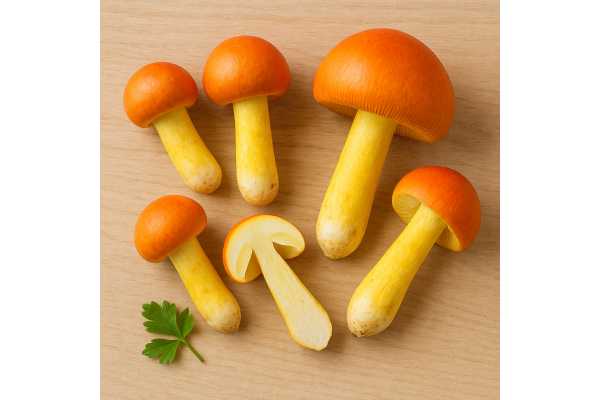
Caesar’s mushroom is the flagship edible of Amanita section Caesareae and has been favored across Italy, Spain, Portugal, southern France, and parts of the Balkans and Anatolia. Its appearance is unmistakable when mature: a bright orange to red-orange cap with fine striations along the margin; golden-yellow gills and stem; a persistent skirtlike ring; and a white, saclike volva encasing the base. It forms ectomycorrhizal partnerships with oaks, chestnuts, and other broadleaf trees, which explains its seasonal fruiting after warm rains in summer through early autumn. A closely allied American species, Amanita jacksonii, is also edible but distinct.
Flavor and texture: raw slices are tender with a mild sweetness and a faint nutty, egg-yolk note; brief heating intensifies aroma and brings out a buttery quality. Unlike many cultivated mushrooms, A. caesarea remains delicate and thin-fleshed, making it ideal for quick sautés, warm salads, and finishing dishes.
Sourcing realities: this species is not commercially cultivated; it is wild-harvested and legally traded in certain regions through licensed foragers and markets. Because wild supplies are variable and short-lived, quality can range from immaculate to bruised or insect-nibbled. Proper handling (cool, breathable storage and rapid consumption) is essential. Sustainability hinges on careful picking practices that protect the underground mycelium and leave immature specimens.
Safety note for readers: many Amanita species are deadly, particularly those in section Phalloideae (e.g., death cap, destroying angels). The risk of confusion is highest when Caesar’s mushroom is still “in the egg,” when cap and gills are hidden inside the universal veil. For anyone who is not a trained identifier, the only safe path is to buy from reputable sellers or dine at restaurants that source from licensed foragers. Identification errors with Amanita can be catastrophic; there is no kitchen method that neutralizes amatoxins.
Culinary positioning: treat Caesar’s mushrooms as you would a fine truffle or seasonal asparagus—simple preparations that showcase their character. They pair well with eggs, dairy fat (butter, young cheeses), olive oil, lemon, herbs like chives or parsley, and mild proteins like chicken or white fish. Heat lightly; they do not require long cooking.
Nutrition Profile
Below are typical nutrition values for raw Caesar’s mushroom per 100 g, compiled from analyses of wild edible mushrooms and species-specific reports. Natural variability is high due to terroir, maturity, and post-harvest handling; use these as indicative values, not absolute lab results.
Macros and Key Electrolytes (per 100 g)
| Nutrient | Amount | %DV* |
|---|---|---|
| Energy | 20–30 kcal | — |
| Water | ~90 g | — |
| Protein | 2.5–4.0 g | 5–8% |
| Total fat | 0.2–0.6 g | <1% |
| Carbohydrate | 3–5 g | — |
| Dietary fiber | 1.0–2.5 g | 4–9% |
| Potassium | 300–450 mg | 6–10% |
| Sodium | 5–15 mg | <1% |
| Magnesium | 10–15 mg | 2–4% |
*%DV based on adult daily values (U.S.). Carbohydrate DV depends on overall diet; fiber DV is 28 g.
Vitamins (per 100 g)
| Vitamin | Amount (typical) | %DV |
|---|---|---|
| Riboflavin (Vitamin B2) | 0.25–0.45 mg | 19–35% |
| Niacin (Vitamin B3) | 3.0–4.5 mg | 19–28% |
| Pantothenic acid (Vitamin B5) | 1.0–1.5 mg | 20–30% |
| Folate (Vitamin B9) | 25–35 µg | 6–9% |
| Vitamin D2 (ergocalciferol)** | 0–10 µg (0–400 IU) | 0–50% |
Vitamin D note: The D2 value depends on ultraviolet exposure post-harvest. Drying in sun or UV-B treatment can markedly raise vitamin D2 by converting ergosterol.
Minerals and Trace Elements (per 100 g)
| Mineral | Amount (typical) | %DV |
|---|---|---|
| Phosphorus | 80–120 mg | 6–10% |
| Copper | 0.20–0.35 mg | 22–39% |
| Selenium | 6–12 µg | 11–22% |
| Zinc | 0.7–1.0 mg | 6–9% |
| Iron | 0.5–1.2 mg | 3–7% |
Fats and Fatty Acids (per 100 g)
| Component | Amount | Notes |
|---|---|---|
| Total fat | 0.2–0.6 g | Very low |
| Polyunsaturated fatty acids | 0.1–0.3 g | Linoleic acid predominates |
| Monounsaturated fatty acids | 0.05–0.15 g | Mainly oleic acid |
| Saturated fatty acids | 0.03–0.10 g | Minor fraction |
Protein and Amino Acids (per 100 g)
Mushroom protein offers essential amino acids in modest amounts for a vegetable-class food. Glutamic and aspartic acids are abundant (umami contributors). Leucine, lysine, and arginine are present in smaller yet meaningful quantities for a low-calorie ingredient.
Bioactives/Phytonutrients
- Ergosterol: predominant sterol; converts to vitamin D2 with UV exposure.
- Phenolic compounds: including gallic, ferulic, and p-coumaric acids in species analyses; contribute to antioxidant capacity.
- Beta-glucans: structural polysaccharides that add fiber and may modulate immune responses (general to edible mushrooms).
Contaminants/Residues
- Wild mushrooms can accumulate soil particles and occasional trace metals or radionuclides depending on location. Buy from reputable sources and trim soiled bases. Avoid roadside picks.
Allergens and Intolerance Markers
- A small subset of people experience gastrointestinal intolerance to mushrooms; rare true allergies exist. Introduce new wild species in small amounts.
Footnotes
- Values reflect raw, unfortified mushrooms. Vitamin D2 can be enhanced post-harvest by sunlight or controlled UV treatment; labels should state when applied.
Evidence-Based Health Benefits
1) Nutrient density at low calories
At 20–30 kcal per 100 g, Caesar’s mushroom offers an appealing nutrient-to-calorie ratio. The profile—modest protein, dietary fiber, potassium, copper, riboflavin, niacin, and pantothenic acid—supports everyday needs without heavily impacting energy intake. Copper aids iron mobilization and antioxidant enzymes; riboflavin and niacin support energy metabolism; potassium contributes to blood pressure regulation as part of an overall diet rich in fruits and vegetables.
2) Ergosterol and vitamin D2 potential
Ergosterol in mushrooms can convert into vitamin D2 (ergocalciferol) when exposed to UV light. For consumers, that means sun-dried or UV-treated mushrooms may provide meaningful vitamin D2 in a plant-forward diet. While vitamin D2 is biochemically distinct from D3, UV-enhanced mushrooms can help fill intake gaps—especially in winter or for people with limited sun exposure.
3) Antioxidant activity from phenolics and unsaturated lipids
Chemical analyses of Amanita caesarea and related edible Amanita report phenolic compounds and unsaturated fatty acids that contribute to antioxidant capacity in vitro. Although in vitro findings do not guarantee in vivo outcomes, these data align with broader research on edible mushrooms, where phenolics and certain sterols show radical-scavenging potential. Practically, the best way to leverage this is to eat Caesar’s mushrooms as part of a pattern that also includes vegetables, legumes, and whole grains.
4) Low sodium, supportive of heart-smart cooking
Naturally very low in sodium, Caesar’s mushrooms harmonize with Mediterranean-style meals that emphasize olive oil, herbs, nuts, and fish. Their savory glutamates mean you can use less salt while maintaining flavor.
5) Culinary satisfaction and diet quality
Because wild mushrooms carry intense aroma, small portions go a long way. That culinary power can make simple, plant-rich meals more satisfying—an underappreciated path to sustainable eating habits. Using thin shavings to top eggs or vegetables is an efficient strategy for flavor with minimal calories.
How benefits translate in the kitchen
- Add 50–75 g to omelets or vegetable sautés to boost B vitamins and potassium.
- Sun-expose or buy UV-treated mushrooms when you want a vitamin D2 lift.
- Pair with vitamin C–rich foods (lemon, parsley) to enhance non-heme iron absorption from the meal as a whole.
Realistic expectations
Caesar’s mushroom is a gourmet accent, not a cure. Health effects come from the total dietary pattern, food safety, and preparation choices. For reliability and safety, treat health claims about wild mushrooms cautiously and look for human data, not just test-tube results.
Risks, Allergies and Interactions
1) Deadly look-alikes
This is the critical risk. Several Amanita species contain amatoxins that cause delayed but severe liver damage. Early gastrointestinal upset may be followed by a “quiet” period, then liver failure. Caesar’s mushroom is edible, but misidentification—especially at the “egg” stage—can have fatal consequences. Practical guidance:
- Do not forage Caesar’s mushrooms unless you are trained, local-species competent, and following regional expert verification.
- Buy only from licensed suppliers in regions where trade is regulated.
- Never eat unidentified “eggs” (young buttons) with a volva; wait until diagnostic features (striate orange cap, yellow gills/stem, ring, white saclike volva) are fully visible.
2) Allergies and intolerance
True mushroom allergy is rare but present; symptoms can include oral itching, hives, or gastrointestinal distress. If you are new to Caesar’s mushroom, start with a small portion (25–30 g) and monitor. People with histamine intolerance sometimes report issues with older or poorly stored mushrooms.
3) Foodborne illness
As with all wild mushrooms, improper storage invites bacterial spoilage. Keep chilled (1–4 °C), dry, and well-ventilated. Cook within 24–48 hours of purchase. Avoid specimens with sour odor, slimy texture, or heavy insect damage.
4) Medication and condition considerations
- Liver disease or pregnancy: Avoid any self-foraging; if uncertain about identification or freshness, do not consume.
- Immunocompromised status: Stick to well-cooked mushrooms from reputable sources.
- Warfarin and anticoagulants: No specific interactions with Caesar’s mushroom are established; still, maintain consistent vitamin K intake overall and report any diet changes to your clinician.
- Kidney disease: Potassium content is moderate; those on potassium-restricted diets should account for it.
5) Myths to ignore
Boiling, soaking, salting, or alcohol does not neutralize amatoxins. Silver-spoon discoloration tests are unreliable. Identification hinges on morphology and, when needed, expert microscopy and DNA.
What to do after accidental ingestion or symptoms
If you suspect a toxic look-alike was consumed—or if delayed vomiting/diarrhea starts 6–24 hours after a mushroom meal—seek emergency care immediately and contact a poison center. Bring leftover mushrooms or photographs for identification. Early activated charcoal and supportive care are time-sensitive interventions in suspected amatoxin exposure.
Selecting, Quality, Sustainability and Storage
Selecting the best
- Cap: vibrant orange to red-orange; fine radial striations at the margin. Avoid caps that are dull, waterlogged, or heavily bruised.
- Gills and stem: uniformly yellow; gills free from the stem; firm, not spongy.
- Volva and ring: intact white sac at the base; yellow ring on the stem. If the base is cut off, you lose a key ID feature—decline such specimens.
- Aroma: clean, faintly sweet and nutty; sourness suggests spoilage.
Sustainability and ethical sourcing
As a mycorrhizal species, Caesar’s mushroom cannot be reliably cultivated at scale. Sustainable wild harvest means:
- Picking mature caps and leaving small or “egg” buttons.
- Cutting or gently twisting at the base without trampling duff.
- Avoiding overharvest in sensitive stands and respecting local quotas.
- Favoring suppliers who follow traceable, region-appropriate practices.
- Supporting biodiversity by rotating purchase choices across the season rather than fixating on a single species.
Transport and storage
- Breathable containers: paper bags or baskets—never sealed plastic.
- Refrigeration: 1–4 °C in the high-humidity drawer; keep dry.
- Shelf life: 1–3 days at best; this is a “buy today, eat soon” ingredient.
- Cleaning: brush gently or wipe with a barely damp cloth; avoid soaking.
- Freezing: blanch slices briefly (30–60 seconds), drain, pat dry, then quick-freeze. Quality remains acceptable in cooked applications for 2–3 months.
- Drying: thinly slice and air-dry or use a dehydrator at low heat. Store in airtight glass away from light. Rehydrate in warm water (save the liquid for stock).
Quality defects to reject
Sliminess, ammonia or sour smell, blackened gills, worm galleries extending through the cap, or missing base (no visible volva) in market specimens.
Preparation, Cooking and Nutrient Retention
Prep essentials
- Trim just above the volva; keep a thin base slice if you need to document ID.
- Brush away debris; avoid rinsing unless necessary. If rinsed, dry promptly on towels.
- Slice 2–3 mm thick for raw salads or quick sautés; thicker wedges (5–6 mm) for grilling.
Best techniques
- Raw, dressed: Layer thin slices with olive oil, lemon, sea salt, and chives. Add shaved young Pecorino. This preserves heat-sensitive B vitamins and texture.
- Quick sauté: 1–2 minutes over medium-high heat in butter and oil until just tender. Overcooking dulls color and aroma.
- Warm confit: Gently warm slices in olive oil at low heat with thyme and garlic; spoon over eggs or fish.
- Grilling: High heat, 30–60 seconds per side, brushed with oil.
- Finishers: Add at the end of risotti and light sauces to retain aroma.
Nutrient retention tips
- Vitamin D2 optimization: If drying, expose slices to sunlight or UV-B for part of the process to convert ergosterol to D2; store dried slices in opaque jars to protect the vitamin.
- Mineral retention: Avoid prolonged boiling; brief sauté or steaming conserves potassium and magnesium.
- Fat absorption: Mushrooms soak up fats; use measured amounts of oil or butter to manage calories.
Safety in the pan
- Cook market mushrooms thoroughly if you have a sensitive stomach. While Caesar’s mushroom can be eaten raw by many, cooking lowers microbial risk and improves digestibility.
- Do not mix unidentified wild mushrooms with known edibles in the same dish; it complicates identification if problems arise.
Flavor pairings
- Acid: lemon, sherry vinegar
- Fat: cultured butter, olive oil
- Herbs: chives, parsley, thyme
- Partners: soft eggs, polenta, white fish, young cheeses, asparagus, peas
Common mistakes
Crowding the pan (causes steaming), over-salting early (draws water), or cooking until limp and gray. Aim for gentle heat and just-tender texture.
Portions, Comparisons and FAQs
Suggested portions and frequency
- Typical serving: 50–75 g fresh (about ½–1 cup sliced).
- Frequency: 1–2 times per week in season, within a varied diet.
- Dried equivalents: 5–8 g dried approximates 50–75 g fresh after rehydration.
How Caesar’s mushroom compares
| Aspect | Caesar’s Mushroom | Cultivated Button (Agaricus bisporus) | Chanterelle (Cantharellus cibarius) |
|---|---|---|---|
| Flavor | Nutty, egg-yolk, delicate | Mild, earthy | Fruity, apricot-like |
| Texture | Tender, thin-fleshed | Firm, spongy | Firm, toothsome |
| Calories (per 100 g) | 20–30 kcal | ~22 kcal | ~32 kcal |
| Protein (per 100 g) | 2.5–4.0 g | ~3.1 g | ~1.5 g |
| Notables | Ergosterol, phenolics; seasonal wild | Economical, widely available | Vitamin D2 when sun-exposed; carotenoids |
FAQs
Is it safe to eat raw?
Many enthusiasts enjoy thin raw slices. If you have a sensitive stomach or are immunocompromised, cook thoroughly. As always, consume only correctly identified, fresh, market-sourced mushrooms.
Can I build my vitamin D intake from Caesar’s mushrooms alone?
Not reliably. Vitamin D2 content depends on UV exposure. Treat UV-exposed mushrooms as a supplemental food source, not a sole solution. Your clinician may recommend a vitamin D supplement if needed.
Why is the base (volva) so important when buying?
The volva is a critical identification feature in Amanita. Market mushrooms missing the base reduce confidence in correct ID. Prefer specimens with an intact base.
What about freezing vs. drying?
Freezing preserves texture for sautéing; drying intensifies flavor and, if sun- or UV-exposed, can increase vitamin D2. Use dried slices in broths, risotti, and sauces.
Any groups who should avoid Caesar’s mushrooms?
Yes—pregnant people, the very young, those with liver disease, and immunocompromised individuals should avoid any self-foraged wild mushrooms and stick to well-cooked, professionally sourced products. Anyone with prior mushroom reactions should avoid or consult a clinician.
Bottom line
Caesar’s mushroom is an exquisite seasonal ingredient that fits beautifully into balanced, plant-forward cooking—provided it is sourced responsibly and handled with care.
References
- Biological activity and fatty acid composition of Caesar’s mushroom 2013
- Mushroom Poisoning 2020 (Review)
- UV induced conversion during drying of ergosterol to vitamin D in various mushrooms: Effect of different drying conditions 2020 (Review)
- Survey of Edible Amanita in Northern Thailand and Their Nutritional Value, Total Phenolic Content, Antioxidant and α-Glucosidase Inhibitory Activities 2023
- Diagnosis and Management of Amanita Phalloides Toxicity in the Emergency Department Observation Unit: A Case Report 2024
Disclaimer
This article provides general information about Caesar’s mushroom for culinary and educational purposes. It is not a substitute for professional medical advice, diagnosis, or treatment. Never consume wild mushrooms unless their identity has been verified by a qualified expert. If you suspect mushroom poisoning, seek emergency care immediately and contact your local poison information center.
If you found this guide useful, please consider sharing it on Facebook, X (formerly Twitter), or your favorite platform to support our work in creating reliable, reader-first food resources.