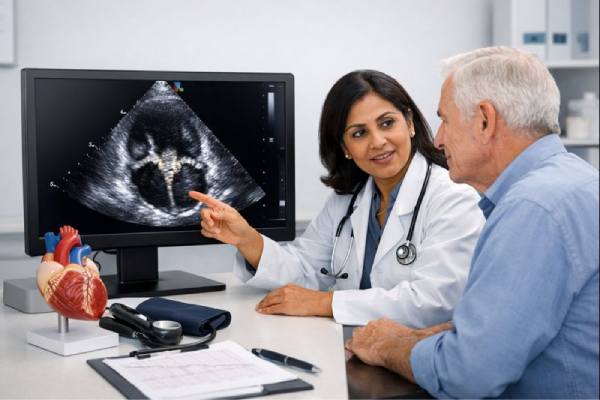
Calcific aortic stenosis is a common valve condition in which the aortic valve becomes stiff and narrowed as calcium builds up in the valve leaflets. Over time, the heart must generate higher pressure to push blood through the smaller opening, which can strain the left ventricle and reduce blood flow to the rest of the body. Many people feel well for years, then symptoms appear more suddenly as narrowing becomes severe. The good news is that modern imaging can detect and track the problem accurately, and valve replacement therapies—both surgical and catheter-based—can restore forward blood flow and quality of life for the right patients. This article explains what the condition is, why it develops, how it feels, how clinicians confirm severity, and what treatment and long-term management typically involve.
Table of Contents
- What it is and why it matters
- Causes and risk factors
- Symptoms and complications to watch for
- How it is diagnosed and staged
- Treatment options and what to expect
- Daily management, prevention, and when to seek care
What it is and why it matters
The aortic valve sits between the left ventricle (the heart’s main pumping chamber) and the aorta (the body’s largest artery). In calcific aortic stenosis, the valve leaflets gradually thicken, stiffen, and develop calcium deposits, so they do not open fully. The result is a smaller effective opening—called the aortic valve area—and a higher pressure gradient across the valve. This process is often described as “degenerative” because it becomes more common with age, but it is not simply “wear and tear.” It involves inflammation, microscopic injury to the valve surface, and active calcification that resembles bone formation in some pathways.
How narrowing changes the heart
When the valve narrows, the left ventricle has to pump harder to maintain forward flow. The heart responds by thickening its muscle wall (left ventricular hypertrophy). At first, this adaptation can keep symptoms away, but it can also make the ventricle stiffer. A stiff ventricle fills less easily, raising pressures backward toward the lungs and increasing the risk of breathlessness.
Over time, the heart may struggle to keep up, leading to:
- Reduced exercise capacity, because the heart cannot increase output enough during activity.
- Higher risk of abnormal heart rhythms, particularly atrial fibrillation in some patients.
- Progressive heart failure, either with preserved pumping function (stiffness problem) or later with reduced pumping function.
Why symptoms change the urgency
Many people remain asymptomatic for years even with moderate narrowing. The clinical “turning point” is the onset of symptoms or evidence that the ventricle is being harmed. Once severe aortic stenosis becomes symptomatic, outcomes without valve replacement worsen substantially. This is why clinicians treat a new symptom report as a major event and often move quickly from evaluation to a treatment plan.
Common terms you may hear
- Calcific aortic valve disease (CAVD): a broad umbrella that includes early thickening (sclerosis) and later true stenosis.
- Aortic sclerosis: thickening and calcium without major obstruction; it can progress, but not always.
- Severe stenosis: defined by measurements from echocardiography, not just by how a patient feels.
Understanding these basics helps you interpret test results, recognize meaningful symptom changes, and discuss timing of valve intervention with confidence.
Causes and risk factors
Calcific aortic stenosis usually develops through a combination of valve vulnerability and long-term exposure to cardiovascular risk factors. The valve leaflets experience repetitive mechanical stress with each heartbeat. In susceptible valves, the surface lining (endothelium) becomes more permeable, allowing lipids and inflammatory cells to enter. This can trigger fibrosis (scar-like thickening) and calcification.
Key causes and contributors
- Aging-related calcification: The most common pathway, typically appearing after age 60 and becoming more frequent with advancing age.
- Bicuspid aortic valve: Some people are born with two valve leaflets instead of three. Bicuspid valves experience abnormal flow and stress, often leading to earlier stenosis—sometimes decades earlier than typical age-related disease.
- Chronic kidney disease (especially advanced stages): Disturbed calcium and phosphate balance and higher inflammatory burden can accelerate valve calcification.
- Prior radiation therapy to the chest: Radiation can cause fibrosis and calcification of valves and nearby structures years later.
- Elevated lipoprotein(a), also written Lp(a): This genetically influenced lipid particle is linked with faster calcification in many studies and can run strongly in families.
Risk factors that often travel together
Even though calcific aortic stenosis is not the same as coronary artery disease, they share several risk factors. Common ones include:
- High blood pressure
- High LDL cholesterol or a history of atherosclerotic disease
- Diabetes
- Smoking history
- Obesity and sedentary lifestyle
- Male sex (higher prevalence in many populations)
- Family history of aortic valve disease or early valve replacement
What does not usually cause calcific stenosis
It helps to clear up a few misconceptions:
- Calcium in the diet is not a direct cause of valve calcification for most people. The body regulates blood calcium tightly; the valve calcification process is more about local inflammation and osteogenic signaling.
- Typical exercise does not “wear out” the valve. In fact, appropriate activity supports cardiovascular health and symptom awareness, though severe stenosis requires tailored guidance.
- Medications that lower cholesterol (statins) improve cardiovascular risk overall, but they have not consistently been shown to stop calcific stenosis once established. Clinicians still prescribe them when indicated for vascular risk reduction.
Why risk factor control still matters
Even if risk factor control does not reverse valve narrowing, it can reduce related hazards such as coronary disease, stroke, and heart failure decompensation. In practical terms, improving blood pressure, glucose control, and smoking status can make future procedures safer and recovery smoother.
Symptoms and complications to watch for
Symptoms often appear gradually, and many people unconsciously adapt by slowing down. Because the “asymptomatic phase” can be long, recognizing early changes—and reporting them clearly—can directly affect timing of treatment.
Common early symptoms
- Shortness of breath with exertion: Often noticed on hills, stairs, or faster walking.
- Reduced exercise tolerance: You may find yourself stopping more often, choosing elevators, or avoiding activities you used to do easily.
- Chest tightness or pressure with activity: This can occur even without blocked coronary arteries because the thickened ventricle needs more oxygen while the valve limits output.
- Lightheadedness or near-fainting: Especially during exertion, when the body demands more blood flow and the heart cannot increase output enough.
Classic warning triad in severe disease
Clinicians often watch closely for:
- Angina-like chest pain
- Syncope (fainting) or near-syncope
- Heart failure symptoms (breathlessness, swelling, fatigue)
Not everyone presents with all three. In older adults, symptoms may be subtle—confusion during exertion, unexplained falls, or worsening frailty can sometimes be clues.
Signs that deserve same-day attention
Seek urgent evaluation if you have any of the following, especially if you already know you have aortic stenosis:
- Fainting, near-fainting, or a sudden collapse
- New chest pain at rest or chest pain that lasts more than a few minutes
- Severe breathlessness, especially if it wakes you from sleep
- Rapid weight gain over a few days with ankle swelling or abdominal bloating
- New confusion, weakness, or stroke-like symptoms
Possible complications
Calcific aortic stenosis can lead to complications even before dramatic symptoms appear:
- Left ventricular dysfunction: The heart muscle can eventually weaken after years of pressure overload.
- Pulmonary hypertension: Higher pressure backs up into lung circulation.
- Arrhythmias: Atrial fibrillation, ventricular arrhythmias, or conduction problems can occur, particularly after calcification extends into nearby structures.
- Bleeding tendency in some patients: Severe stenosis can be associated with gastrointestinal bleeding from fragile vessels, a pattern sometimes discussed in specialist care.
Why symptom timing can feel unpredictable
Small decreases in valve opening can create large changes in pressure gradient once the valve becomes tight. That is why someone may feel stable for a long time, then notice a sharper drop in stamina over months. If you track your walking distance, stair tolerance, or recovery time after activity, you often detect progression earlier than by memory alone.
How it is diagnosed and staged
Diagnosis relies on a combination of history, physical exam, and cardiac imaging—most importantly echocardiography. Staging matters because treatment decisions depend on severity, symptoms, ventricular response, and the presence of other heart conditions.
What clinicians look for on exam
A classic finding is a systolic heart murmur, often described as harsh and best heard at the right upper chest, sometimes radiating toward the neck. In more advanced cases, the pulse may feel slower to rise, and the second heart sound may soften. Physical exam alone cannot measure severity, but it often triggers the workup.
Echocardiography as the core test
A transthoracic echocardiogram (TTE) is the standard first-line test. It can:
- Estimate aortic valve area
- Measure blood flow velocity across the valve
- Calculate the pressure gradient
- Assess left ventricular thickness and pumping function
- Evaluate other valves and overall heart structure
Severity is usually described as mild, moderate, or severe based on these measurements rather than a single number. Clinicians also interpret the pattern of results, because certain situations can create “discordant” measurements.
Important diagnostic nuances
Some patients have severe stenosis but a lower gradient because the heart is not pushing a large volume of blood forward. This can happen when:
- The left ventricle is weak (low flow due to low ejection fraction).
- The ventricle is small and stiff (low flow despite preserved ejection fraction).
In these scenarios, additional tests may help clarify true severity, such as stress echocardiography or computed tomography (CT) calcium scoring of the valve.
Additional tests that refine decisions
Depending on the situation, clinicians may use:
- Exercise testing: For people who claim no symptoms, supervised testing can reveal limited tolerance, abnormal blood pressure response, or symptoms that appear under stress.
- CT imaging: Helps define anatomy and calcium burden, and is essential for planning transcatheter valve procedures.
- Cardiac catheterization: Sometimes used when echocardiography is inconclusive, or when coronary artery evaluation is needed before intervention.
- Blood tests: Not diagnostic by themselves, but can support assessment of heart strain, kidney function, anemia, and procedural readiness.
How staging supports the next step
The practical goal of staging is to answer three questions clearly:
- How tight is the valve, really?
- Is the heart showing signs of strain or damage?
- Are symptoms present, and are they attributable to the valve?
When the answers point to severe disease with symptoms—or severe disease harming the ventricle—clinicians usually shift the conversation from “watchful waiting” to “planning valve replacement.”
Treatment options and what to expect
There is currently no medication proven to reliably reverse calcific narrowing once significant stenosis is present. Treatment focuses on careful monitoring for progression, managing contributing cardiovascular conditions, and replacing the valve when benefits outweigh risks.
Watchful waiting and monitoring
For mild or moderate stenosis—or severe stenosis without symptoms in carefully selected patients—clinicians may recommend:
- Periodic echocardiograms to track valve measurements and ventricular response
- Symptom check-ins that focus on real activities (stairs, hills, carrying groceries)
- Management of blood pressure, lipids, diabetes, and smoking cessation
- Evaluation for new murmurs, rhythm changes, or heart failure signs
A useful mindset is “active surveillance,” not passive waiting. The goal is to schedule intervention before irreversible heart damage occurs, but not so early that you take on procedure risk without benefit.
Medications: what they can and cannot do
Medications often support overall stability and treat coexisting problems:
- Blood pressure control reduces strain on the heart, though dosing must be individualized in severe stenosis.
- Diuretics may help fluid overload in heart failure, used cautiously to avoid low blood pressure.
- Statins and other lipid-lowering therapy reduce vascular risk when indicated, even if they do not stop valve narrowing.
- Rhythm control or anticoagulation may be needed if atrial fibrillation develops.
If you have severe stenosis, clinicians are typically careful with medications that significantly lower blood pressure or reduce preload, because the heart depends on adequate filling pressure to maintain output across a tight valve.
Valve replacement: the definitive therapy
When stenosis is severe and symptomatic—or severe with evidence of ventricular harm—valve replacement is usually recommended. The two main approaches are:
- Surgical aortic valve replacement (SAVR): The chest is opened and the diseased valve is replaced. Options include mechanical valves (durable but require lifelong anticoagulation) and bioprosthetic valves (typically no lifelong anticoagulation but may wear out over time).
- Transcatheter aortic valve replacement (TAVR): A catheter-based procedure, often through an artery in the groin, that places a new valve inside the old one. Recovery is often faster, but suitability depends on anatomy, age, and other clinical factors.
What to expect around the procedure
Most care teams use a shared decision process that considers:
- Age and life expectancy
- Frailty and mobility
- Kidney function and bleeding risk
- Coronary artery disease and whether bypass surgery is needed
- Valve anatomy and the safety of catheter access routes
After valve replacement, many patients notice improved breathing and stamina within weeks, though rebuilding strength can take longer—especially if symptoms had been present for months or years. Cardiac rehabilitation often helps people regain confidence and conditioning in a supervised setting.
Daily management, prevention, and when to seek care
Living well with calcific aortic stenosis means pairing medical follow-up with practical, day-to-day choices that reduce strain on the heart and make symptom changes easier to detect.
Daily habits that support heart function
- Physical activity tailored to severity: Many people with mild-to-moderate stenosis can stay active with walking, cycling, and strength training at a moderate level. In severe stenosis, clinicians often advise avoiding sudden heavy exertion or competitive high-intensity bursts. The safest plan is individualized and updated after each echocardiogram.
- Sodium awareness: If you retain fluid or have heart failure symptoms, moderating sodium can reduce swelling and breathlessness. A practical approach is reducing processed foods first, rather than obsessing over every meal.
- Weight and metabolic health: Even modest weight reduction can improve breathing efficiency and blood pressure control, reducing cardiac workload.
- Sleep quality: Untreated sleep apnea can worsen blood pressure and heart strain. If you snore loudly, have morning headaches, or feel sleepy during the day, discuss evaluation.
Monitoring that actually works
Instead of vague “I feel fine,” track concrete markers:
- Your usual walking route and time
- Whether stairs require pauses
- How often you need to stop when carrying loads
- Recovery time after exertion
- New ankle swelling or sudden weight change
If you record these in a simple note once per week, you build a clear timeline that helps your clinician judge progression.
Preventing complications
Some prevention is indirect: controlling blood pressure, diabetes, and smoking reduces vascular events that can complicate stenosis and procedures. Also consider:
- Vaccinations: Respiratory infections can stress the heart; staying current with recommended vaccines can reduce risk of decompensation.
- Dental and infection awareness: If you develop a persistent fever or unexplained fatigue, seek evaluation—especially if you have known valve disease or a prosthetic valve. Your clinician will advise you about situations where preventive antibiotics are appropriate, based on individual risk.
- Medication review: Before new prescriptions, remind clinicians you have aortic stenosis so they consider blood pressure effects and fluid balance.
When to call your clinician versus emergency care
Call your clinician promptly (within days) for:
- Worsening exertional breathlessness
- New reduction in exercise tolerance
- New palpitations, especially if associated with fatigue or shortness of breath
- Gradual swelling in legs or abdomen
Seek urgent or emergency care for:
- Fainting or near-fainting
- Chest pain at rest or persistent chest pressure
- Severe breathlessness, especially at rest or overnight
- Neurologic symptoms such as one-sided weakness, slurred speech, or sudden confusion
After valve replacement: long-term success basics
Long-term outcomes improve when you follow the post-procedure plan: attend follow-ups, take prescribed antiplatelet or anticoagulant therapy exactly as directed, and commit to gradual conditioning. Many people also benefit from learning their new “baseline” so they can recognize changes early in the future.
References
- 2020 ACC/AHA guideline for the management of patients with valvular heart disease: A report of the American College of Cardiology/American Heart Association Joint Committee on Clinical Practice Guidelines – PubMed 2021 (Guideline)
- 2021 ESC/EACTS Guidelines for the management of valvular heart disease – PubMed 2022 (Guideline)
- The Pathophysiologic Basis and Management of Calcific Aortic Valve Stenosis: JACC State-of-the-Art Review – PubMed 2025 (Systematic Review)
Disclaimer
This article is for educational purposes only and does not provide medical advice, diagnosis, or treatment. Calcific aortic stenosis can become serious and may require time-sensitive decisions, especially when symptoms develop. If you have chest pain, fainting, severe shortness of breath, or stroke-like symptoms, seek emergency care. For personal guidance, including whether you need monitoring, medications, or valve replacement, consult a qualified clinician who can interpret your symptoms, exam, and imaging in context.
If you found this article helpful, please consider sharing it on Facebook, X (formerly Twitter), or any platform you prefer, and follow us on social media. Your support through sharing helps our team keep producing accurate, practical health content.