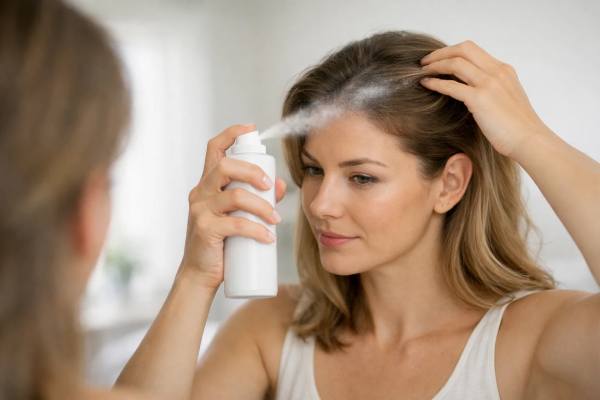
Dry shampoo is one of the most useful “in-between” products in modern hair care. It can refresh roots after a workout, extend a blowout, reduce heat styling, and help some hair types avoid over-washing that leaves lengths dry or frizzy. The concern begins when dry shampoo stops being an occasional helper and becomes a substitute for cleansing. That is when residue, irritation, and aggressive brushing habits can quietly build a scalp environment that feels tender and looks less full.
The good news is that most people do not need to fear dry shampoo. Used correctly, it is unlikely to cause permanent hair loss. The more realistic risk is breakage that mimics thinning, or shedding that worsens because the scalp is inflamed, itchy, or chronically coated. This guide separates myths from mechanisms and gives you a practical routine that keeps the convenience while protecting your scalp and hair fiber.
Top Highlights
- Dry shampoo does not “kill follicles,” but overuse can contribute to breakage and scalp irritation that makes hair look thinner.
- Most problems come from buildup, friction, and sensitive-skin reactions rather than true baldness.
- Itching, burning, scalp bumps, or heavy flakes are signs to pause and reset your routine.
- Do not replace washing indefinitely; plan a regular cleanse after 1–2 dry shampoo uses.
- Apply lightly at the roots, let it sit, then remove gently to reduce friction and residue.
Table of Contents
- Does dry shampoo cause hair loss
- How dry shampoo works on the scalp
- Buildup, irritation, and follicle stress
- Breakage that looks like thinning
- Safer habits and frequency guidelines
- When to stop and get help
Does dry shampoo cause hair loss
Dry shampoo is often blamed for “hair loss,” but that phrase covers several different experiences. True hair loss implies the follicle is producing a thinner strand, producing fewer strands, or stopping production in a patch. Many dry shampoo complaints are actually about breakage (the hair shaft snapping) or shedding (more hairs releasing from follicles than usual). Those can look similar in the mirror, but they have different causes and different fixes.
Here is the myth that drives most fear: dry shampoo clogs follicles and suffocates hair growth. In reality, hair grows from a living structure under the skin. Powder sitting on the scalp does not reach the growth center of the follicle the way a medication might. Dry shampoo can, however, irritate the scalp surface and change your grooming behavior, and both of those can make hair appear less dense.
The most realistic pathways are indirect:
- Scalp irritation and inflammation: If the scalp stays itchy, tender, or scaly, follicles can spend more time in a stressed environment. That does not guarantee shedding, but chronic inflammation can worsen shedding in someone already prone to it.
- Buildup and uneven cleansing: Dry shampoo absorbs oil, but it does not remove sweat, dead skin, or product film. Over time, residue can trap more residue. A coated scalp often feels itchy or tight, and scratching can increase breakage at the base.
- Mechanical damage: Many people brush more aggressively to “make the powder disappear.” That friction can snap fragile strands, especially around the hairline and temples.
- Contact reactions: Fragrance, propellants, preservatives, and botanical additives can trigger irritant or allergic contact dermatitis in sensitive people. When the scalp is reacting, it is not uncommon to notice more shedding during washing and detangling.
What about dramatic “bald spots”? Those stories exist online, but they are rarely straightforward. A sudden patch can be alopecia areata, traction-related loss, fungal infection, or a hairline breakage pattern that reads as a gap. Dry shampoo may be the product someone notices last, but it is not always the true cause.
A balanced conclusion: dry shampoo is unlikely to cause permanent hair loss in most users, but overuse can contribute to conditions that make hair look thinner, feel weaker, and shed more—especially if you already have a sensitive scalp or fragile hair fiber.
How dry shampoo works on the scalp
Dry shampoo is best understood as an oil-management product, not a cleansing product. Most formulas use absorbent particles that sit at the scalp and root area, bind to sebum, and reduce the shine and separation that makes hair look greasy. When you brush or massage it out, you remove some oil-loaded powder, which creates the “freshened” effect.
Common absorbents include starches (rice, corn, tapioca), clays, silica, and other porous powders. Some formulas add pigments to blend with darker hair, while others aim for a translucent finish. Aerosol versions typically use propellants to disperse a fine mist of powder; non-aerosol versions use pump sprays or shaker tops.
This matters because different delivery systems can change your risk profile:
- Aerosol dry shampoos distribute product quickly and evenly, but they also add propellants and can be easier to overapply without realizing it. If you spray too close, the product can concentrate at the scalp, creating a thick layer that is hard to remove.
- Non-aerosol powders give more control, but they can clump if applied heavily or if the scalp is damp with sweat. Clumps increase friction during removal and can make the scalp feel gritty.
Dry shampoo works best on truly dry hair. Applying it to sweaty roots often creates a paste-like residue that sticks to hair and scalp. That sticky layer can tempt you to scrub harder later, increasing breakage risk.
Another overlooked detail is that oil is not the only thing on your scalp. Sweat leaves salts. Styling products leave polymers. Skin naturally sheds cells. Your scalp also hosts microorganisms that do best when the environment is balanced. Regular washing is not about being “clean enough” for appearance—it is about resetting that ecosystem so oil absorption does not become chronic coating.
Finally, safety conversations sometimes include ingredient quality concerns and product recalls. While these concerns are not the main driver of hair thinning for most people, they are a reminder to choose reputable products, avoid expired cans, and pay attention to how your scalp responds rather than assuming a product is harmless because it is widely sold.
Buildup, irritation, and follicle stress
If dry shampoo contributes to hair concerns, the most common starting point is buildup. Buildup is not just “dirty hair.” It is a layered film made from sebum, powder, sweat salts, styling polymers, and dead skin. Over time, that film can make the scalp feel itchy, tender, or tight, and it can make roots feel paradoxically greasy and dry at the same time.
A coated scalp can affect hair in three practical ways:
- Inflammation and scratching: Itch leads to rubbing and scratching. Even light scratching can snap fragile regrowth and roughen the cuticle near the base. More intense scratching can create micro-injuries, which increases irritation and can invite follicle inflammation.
- Scaling and flaking: When residue builds, flakes may increase—not always because of “dandruff,” but because the scalp barrier is stressed and shedding skin cells becomes more visible. Some people also notice a waxy film near the hairline or behind the ears.
- Follicle clogging and bumps: Dry shampoo does not permanently block follicles, but a heavy mixture of oil and powder can collect at follicle openings. That can contribute to clogged-feeling pores, follicle-centered redness, or small bumps—especially if you also sweat, wear hats, or keep hair tightly pulled back.
Not every itchy scalp is caused by buildup. Allergic and irritant reactions are common in hair care, and dry shampoos can contain fragrance blends and preservatives that trigger sensitivity. If symptoms begin soon after switching brands, that timing is meaningful.
Here is a simple self-check that often clarifies what is happening:
- Buildup pattern: scalp feels heavy, roots look dull or grayish, itching improves after a thorough wash, and there is a “film” feeling when you rub the scalp.
- Irritation pattern: burning, stinging, redness, or tenderness that can persist even after washing, especially along the hairline, part, and behind the ears.
- Bump pattern: follicle-centered pimples, pustules, or painful spots that worsen with sweating or occlusion.
If you suspect buildup, the most effective fix is not more dry shampoo. It is a reset: a real wash, gentle scalp massage, and a plan for periodic deeper cleansing. If you need a structured approach, removing product buildup without damaging hair can help you choose methods that match your hair type and sensitivity.
Breakage that looks like thinning
When people say dry shampoo “made my hair fall out,” the most common physical reality is breakage. Breakage can create a visibly thinner hairline, more flyaways, and shorter “new hairs” that never seem to grow—because they are snapping faster than they lengthen.
Dry shampoo can contribute to breakage through a few predictable behaviors:
- Overapplication: Too much powder makes hair stiff and gritty. Stiff hair has less slip, so strands catch on each other and on brushes more easily.
- Aggressive brushing: The goal is usually to remove visible residue, but forceful brushing concentrates stress at weak points like the temples, part line, and crown. If you brush repeatedly to erase a white cast, you may be trading appearance for fiber damage.
- Dryness stacking: Dry shampoo absorbs oil, and oil provides some lubrication at the root. If your scalp is naturally dry or your hair is already porous, repeated oil removal can leave roots feeling rough. That roughness increases friction during detangling.
- Sleeping in heavy residue: Powder and oil can transfer to pillowcases and then back to the hairline and face. Overnight friction plus residue can increase tangling, especially for wavy and curly hair.
- Tight styles to “hide” roots: When roots feel gritty, some people rely on tight ponytails, buns, hats, or headbands. Tension plus friction is a classic breakage recipe at the hairline.
A useful clue is where you see the damage. Breakage from dry shampoo habits often shows up as:
- Short snapped hairs around the temples and hairline
- A widened part that is worse on days you brush heavily
- Hair that feels rough at the roots but normal on the mid-lengths
To reduce breakage risk, focus on removal technique. Instead of brushing repeatedly, try gentle fingertip massage at the roots, then brush lightly once the powder has absorbed oil. If you use a brush daily, hygiene matters too. Oils and powders accumulate on bristles and can redeposit onto clean hair. A simple routine for how often to clean hairbrushes and combs can make dry shampoo work better with less product and less friction.
The key idea is not “never brush.” It is “avoid turning removal into sanding.” Gentle, deliberate removal protects the hair fiber and keeps the scalp calmer.
Safer habits and frequency guidelines
The safest way to use dry shampoo is to treat it as a short bridge between washes, not a replacement for washing. Most problems improve when people adopt two rules: use less than you think you need and wash sooner than you think you should.
A practical routine that fits most hair types:
- Start with less product. Apply only to the oiliest zones (often the crown, part line, and front hairline). If you cover the entire scalp out of habit, buildup is more likely.
- Keep distance and move continuously. For sprays, hold the can several inches away and avoid saturating one spot. For powders, tap lightly and distribute gradually.
- Let it sit. Give it 1–3 minutes to absorb oil before touching it. Immediate rubbing tends to clump product with sebum and increases friction.
- Remove gently. Use fingertips at the roots first, then a soft brush or wide-tooth comb if needed. Aim for one purposeful pass, not repeated scrubbing.
- Plan a real wash after 1–2 uses. If you need dry shampoo daily to feel presentable, that is a sign to adjust your wash schedule, shampoo choice, or styling approach.
How often is “too often”? There is no single number that fits everyone, but these guardrails are useful:
- If you use dry shampoo more than two consecutive days without washing, watch closely for itch, flakes, tenderness, and heaviness at the root.
- If your scalp is sensitive, treat dry shampoo as occasional, not routine—especially if you have a history of dermatitis.
- If you sweat frequently, wash more often. Powder plus sweat tends to create stubborn residue.
You can also build a preventive reset into your month. Many people benefit from periodic deeper cleansing, especially if they use styling products or have hard water. If you want to do that without stripping your hair, follow a plan like how to use clarifying shampoo safely so you get the scalp benefits without turning lengths dry and brittle.
Finally, choose formulas thoughtfully. Fragrance-free options are often better for sensitive scalps. If you repeatedly react to different brands, the issue may not be “dry shampoo” as a category, but your scalp barrier and your cumulative product load.
When to stop and get help
Dry shampoo should not cause pain. If your scalp is burning, sore, or forming bumps, treat that as a stop sign. Continuing to apply powder over an irritated scalp often turns a small problem into a stubborn one.
Pause dry shampoo and reset with gentle washing if you notice:
- Persistent itching, burning, or tenderness
- New flakes that are greasy, stuck-on, or worsening
- A “tight” scalp feeling that does not improve after washing
- Red patches, oozing, or crusting along the part line or hairline
- Follicle-centered bumps, pimples, or pustules
If bumps are present, avoid picking or scrubbing. Follicle inflammation can look like acne, infection, or dermatitis, and the best treatment depends on which it is. A focused overview of scalp folliculitis and bump treatment options can help you recognize when you need targeted care rather than more cleansing.
Seek medical guidance promptly if you have:
- Sudden patchy hair loss, smooth bald spots, or rapidly expanding gaps
- Significant scalp pain, swelling, fever, or draining lesions
- Thick silvery scale, bleeding, or widespread redness
- Hair loss accompanied by eyebrow loss or other systemic symptoms
If you do see a clinician, you can make the visit more productive by bringing:
- Photos of the scalp in good light (part line, crown, hairline, and any bumps)
- A timeline: when you started dry shampoo, how often you use it, and when symptoms began
- Your products (or ingredient lists), including fragrances and hair sprays
If the pattern suggests a contact allergy, patch testing can be helpful. If it suggests inflammation or infection, treatment may involve medicated shampoos, topical anti-inflammatories, or antimicrobial approaches. The goal is not to “prove dry shampoo is bad.” The goal is to calm the scalp environment so follicles can cycle normally and hair can grow without constant friction.
Dry shampoo can stay in your routine, but it should never be the reason you tolerate discomfort. Comfort is a signal, and listening early is usually the fastest path back to fuller-looking hair.
References
- Dry shampoo: Dermatologists’ tips for getting your best results 2024
- Unilever Issues Voluntary U.S. Recall of Select Dry Shampoos Due to Potential Presence of Benzene | FDA 2022 (Safety Alert)
- Presence of Contact Allergens in Dry Shampoo Products – PubMed 2021
- Hair Product Allergy: A Review of Epidemiology and Management – PMC 2024 (Review)
- Contact Dermatitis Due to Hair Care Products: A Comprehensive Review | MDPI 2024 (Review)
Disclaimer
This article is for educational purposes and does not provide medical advice, diagnosis, or treatment. Hair thinning and shedding can have many causes, including genetics, hormonal shifts, nutritional deficiencies, scalp inflammation, infection, and medication effects. Dry shampoo is generally safe when used as directed, but overuse or sensitivity to ingredients can irritate the scalp and contribute to breakage or increased shedding. Stop use if you develop burning, persistent redness, swelling, open sores, or scalp bumps, and seek medical care if symptoms are severe, spreading, or do not improve after discontinuing the product. For personalized guidance—especially during pregnancy, while breastfeeding, or when managing chronic skin or health conditions—consult a qualified healthcare professional.
If this article helped you use dry shampoo more safely, consider sharing it on Facebook, X (formerly Twitter), or your preferred platform so others can avoid preventable irritation and unnecessary worry.