Candy cap mushrooms are small, russet-orange milk caps best known for a remarkable trick: once dried, they release an aroma uncannily like maple syrup, toasted sugar, and warm fenugreek. For cooks, this means you can use a fungus to perfume ice cream, shortbread, panna cotta, French toast, or a glaze for roasted nuts—without adding extra sugar. For foragers, it means paying attention to the “milk” (the thin, whey-like latex typical of Lactarius), the mild taste, and the rusty-brown cap that often intensifies as it dries. Nutritionally, candy caps are similar to other culinary mushrooms: very low in calories, a source of B vitamins, copper, potassium, and selenium, and—if exposed to UV light—vitamin D2. Like most wild mushrooms, they are high in water and contribute modest fiber and protein. The key with candy caps is thoughtful handling: select true candy caps, dry them thoroughly to amplify their scent, and use them sparingly so their maple character enhances rather than overwhelms your dish.
At a Glance
- Dried candy caps deliver an intense maple-like aroma that flavors desserts and sweet-savory dishes.
- Provide B vitamins, copper, potassium, selenium, and, if UV-exposed, vitamin D2 (≈10–20 µg/100 g).
- Typical culinary use is 1–3 g dried (about ½–1½ tsp powder) per recipe, 1–2 times per week.
- Risk note: misidentification with look-alike Lactarius or toxic species; eat only well-identified, well-cooked mushrooms.
- People who are pregnant, immunocompromised, or with mushroom allergies should avoid foraged mushrooms and choose reputable sources.
Table of Contents
- Candy Caps: Detailed Overview
- Candy Cap Nutrition Profile
- Candy Cap Health Benefits
- Risks, Allergies and Interactions
- Selecting, Quality, Sustainability and Storage
- Preparation, Cooking and Nutrient Retention
- Portions, Comparisons and FAQs
Candy Caps: Detailed Overview
Candy caps are a small group of North American milk caps most commonly sold and cooked as Lactarius rubidus (West Coast) and the closely related L. camphoratus and L. fragilis (more often Eastern). Fresh, they can smell faintly sweet or even nondescript. The magic appears after drying or gentle heat: their volatile lactones shift and concentrate, producing a powerful maple-syrup, caramel, or fenugreek perfume that persists for months in a tight jar. This distinctive scent is why pastry chefs grind them into a “spice” and why a gram or two can transform a pan sauce, custard, or cookie dough.
Identification hinges on several consistent traits. Candy caps have a dry to slightly moist, rusty-cinnamon cap that may become depressed with age; pale, slightly decurrent gills; a brittle, matching stipe; and they exude a thin, whey-like, whitish latex when cut. The taste is mild—not bitter or peppery like some other milk caps. Unlike many Lactarius that smell fruity or balsamic, candy caps’ odor becomes pronounced only after drying, so experienced foragers sometimes singe a tiny piece to “wake” the aroma during field checks. As with all wild mushrooms, accurate identification requires experience, reliable region-specific guides, or guidance from a local mycological society.
Culinary uses are broader than sweets. A pinch of powder enriches brown-butter vinaigrette, maple–miso glazes, bourbon sauces, and roasted squash purées. Whole dried caps steep beautifully in cream, milk, or simple syrup for ice cream, crème brûlée, and coffee drinks. Because the aromatics are potent and can skew bitter in excess, most recipes call for 1–3 grams dried (about ½–1½ teaspoons powder) for a batch of cookies or a pint of custard—often paired with vanilla, toasted nuts, cinnamon, or citrus to round the profile.
From a nutrition standpoint, candy caps behave like other culinary mushrooms: low calorie, low fat, and a source of minerals (particularly copper, selenium, and potassium) and several B vitamins. When exposed to ultraviolet (UV) light after harvest, mushrooms can also synthesize vitamin D2 (ergocalciferol), which remains fairly stable with gentle cooking. While candy cap–specific nutrient datasets are limited, using established values from common culinary mushrooms provides a practical baseline for menu planning and diet tracking.
Finally, sustainability matters. Candy caps are ectomycorrhizal partners of trees and also appear on woody debris; thoughtful foraging practices—cut above the base, avoid raking duff, and leave plenty to sporulate—help maintain local populations and the forest micro-ecosystems they support. Sourcing from responsible harvesters or specialty growers respects this ecological role while ensuring consistent quality and safety.
Candy Cap Nutrition Profile
Candy caps do not yet have a dedicated national nutrient profile; however, their macronutrient and micronutrient composition aligns closely with commonly analyzed culinary mushrooms (e.g., white button, crimini, portabella). The tables below present practical, dietitian-style approximations per 100 g edible portion of fresh mushrooms, with notes where candy caps may differ in typical culinary use (most often as a dried spice).
Macros and Electrolytes (per 100 g, fresh mushrooms)
| Nutrient | Amount | % Daily Value (%DV) |
|---|---|---|
| Energy | 22 kcal | — |
| Water | 92.5 g | — |
| Protein | 3.1 g | — |
| Total fat | 0.3 g | — |
| Carbohydrate | 3.3 g | — |
| Dietary fiber | 1.0 g | 4% |
| Sugars (total) | 2.0 g | — |
| Potassium | 318 mg | 7% |
| Sodium | 5 mg | 0% |
Vitamins (per 100 g, fresh mushrooms)
| Vitamin | Amount | %DV |
|---|---|---|
| Riboflavin (Vitamin B2) | 0.4 mg | 31% |
| Niacin (Vitamin B3) | 3.6 mg | 23% |
| Pantothenic acid (B5) | 1.5 mg | 30% |
| Folate (DFE) | 17 µg | 4% |
| Vitamin D2 (UV-exposed mushrooms)* | 10–20 µg | 50–100% |
Minerals (per 100 g, fresh mushrooms)
| Mineral | Amount | %DV |
|---|---|---|
| Copper | 0.3 mg | 33% |
| Selenium | 9.3 µg | 17% |
| Phosphorus | 86 mg | 7% |
| Iron | 0.5 mg | 3% |
| Zinc | 0.5 mg | 5% |
Fats and Fatty Acids (per 100 g, fresh mushrooms)
| Component | Amount |
|---|---|
| Saturated fat | 0.05 g |
| Monounsaturated fat | 0.03 g |
| Polyunsaturated fat | 0.17 g |
| Cholesterol | 0 mg |
Protein and Amino Acids (per 100 g, fresh mushrooms)
| Component | Amount |
|---|---|
| Protein | 3.1 g |
| Notable essential amino acids | Present in small amounts; quality improves when combined with grains, legumes, dairy, or eggs |
Bioactives/Phytonutrients
| Compound | Typical presence | Notes |
|---|---|---|
| Ergothioneine | 0.1–7 mg/g dry weight (species-dependent) | Unique sulfur-containing antioxidant concentrated in mushrooms; levels vary by species and cap vs. stem. |
| Glutathione | 0.1–2.4 mg/g dry weight (species-dependent) | Endogenous antioxidant; often correlates with ergothioneine across species. |
Glycemic & Acid–Base
| Metric | Value | Interpretation |
|---|---|---|
| Glycemic impact | Very low | Low available carbohydrate and high water content. |
| PRAL (potential renal acid load) | Slightly alkaline | Mushrooms contribute minimal acid load in balanced diets. |
*Vitamin D2 appears when mushrooms are exposed to UV-B light post-harvest or by brief sun exposure; UV-treated products typically list vitamin D on the label. Candy caps sold dried are not usually UV-treated unless specified.
Footnote on form: Candy caps are used mostly dried. One gram dried roughly corresponds to 8–10 g fresh. Nutrient contributions from typical culinary doses (1–3 g dried per recipe) are modest, but the flavor impact is large—so they function more like a spice nutritionally.
Candy Cap Health Benefits
Aromatic advantage, practical nutrition. Candy caps’ headline benefit is culinary: their maple-syrup aroma allows you to create “sweet” sensory impact with little or no added sugar. A teaspoon of candy cap powder in cookie dough or pancake batter can make the finished food taste sweeter and more complex, enabling sugar reduction strategies without artificial sweeteners. In savory cooking, the same aromatic warmth deepens glazes for salmon or carrots and complements bourbon, soy, miso, and aged cheese.
Micronutrient support with few calories. Like other mushrooms, candy caps offer B vitamins (riboflavin, niacin, pantothenic acid), copper, selenium, and potassium for negligible calories and virtually no fat. In most diets, these nutrients help fill small but meaningful gaps: riboflavin and niacin support cellular energy metabolism; copper assists iron transport and connective tissue formation; selenium supports antioxidant enzymes; and potassium helps balance sodium and support normal blood pressure.
Vitamin D potential (when UV-exposed). Mushrooms can synthesize vitamin D2 from ergosterol when exposed to UV-B. If your candy caps or mushroom blends are specifically UV-treated, 100 g fresh-equivalent can contribute 10–20 µg (400–800 IU), helping you meet daily needs—useful for vegetarians and during low-sunlight seasons. Even with some loss during storage or cooking, typical home methods retain a large fraction when handled properly.
Beneficial antioxidants unique to fungi. Mushrooms are unusual in providing ergothioneine, a sulfur-containing amino acid–like compound transported into human cells by a specialized carrier (OCTN1). Across species, ergothioneine and glutathione often co-occur at meaningful levels; both contribute to the food’s total antioxidant capacity. While research is still clarifying clinical outcomes, these compounds add to the overall nutrient density of mushrooms and may support redox balance as part of an overall healthy diet.
A culinary path to “less sugar, more flavor.” Because candy caps deliver a strong maple-fenugreek note, they can serve as a flavor multiplier. For home cooks aiming to trim sugar intake, candy caps combined with vanilla, cinnamon, or orange zest can create the perception of sweetness and complexity. In recipe testing, 20–30% sugar reductions are common when candy caps are included and balanced with salt and fat (e.g., browned butter).
Digestibility and satiety. Mushrooms provide modest fiber and a firm matrix with umami compounds that enhance perceived savoriness. This can support satisfaction and slower eating when used in meals, despite their low energy density. While the absolute fiber grams are small, every gram counts in the context of today’s fiber-short diets.
Bottom line: Candy caps primarily shine as a culinary tool that can make better-for-you recipes feel indulgent. Their nutrition aligns with other mushrooms—nutrient-dense for very few calories—and UV-exposed products can contribute vitamin D2 where diets or seasons fall short.
Risks, Allergies and Interactions
Misidentification is the primary hazard. The main risk with candy caps isn’t the mushroom itself—it’s confusing a safe species with a look-alike. The genus Lactarius contains both mild, edible species and pungent, irritating, or inedible ones. Additionally, entirely different genera include dangerous species that novice foragers may mistake for edible milk caps. If you forage, rely on region-specific keys, multiple concordant features (cap color/texture, latex character, gill attachment, taste, habitat), and expert verification. When in doubt, do not eat it. Purchasing from reputable sellers eliminates most identification risk.
Allergies and sensitivities. Mushroom allergies are uncommon but real. They can manifest as oral itching, gastrointestinal upset, or—rarely—systemic reactions. If you have a known mold/mushroom allergy, avoid candy caps. Some people experience indigestion from poorly cooked mushrooms; candy caps should be cooked thoroughly, not eaten raw.
Food safety and handling. Like other mushrooms, candy caps are high in water when fresh and can spoil if stored improperly. Drying reduces water activity, but dried pieces may mold if not fully dried and kept airtight. Storage with desiccant packs in opaque, well-sealed jars helps preserve aroma and safety. Always discard mushrooms that develop off-odors, visible mold, or unusual discoloration after storage.
Medication interactions. Mushrooms in general do not have well-documented, clinically meaningful drug interactions at culinary doses. If you take anticoagulants, immunosuppressants, or have underlying liver/kidney disease, discuss wild mushrooms with your clinician, especially if consuming beyond occasional culinary amounts.
Special populations. People who are pregnant, very young children, older adults with chronic disease, and immunocompromised individuals should avoid foraged mushrooms due to the outsized risk of misidentification and foodborne illness. Choose commercially sold, well-identified products from trusted sources.
Environmental contaminants. Wild mushrooms can bioaccumulate heavy metals depending on species and site history. Avoid harvesting near roads, industrial sites, or treated timber. Responsible suppliers should track harvest areas; when sourcing, ask vendors about provenance and post-harvest testing where applicable.
Bottom line: Buy candy caps from reputable sources or forage only with expert confirmation, cook them well, and store them properly. Respect a conservative approach if you have allergies or belong to a higher-risk group.
Selecting, Quality, Sustainability and Storage
How to choose quality candy caps
- Form: Most commonly sold dried whole caps or powder. Whole caps retain aroma longer; powder is convenient and disperses flavor evenly.
- Color and integrity: Look for rusty to chestnut-brown caps with intact, pale gills. Excessive crumbling suggests age.
- Aroma: Open the jar or pouch (if permitted) and sniff—there should be a clear maple, caramel, or fenugreek note. Faint or musty aromas indicate oxidation or inadequate drying.
- Cleanliness: Minimal duff (forest debris) and no visible mold. Reputable vendors sort and screen their product.
Sustainability and sourcing
- Harvest ethics: Candy caps are ectomycorrhizal and often fruit near conifers or on woody debris. Sustainable foraging means cutting mushrooms rather than pulling, avoiding disturbance of mycelial mats, harvesting a modest portion, and leaving behind older or damaged fruitbodies to sporulate.
- Traceability: Favor vendors who identify species (e.g., L. rubidus), region, and harvest season. This supports ecological stewardship and consistent flavor.
- Cultivation: Candy caps are rarely cultivated at scale; limited, small-scale trials exist. As a result, most supply is wild-harvested, increasing the value of careful selection and ethical sourcing.
Storage to preserve aroma and safety
- Short term (open package): Transfer dried mushrooms or powder to an airtight, opaque container with a food-safe desiccant. Light and air rapidly dull the maple aroma.
- Long term: Keep at cool room temperature or refrigerated if your climate is humid. Avoid the freezer for powders (condensation risk). Properly stored, whole dried caps maintain strong aroma for 6–12 months; powders for 3–6 months.
- Reviving aroma: A brief warm-up (e.g., toasting the powder 30–60 seconds in a dry pan on low heat) can reawaken volatiles just before use.
- Contamination control: Always use clean, dry utensils when scooping powder. If moisture infiltrates, spread on a parchment-lined sheet and re-dry at low oven temperature (≈50–60 °C) for 30–60 minutes, then cool sealed with desiccant. Discard if any mold odor or visible growth appears.
Quality cues to avoid
- Faded scent, mustiness, or a “cardboard” smell (oxidation).
- Excessive breakage or powder when you intended to buy whole caps.
- Sticky or pliable pieces (incomplete drying).
Sensible purchasing
Because you use so little at a time, smaller packages (14–28 g / ½–1 oz) are practical. Buy more only if you will use them within 6–12 months or you can share a bulk purchase with fellow cooks.
Preparation, Cooking and Nutrient Retention
Foundational techniques
- Hydrate or infuse: Steep whole dried caps in warm milk, cream, or water 10–20 minutes. Use both the infused liquid and the softened mushrooms; strain grit if needed.
- Grind to a spice: Pulse dried caps in a clean coffee grinder to a fine powder (sift if you want perfectly smooth desserts). Store tightly.
- Bloom the aroma: Toast powder lightly in a dry pan or bloom in warm butter to release volatiles before adding liquids.
- Strain smartly: When you want a glossy custard or panna cotta, strain after infusion to remove sediment that can cloud gels.
Working amounts and pairings
- Desserts: 1–2 tsp powder (≈1–2 g) per 12–18 cookies; 1–3 g per 1 pint/475 ml custard base; ½–1 tsp in pancake batter for two.
- Savory: ¼–½ tsp in brown-butter vinaigrette; ½–1 tsp in maple–miso glaze; 1 g in pan sauces with bourbon or sherry.
- Pairings: Vanilla, toasted pecans/walnuts, cinnamon, orange zest, browned butter, soy/miso, roasted squash, sweet potato, and aged cheeses like Gruyère. A pinch of salt balances the sweet-fenugreek edge.
Vitamin D and heat
If your mushrooms were UV-exposed, typical home cooking methods (brief sautéing, simmering, baking) retain a substantial portion of vitamin D2. Retention often exceeds 60–85% with short cooking times; avoid prolonged boiling if maximizing vitamin D is a priority. Store UV-treated mushrooms within date to minimize degradation.
Flavor control and bitterness
Candy caps are potent. Too much powder can add a bitter, medicinal edge. If a dish tips bitter, add fat (cream, butter), a pinch of sugar, or a bright acid (lemon, orange) to rebalance. For custards and ice creams, steeping whole caps rather than adding powder often yields a rounder flavor.
Food safety
Cook thoroughly. As with all mushrooms, thorough heating improves digestibility by softening chitinous cell walls and inactivating enzymes that can cause browning or off-flavors. Rinse lightly before use if needed, then dry well; soaking water for infusions should be brought briefly to a simmer in the recipe step.
Waste-smart tips
- Save leftover candy cap syrup (1:1 sugar to water + steeped caps) in the fridge for coffee drinks and French toast (2–3 weeks).
- Freeze candy cap–infused butter in portions; it keeps for months and is excellent for quick sauces.
- Whisk a pinch of powder into finishing salt for an aromatic sprinkle on roasted carrots or popcorn.
Portions, Comparisons and FAQs
Practical portions
- Culinary dose: 1–3 g dried candy caps (roughly ½–1½ tsp powder) per recipe.
- Frequency: 1–2 times per week for variety and enjoyment.
- Fresh equivalent: 1 g dried ≈ 8–10 g fresh mushrooms.
- Nutrient impact: At these small amounts, micronutrients contribute modestly; use candy caps mainly for flavor, relying on a varied diet for vitamins and minerals. If you want vitamin D from mushrooms, choose UV-labeled products and cook larger portions of common culinary mushrooms in savory meals.
Candy caps vs. other mushrooms
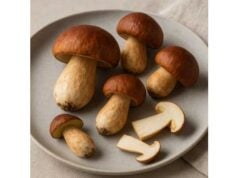
- Versus chanterelles/porcini: Candy caps excel in sweets and glazes because of their maple note; chanterelles are apricot-fruity and shine with eggs and cream, while porcini are savory, woodsy, and best in risotti and ragùs.
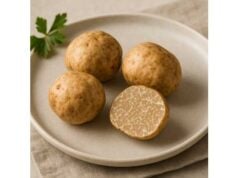
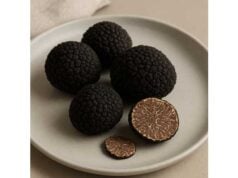
- Versus black truffles: Truffles are intensely savory and used raw or lightly warmed for volatile preservation; candy caps are dried and used like a spice, most often sweet-leaning.
- Nutrition: All are low-calorie; common culinary mushrooms are better day-to-day nutrient vehicles because you eat them in larger portions. Candy caps are a “high-flavor, low-quantity” ingredient.
FAQs
Do candy caps actually taste sweet?
No—there’s little inherent sugar. They smell like maple syrup; your brain reads that aroma as sweetness. Use them to reduce added sugar in recipes while maintaining a “sweet” profile.
Can I just pick any milk cap that smells nice?
No. Many Lactarius species have distinctive odors, and some are irritating or inedible. Learn the full suite of candy cap traits or buy from reputable sellers.
How long do dried candy caps last?
Aroma is best within 6–12 months for whole caps (3–6 months for powders) when kept in airtight, opaque containers with a desiccant, away from heat and light.
Are candy caps safe for children?
If purchased from reputable sources and well cooked, small tastes in family meals are fine for most children. Avoid foraged mushrooms for young kids due to misidentification risk and their smaller body mass.
Can candy caps replace vanilla?
They complement rather than replace. Vanilla gives creamy, floral notes; candy caps add maple-fenugreek depth. Using both creates a round, complex sweetness.
What if my powder turned clumpy?
It absorbed moisture. Re-dry gently on a parchment-lined sheet at 50–60 °C for 30–60 minutes, cool completely, and store with desiccant. Discard if moldy or musty.
How do I get consistent flavor?
Grind and sift to a uniform powder; weigh by grams; and bloom the powder in warm fat or liquid. Keep a small test batch to calibrate your preferred dose.
References
- A Review of Mushrooms as a Potential Source of Dietary Vitamin D 2018 (Systematic Review)
- Mushrooms: A rich source of the antioxidants ergothioneine and glutathione 2017
- Mushroom Poisoning 2020 (Guideline/Review)
- Nutritional impact of adding a serving of mushrooms to USDA Food Patterns – a dietary modeling analysis 2021
- The maple syrup odour of the “candy cap” mushroom, Lactarius fragilis var. rubidus 2012
Disclaimer
This article is for general informational purposes and does not replace personalized advice from a qualified healthcare professional. Do not forage or consume wild mushrooms unless they have been positively identified by an expert. If you are pregnant, immunocompromised, taking prescription medications, or have food allergies, consult your clinician before adding new mushroom products to your diet.
If you found this guide helpful, please consider sharing it with friends or colleagues on Facebook, X, or any platform you prefer. Your support helps us continue creating clear, practical resources for cooks and foragers.