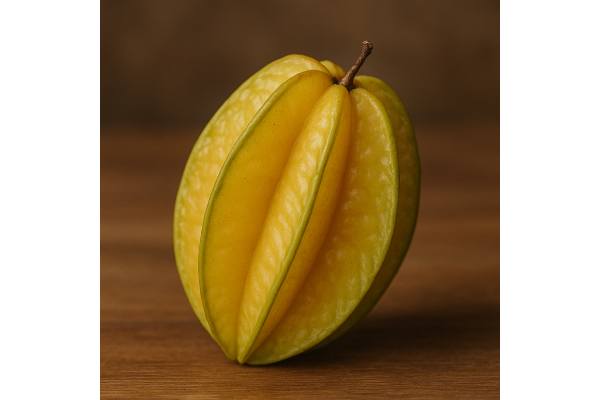
Carambola—better known as star fruit—earns its name from the bright, five-pointed cross-section that turns any fruit plate into a showpiece. Beyond looks, this tropical fruit brings refreshing, citrus-meets-grape notes, a light crunch, and impressive hydration from its high water content. A 100-gram portion is low in calories yet supplies meaningful vitamin C, small amounts of B vitamins and copper, and around 3 grams of fiber. It’s versatile in the kitchen: crisp when underripe for slaws and pickles, honeyed when ripe for salads, salsas, and juices, and sturdy enough for quick sautéing or grilling. If you live where it grows, you’ll find sweet and tart cultivars; both can be used, adjusting sugar and acid in recipes to taste. One essential caveat: carambola naturally contains oxalic acid and a neuroactive compound called caramboxin—harmless for most people in moderate amounts, but risky for anyone with kidney disease or on certain medications. This guide explains the benefits and nutrition, how to choose and store it, and the safety rules you should know.
Top Highlights
- Per 100 g, carambola provides ~31 kcal, ~2.8 g fiber, and ~34 mg vitamin C.
- People with kidney disease should avoid carambola due to oxalate and caramboxin.
- A typical serving is 1 cup (≈130 g) up to 2–3 times per week for healthy adults.
- Those with chronic kidney disease, recurrent kidney stones, or on CYP-metabolized drugs should limit or avoid.
Table of Contents
- Carambola at a Glance: Detailed Overview
- Carambola Nutrition Profile (per 100 g)
- Evidence-Based Health Benefits
- Risks, Allergies and Interactions
- Selecting, Quality, Sustainability and Storage
- Preparation, Cooking and Nutrient Retention
- Portions, Comparisons and FAQs
Carambola at a Glance: Detailed Overview
Carambola (Averrhoa carambola) is a tropical tree fruit native to Southeast Asia and now cultivated widely across South and Southeast Asia, the Pacific, parts of Africa, the Caribbean, and warm regions of the Americas. Its ribbed, star-shaped profile makes it popular as an edible garnish, yet it’s far more than decoration. Botanical diversity matters here: broadly, cultivars fall into two taste types—“sweet” (lower acid, more sugar, juicy) and “sour” (higher acid, tangier, firmer). Both are edible raw and cooked. Underripe sour types hold their shape in stir-fries and pickles; ripe sweet types shine in fruit salads, smoothies, chutneys, and desserts.
From a nutrition perspective, carambola is a light, high-water fruit. Per 100 g it supplies about 31 kcal, roughly 6.7 g carbohydrate, ~2.8 g fiber, ~4 g natural sugars, ~1 g protein, and minimal fat. It contributes vitamin C and small amounts of B-complex vitamins (notably pantothenic acid), together with minerals such as potassium and copper. Compared with other everyday fruits, carambola is lower in total carbohydrate and sugars than banana, mango, or grapes, with a similar vitamin C range to clementines and kiwifruit on a per-gram basis.
Flavor and texture evolve as the fruit ripens. Immature, greenish fruit tends to be crisp, tart, and slightly astringent—excellent for slaws, savory salsas, or a quick pickle. Fully ripe fruit turns golden yellow, softens slightly, and develops floral, sweet-tart aromas; it’s best sliced across the ribs for “stars” or blended into drinks. The thin, edible peel requires no peeling; only the thin “wings” and small, flat seeds are trimmed out when presentation matters.
Importantly, carambola has unique safety considerations. The fruit contains oxalic acid (an anti-nutrient that can bind calcium and form crystals) and a neuroactive amino-acid derivative called caramboxin. In healthy people consuming modest portions, these compounds are typically handled without issues. However, individuals with chronic kidney disease (including those on dialysis) are at special risk for acute kidney injury or neurological symptoms after carambola intake—even from small amounts. There is also emerging evidence that carambola juice can inhibit drug-metabolizing enzymes (cytochrome P450), potentially affecting certain medications. If you have kidney problems or take drugs with narrow therapeutic windows, review the safety section below and ask your clinician before including carambola.
In culinary practice, treat carambola like a hybrid of cucumber, apple, and citrus: it brings crunch, gentle sweetness, and a clean acidic lift. Pairings that work reliably include chile, lime, ginger, mint, basil, coconut, yogurt, and seafood. Quick heat (wok tossing, grilling) intensifies aroma without turning it mushy, while gentle acidity lets it brighten rich dishes.
Carambola Nutrition Profile (per 100 g)
The tables below summarize raw carambola’s typical composition per 100 g, using commonly referenced values and Daily Values (DV) for adults. Minor variation occurs by cultivar and ripeness.
Macros & Electrolytes
| Nutrient | Amount (per 100 g) | %DV |
|---|---|---|
| Energy | 31 kcal | 2% |
| Water | 91.4 g | — |
| Protein | 1.0 g | — |
| Total Fat | 0.33 g | — |
| Carbohydrate | 6.7 g | — |
| Dietary Fiber | 2.8 g | 10% |
| Total Sugars | 4.0 g | — |
| Sodium | 2 mg | 0% |
| Potassium | 133 mg | 3% |
Carbohydrates
| Component | Amount | Notes |
|---|---|---|
| Total carbohydrate | 6.7 g | Low for a fruit |
| Dietary fiber | 2.8 g | Mostly insoluble |
| Net carbs (approx.) | 3.9 g | Carbs minus fiber |
| Starch | — | Not a major contributor |
| Sugars | ~4.0 g | Mostly glucose and fructose |
Fats & Fatty Acids
| Component | Amount | %DV/AI* |
|---|---|---|
| Saturated fat | 0.02 g | 0% |
| Monounsaturated fat | 0.03 g | — |
| Polyunsaturated fat | 0.18 g | — |
| Omega-3 (ALA) | 0.027 g | 2% (AI) |
| Omega-6 (LA) | 0.157 g | 1% (AI) |
*AI = Adequate Intake (not a DV).
Vitamins
| Vitamin | Amount | %DV |
|---|---|---|
| Vitamin C | 34.4 mg | 38% |
| Vitamin A (RAE) | 3 µg | 0% |
| Thiamin (B1) | 0.01 mg | 1% |
| Riboflavin (B2) | 0.02 mg | 1% |
| Niacin (B3) | 0.37 mg | 2% |
| Pantothenic Acid (B5) | 0.39 mg | 8% |
| Vitamin B6 | 0.02 mg | 1% |
| Folate (DFE) | 12 µg | 3% |
| Choline | 7.6 mg | 1% |
| Vitamin E | 0.15 mg | 1% |
| Vitamin K | 0 µg | 0% |
Minerals
| Mineral | Amount | %DV |
|---|---|---|
| Calcium | 3 mg | 0% |
| Iron | 0.08 mg | 0% |
| Magnesium | 10 mg | 2% |
| Phosphorus | 12 mg | 1% |
| Zinc | 0.12 mg | 1% |
| Copper | 0.14 mg | 16% |
| Manganese | 0.04 mg | 2% |
| Selenium | 0.6 µg | 1% |
Bioactives / Phytonutrients
- Flavonoids (e.g., C-glycosides), phenolic acids, and small amounts of carotenoids contribute antioxidant capacity. Profiles shift with cultivar and ripeness; ripe fruit tends to show higher sugar and oxalate, and differing volatile esters that drive aroma.
- Lutein and zeaxanthin are present in modest microgram amounts per 100 g.
Anti-nutrients & Notable Compounds
| Compound | Typical Consideration |
|---|---|
| Oxalic acid | Present; can bind calcium and contribute to kidney stone risk in susceptible persons. Levels vary by cultivar and ripeness. |
| Caramboxin | A neuroactive amino acid derivative; clinically relevant primarily for those with impaired kidney function. |
Glycemic & Acid–Base Metrics
- Glycemic Index: Not firmly established for carambola; expected to be low due to modest sugars and fiber.
- Estimated Glycemic Load per 100 g: Low (driven by ~3.9 g net carbs).
- PRAL (acid–base): Slightly alkaline-forming (~-2).
Footnote on Data and Variation: Nutrient values can vary by variety, growing conditions, and maturity. Vitamin C and oxalate typically rise as fruit ripens, while texture softens.
Evidence-Based Health Benefits
Hydration and light energy density. With roughly 91% water and only ~31 kcal per 100 g, carambola is a thirst-quenching snack suited to hot climates and active days. For people managing calorie intake, it offers volume and texture without heavy energy load, which can support satiety when paired with protein or yogurt.
Vitamin C for immune and skin support. A 100-gram serving typically provides around one-third of the daily vitamin C target, contributing to collagen formation, normal immune function, and antioxidant defense. Vitamin C also aids non-heme iron absorption from plant foods; adding carambola to lentil or leafy-green dishes can modestly improve iron uptake from the meal.
Fiber for digestive health. The ~2.8 g fiber per 100 g supports regularity and helps blunt post-meal glucose excursions when carambola is eaten with higher-carb foods. While not a fiber powerhouse like raspberries or pears, its fiber-per-calorie ratio is favorable.
Antioxidant and enzyme-modulating potential. Analytical studies show that carambola contains flavonoids (including C-glycosides) and other phenolics that scavenge free radicals in vitro. Extracts from different origins exhibit varying profiles of sugars, organic acids (including oxalate), and volatiles, and some assays suggest α-glucosidase and pancreatic lipase inhibition. These mechanisms could, in theory, modestly affect post-prandial glycemia or fat digestion when consumed with mixed meals. Human trials are limited, so treat such effects as contributory rather than primary health benefits.
Weight-conscious meal building. Because it’s crunchy and aromatic, carambola can replace higher-calorie toppings (sugary dressings, candied nuts) in salads, or add bulk and brightness to grain bowls, reducing added sugar and sodium elsewhere in the dish.
Electrolyte contribution. Potassium is present but modest (~133 mg per 100 g). It’s not a major potassium source compared with bananas or potatoes, yet it contributes to overall balance in a day’s intake for those not on potassium-restricted diets.
Culinary variety aids adherence. A surprisingly practical benefit: variety predicts diet adherence. Carambola’s ability to live comfortably in sweet, sour, and savory recipes helps people stick to produce-rich patterns by keeping flavors fresh. In high-produce dietary approaches (Mediterranean-style or DASH-style eating), unique fruits like carambola can maintain interest without adding excess sugar.
What benefits to treat cautiously. Claims that carambola lowers blood sugar or lipids on its own are not substantiated by robust randomized trials. Any improvements likely reflect broader dietary changes (more fruits and vegetables, fewer refined calories) rather than a fruit-specific “therapeutic” effect. Enjoy carambola as part of a balanced pattern.
Bottom line. For most healthy adults, modest servings of carambola can add vitamin C, fiber, hydration, and culinary versatility. The gains are incremental but meaningful when the fruit displaces higher-sugar toppings or ultra-processed snacks.
Risks, Allergies and Interactions
Kidney-related risks (critical). Carambola has two features that matter for kidney health:
- Oxalic acid can precipitate as calcium oxalate crystals. In susceptible people—especially those with chronic kidney disease (CKD) or a history of calcium oxalate stones—consumption has been linked to acute oxalate nephropathy and acute kidney injury.
- Caramboxin is a neuroactive compound structurally related to amino acids. In individuals with reduced renal clearance, even small amounts of carambola or its juice have triggered hiccups, agitation, confusion, seizures, and, rarely, coma. Hemodialysis is sometimes required to remove the toxin.
Because these reactions can occur at low doses in CKD (reports describe symptoms after a small glass of juice or a few fruits), people with kidney disease—including those on dialysis—should avoid carambola entirely. Those with a history of recurrent kidney stones should discuss any intake with a clinician or renal dietitian.
Drug interactions (enzyme inhibition). Carambola juice can inhibit cytochrome P450 enzymes in laboratory and animal studies, particularly CYP3A and CYP2A6, with additional inhibition reported across other isoforms. Practically, this means carambola could increase blood levels of medications metabolized by these pathways—most concerning for drugs with narrow therapeutic windows or sedative effects (examples include certain benzodiazepines, some statins, select calcium-channel blockers, and others). The degree of effect in everyday human eating is not fully defined, but caution is prudent:
- If you take medications metabolized by CYP3A (or CYP2A6), consider avoiding carambola or separating it from dosing by at least 24 hours, and consult your prescriber or pharmacist for individualized advice.
- Avoid concentrated forms (juices, extracts) around medication times.
Allergy and oral symptoms. Carambola is not a common IgE allergen, but any fruit can elicit reactions. Rarely, individuals report oral tingling, lip swelling, or hives. Discontinue and seek care if symptoms progress beyond mild oral itch.
Pregnancy and breastfeeding. Normal culinary amounts are generally considered acceptable for healthy individuals. Because safety data in high intakes are limited—and given the enzyme interactions—avoid concentrated juices or supplements. Anyone with kidney concerns should avoid carambola during pregnancy and lactation.
Pediatric use. Healthy children can enjoy small servings as part of mixed meals. Do not offer to children with kidney disease; supervise to avoid choking on seeds or firm wing tips.
Who should limit or avoid.
- Chronic kidney disease (any stage), dialysis, or prior star-fruit-related symptoms: avoid.
- Recurrent calcium oxalate kidney stones: limit/avoid; seek personalized guidance.
- Individuals on CYP-metabolized drugs with narrow margins: limit/avoid or review with a pharmacist.
- People with prior adverse reactions to carambola: avoid.
Safe-use tips for everyone else. Keep portions small to moderate, avoid consuming on an empty stomach if you’re sensitive to acids, and introduce gradually if you’ve never tried it. Favor whole slices over large volumes of juice to reduce rapid exposure.
Selecting, Quality, Sustainability and Storage
How to choose. Look for fruits that are bright yellow to golden with lightly translucent skin and only a hint of green near the tips (for slightly tart flavor). The ribs (“wings”) should be smooth and firm, not shriveled or deeply browned. A fruity, floral aroma at the stem end is a good sign of ripeness. Sweet cultivars tend to be larger and more golden; sour types often remain yellow-green when ripe. If you want crisp texture for salads or pickles, choose firmer, greener fruit; for snacking and desserts, select fully yellow fruit with minimal green and a bit of give.
Handling and ripening. Star fruit bruises less readily than stone fruits but still appreciates gentle handling. If purchased underripe (green-tinged), leave at room temperature out of direct sun for 1–3 days. Ethylene exposure (near bananas) can slightly hasten color change.
Storage.
- Whole, ripe fruit: Refrigerate unwashed in a breathable bag for 4–7 days.
- Cut fruit: Refrigerate in an airtight container for 2–3 days. Keep slices as “stars” to reduce exposed surface area and moisture loss.
- Freezing: For smoothies, freeze sliced stars in a single layer, then bag. Thawed texture is soft, best for blending or sauces.
Quality troubleshooting. Brown, translucent patches often indicate chilling injury or over-ripeness; mild browning along rib edges can be trimmed and doesn’t always mean spoilage. A sour, fermented smell signals over-ripening; discard if mold appears or the texture turns mushy and wet.
Sustainability notes. Carambola trees bear generously in tropical climates, with modest inputs once established. In some regions the species can naturalize; choose fruit from responsible growers who manage orchards to protect native biodiversity. When buying imported fruit, prioritize sea-freight seasons over air-freight where possible to minimize transport emissions. At home, minimize waste by using trim (edible wings and near-seed flesh) in smoothies or chutneys.
Food safety basics. Rinse whole fruit under running water and dry before cutting to keep microbes on the surface from transferring to the flesh. Use clean boards and knives, and refrigerate cut fruit promptly. For immune-compromised individuals, serve ripe, freshly cut portions rather than fruit held at room temperature for long periods.
Preparation, Cooking and Nutrient Retention
Basic prep. Wash, pat dry, and set the fruit on its side. Trim thin brown edges from the five ribs if desired for cleaner “stars”—it’s optional, since the skin is edible. Slice crosswise into 5–8 mm stars, then pop out any flat seeds with the tip of a knife. For wedges, slice lengthwise and remove seeds after cutting.
Raw applications that work.
- Crisp salads: Combine thin stars with cucumber, jicama, mint, and lime. A pinch of salt heightens sweetness.
- Salsas: Dice and pair with red onion, chili, cilantro, and fish or tofu.
- Fruit plates: Alternate stars with citrus segments and kiwi for color and contrast.
- Hydrating blends: Blend with pineapple and cold water for a light spritzer; strain if you prefer a smooth drink.
Quick-heat methods. Carambola softens fast, so use high heat for a short time:
- Wok toss: 60–90 seconds with ginger, garlic, and green beans keeps texture.
- Grilled stars: Brush lightly with oil and sear 1 minute per side for caramelized edges—great over yogurt or grilled fish.
- Sauces and glazes: Simmer chopped fruit briefly with lime juice, a touch of sugar, and chili; finish with a knob of butter for a shiny, tangy glaze.
Retention tips. Vitamin C is sensitive to heat, oxygen, and long holding times. Preserve more by:
- Cutting just before serving.
- Using quick, high-heat methods rather than long stews.
- Serving raw stars with cooked dishes to balance textures and nutrients.
- Acidifying (lime/lemon) to slow oxidative changes and maintain color.
Managing oxalate exposure. If you do not have kidney disease but wish to reduce oxalate, practical kitchen strategies include pairing carambola with calcium-rich foods (e.g., yogurt), avoiding large solo juice servings, and sticking to modest portions. Fermentation of juices in research settings can reduce oxalate, but this isn’t a common home practice; for everyday cooking, moderate portions of whole fruit remain the simplest approach.
Flavor pairings (chef-tested).
- Savory: shrimp, scallops, white fish, roast chicken, halloumi, goat cheese, avocado, cucumber, fennel, chili, ginger, scallion, cilantro, mint, basil.
- Sweet: pineapple, mango, passionfruit, citrus, coconut, honey, vanilla, cardamom.
- Texture partners: toasted cashews, sesame seeds, puffed quinoa for crunch without overpowering the delicate flesh.
What not to do. Avoid long simmering or baking that turns stars mushy and dulls aroma. Skip heavy cream sauces; their richness can flatten carambola’s bright acidity.
Portions, Comparisons and FAQs
Recommended portion and frequency. For healthy adults, a typical portion is 1 cup sliced (≈130 g), up to 2–3 times per week as part of a varied fruit rotation. That serving delivers about 40 kcal, ~3.6 g fiber, and roughly half the vitamin C daily target across the day when combined with other produce.
Who should avoid or limit.
- Avoid: Anyone with chronic kidney disease (any stage), on dialysis, or with prior star-fruit-related symptoms.
- Limit/Avoid: Individuals with recurrent calcium oxalate stones or those on medications metabolized primarily by CYP3A/CYP2A6.
- Use care: People with sensitive teeth or reflux—its acidity can be noticeable; pair with yogurt or nuts to soften the impact.
How carambola compares to other fruits.
- Versus citrus: Lower in total sugars and calories per 100 g than orange, with similar vitamin C density on a per-gram basis, though oranges usually provide more absolute vitamin C per typical serving size.
- Versus berries: Less fiber than raspberries or blackberries per 100 g but still a respectable ~2.8 g.
- Versus tropical fruits: Far fewer carbohydrates and calories than mango or banana, which makes carambola a flexible add-in for mixed fruit bowls without tipping sugar high.
Can I eat the peel? Yes. The peel is thin and fully edible; trimming rib edges is largely aesthetic.
Is carambola low FODMAP? In small to moderate servings, many people tolerate it well. Individual tolerance varies; if you follow a therapeutic FODMAP plan, work with your dietitian to test a portion.
Does it brown after cutting? Less than apples or pears. A quick lime spritz keeps slices bright for entertaining.
Can kids have it? Healthy children can enjoy small, supervised portions (watch the seeds). Do not serve to children with kidney disease.
Is juice okay? Whole fruit is preferred. Large volumes of straight carambola juice can deliver higher loads of oxalate and bioactives quickly. If you juice, dilute heavily and keep portions small.
Budget and availability tips. Peak season varies by region; prices drop when local or regional harvests are in. Store-brand or market-stall fruit is often just as good as premium labels; prioritize freshness and color.
Quick serving ideas.
- Breakfast: yogurt parfait with grilled stars and toasted sesame.
- Lunch: crunchy slaw of carambola, cabbage, cucumber, mint, lime.
- Dinner: seared fish with carambola-ginger pan sauce.
- Snack: star-fruit “chips”—very thin slices dehydrated at low heat until lightly chewy.
Key takeaways on portions. The right dose for most healthy adults is small to moderate, woven into meals rather than consumed as large solo juices. If you have kidney concerns or take interacting medications, choose another fruit.
References
- FoodData Central 2025.
- Mechanisms of star fruit (Averrhoa carambola) toxicity: A mini-review 2020 (Review).
- Nephrotoxicity and neurotoxicity following star fruit (Averrhoa carambola) ingestion: a narrative review 2021 (Review).
- Nutrient and Sensory Metabolites Profiling of Averrhoa Carambola L. (Starfruit) in the Context of Its Origin and Ripening Stage by GC/MS and Chemometric Analysis 2020.
- Acute kidney injury associated with consumption of starfruit juice: A case report 2022.
Disclaimer
This article is educational and is not a substitute for personalized medical advice, diagnosis, or treatment. Carambola can be unsafe for people with kidney disease or those taking certain medications. If you have chronic health conditions, a history of kidney stones, or take prescription drugs, speak with your healthcare professional before consuming carambola or its juice. In an emergency or if you experience symptoms after eating star fruit (e.g., persistent hiccups, confusion, vomiting, or seizures), seek urgent medical care.
If you found this guide helpful, please consider sharing it with friends or on your favorite platforms like Facebook or X. Your support helps us keep creating high-quality, evidence-based nutrition content.