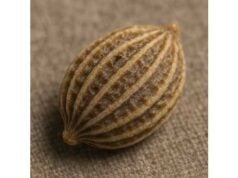
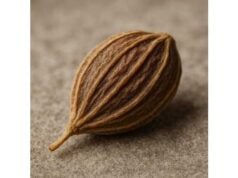
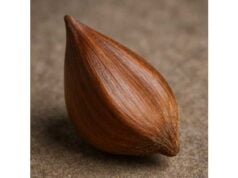
Caraway seeds (from Carum carvi) are small, crescent-shaped fruits with a big culinary personality. Their warm, sweet-earthy flavor with hints of anise and citrus can turn rye bread fragrant, cut the richness of cabbage and cheeses, and give stews, pickles, and sauerkraut a clean finish. In traditional European and Middle Eastern cooking, caraway is a digestive ally—bloomed in fat to start a soup, sprinkled over roasted roots, or brewed as a gentle tea after meals. Nutritionally, the seeds pack concentrated fiber, plant protein, and minerals like iron and magnesium, while their essential oil—rich in carvone and limonene—supplies the signature aroma. Because you use only teaspoons at a time, caraway improves meals more than it moves macros; the payoff is flavor that helps you enjoy more vegetables and balanced, satisfying plates. This guide explains what caraway is, how to get the most from its taste and nutrients, the evidence behind potential benefits, when to use caution, and practical ways to buy, store, and cook it well.
Key Takeaways
- Caraway’s essential oil (carvone, limonene) delivers bright, digestive-friendly flavor that can reduce the need for excess salt and sugar.
- Per 1 teaspoon (≈2 g), calories are minimal while fiber and minerals add up across the week.
- Safety note: culinary amounts are generally well tolerated; concentrated essential oil requires caution and is not the same as using the seed.
- Typical use: ½–1 teaspoon (2–3 g) per dish; enjoy several times per week according to taste and tolerance.
- Avoid or limit if you have a known Apiaceae allergy (e.g., celery, coriander) or if advised to restrict essential oils during pregnancy—stick to small culinary amounts of seed.
Table of Contents
- Detailed Overview
- Nutrition Profile
- Evidence-Based Health Benefits
- Risks, Allergies and Interactions
- Selecting, Quality, Sustainability and Storage
- Preparation, Cooking and Nutrient Retention
- Portions, Comparisons and FAQs
Detailed Overview
What it is and where it comes from
Caraway is a hardy biennial from the parsley family (Apiaceae). The plants thrive in cool climates across Europe and Western Asia and are now cultivated in many regions. The “seeds” are technically dry fruits (schizocarps): narrow, ridged crescents 4–7 mm long. Once mature and dried, they hold volatile oils that release aroma when crushed or warmed.
Flavor, chemistry, and why it matters in cooking
Caraway’s flavor comes primarily from carvone (minty, anise-like) and limonene (citrus-like), plus supporting terpenes. These volatile compounds dissolve well in fat and alcohol, so blooming seeds briefly in butter, ghee, schmaltz, or oil at the start of cooking disperses flavor throughout the dish. Because the profile is bright rather than hot, caraway can make heavy foods—cabbage, potatoes, pork, creamy cheeses—taste lighter. That allows you to use less salt or sugar to achieve balance.
Culinary map
- Central and Eastern Europe: rye breads, sauerkraut, caraway-laced soups and stews, soft cheeses.
- Middle East and North Africa: spice blends, vegetable braises, and pickles.
- Scandinavia: spirits (akvavit) and seed-studded crackers.
- Everyday hacks: toast a pinch for roasted carrots, fold ground seeds into burger mix, or steep a simple caraway tea after meals.
Nutrition in context
Per 100 g, caraway is fiber-dense with meaningful iron, calcium, and magnesium—but home cooks use teaspoons, not handfuls. Think of caraway as a flavor tool that nudges the diet in a healthier direction by making vegetables and whole grains more craveable.
Buying forms
Whole seeds keep aroma longest. Ground caraway is convenient but stales more quickly; buy in small amounts. Caraway essential oil is a concentrated flavoring used in food manufacturing and herbal products; it is not the same as sprinkling seeds into dinner.
Sustainability notes
Caraway grows as a rotation crop that can support soil health and pollinators. Because you use little at a time, waste most often comes from stale spice jars—buy modest quantities and store well.
Nutrition Profile
How to read this section: Values below refer to caraway seeds per 100 g (dry, whole), with % Daily Value (%DV) for a 2,000-kcal diet. Typical portions are much smaller (½–1 tsp ≈ 2–3 g). Numbers can vary by origin and database; treat them as realistic typical values for culinary guidance.
Macros & Electrolytes (per 100 g)
| Nutrient | Amount | %DV |
|---|---|---|
| Energy | 333 kcal | — |
| Protein | 19.8 g | 40% |
| Total fat | 14.6 g | 19% |
| Saturated fat | 0.6 g | 3% |
| Monounsaturated fat | ~8.0 g | — |
| Polyunsaturated fat | ~3.3 g | — |
| Carbohydrate | 49.9 g | 18% |
| Dietary fiber | 38.0 g | 136% |
| Total sugars | ~0.6 g | — |
| Sodium | ~17 mg | 1% |
| Potassium | ~1,350 mg | 29% |
| Water | ~10 g | — |
Fats & Fatty Acids (per 100 g)
| Fatty Acid | Amount |
|---|---|
| Oleic acid (18:1 n-9) | ~7–9 g |
| Linoleic acid (18:2 n-6) | ~2–3 g |
| Alpha-linolenic acid (18:3 n-3) | ~0.2–0.3 g |
| Palmitic + stearic acids | ~0.6–0.8 g |
Interpretation: Caraway is not a high-fat seed. The small fat content is mostly unsaturated and contributes to flavor carriage when seeds are lightly bloomed in fat.
Protein & Amino Acids (per 100 g)
- Protein: ~20 g. As with most seeds, methionine and cysteine help complement legume proteins. In teaspoon-level culinary use, protein contribution is modest.
Vitamins (per 100 g)
| Vitamin | Amount | %DV |
|---|---|---|
| Thiamin (B1) | ~0.38 mg | 32% |
| Niacin (B3) | ~3.6 mg | 23% |
| Vitamin B6 | ~0.36 mg | 21% |
| Folate (DFE) | ~38 µg | 10% |
| Vitamin C | ~20–22 mg | 22–24% |
| Vitamin E (alpha-tocopherol) | ~2 mg | 13% |
| Vitamin A, D, B12 | ~0 | — |
Minerals (per 100 g)
| Mineral | Amount | %DV |
|---|---|---|
| Iron | ~16.0 mg | 89% |
| Calcium | ~689 mg | 53% |
| Magnesium | ~258 mg | 61% |
| Phosphorus | ~568 mg | 45% |
| Zinc | ~5.5 mg | 50% |
| Manganese | ~1.3 mg | 57% |
| Copper | ~0.9 mg | 100% |
| Selenium | ~12 µg | 22% |
Bioactives/Phytonutrients
- Essential oil: chiefly carvone and limonene, with γ-terpinene and p-cymene.
- Polyphenols: phenolic acids and flavonoids in smaller amounts.
- Aroma behavior: volatiles are heat- and time-sensitive; gentle toasting and quick blooming preserve brightness.
Allergens & Intolerance Markers
- Belongs to Apiaceae (celery, coriander, fennel). Pollen-food cross-reactivity is possible in sensitive individuals. Whole-seed culinary use differs from ingesting the essential oil.
Anti-nutrients
- Phytates accompany the mineral density. Small culinary portions and varied diets limit practical impact. Light toasting and fermentation reduce phytates modestly.
Contaminants/Residues
- Quality issues are mostly oxidation (stale aroma) and moisture. Choose fresh stock and protect from light, heat, and air.
Footnote: Values reflect unfortified seeds. Prepared foods (rye bread, pickles) change the profile, usually adding sodium and diluting seed density.
Evidence-Based Health Benefits
1) Flavor that supports healthier patterns
Because caraway is intensely aromatic yet low in calories, it helps you build satisfying dishes with fewer added sugars and less salt. Brightening heavy foods (cabbage, potatoes, cheeses) with a teaspoon of caraway encourages higher vegetable intake and reduces reliance on high-sodium condiments. Strong flavor also enhances satiety signals—meals taste “complete” without extra richness.
2) Digestive comfort in traditional use
Caraway has a long history as a carminative—a culinary aid used with gas-forming foods (beans, brassicas). Mechanistically, volatile terpenes can relax intestinal smooth muscle in model systems and modulate fermentation aromas. In practice, pairing caraway with beans or cabbage and serving the dish warm helps many people tolerate fiber-rich meals better.
3) Antimicrobial and antioxidant activity (food context)
In laboratory and food-application studies, caraway essential oil exhibits antimicrobial effects against a range of bacteria and fungi and shows antioxidant behavior that can modestly stabilize foods. In the kitchen, this explains why caraway is common in pickles and fermented vegetables: it contributes both flavor and a gentle preservative effect when used alongside salt and acid. Remember that essential oil studies use concentrated preparations; culinary seed use gives a subtler—but directionally similar—support to product quality.
4) Mineral “top-ups” over time
While a single teaspoon provides tiny amounts, repeated use across the week provides iron, magnesium, and zinc that add up—especially useful in plant-forward diets. Caraway’s high fiber content per weight also contributes to overall fiber goals when seeds are included across breads, salads, and cooked vegetables.
5) Synergy in blends and fermentation
Caraway plays well with coriander, mustard seed, dill seed, and fennel, as well as with lactic fermentation. In sauerkraut, for example, caraway’s terpenes overlay clean notes on cabbage funk and complement lactic acidity, making fermented vegetables more appealing to new tasters.
Realistic expectations
Caraway is not a cure-all. Its strongest role is culinary: making fiber-rich, plant-forward dishes more delicious so you choose them more often. Any physiologic effects in humans at culinary doses are modest and should be viewed as part of an overall healthy pattern.
Risks, Allergies and Interactions
Culinary seed vs. essential oil
- Seeds: Generally safe in food amounts (½–1 tsp in dishes).
- Essential oil: Highly concentrated; dosing errors are easy. Many products are not standardized for internal use. Unless working with a qualified clinician, avoid ingesting essential oil and keep it away from children.
Allergy and cross-reactivity
Caraway belongs to the Apiaceae family (celery, coriander, fennel). People with known allergies to Apiaceae foods or pollens may react to caraway. Symptoms range from oral itching to gastrointestinal upset; severe reactions are rare but possible. If you have food-pollen syndrome or a history of spice allergies, introduce small amounts under medical advice.
Gastrointestinal sensitivity
Aromatics can aggravate reflux or sensitive stomachs in some people. If spicy aromas bother you, start with ½ teaspoon in a family-size dish and assess tolerance. Crushed seeds are stronger than whole; adjust accordingly.
Pregnancy and lactation
Culinary amounts of seed are widely used in traditional cuisines. The essential oil is a different category and should be avoided internally unless specifically recommended by a clinician. Some traditional systems consider caraway a galactagogue; evidence remains mixed. Prioritize food-level use.
Medications and conditions
- Bile or pancreatic disorders: Aromatic, fat-bloomed dishes can be rich; keep portions modest and monitor tolerance.
- Sodium-restricted diets: Caraway itself is low in sodium, but caraway-heavy foods like rye bread or pickles can be salty—check labels or recipes.
- Topical products: Essential-oil-containing balms can irritate sensitive skin; patch test first.
Quality and purity
Buy from reputable spice merchants. Avoid essential oils marketed with disease claims. Store seeds well to prevent oxidation; stale or rancid notes are a sign to replace the jar.
When to seek care
Hives, swelling, wheeze, throat tightness, or dizziness after eating a caraway-containing food require urgent medical attention.
Selecting, Quality, Sustainability and Storage
Selecting seeds
- Appearance: Look for dry, clean, uniformly brown crescent seeds with intact ridges.
- Aroma: Fresh caraway smells bright and sweet with mint-citrus notes. A flat or dusty aroma means age.
- Form: Whole seeds retain aroma far better than pre-ground. Buy ground only if you’ll use it within a month or two.
Reading labels
- Origin: Common producers include The Netherlands, Poland, Finland, Germany, and Egypt. A recent harvest or best-by date is a plus.
- Processing: Steam-sterilized seeds can reduce microbial load without major flavor loss.
Sustainability snapshot
Caraway often fits well in cool-season rotations, supporting soil structure and biodiversity. The tiny dose per recipe means your footprint is mostly about waste management: buy modest amounts and store well so you use what you purchase.
Storage
- Airtight: Keep in a tightly sealed glass jar.
- Dark & cool: Pantry below 20 °C; for very long storage, refrigerate sealed jars.
- Shelf life: Whole seeds keep best quality 12–18 months; ground, 1–3 months.
- Stale or rancid? Replace. Old seeds taste woody and won’t perfume dishes.
Troubleshooting flavor
- Too strong? Use whole seeds (milder than ground), crush lightly, or cut the amount in half.
- Not enough pop? Bloom in a teaspoon of fat for 20–40 seconds before adding liquids; freshly crush just before cooking.
- Clashing with other spices? Caraway is assertive; pair with coriander, fennel, mustard seed, paprika, and bay. Use sparingly with cumin to avoid muddiness.
Preparation, Cooking and Nutrient Retention
Core techniques
- Bloom the seeds. Warm 1–2 teaspoons of butter, ghee, or oil over medium heat. Add ½–1 teaspoon caraway seeds and cook 20–40 seconds until fragrant. Add aromatics or vegetables.
- Toast dry for baking. Spread seeds on a small pan; toast over low heat 2–3 minutes until aromatic. Cool before folding into doughs.
- Grind fresh. For rubs and dressings, grind or crush just before use; ground caraway releases flavor quickly and fades faster.
- Tea (infusion). Lightly crush ½–1 teaspoon seeds. Steep in hot water 5–8 minutes; strain. Drink warm after meals.
Pairings that shine
- Vegetables: Cabbage, carrots, potatoes, beets, onions, mushrooms.
- Proteins: Pork, turkey, sausages; also lentils and chickpeas.
- Breads & grains: Rye and whole-wheat doughs, barley pilaf, buckwheat.
- Acid & fat: Vinegar, lemon, crème fraîche, yogurt, sour cream—caraway bridges these elements.
Keep nutrients and aroma
- Caraway’s fiber and minerals are stable during normal cooking.
- Aroma is volatile: toast gently, avoid scorching, and add ground seed closer to the end for brightness.
- In fermentation (e.g., sauerkraut), keep seed amounts modest; too much can dominate after a few weeks.
Recipe ideas (portion-savvy)
- Caraway-cabbage skillet: Bloom 1 tsp seeds, add thinly sliced cabbage and onions, splash with vinegar, finish with dill.
- Rye-caraway crackers: Fold 1–2 tsp lightly crushed seeds into dough for 12 crackers; bake crisp and serve with soft cheese.
- Roasted carrots with caraway-orange butter: Toss carrots with olive oil, roast, then finish with a knob of butter bloomed with ½ tsp seeds and orange zest.
- Warm lentil salad: Stir ½ tsp toasted, ground caraway into a mustard-vinegar dressing for cooked lentils and herbs.
What to avoid
- Burning the seeds: Bitter, medicinal flavors overwhelm the dish.
- Treating essential oil like seasoning: It is not interchangeable with seed.
- Old spices: If it doesn’t smell lively, it won’t lift the meal—replace.
Portions, Comparisons and FAQs
How much should I use?
- Start with ½ teaspoon (≈2 g) for a 4-serving dish and adjust to taste. Up to 1 teaspoon is common in cabbage or potato dishes. Because the flavor is potent, a little goes a long way.
How does caraway compare with look-alike spices?
- Cumin: Earthier and warmer; less minty. Cumin suits chili and taco blends; caraway suits European breads, cabbage, and pickles.
- Fennel seed: Sweeter, licorice-like; pair fennel with tomatoes and seafood, caraway with brassicas and grains.
- Dill seed: Sharper and grassy; great in pickles. Caraway is rounder and sweeter.
Is caraway good for digestion?
Many people find it helpful as part of a meal, especially with beans or cabbage. A small after-dinner infusion is a traditional practice. If you have reflux or a sensitive stomach, use modest amounts and observe your own response.
Does it have carbs or calories I should track?
Per teaspoon, calories are minimal and carbs are very low. The big nutrition story is aroma for few calories and fiber that adds up over time in seed-rich breads and vegetable dishes.
Can I use it daily?
Yes—culinary amounts are fine for most healthy adults. Rotate with other spices for variety. If pregnant or managing a medical condition, stick to seed-level use and avoid self-dosing essential oils.
Gluten-free? Low-FODMAP?
Caraway seeds are naturally gluten-free and low in fermentable carbohydrates at culinary amounts. If you’re sensitive to spice aromatics or belong to the Apiaceae-allergy group, adjust accordingly.
Storage quick tips
Buy small jars, store airtight and dark, and crush only what you need. Replace ground caraway every couple of months for peak flavor.
References
- Nutrition Facts for Caraway Seed (2024)
- Antimicrobial, Antioxidant, Anti-Acetylcholinesterase, Antidiabetic, and Pharmacokinetic Properties of Carum carvi L. and Coriandrum sativum L. Essential Oils Alone and in Combination (2021) (Systematic/Experimental Review)
- Caraway as Important Medicinal Plants in Management of Diseases (2019) (Review)
- Safety and efficacy of a feed additive consisting of an essential oil from Carum carvi L. (caraway oil) for all animal species (2024) (Scientific Opinion)
- Scientific Opinion on the safety assessment of carvone, considering all sources of exposure (2014) (Scientific Opinion)
Medical Disclaimer
This guide is for general education and does not replace medical advice, diagnosis, or treatment. If you have allergies, are pregnant or breastfeeding, manage a digestive disorder, or take prescription medications, consult a qualified healthcare professional about the amount and form of caraway that is appropriate for you. If you experience signs of an allergic reaction—hives, swelling, wheezing, throat tightness—seek urgent medical care.
If this article was helpful, please consider sharing it on Facebook, X (formerly Twitter), or any platform you prefer. Your support helps us continue producing careful, evidence-based resources.