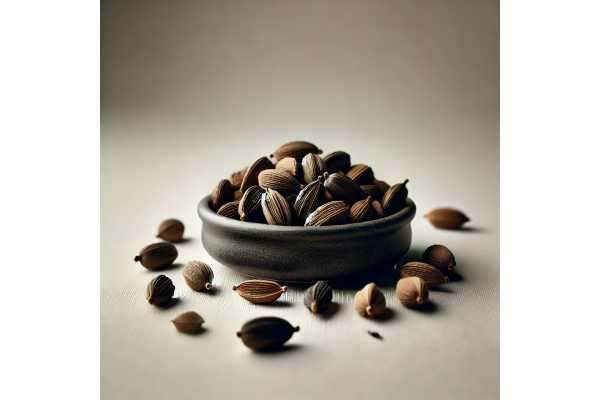
Black cardamom is one of the most distinctive spices in the pantry, yet it often sits in the shadow of its green cousin. Also called large cardamom, it comes from the dried, smoked pods of plants in the Amomum genus, primarily Amomum subulatum. The pods are dark brown to nearly black with a tough, ridged shell that holds aromatic seeds inside. Their flavor is bold and smoky, with resinous, menthol-like notes that stand up well to long cooking.
Traditionally, black cardamom is used in hearty dishes: slow-cooked curries, rice pilafs, lentil stews, and spice blends for meat. It is also valued in some herbal traditions for respiratory and digestive support. Nutritionally, the pods contain fiber, minerals, and a complex mix of essential oils and other phytochemicals that show antioxidant, antimicrobial, and metabolic effects in experimental studies.
This article explains what black cardamom is, how it differs from green cardamom, its nutrient and compound profile, what research suggests about potential benefits, and how to use it safely and effectively in cooking and wellness routines.
Quick Overview for Black Cardamom
- Black cardamom pods add intense smoky, camphor-like aroma to slow-cooked dishes while contributing fiber, minerals, and aromatic oils in small amounts.
- Active components such as 1,8-cineole, limonene, and other terpenes may support respiratory comfort, digestive function, and antioxidant defenses when used appropriately.
- A practical culinary range is about 1–4 whole pods (or 0.5–2 g seeds) in a family-size dish, or 1–2 pods infused in 250–300 ml liquid, used several times per week.
- People with gallbladder disease, stone-related biliary problems, or known cardamom allergy should be cautious, especially with concentrated extracts or large amounts.
- Black cardamom should be stored whole in airtight containers and discarded if it smells rancid, moldy, or has visible damage to avoid spoilage and quality loss.
Table of Contents
- Black Cardamom History and Kitchen Uses
- Black Cardamom Nutrients and Key Compounds
- Research on Black Cardamom Health Effects
- Safety Concerns Allergies and Interactions
- Buying High Quality Black Cardamom
- Cooking with Black Cardamom for Flavor
- Black Cardamom Serving Guidance and FAQs
Black Cardamom History and Kitchen Uses
Black cardamom comes mainly from the eastern Himalayas and surrounding regions, where it has been cultivated for centuries in cool, moist forested slopes. Unlike green cardamom, which belongs to a different genus and has a bright, floral sweetness, black cardamom pods are larger, rougher, and processed very differently. After harvest, the fresh capsules are traditionally dried over open fires or in smoke-filled curing houses, which gives them their signature smoky aroma.
Historically, black cardamom has been an important spice in the cuisines of Nepal, Bhutan, northeast India, and parts of China. From there it spread into broader South Asian and Central Asian cooking, where it is often known as badi elaichi or large cardamom. It appears prominently in some versions of garam masala and other spice blends designed for robust, slow-cooked dishes.
In the kitchen, black cardamom is usually used whole or slightly crushed rather than finely ground. Common uses include:
- Adding whole pods to long-simmered meat curries, lentil dishes, and hearty vegetable stews where the spice has time to mellow and penetrate.
- Including pods in rice dishes such as biryani or pulao along with cloves, cinnamon, and bay leaves to create a layered, aromatic base.
- Using black cardamom in certain chai blends or herbal-style infusions, where its menthol-like cooling note contrasts with the warmth of ginger and cinnamon.
- Incorporating seeds into marinades and spice rubs when a smoky depth is desired without the sweetness of green cardamom.
Black cardamom’s flavor is powerful and less suited to delicate desserts or light dishes. Many cooks treat it almost like a cross between cardamom and a mild smoked spice. It pairs well with red meats, mushrooms, root vegetables, and legumes, and it can stand up to strong flavors such as garlic, onion, and chili.
One of its key roles is structural: it anchors the aromatic backbone of a dish. While green cardamom lifts flavors upward with floral and citrus notes, black cardamom tends to pull them deeper, adding bass notes and a sense of body. This makes it particularly useful in cold-weather dishes and recipes that rely on slow moist heat, where its more resinous, medicinal notes have time to integrate fully.
As global cooking becomes more adventurous, black cardamom is also appearing in new contexts, such as in smoked-style barbecue rubs, braised vegetable dishes, and even in some modern cocktails and non-alcoholic drinks. Used carefully, it can provide a distinctive signature that sets a dish apart without overpowering everything around it.
Black Cardamom Nutrients and Key Compounds
From a nutritional perspective, black cardamom is a dense seed spice, similar in broad outline to other cardamoms. Per 100 g of dried pods or seeds, it provides a few hundred kilocalories, mostly from carbohydrates and fats, along with significant amounts of protein and fiber. In practice, however, the amounts used in cooking are much smaller—typically a few grams or less per dish—so its role is more about micronutrients and phytochemicals than macronutrient supply.
Carbohydrates in black cardamom are largely complex, with a notable proportion as dietary fiber. A small amount of fiber comes along with each pod used in a dish, which is modest in absolute terms but still counts toward overall intake, especially when black cardamom is used regularly in legume- and vegetable-heavy meals.
Mineral content is where cardamom seeds stand out more clearly:
- They are relatively rich, per weight, in manganese, a trace mineral important in antioxidant enzyme systems and connective tissue health.
- Iron levels are noteworthy, though culinary amounts contribute only a small fraction of daily needs.
- Magnesium, calcium, potassium, and zinc are also present in meaningful concentrations for such a small ingredient.
Again, the tiny serving size means that black cardamom is a supportive rather than primary mineral source, but it adds to the cumulative micronutrient diversity of a spice-rich diet.
What makes black cardamom especially interesting is its complex array of volatile and non-volatile phytochemicals. These include:
- Essential oils, with major components such as 1,8-cineole (eucalyptol), limonene, terpinyl acetate, and other monoterpenes and sesquiterpenes. These contribute to the smoky, camphor-like aroma and have been associated with antioxidant, antimicrobial, and respiratory effects in experimental settings.
- Phenolic compounds and flavonoids, which help account for measured antioxidant capacity and possible anti-inflammatory actions in laboratory studies.
- Fixed oils (fatty acids) such as oleic and linoleic acids, which provide energy and may play a minor role in the spice’s physiological actions.
The drying and smoking process used for black cardamom changes its chemical profile compared with green cardamom. Some delicate floral notes are lost, while smoky compounds and certain resinous terpenes increase. This creates a different balance of aroma and potentially a somewhat different pattern of biological activity, although many broad categories of compounds overlap between the two types.
Processing and storage strongly influence this profile. Essential oils are sensitive to light, heat, and air. Whole pods protect the seeds quite well, while cracked or ground material loses aroma more quickly as volatile compounds evaporate or oxidize. Prolonged high temperatures can degrade both aromatic oils and some phenolic compounds, although many remain stable enough to survive typical cooking.
In everyday terms, black cardamom is best thought of as:
- A very low-calorie ingredient at normal usage levels.
- A modest contributor of fiber and minerals when used regularly.
- A concentrated source of aromatic oils and other phytochemicals that give it both its intense flavor and its potential functional properties.
This combination sets the stage for understanding how black cardamom might affect digestion, metabolism, and respiratory comfort, particularly in light of research on large cardamom and cardamom more broadly.
Research on Black Cardamom Health Effects
When looking at health effects, it is important to distinguish between black cardamom (large cardamom in the Amomum genus) and green cardamom (Elettaria genus). Many modern clinical studies investigate green cardamom, while a growing number of experimental and review papers focus specifically on Amomum subulatum and related large cardamom species. Together, they offer a picture of potential benefits but also clear limits to current knowledge.
Digestive and gastrointestinal support
Large cardamom has long been used in traditional systems for indigestion, vomiting, abdominal cramps, and loss of appetite. Experimental studies on extracts from black cardamom fruits show antispasmodic and carminative actions in smooth muscle models, which aligns with these traditional uses. The essential oil, rich in 1,8-cineole and other terpenes, appears to modulate intestinal motility and may help reduce gas and cramping in animal experiments.
In human settings, there are combination herbal formulations that include black cardamom along with other digestive herbs. These have reported improvements in bloating and discomfort, though it is difficult to ascribe effects to cardamom alone. Still, sipping mild cardamom-based infusions after heavy meals is a long-standing practice that many people find soothing.
Respiratory and antimicrobial effects
The resinous, camphor-like profile of black cardamom reflects components also found in some respiratory remedies, such as 1,8-cineole. Experimental work indicates that large cardamom fruits and oils have antimicrobial activity against several bacterial and fungal strains, and may support mucus clearance and bronchodilation in animal or in vitro models. In traditional use, black cardamom is sometimes incorporated into preparations for coughs, congestion, or general chest comfort.
These findings suggest a plausible basis for black cardamom’s role as a supportive respiratory spice, especially in warm broths and teas. However, rigorous clinical trials in humans are still limited, and it should not be treated as a replacement for prescribed respiratory medicines.
Antioxidant, metabolic, and cardiovascular aspects
Both black and green cardamom show antioxidant capacity in laboratory assays. Large cardamom fruits contain phenolic compounds and essential oils that can neutralize free radicals and influence oxidative pathways. Reviews on Amomum subulatum describe potential anti-inflammatory, lipid-lowering, and glucose-modulating effects in experimental models.
Clinical trials in humans have more commonly used green cardamom, often in capsule form, for people with pre-diabetes, fatty liver, or metabolic syndrome. In these studies, cardamom supplementation over several weeks has been associated with improvements in selected metabolic markers, such as blood lipids, inflammatory indices, and insulin sensitivity. A recent meta-analysis of randomized trials found that cardamom consumption may support improvements in cardiovascular-related biomarkers, though the number of studies and participants remains modest.
While these results do not directly prove that black cardamom used in cooking will deliver the same magnitude of benefit, they support the idea that cardamom as a spice family has meaningful biological activity. Large cardamom, with its overlapping but distinct phytochemical profile, likely shares some of these actions and may contribute to an overall pattern of healthier cooking when used to season plant-rich, minimally processed meals.
Anticancer and broader protective potential
Recent reviews and experimental work highlight large cardamom’s potential anticancer activity, with extracts demonstrating effects on cell growth, apoptosis (programmed cell death), and oxidative stress in cell and animal models. Similar exploratory findings exist for other chronic conditions. At this stage, however, such data should be viewed as early-stage scientific exploration rather than as a basis for therapeutic use.
In summary, research suggests that black cardamom and related cardamoms:
- Support digestive and respiratory comfort in traditional and experimental contexts.
- Exert antioxidant and anti-inflammatory effects in laboratory models.
- May contribute to improved metabolic and cardiovascular markers, drawing especially on studies with green cardamom supplements.
For everyday use, black cardamom is best seen as a supportive spice that can fit into a health-conscious diet, not as a stand-alone treatment. Individuals considering concentrated extracts or medicinal dosing should do so under professional guidance.
Safety Concerns Allergies and Interactions
Black cardamom is considered safe for most healthy adults when used as a culinary spice in typical quantities. However, as with many potent aromatic plants, certain risks and special situations need attention, particularly when moving beyond food-level use into concentrated extracts or oils.
Digestive tract and gallbladder issues
At normal cooking levels, black cardamom is generally gentle on the digestive system and may even support comfort. In higher doses, though, strong teas or extracts can irritate sensitive stomachs, potentially causing nausea or cramping. People with active gastritis, peptic ulcers, or very sensitive digestion should introduce black cardamom gradually and monitor their response.
Large cardamom also has documented effects on bile flow and gallbladder function in some experimental and clinical observations. Because of this, individuals with known gallstones, obstruction of the bile ducts, or acute gallbladder inflammation should be cautious with concentrated cardamom products. Culinary use of a few pods in a shared dish is unlikely to cause problems for most, but high-dose supplements or medicinal formulas may not be appropriate in such conditions without medical supervision.
Allergy and cross-sensitivity
Cardamom allergy is uncommon but possible. Symptoms may include oral itching or burning, swelling of lips or tongue, hives, or, rarely, more serious reactions. People who have reacted to green cardamom, mixed spice blends, or certain herbal teas may be sensitive to black cardamom as well, since some allergens and essential oil components overlap.
Cardamom belongs to the Zingiberaceae family, along with ginger and turmeric. While cross-reactivity within this family is not as well documented as in some other plant families, individuals with multiple spice allergies should be particularly alert. Any history of spice-induced hives, swelling, or breathing difficulty warrants professional assessment and clear guidance on which spices to avoid.
Pregnancy, breastfeeding, and children
Normal culinary use of cardamom pods in food is generally considered acceptable during pregnancy and breastfeeding for most individuals, as long as there is no allergy or specific medical restriction. However, safety data on concentrated large cardamom oils and extracts in these life stages are limited.
Because essential oils are highly concentrated and can have uterine or hormonal effects in some plants, it is prudent for pregnant or breastfeeding people to avoid medicinal doses of black cardamom or multi-herb formulas containing large amounts of cardamom oil unless these are explicitly recommended and supervised by a qualified clinician.
For children, especially infants, black cardamom-flavored foods in small amounts are usually safe once they are eating a varied diet. Strong cardamom teas, capsules, or essential oils should not be given to young children without pediatric guidance.
Interactions with medications and other supplements
Cardamom’s essential oils and other constituents can influence digestive motility, bile flow, and certain enzyme systems. While food-level use rarely causes significant drug interactions, concentrated extracts may alter how some medications are absorbed or processed, especially medicines that depend on predictable bile flow, liver metabolism, or gut transit time.
People taking multiple prescription medications—for blood pressure, blood sugar, cholesterol, blood thinning, or serious chronic conditions—should consult their healthcare team before adding high-dose cardamom supplements or therapeutic formulas that include black cardamom.
General precautions
As with other spices, quality and storage influence safety. Moldy, rancid, or contaminated cardamom should be discarded. Essential oils should never be applied undiluted to skin or mucous membranes and should not be ingested without clear professional dosing instructions.
For most healthy adults, using black cardamom in home cooking a few times a week is a safe and enjoyable practice. The main safety concerns arise when moving into medicinal doses, concentrated extracts, vulnerable populations, and complex medical situations.
Buying High Quality Black Cardamom
The quality of black cardamom you buy has a strong impact on flavor, aroma, and potential functional value. Fresh, well-cured pods are intensely aromatic and pleasantly smoky, while low-grade or old stock can taste harsh, flat, or musty.
What to look for in whole pods
When choosing black cardamom, pay attention to:
- Appearance: Pods should be relatively large, plump, and deeply ridged, with a dark brown to black exterior. Excessively shriveled, broken, or very pale pods may signal poor handling or age.
- Aroma: Good black cardamom smells distinctly smoky, resinous, and slightly menthol-like, with a warm underlying spice. A dull, dusty, or moldy odor is a sign to avoid.
- Texture: The shell should feel firm and dry but not powdery. A little surface oiliness can be normal but obvious moisture, stickiness, or soft spots may indicate improper storage.
- Seeds inside: If you open a pod, the seeds should be dark brown to black, firm, and strongly aromatic. Pale or crumbly seeds suggest oxidation or very old stock.
Whenever possible, buy from suppliers with good turnover, so the pods have not sat on the shelf for years. Markets specializing in South Asian or Middle Eastern ingredients often have lively spice sections, which can be a good sign. Transparent packaging allows visual inspection, but opaque or dark containers protect aroma better; there is a trade-off.
Whole pods versus ground cardamom
Black cardamom is best purchased as whole pods. The tough shell protects the volatile oils in the seeds. Ground black cardamom powder is more convenient but loses aroma quickly once exposed to air.
If you do buy ground black cardamom:
- Choose small packages you can finish within a few months.
- Make sure the powder is dark and smells clearly of smoke and cardamom, not just generic spice.
- Store it well sealed and away from light and heat.
Many cooks prefer to grind seeds themselves just before use. To do this, you crack the pod, remove the seeds, and grind them in a mortar or spice grinder. This approach offers the strongest flavor and the most control over texture.
Sustainability and origin
Black cardamom cultivation is concentrated in parts of the Himalayas and neighboring regions, where it can be an important cash crop. Farming practices, worker conditions, and environmental impacts vary. Where information is available, you can consider:
- Supporting producers or brands that share details about origin, smallholder support, and sustainable agricultural practices.
- Choosing organically grown cardamom when feasible to reduce exposure to synthetic pesticides and encourage soil-friendly methods.
- Buying only what you expect to use within about a year, minimizing waste.
Storage at home
Once you have good-quality black cardamom, store it carefully:
- Keep whole pods in an airtight jar or tin in a cool, dry, dark place, away from the stove and direct sunlight.
- Avoid repeated exposure to steam and humidity, which can encourage mold and degrade aroma.
- Do not refrigerate pods unless your climate is extremely hot and humid, and even then ensure containers are well sealed to prevent condensation.
- Check periodically for signs of insects, mold, or off smells, and discard any pods that show problems.
Handled like this, whole black cardamom pods can retain much of their aroma for many months, making them a reliable anchor spice in slow-cooked dishes and blends.
Cooking with Black Cardamom for Flavor
Cooking effectively with black cardamom is about respect for its intensity. The pods are powerful, and a little goes a long way. With a few straightforward techniques, you can harness their deep, smoky warmth without overwhelming a dish.
Using whole pods in slow cooking
The most common method is to add whole pods to dishes that cook for an extended time:
- Lightly crush each pod with the side of a knife or a rolling pin to expose some of the seeds while keeping most of them inside.
- Add the pods to hot oil or ghee at the beginning of cooking, along with whole spices like cloves, cinnamon, and bay leaves.
- Let them fry briefly until fragrant, then add onions, garlic, and other base ingredients.
- Leave the pods in during simmering so their flavor infuses the liquid. Remove them before serving if you prefer not to bite into them.
This technique works well for meat curries, lentil stews, chickpea dishes, and vegetable braises. Over an hour or more of cooking, the smoky notes soften and deepen, integrating into the overall flavor profile.
Combining with other spices
Black cardamom rarely appears alone. It plays well with:
- Warming spices such as cinnamon, cloves, black pepper, and nutmeg.
- Earthy spices like cumin, coriander, and fenugreek.
- Aromatics such as ginger, garlic, onion, and shallots.
In many garam masala formulas, black cardamom provides a dark, smoky backbone that supports brighter accents from green cardamom and coriander. When formulating your own spice blends, start with a modest amount of black cardamom relative to other spices and adjust gradually.
Infusions and drinks
Although green cardamom is more common in sweet and hot drinks, black cardamom can be used in certain infusions:
- A pod or two added to a spiced tea (chai) with ginger, cinnamon, and cloves can contribute depth and a cooling counterpoint.
- Lightly crushed pods steeped in hot water with honey and lemon create a robust, aromatic drink that some people enjoy during cold weather.
Because the flavor is intense, it is usually best to combine black and green cardamom or use smaller amounts of black cardamom in beverages.
Managing nutrient and aroma retention
Most of black cardamom’s nutrients are not particularly fragile in the amounts used, but its aromatic oils can be lost with inappropriate handling:
- Long boiling is acceptable in slow stews, but avoid frying cracked seeds at very high temperatures for extended periods, which can create harsh or burnt flavors.
- Adding pods early in cooking builds depth; adding a small amount of freshly ground seeds later can lift aroma without changing the basic structure of the dish.
- When making infusions, keep the pot or cup partially covered to minimize evaporation of volatile compounds.
Balancing intensity
Beginners sometimes overuse black cardamom, leading to a dish that tastes medicinal or overly smoky. To avoid this:
- Start with one pod in a dish serving four people if you are unsure, and increase only after tasting the result.
- Combine black cardamom with green cardamom when you want both depth and brightness, allowing the gentler spice to keep the profile in balance.
- Use it primarily in dishes with enough body—legumes, grains, meats, or robust vegetables—rather than in very light preparations.
With practice, black cardamom becomes a powerful tool for creating signature flavors in your cooking, especially in cool-weather or slow-cooked meals.
Black Cardamom Serving Guidance and FAQs
Because black cardamom is so intense, sensible serving ranges focus on flavor balance, digestive comfort, and the distinction between everyday culinary use and more concentrated intake.
Typical culinary serving ranges
For most adults, comfortable ranges in household cooking are:
- Whole pods in dishes: About 1–4 pods for a pot serving four people, depending on their size and the richness of the recipe. Rich meat curries might tolerate more; delicate dishes usually need less.
- Seeds for grinding: Roughly 0.5–2 g (about ¼–1 teaspoon of seeds) in a shared dish or spice blend.
- Infusions and teas: One or two lightly crushed pods in 250–300 ml of hot water, often combined with other spices, once or sometimes twice per day.
These ranges are guidelines rather than strict limits. Many traditional dishes use similar amounts safely over long periods. However, individual sensitivity varies, so paying attention to how you feel after black-cardamom-heavy meals is important.
How often can you use black cardamom?
Most healthy adults can include black cardamom in cooking several times per week without difficulty. In regions where it is a staple, it may appear daily in small amounts. If you are new to it, starting with once or twice a week and gradually increasing as desired lets you gauge tolerance and preference.
Black cardamom versus green cardamom
Although they share a name, black and green cardamom differ in several ways:
- Flavor: Green cardamom is bright, citrusy, and floral; black cardamom is smoky, resinous, and more robust.
- Uses: Green cardamom suits desserts, light teas, and delicate dishes; black cardamom anchors heavy curries, rice, and stews.
- Processing: Green cardamom is usually dried without smoke; black cardamom is smoke-cured, changing its chemistry and aromatics.
- Research focus: Many modern human trials use green cardamom; black cardamom research is more common in experimental and regional studies.
They are not interchangeable in recipes; substituting one for the other will change the character of a dish.
Frequently asked questions
Does black cardamom help with digestion?
Traditional use and experimental work suggest that large cardamom can ease gas, mild cramping, and a sense of heaviness after meals. Many people find that dishes or teas containing black cardamom feel more digestible, especially when the overall meal includes plenty of fiber and moderate fat. However, it is not a cure for serious digestive disease, and individual responses vary.
Can black cardamom support heart and metabolic health?
Some human studies with cardamom supplements, mostly using green cardamom, have reported improvements in markers such as blood pressure, lipids, and certain inflammatory indicators in people with metabolic risk factors. Large cardamom shares many categories of bioactive compounds, and experimental work on Amomum species supports antioxidant and metabolic effects. Still, using black cardamom in cooking should be viewed as part of an overall healthful pattern rather than a targeted therapy in itself.
Is black cardamom suitable for people with high blood pressure?
At normal culinary doses, black cardamom is unlikely to raise blood pressure and may fit comfortably into heart-conscious diets, especially when used to season minimally processed foods. If you are on blood pressure medication or using cardamom supplements, talk with your healthcare provider before taking concentrated cardamom products, as combined effects may require monitoring.
Who should limit or avoid black cardamom?
It is prudent to be cautious, and to seek personalized advice, if you:
- Have known cardamom allergy or strong reactions to spice blends.
- Live with gallstones, bile duct obstruction, or other serious gallbladder or biliary disease.
- Are pregnant or breastfeeding and considering cardamom in medicinal doses rather than simple food seasoning.
- Are giving herbs to infants or young children, or taking multiple prescription medications and thinking about cardamom supplements.
For most others, black cardamom is safe in cooking and can add both pleasure and variety to your diet.
References
- Technology, Chemistry and Bioactive Properties of Large Cardamom (Amomum subulatum Roxb.) 2016 (Review)
- Amomum subulatum: A Treasure Trove of Anti-Cancer and Other Health Beneficial Phytochemicals 2023 (Experimental Review)
- Nutritional Composition of Cardamom (Elettaria cardamomum) Seed Cultivated in Ethiopia 2020 (Nutrient Analysis)
- Cardamom Consumption May Improve Cardiovascular Metabolic Biomarkers in Adults: A Systematic Review and Meta-Analysis of Randomized Controlled Trials 2025 (Systematic Review and Meta-analysis)
- Cardamom – Drugs and Lactation Database (LactMed) 2025 (Safety Monograph)
Medical Disclaimer
The information in this article is intended for general educational purposes only and does not replace personalized medical advice, diagnosis, or treatment. Black cardamom and other herbal products can affect individuals differently, especially in the presence of digestive disorders, gallbladder or liver disease, allergies, pregnancy, breastfeeding, childhood, or complex medication regimens. Always consult a qualified healthcare professional before using black cardamom in medicinal amounts, taking cardamom-containing supplements, or relying on any spice or herb for the prevention or management of health conditions. If you notice troubling symptoms after consuming black cardamom, seek timely medical evaluation.
If you found this guide useful, you are warmly invited to share it on Facebook, X (formerly Twitter), or any platform you prefer. Sharing supports wider access to balanced, carefully researched nutrition content and helps our team continue creating detailed, high-quality articles.