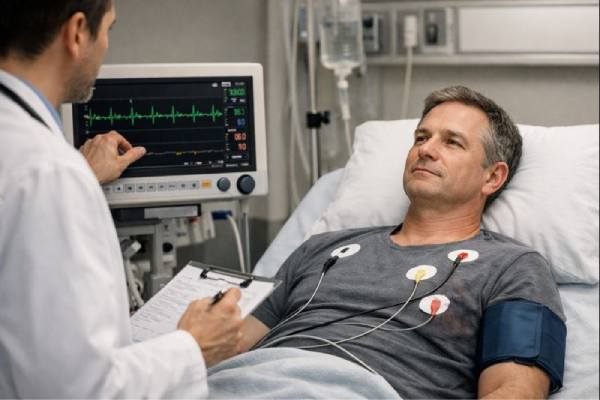
A cardiac contusion is a bruise of the heart muscle caused by blunt force to the chest. It most often occurs after high-energy trauma—such as a car crash, a fall from height, or a direct blow during sports—and it sits on a spectrum called blunt cardiac injury. Some contusions are mild and heal with observation, while others disrupt the heart’s electrical system or pumping strength and can become dangerous within hours. The challenge is that symptoms can be subtle or blamed on rib and chest wall pain, yet a serious rhythm problem may appear suddenly. Clinicians focus on rapid screening with heart rhythm testing, targeted blood work, and monitoring when needed, while also treating other injuries that commonly travel with chest trauma. This article explains what cardiac contusion is, who is at risk, how it is diagnosed, and what treatment and recovery usually look like.
Table of Contents
- What a cardiac contusion is and what it does to the heart
- Causes and risk factors after blunt chest trauma
- Symptoms, complications, and warning signs
- How cardiac contusion is diagnosed in the ER
- Treatment options and what recovery involves
- Home management, follow-up, and when to seek urgent care
What a cardiac contusion is and what it does to the heart
A cardiac contusion is a trauma-related injury to the heart muscle that behaves like a bruise elsewhere in the body—except the heart is a moving electrical pump, so even a “bruise” can matter. The term is often used interchangeably with myocardial contusion, and it is commonly discussed under the broader umbrella of blunt cardiac injury (BCI). That spectrum ranges from minor, clinically quiet injury to life-threatening problems such as chamber rupture, valve disruption, or severe pump failure.
When blunt force hits the chest, the heart can be injured in a few ways. It may be compressed between the sternum and the spine, jolted by sudden deceleration, or strained by a sharp rise in pressure inside the chest. The right ventricle sits closest to the sternum and is often the most exposed, but any chamber can be affected depending on the mechanism and angle of impact.
Inside the heart muscle, a contusion can cause:
- Local inflammation and small areas of bleeding within the muscle fibers
- Temporary “stunning” that weakens contraction in a segment of the heart wall
- Irritability of the electrical system, raising the risk of abnormal rhythms
This explains why the two biggest clinical concerns are dysrhythmias (dangerous rhythm changes) and hemodynamic instability (low blood pressure or poor organ perfusion). Most contusions do not cause permanent damage, but the first 24–48 hours after injury are treated with respect because that is when rhythm problems and decompensation are most likely to appear.
A useful distinction is between symptoms from the chest wall and symptoms from the heart itself. Rib fractures, bruised muscles, and sternal pain can be intense and can make breathing shallow, which may mimic “cardiac” shortness of breath. Clinicians look for clues that the heart is involved: unexpected low blood pressure, fainting, persistent palpitations, new ECG changes, or signs of poor circulation that do not fit the visible injuries.
In short, cardiac contusion is not defined by one perfect test. It is defined by context (significant blunt chest trauma) plus objective evidence that the heart’s rhythm or function is affected. That is why screening and monitoring strategies are so central to safe care.
Causes and risk factors after blunt chest trauma
Cardiac contusion is most likely after high-energy blunt chest trauma, especially when force is delivered directly over the sternum or when the body stops abruptly while internal organs keep moving. The injury is less about a single “cause” and more about a combination of mechanical factors: impact intensity, direction, speed change, and the patient’s underlying heart vulnerability.
Common causes
The most frequent scenarios include:
- Motor vehicle collisions, particularly with steering wheel impact, airbag deployment injuries, or significant seatbelt force across the chest
- Pedestrian or cyclist struck by a vehicle
- Falls from height, especially with direct chest impact on landing
- Crush injuries (heavy object compressing the chest)
- Sports collisions (for example, tackle injuries, high-speed contact sports)
- Blast or pressure-wave injuries, which can transmit force through the chest
Risk factors that raise suspicion
Not everyone with chest trauma needs extensive cardiac testing. Clinicians become more concerned when the mechanism or associated injuries suggest significant force to the chest or potential strain on the heart. Common risk factors include:
- High-speed deceleration (highway-speed crash, major fall)
- Sternal fracture or multiple rib fractures, especially with significant chest wall bruising
- Pulmonary contusion (bruised lung) or large chest wall injury, which often travels with strong blunt force
- Hypotension not explained by bleeding elsewhere
- New arrhythmia or abnormal heart rate pattern on initial monitoring
- Persistent chest pain out of proportion to rib or muscle tenderness, particularly when paired with palpitations or dizziness
Patient factors that can influence severity
The same trauma can have different effects depending on the person. Risks may be higher or consequences more serious when there is:
- Known coronary artery disease or prior heart attack, because scarred muscle can be more irritable electrically
- Heart failure or cardiomyopathy, where the pumping reserve is already limited
- Implanted devices (pacemaker or defibrillator), which may need evaluation after strong impact
- Blood thinners, which can worsen bleeding risk around injuries, though contusion-related bleeding inside the heart muscle is not the same as external hemorrhage
A practical takeaway for patients and families
If the event involved a major blow to the chest or a high-speed stop, it is reasonable to expect that clinicians will at least perform heart rhythm screening and consider short-term monitoring depending on findings. A normal evaluation early is reassuring, but it should be paired with clear discharge advice—because delayed symptoms like palpitations or fainting deserve prompt reassessment.
Symptoms, complications, and warning signs
Cardiac contusion can be tricky because symptoms often overlap with general trauma complaints. Some people have no heart-specific symptoms at all, while others develop clear warning signs. The key is to recognize which symptoms are expected from chest injury and which suggest the heart is electrically or mechanically unstable.
Common symptoms
Symptoms may begin immediately or within the first day and can include:
- Chest pain or pressure, sometimes hard to distinguish from rib or sternal pain
- Shortness of breath, which may come from pain-limited breathing, lung bruising, or heart dysfunction
- Palpitations, a fluttering or racing heartbeat
- Lightheadedness, near-fainting, or fainting (syncope)
- Fatigue and weakness, especially if blood pressure is low
It is normal for trauma patients to feel sore, anxious, and winded. What raises concern is a pattern that suggests reduced blood flow or unstable rhythm—especially when symptoms are not proportional to the visible injuries.
Most important complications
Complications generally fall into rhythm problems, pump problems, and structural problems.
- Arrhythmias (rhythm disturbances): These are among the most common clinically important findings. They can range from extra beats to atrial fibrillation to ventricular tachycardia. Some are brief and harmless; others can reduce blood pressure or become life-threatening.
- Myocardial dysfunction: A contused segment may contract poorly, leading to reduced overall pumping, shortness of breath, fluid in the lungs, or low blood pressure—especially in people with limited baseline cardiac reserve.
- Conduction abnormalities: Injuries can disturb how electrical signals travel, producing new blocks or significant slowing.
- Rare structural injuries: While not the typical “contusion” picture, blunt trauma can also cause valve injury, septal rupture, coronary artery injury, or cardiac tamponade from bleeding into the pericardial sac. These are less common but must be identified quickly.
Warning signs that need urgent attention
After chest trauma, seek urgent evaluation if any of the following occur:
- Fainting, near-fainting, or sudden severe dizziness
- New sustained palpitations, especially with weakness or chest pressure
- Shortness of breath at rest, bluish lips, or inability to speak full sentences
- Chest pain that feels crushing, spreading, or paired with sweating or nausea
- New confusion, extreme sleepiness, or signs of poor circulation (cold clammy skin)
Why timing matters
Many clinically meaningful rhythm issues appear within the first 24–48 hours. That is why an initial normal check is reassuring, but clinicians may still recommend observation for those with abnormal ECG findings, elevated cardiac markers, or unstable vitals. For patients discharged home, the goal is not to create fear—it is to make sure delayed warning signs trigger a fast return to care rather than being dismissed as “just bruising.”
How cardiac contusion is diagnosed in the ER
Diagnosis is less about labeling a bruise and more about answering a safety question: Is the heart at risk for dangerous rhythm changes or pump failure after this trauma? Because there is no single perfect test, clinicians use a layered approach that starts simple and escalates only when findings justify it.
Step 1: ECG and continuous rhythm monitoring
The first-line test is a 12-lead electrocardiogram (ECG). It can reveal:
- New rhythm problems (atrial fibrillation, frequent premature beats)
- Conduction changes (bundle branch block, AV block)
- Ischemic-appearing patterns that may signal coronary injury or coincidental heart attack
An ECG is quick, inexpensive, and strongly influences next steps. In many protocols, a normal ECG at presentation is a major reassuring sign—especially when paired with normal cardiac biomarkers.
Step 2: Cardiac biomarkers, usually troponin
Clinicians often check cardiac troponin to look for myocardial injury. Troponin can be elevated from a contusion, but it can also rise from other stress states in severe trauma. What matters clinically is how troponin results align with symptoms, ECG findings, and the overall injury picture.
A common real-world pattern is:
- Normal ECG and normal troponin: low likelihood of clinically significant blunt cardiac injury, assuming no other concerning features
- Abnormal ECG or elevated troponin: increased concern, often leading to monitored observation and repeat testing
Step 3: Echocardiography when there are concerning features
Echocardiography is typically used when there is hemodynamic instability, persistent arrhythmia, unexplained low blood pressure, or suspicion of structural injury. It helps evaluate:
- Overall pumping function and regional wall motion abnormalities
- Pericardial effusion and tamponade physiology
- Major valve disruption or septal defects
- Volume status and other shock clues
A normal echocardiogram does not erase all risk, but it provides crucial information when the patient’s condition is unstable or when the diagnosis needs clarification.
Step 4: Imaging for associated injuries and special scenarios
Many patients with suspected contusion are already receiving chest imaging for trauma. CT scanning can identify rib fractures, lung bruising, and major vascular injury. In selected cases—especially when ECG changes suggest ischemia or there is persistent shock—clinicians may pursue more specialized evaluation to differentiate contusion from coronary injury.
Observation decisions and what “monitoring” means
When monitoring is recommended, it usually means:
- Telemetry (continuous ECG monitoring) for a defined period, often 24–48 hours depending on risk
- Repeat ECGs and possibly repeat troponin
- Rapid treatment if a significant arrhythmia appears
For patients and families, the most helpful question to ask is: “What finding made you recommend monitoring—ECG changes, troponin elevation, symptoms, or blood pressure concerns?” Clear reasoning makes the plan easier to follow and reduces unnecessary anxiety.
Treatment options and what recovery involves
Most cardiac contusions are treated with supportive care and careful monitoring, not surgery. The treatment plan focuses on preventing complications, addressing arrhythmias promptly, supporting blood pressure and oxygenation, and treating the other injuries that often coexist after blunt chest trauma.
Immediate treatment priorities
In the acute setting, clinicians typically focus on:
- Stabilizing breathing and oxygenation, especially if there are rib fractures or lung contusions
- Pain control, because severe chest wall pain can limit breathing and worsen oxygen levels
- Continuous rhythm monitoring when risk is meaningful
- Targeted fluid and blood pressure support, avoiding both under-resuscitation and fluid overload
Managing arrhythmias
Arrhythmia treatment depends on the rhythm and the patient’s stability:
- Benign extra beats may require observation and correction of triggers like low oxygen, pain, or electrolyte abnormalities.
- Sustained tachyarrhythmias that reduce blood pressure are treated urgently, often following standard advanced cardiac life support pathways.
- Bradycardia or conduction blocks may improve as inflammation settles, but severe block with instability may require temporary pacing in selected cases.
A practical point is that trauma patients often have multiple arrhythmia triggers—pain, catecholamine surge, hypoxia, blood loss—so treatment frequently includes fixing those drivers rather than focusing only on the rhythm itself.
When heart function is reduced
If echocardiography shows reduced pumping function or regional wall motion abnormalities, care may include:
- Careful blood pressure support to maintain organ perfusion
- Avoiding medications that depress heart function unless clearly necessary
- In some cases, consultation with cardiology for tailored management
Clinicians also consider whether ECG changes and wall motion patterns suggest coronary injury or acute coronary syndrome, which may alter treatment decisions.
Surgery and procedures: uncommon, but important
True “cardiac contusion” rarely needs an operation. Procedures become relevant when blunt trauma causes a different cardiac injury, such as:
- Cardiac tamponade requiring urgent drainage
- Valve disruption, septal rupture, or chamber rupture needing surgical repair
- Coronary artery injury requiring specialized intervention
These situations are less common than contusion but are part of why careful evaluation is essential when vital signs are unstable.
What recovery usually looks like
Recovery depends on the severity of the contusion and associated injuries. Many people improve over days to weeks, with gradual reduction of chest pain and fatigue. If monitoring remains normal and symptoms settle, long-term heart problems are uncommon. When significant arrhythmias or reduced function occur, follow-up is more structured, and return to heavy physical activity is often delayed until the heart rhythm and function are clearly stable.
Home management, follow-up, and when to seek urgent care
If you are discharged after suspected or confirmed cardiac contusion, the goal at home is straightforward: recover safely while watching for late-developing rhythm or heart function problems. Most people do well, but clear boundaries help prevent missed complications.
Home care basics
Common discharge advice often includes:
- Rest and graded activity: Start with light walking and gentle movement, then increase gradually as pain and stamina improve.
- Pain control that supports breathing: Adequate pain relief helps you take deep breaths and lowers pneumonia risk, especially if rib injuries are present.
- Hydration and nutrition: Maintain regular intake unless you were given specific fluid restrictions.
- Medication review: Take only what was prescribed. If you were started on new heart medications, understand what they are for and what side effects to watch for.
Avoid heavy lifting, intense exertion, and contact sports until a clinician clears you—particularly if you had abnormal ECG findings, elevated troponin, or any significant arrhythmia during observation.
Follow-up planning
Follow-up is individualized. It may be minimal for low-risk patients with normal testing, or more structured if there were abnormalities. Follow-up can include:
- Repeat ECG, especially if palpitations continue
- Repeat echocardiogram if there was reduced function or significant symptoms
- Cardiology evaluation when there were sustained arrhythmias, fainting, or persistent ECG changes
If you have a pacemaker or defibrillator, ask whether the device should be checked after the injury, even if you feel well.
Warning signs that should not be ignored
Seek urgent medical care if you develop:
- Fainting, near-fainting, or sudden severe dizziness
- Persistent palpitations, racing heart, or irregular heartbeat with weakness
- Shortness of breath at rest, worsening breathlessness, or new wheezing not explained by pain
- Chest pressure that feels heavy, spreading, or paired with sweating or nausea
- New confusion, extreme fatigue out of proportion, or bluish lips
If you were told to return for any specific symptom threshold—such as recurrent palpitations lasting more than a few minutes—follow that advice even if the symptom fades.
Prevention and future risk reduction
You cannot undo the trauma, but you can reduce future risk:
- Use seat belts consistently and ensure proper fit across the chest
- Avoid distracted driving and wear protective gear during sports
- Address modifiable cardiac risks (blood pressure, diabetes, smoking) so the heart has more reserve if injury occurs again
A final practical note: it is normal to feel anxious after a chest trauma, especially if you were monitored for heart injury. If anxiety is driving breathlessness or palpitations, mention it during follow-up. Clinicians can help separate stress symptoms from cardiac warning signs and provide a plan that feels steady and realistic.
References
- Diagnosis and management of blunt cardiac injury: What you need to know – PubMed 2024 (Review)
- Accuracy of diagnostic tests in cardiac injury after blunt chest trauma: a systematic review and meta-analysis – PMC 2023 (Systematic Review)
- Managing blunt cardiac injury – PubMed 2023 (Review)
- Biochemical markers of myocardial contusion after blunt chest trauma – PMC 2025 (Review)
- Cardiac Trauma – StatPearls – NCBI Bookshelf 2024 (Clinical Review)
Disclaimer
This article is for educational purposes only and does not provide medical advice, diagnosis, or treatment. Cardiac contusion can range from mild injury to serious complications, including dangerous heart rhythm changes. If you or someone else develops fainting, severe shortness of breath, chest pressure, confusion, or persistent palpitations after chest trauma, seek emergency care immediately. Always follow the guidance of your healthcare professionals, who can interpret your symptoms, ECG findings, imaging, and lab results in the context of your overall injuries and medical history.
If you found this article helpful, please share it on Facebook, X (formerly Twitter), or any platform you prefer, and follow us on social media. Your support through sharing helps our team continue producing quality health content.