Cardiac ischemia (myocardial ischemia) happens when the heart muscle does not get enough oxygen-rich blood to meet its needs. Most often, the “traffic problem” is in the coronary arteries that feed the heart, but ischemia can also occur when the heart’s demand rises too fast or blood oxygen drops. Some episodes are brief and reversible; others signal an emergency that can lead to permanent damage, dangerous rhythm changes, or heart failure. Because symptoms range from classic chest pressure to subtle shortness of breath—or no symptoms at all—many people are unsure what to watch for and when to seek urgent care. This guide explains what cardiac ischemia is, why it happens, who is at risk, how it feels, how clinicians diagnose it, and what treatment and long-term management typically involve.
Table of Contents
- What cardiac ischemia means for the heart
- What causes reduced blood flow
- Early symptoms and serious complications
- How doctors diagnose cardiac ischemia
- Treatment options and what to expect
- Management, prevention, and when to seek help
What cardiac ischemia means for the heart
Your heart is a muscle that never gets a day off. To keep pumping, it needs a steady supply of oxygen delivered by the coronary arteries. Cardiac ischemia means this supply is inadequate for the moment—either because blood flow is limited or because the heart’s workload has increased beyond what the circulation can support. When oxygen delivery falls short, heart cells shift into “energy-saving mode.” That can reduce how strongly the heart contracts and can irritate the electrical system, increasing the risk of abnormal rhythms.
Ischemia exists on a spectrum:
- Transient ischemia: Reduced blood flow for minutes can cause symptoms (like chest pressure) and temporary ECG changes, but it may not leave permanent damage if corrected quickly.
- Prolonged ischemia: If the mismatch persists, heart muscle can become injured and eventually die. That process is what people commonly think of as a heart attack (myocardial infarction).
- Silent ischemia: Some people—especially those with diabetes, older adults, and some women—may have reduced blood flow with little or no pain. This is one reason risk assessment and appropriate testing matter.
Clinicians also distinguish between acute and chronic ischemia. Acute ischemia typically involves sudden plaque rupture, clot formation, or severe spasm and can be life-threatening. Chronic ischemia often reflects long-standing narrowing of coronary arteries, microvascular dysfunction, or repeated supply-demand mismatch during exertion.
A helpful way to think about ischemia is “supply versus demand”:
- Supply side problems reduce delivery (narrowing, clot, spasm, low blood pressure, low blood oxygen).
- Demand side problems increase need (fast heart rate, high blood pressure, fever, severe stress, heavy exertion).
Understanding that balance helps explain why two people can have the same degree of coronary narrowing but different symptoms—and why treatment usually targets both sides: improving blood flow and reducing the heart’s workload.
What causes reduced blood flow
Most cardiac ischemia is linked to coronary artery disease (CAD)—the gradual buildup of fatty plaque in coronary vessels. Over time, plaque narrows the artery and limits blood flow, especially during activity when the heart needs more oxygen. Sometimes plaque becomes unstable and ruptures, triggering a clot that can suddenly block the artery.
Common causes include:
- Atherosclerotic narrowing (stable CAD): Fixed narrowing that typically causes predictable symptoms with exertion.
- Plaque rupture and clot (acute coronary syndrome): Sudden blockage, often associated with new or worsening symptoms.
- Coronary artery spasm (vasospasm): A temporary tightening of the vessel wall that can reduce flow even without heavy plaque burden. It can occur at rest and may be triggered by smoking, stimulants, cold exposure, or stress.
- Coronary microvascular dysfunction: The smallest heart vessels do not dilate normally. This can cause ischemia symptoms even if larger coronary arteries look “clean” on angiography.
- Supply-demand mismatch (type 2 ischemia): The coronary arteries may be mildly narrowed or even normal, but the heart’s oxygen demand rises or oxygen supply falls. Examples include severe anemia, low blood pressure, rapid arrhythmias, sepsis, severe lung disease, or uncontrolled thyroid disease.
Key risk factors (many modifiable) increase the chance of ischemia by accelerating plaque buildup or stressing the cardiovascular system:
- Age and family history of early CAD
- Smoking and vaping nicotine
- High blood pressure
- High LDL cholesterol and high triglycerides
- Diabetes and insulin resistance
- Obesity, especially abdominal obesity
- Physical inactivity and poor sleep
- Chronic kidney disease
- Inflammatory conditions (for example, rheumatoid arthritis) that raise vascular risk
- Stimulant use (cocaine, amphetamines) and heavy alcohol binges
- Untreated sleep apnea
Because ischemia can arise from more than one mechanism, two people can share the same diagnosis but require different treatment emphasis—one may need plaque-focused prevention, while another needs spasm control or management of anemia, blood pressure, or rhythm problems.
Early symptoms and serious complications
The “classic” symptom of cardiac ischemia is angina—a pressure, squeezing, heaviness, or burning feeling in the chest. Many people do not describe it as sharp pain. It may spread to the left arm, both arms, shoulder, neck, jaw, upper back, or upper abdomen. Symptoms often come on with exertion, emotional stress, cold weather, or heavy meals and ease with rest.
However, ischemia can be subtle. Symptoms may include:
- Shortness of breath, especially with activity
- Unusual fatigue, reduced exercise tolerance, or feeling “winded” doing normal tasks
- Nausea, indigestion-like discomfort, or upper abdominal pressure
- Sweating, lightheadedness, or a sense of impending doom
- Palpitations or a fluttering heartbeat
- Sleep disturbance due to chest discomfort or breathlessness
Some patterns raise concern for an urgent problem:
- Symptoms that are new, worsening, occurring at rest, or lasting longer than a few minutes
- Angina that becomes more frequent, requires less activity to trigger, or does not improve with rest
- Symptoms accompanied by fainting, severe weakness, confusion, or blue lips
Certain groups are more likely to have atypical or less obvious symptoms, including older adults, people with diabetes, and women, particularly during acute events.
Potential complications depend on severity and duration:
- Myocardial infarction (heart attack): Permanent damage to heart muscle.
- Arrhythmias: Ischemia can trigger dangerous rhythms such as ventricular tachycardia or ventricular fibrillation, which can cause sudden collapse.
- Heart failure: Repeated or large ischemic injuries weaken the heart’s pumping ability.
- Mechanical complications after a major heart attack (uncommon but severe), such as valve dysfunction.
- Reduced quality of life: Chronic symptoms can limit activity and create fear around exertion.
A practical rule: If symptoms feel different from usual, happen at rest, or are severe and persistent, treat it as an emergency. It is always safer to be evaluated promptly than to wait and wonder.
How doctors diagnose cardiac ischemia
Diagnosis starts with the basics: a careful history, vital signs, and an exam. Clinicians want to know what triggers symptoms, how long they last, what relieves them, and whether you have risk factors or a prior history of CAD. They will also consider non-cardiac causes of chest discomfort, such as reflux, lung disease, muscle strain, anxiety, or blood clots in the lungs.
Testing depends on whether clinicians suspect an acute event or a chronic pattern.
In urgent or emergency settings, typical steps include:
- Electrocardiogram (ECG): Looks for ischemic changes, prior injury patterns, or rhythm disturbances. A normal ECG does not fully rule out ischemia, especially early.
- Blood tests for cardiac injury: High-sensitivity troponin is commonly used to detect heart muscle injury and help identify a heart attack.
- Chest imaging and labs: Used to evaluate other causes and guide safety (for example, oxygen levels, anemia, kidney function).
For stable symptoms or risk assessment, clinicians may use:
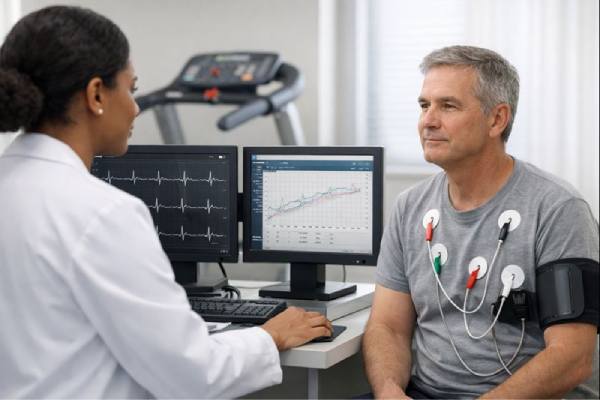
- Exercise stress testing: Walking on a treadmill while monitoring symptoms, ECG, and blood pressure. It is most useful when the baseline ECG is interpretable and the person can exercise adequately.
- Stress imaging: Stress echocardiography or nuclear perfusion studies can show how well blood reaches different heart regions under stress.
- Coronary CT angiography (CCTA): A CT-based scan that visualizes coronary anatomy and can identify plaque and narrowing.
- Cardiac MRI: In some settings, it can evaluate perfusion, scar, and heart function with high detail.
- Invasive coronary angiography: A catheter-based test that provides the most direct view of coronary blockages and allows treatment (like stenting) when needed.
Doctors also look for conditions that worsen ischemia by increasing demand or lowering supply:
- Poorly controlled blood pressure
- Thyroid disorders
- Anemia or bleeding
- Rapid arrhythmias (like atrial fibrillation with high heart rate)
- Severe lung disease or low oxygen saturation
A strong evaluation does two things: confirms whether ischemia is present and clarifies why it is happening (plaque, spasm, microvascular dysfunction, or systemic stress). That “why” shapes the most effective treatment plan.
Treatment options and what to expect
Treatment aims to protect heart muscle, relieve symptoms, and reduce the risk of heart attack and stroke. The plan differs for acute versus chronic ischemia, but most care falls into four pillars: rapid safety decisions, medication, procedures when indicated, and long-term risk reduction.
If acute coronary syndrome is suspected, the priority is urgent evaluation. In emergency care, treatment may include:
- Antiplatelet therapy (often aspirin) to reduce clot growth
- Anticoagulation in selected cases to prevent further clotting
- Nitroglycerin to relieve chest discomfort when appropriate (not suitable for everyone)
- Beta blockers for heart rate and blood pressure control in many patients
- High-intensity statin therapy to stabilize plaque
- Early reperfusion (usually percutaneous coronary intervention, also called PCI) for certain heart attacks, with clot-busting medication considered in specific settings when PCI is not rapidly available
For chronic or stable ischemia, goals broaden to symptom control and prevention of future events. Common strategies include:
- Anti-anginal symptom relief
- Beta blockers to reduce heart rate and oxygen demand
- Calcium channel blockers for symptom control, especially when spasm is involved
- Long-acting nitrates or short-acting nitroglycerin for episodes
- Other agents may be used when symptoms persist despite first-line therapy
- Event prevention
- Statins to lower LDL cholesterol and stabilize plaque
- Antiplatelet therapy in appropriate patients
- Blood pressure control (often with ACE inhibitors or ARBs when indicated)
- Diabetes management with therapies shown to reduce cardiovascular risk when appropriate
- Revascularization when needed
- PCI (stent) or coronary artery bypass surgery (CABG) may be recommended for certain patterns of disease (for example, specific high-risk anatomy) or for symptoms that persist despite optimized medical therapy.
What to expect over time:
- Many people feel better within days to weeks as medications are adjusted.
- Follow-up often includes monitoring blood pressure, cholesterol, and symptom frequency.
- A structured cardiac rehabilitation program, when available, can improve exercise capacity, confidence, and long-term outcomes.
A useful mindset is that treatment is not just about stopping symptoms today—it is about lowering the probability of a future event over years. That long view is where consistent medication use and lifestyle choices pay off.
Management, prevention, and when to seek help
Living well with cardiac ischemia is usually a combination of smart habits, consistent prevention, and a clear action plan for symptoms. Many people do best when they treat ischemia like a long-term risk condition rather than an occasional problem that only matters when pain appears.
Day-to-day management priorities
- Take medications as prescribed and ask early if side effects occur. Small adjustments can often solve problems without losing protection.
- Know your personal triggers: brisk uphill walking, cold air, heavy meals, emotional stress, or dehydration are common. Planning around triggers is not “giving in”—it is strategy.
- Build aerobic fitness safely: many patients benefit from gradually increasing activity, ideally with guidance through cardiac rehabilitation or a clinician-approved plan.
- Choose heart-supportive eating patterns: emphasize vegetables, legumes, whole grains, nuts, fish, and minimally processed foods; limit trans fats, refined sugars, and excess sodium.
- Sleep and stress: poor sleep and chronic stress can raise heart rate and blood pressure. Treat sleep apnea if present and use realistic stress tools (structured breathing, walking breaks, counseling, or mindfulness practices).
- Stop smoking and avoid stimulants: nicotine and stimulants increase spasm risk and accelerate vascular injury.
Prevention targets worth tracking
Even without quoting a lab sheet, most prevention plans focus on lowering LDL cholesterol, controlling blood pressure, managing blood sugar if diabetic, and maintaining a healthy weight and activity level. Ask your clinician what targets apply to your specific risk profile.
When to seek urgent care
Call emergency services (or your local equivalent) if any of the following occur:
- Chest pressure, tightness, or discomfort that lasts more than a few minutes, returns quickly, or occurs at rest
- Shortness of breath with chest discomfort, fainting, severe weakness, or confusion
- Symptoms that feel new, much stronger, or different from your usual pattern
- A rapid or irregular heartbeat with dizziness or near-fainting
If you have diagnosed ischemia and have been prescribed rescue nitroglycerin, follow your clinician’s instructions. If symptoms are not improving quickly or are escalating, do not delay evaluation.
The best prevention tool is clarity: understand your diagnosis, carry a simple symptom plan, and keep follow-up appointments even when you feel well.
References
- 2023 AHA/ACC/ACCP/ASPC/NLA/PCNA Guideline for the Management of Patients With Chronic Coronary Disease: A Report of the American Heart Association/American College of Cardiology Joint Committee on Clinical Practice Guidelines – PubMed 2023 (Guideline)
- 2024 ESC Guidelines for the management of chronic coronary syndromes – PubMed 2024 (Guideline)
- 2021 AHA/ACC/ASE/CHEST/SAEM/SCCT/SCMR Guideline for the Evaluation and Diagnosis of Chest Pain: A Report of the American College of Cardiology/American Heart Association Joint Committee on Clinical Practice Guidelines – PubMed 2021 (Guideline)
- Silent Myocardial Ischemia: From Pathophysiology to Diagnosis and Treatment – PMC 2024 (Review)
Disclaimer
This article is for general educational purposes only and does not provide medical advice, diagnosis, or treatment. Cardiac ischemia can be life-threatening, and symptoms such as chest pressure, shortness of breath, fainting, or sudden weakness require urgent medical evaluation. Always consult a qualified healthcare professional for personal guidance, testing decisions, and treatment choices, especially if you have heart disease risk factors or new or worsening symptoms.
If you found this article useful, please consider sharing it on Facebook, X (formerly Twitter), or any platform you prefer, and follow us on social media. Your support through sharing helps our team continue producing reliable, high-quality health content.