A cardiac lipoma is a rare, noncancerous (benign) tumor made of mature fat cells that forms in or on the heart. Many are discovered by chance during imaging for something else, but location matters: even a benign mass can cause serious problems if it interferes with blood flow, valve movement, or the heart’s electrical pathways. Some lipomas grow slowly and remain quiet for years, while others trigger symptoms such as shortness of breath, chest discomfort, palpitations, fainting, or stroke-like events from emboli. Because cardiac lipoma can resemble other fat-containing or tumor-like heart conditions, accurate diagnosis relies on careful imaging and, at times, tissue confirmation. This article explains what cardiac lipoma is, why it happens, who is at risk, what symptoms to watch for, how it is diagnosed, which treatments are used, and how to manage follow-up safely.
Table of Contents
- What is a cardiac lipoma?
- What causes cardiac lipoma and who is at risk?
- Symptoms, warning signs, and complications
- How is cardiac lipoma diagnosed?
- Treatment options, surgery, and recovery
- Living with cardiac lipoma and when to seek care
What is a cardiac lipoma?
A cardiac lipoma is a well-circumscribed mass made of mature adipose (fat) tissue that develops in cardiac structures. It may arise on the outer surface of the heart (epicardial), within the heart wall (intramyocardial), or inside a heart chamber (subendocardial). Many are encapsulated, meaning they sit within a thin fibrous оболвивка (capsule) that separates them from nearby tissue. This capsule is part of why most cardiac lipomas behave in a benign way.
Even though it is benign, the heart is an unforgiving location. The clinical impact depends less on “benign vs malignant” and more on where the tumor sits and what it presses on. A lipoma near a valve can obstruct opening or closing. A lipoma in the atria may alter blood flow and promote clot formation. A lipoma near the conduction system (the heart’s wiring) can trigger rhythm disturbances. In rare situations, a lipoma can be described as “invasive” when it extends into surrounding structures, which complicates surgery and can increase recurrence risk if complete removal is not possible.
It is also important to distinguish a true cardiac lipoma from similar fat-related conditions, because names can sound deceptively alike:
- Cardiac lipoma: a discrete tumor of mature fat cells, usually a single mass.
- Lipomatous hypertrophy of the interatrial septum: a non-tumor thickening of the interatrial septum due to fat accumulation, often with a characteristic “dumbbell” appearance that usually spares the fossa ovalis.
- Pericardial fat pads and normal epicardial fat: common and usually harmless.
- Liposarcoma: a malignant fat tumor, much rarer, with different imaging behavior and treatment.
Because primary cardiac tumors are uncommon overall, most clinicians approach a newly discovered heart mass with a structured plan: confirm the tissue type by imaging, define the exact anatomy, estimate the risk of obstruction or embolism, and then decide whether monitoring or removal is safest.
What causes cardiac lipoma and who is at risk?
For most people, the exact cause of a cardiac lipoma is unknown. Unlike coronary artery disease or hypertension, cardiac lipoma does not have a single lifestyle-driven pathway that clearly explains it. Instead, it appears to result from localized overgrowth of mature fat cells in cardiac tissue. That said, “unknown cause” does not mean “random outcome.” Clinicians still look for patterns that can guide evaluation and follow-up.
Possible contributing factors
- Sporadic growth: Most cardiac lipomas occur without a clear trigger or inherited syndrome.
- Genetic predisposition (uncommon): Some people have syndromes associated with multiple lipomas in the body. If a patient has many lipomas, early onset, or a strong family pattern, clinicians may consider broader genetic evaluation.
- Age and detection effects: Cardiac lipoma can be found at various ages, but many are discovered in adults because imaging is more common later in life. Increased use of echocardiography, CT, and MRI has also raised incidental detection.
- Local tissue environment: The heart contains normal fat in certain regions (especially epicardial fat). It is plausible that local factors influence how fat cells proliferate, but this remains poorly defined.
Risk factors you can actually use in real life
Instead of traditional “risk factors,” practical risk assessment focuses on what raises the chance that a detected mass will cause harm:
- Location near valves (mitral, tricuspid, aortic, pulmonary): higher chance of obstruction or regurgitation.
- Intracavitary (inside a chamber) position: higher risk of flow disruption and embolic events.
- Proximity to the conduction system: higher likelihood of palpitations, heart block, or other rhythm problems.
- Large size or rapid growth on imaging: greater chance of symptoms and a stronger reason to consider surgical removal.
- Uncertain diagnosis on imaging: if the appearance is not clearly benign fat, doctors treat it more cautiously until proven otherwise.
A helpful way to think about “who is at risk” is to separate two questions: “Who is at risk of having a cardiac lipoma?” (hard to predict) and “Who is at risk of complications from a cardiac lipoma?” (often predictable from anatomy and imaging). The second question is the one that drives clinical decisions.
Symptoms, warning signs, and complications
Many cardiac lipomas cause no symptoms, especially when small and located where they do not interfere with blood flow or electrical conduction. When symptoms occur, they often mimic other common heart conditions, which is why careful evaluation matters. The key is to connect symptoms to plausible mechanics: obstruction, irritation of heart tissue, rhythm disruption, or embolism.
Common symptoms
- Shortness of breath during exertion or when lying flat, especially if the tumor affects filling or valve function
- Chest discomfort or pressure, sometimes positional
- Palpitations, skipped beats, or episodes of rapid heartbeat
- Lightheadedness or fainting (syncope), particularly if rhythm disturbances or outflow obstruction occur
- Reduced exercise tolerance, fatigue, or a sense that the heart “cannot keep up”
Red-flag symptoms that need urgent care
- New or worsening chest pain, especially with sweating, nausea, or breathlessness
- Fainting or near-fainting without a clear cause
- Sudden weakness, numbness, speech difficulty, facial droop, or vision loss (possible stroke or transient ischemic attack)
- New rapid, irregular heartbeat with dizziness, shortness of breath, or chest pressure
- Signs of heart failure, such as swelling in the legs, waking up short of breath, or rapid weight gain from fluid
Potential complications
- Obstruction of blood flow: A lipoma in an atrium or ventricle can narrow an inflow or outflow pathway, leading to breathlessness and low output symptoms.
- Valve dysfunction: If the tumor interferes with valve motion, it can contribute to regurgitation (leakage) or stenosis-like obstruction.
- Arrhythmias and conduction problems: Intramyocardial involvement or proximity to conduction tissue can provoke atrial fibrillation, ventricular ectopy, or varying degrees of heart block.
- Embolic events: A mass can promote clot formation from disturbed flow, or rarely fragments can embolize, leading to stroke-like symptoms.
- Pericardial effects: Epicardial tumors can cause irritation, pericardial effusion, or chest discomfort, depending on size and location.
A practical takeaway: symptoms often do not tell you “lipoma” specifically, but they can tell you whether the tumor is behaving like a dangerous space-occupying problem. That is why symptom timing, triggers, and associated features (syncope, neurologic deficits, heart failure signs) should be documented clearly before imaging and specialty review.
How is cardiac lipoma diagnosed?
Diagnosis starts with confirming that a mass exists, then proving (as confidently as possible) that it is fat and benign, and finally mapping its relationship to critical heart structures. In many cases, imaging alone can strongly suggest a lipoma. When imaging is unclear, tissue diagnosis may be needed.
First-line assessment
- History and exam: Clinicians look for symptom patterns (exertional breathlessness, palpitations, syncope, neurologic events) and signs of valve disease or heart failure.
- Electrocardiogram (ECG): Can show arrhythmias, conduction delays, or nonspecific changes that help assess risk.
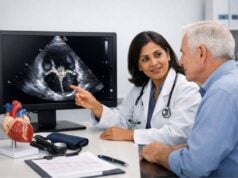
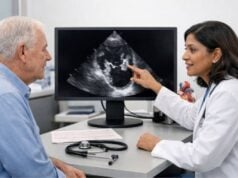
- Transthoracic echocardiogram (TTE): Usually the first imaging test. It can detect a mass, estimate size, evaluate valve function, and show whether blood flow is obstructed.
Imaging that clarifies “fat” and anatomy
- Transesophageal echocardiogram (TEE): Provides higher-resolution views of atria, valves, and posterior structures, useful when TTE is limited.
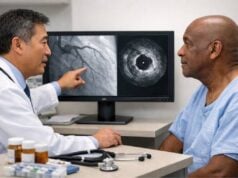
- Cardiac CT: Excellent for defining anatomy and identifying fat density. CT can help distinguish a true mass from normal fat and can support surgical planning.
- Cardiac MRI: Often the most informative test for tissue characterization. Fat has a recognizable signal pattern, and specific MRI sequences can confirm fatty composition and define borders.
Key look-alikes and how clinicians separate them
- Lipomatous hypertrophy of the interatrial septum: typically a thickened septum rather than a discrete capsule-bounded mass.
- Myxoma, fibroelastoma, thrombus: different locations, mobility patterns, and tissue features on echo and MRI.
- Malignant tumors (rare): tend to show invasive features, irregular borders, rapid growth, or tissue characteristics inconsistent with mature fat.
When biopsy or surgery becomes part of diagnosis
A biopsy is not routine for every cardiac mass because of procedural risk and because many lesions are best managed with either imaging follow-up or definitive removal. Tissue confirmation is more likely when:
- Imaging does not clearly show a benign fat tumor.
- The mass is causing symptoms or complications and removal is planned anyway.
- There is concern for malignancy or an atypical “invasive” pattern.
Diagnosis is not a single test; it is a sequence: detect, characterize, define risk, then choose monitoring or treatment. In well-characterized lipomas that are stable and asymptomatic, diagnosis may end with imaging confidence and a structured follow-up plan.
Treatment options, surgery, and recovery
Treatment depends on symptoms, tumor location, size, growth, and diagnostic certainty. Because a cardiac lipoma is benign, not everyone needs surgery. The goal is to prevent avoidable harm: obstruction, embolism, arrhythmias, or progressive functional impairment.
When monitoring is reasonable
A watchful approach may be appropriate when the lipoma is:
- Small, not interfering with valves or flow
- Clearly fatty and benign-appearing on high-quality imaging
- Not causing symptoms and not associated with arrhythmias or embolic events
- Stable in size on repeat imaging
Monitoring usually involves scheduled imaging (often echocardiography, and sometimes CT or MRI) and symptom tracking. The exact interval is individualized: closer follow-up for uncertain lesions, more spaced follow-up when stability is clear.
When surgery is typically recommended
Surgical removal is more strongly considered when:
- The patient has symptoms plausibly linked to the tumor (dyspnea, syncope, chest discomfort, recurrent palpitations).
- The mass is intracavitary, mobile, or positioned in a way that raises concern for obstruction or embolism.
- Imaging is not definitive, and malignancy or a different diagnosis cannot be excluded confidently.
- There is growth over time, especially if faster than expected for a benign lesion.
What surgery involves
Most resections are performed by cardiothoracic surgeons with careful preoperative planning based on imaging. The approach depends on location:
- Intracavitary tumors may require chamber entry to remove the mass and preserve valve structures.
- Intramyocardial tumors can be more complex if they are embedded in the wall or near the conduction system.
- Epicardial tumors may be easier to access but can still involve important coronary structures.
The surgeon aims for complete excision when feasible. In rare “invasive” cases where the tumor extends into surrounding tissue, complete removal may be difficult, and the plan may include partial resection with close follow-up.
Recovery and follow-up
After surgery, recovery focuses on:
- Monitoring for arrhythmias, fluid balance issues, and wound healing
- Gradual return to activity with a supervised plan
- Follow-up imaging to confirm complete removal and to establish a new baseline
- Longer-term surveillance if excision was incomplete or if the anatomy suggested higher recurrence risk
Many patients do well after complete resection, especially when the tumor is well-encapsulated and located away from critical structures.
Living with cardiac lipoma and when to seek care
Living well with a cardiac lipoma is mostly about structured follow-up and smart symptom response, not about dramatic lifestyle restrictions. Because many lipomas are incidental findings, the main risk is either ignoring a lesion that deserves monitoring or overreacting to a benign, stable mass. A good plan balances reassurance with vigilance.
Day-to-day management
- Keep a symptom log: note triggers, duration, associated symptoms (dizziness, breathlessness), and recovery time. This makes follow-up visits more useful.
- Know your baseline: your normal activity level, heart rate response to exercise, and any existing heart conditions.
- Manage coexisting cardiac risks: even though these do not “cause” lipoma, controlling blood pressure, diabetes, and cholesterol protects overall heart function, which matters if surgery is ever needed.
- Medication adherence: if you have arrhythmias or heart failure, take medications as prescribed and discuss any new symptoms before stopping or changing doses.
- Imaging follow-up: treat it like a safety system. Missing scheduled imaging is one of the most preventable ways benign lesions become urgent problems.
What follow-up commonly includes
Follow-up is individualized, but often involves:
- Periodic echocardiography to track size and effects on valves or flow
- Repeat MRI or CT if the original diagnosis depended on advanced tissue characterization, or if changes occur
- ECG monitoring or ambulatory monitoring (Holter or patch) if palpitations, syncope, or conduction issues are present
When to call your clinician soon
- New or worsening shortness of breath, reduced exercise tolerance, or swelling
- Increasing frequency of palpitations or new irregular rhythm
- Episodes of near-fainting, unexplained weakness, or dizziness
- Any new symptom that feels clearly different from your baseline
When to seek emergency care
- Chest pain with pressure, sweating, nausea, or breathlessness
- Fainting, severe dizziness, or sustained rapid heartbeat
- Stroke-like symptoms (face droop, weakness on one side, trouble speaking, sudden vision loss)
A cardiac lipoma diagnosis can feel unsettling because it involves the heart, but the outlook is often favorable when the lesion is correctly characterized and monitored. The safest path is clarity: understand what was seen, what it means for your anatomy, what symptoms matter, and what the next check-in should be.
References
- The characteristics of invasive cardiac lipoma: case report and literature review 2023. ([PMC][1])
- Cardiac computed tomography for cardiac masses: a necessity or a luxury? 2025. ([PMC][2])
- Diagnosis and treatment of cardiac tumors 2025. ([PMC][3])
- Primary Cardiac Tumors: Clinical Presentations and Pathological Features in a Multicenter Cohort 2025. ([PMC][4])
- Cardiac Cancer 2023. ([NCBI][5])
Disclaimer
This article is for educational purposes only and does not provide medical advice, diagnosis, or treatment. Cardiac masses require individualized evaluation because risks depend on anatomy, symptoms, imaging findings, and your overall health. If you have chest pain, fainting, severe shortness of breath, or stroke-like symptoms, seek emergency care. For non-urgent concerns, speak with a qualified clinician who can review your history, imaging results, and medications.
If you found this article helpful, please consider sharing it on Facebook, X (formerly Twitter), or any platform you prefer, and follow us on social media. Your support by sharing helps our team continue producing high-quality health content.