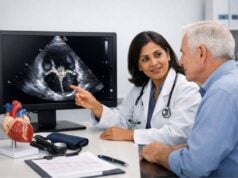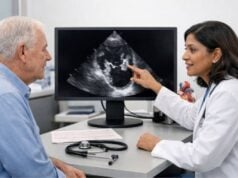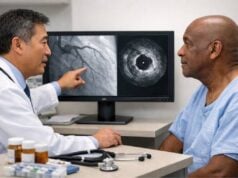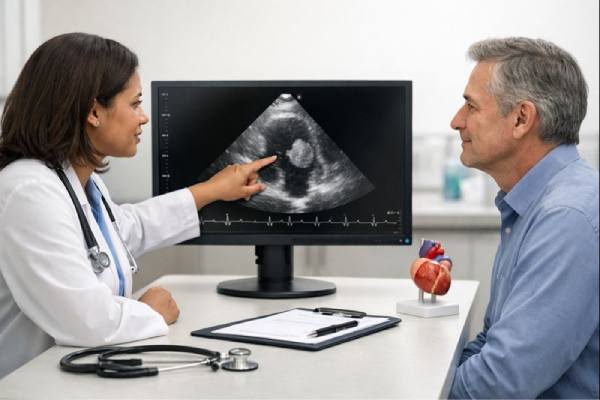
A cardiac myxoma is a non-cancerous (benign) tumor that grows inside the heart, most often in the left atrium. “Benign” can sound reassuring, but myxomas can still be dangerous because of where they sit: they may block blood flow through the heart, shed material that travels as an embolus to the brain or other organs, or trigger inflammatory symptoms that feel like a chronic illness. Many people live with vague signs for months, while others have no symptoms until a sudden event like a stroke or fainting episode. The encouraging part is that, once identified, treatment is usually straightforward: surgical removal is typically curative, and most patients recover well with careful follow-up. This guide walks you through what a cardiac myxoma is, why it happens, who is at risk, what it feels like, how it is diagnosed, and what treatment and long-term management usually involve.
Table of Contents
- What a cardiac myxoma is
- Causes and risk factors
- Symptoms and complications
- How it is diagnosed
- Treatment and what to expect
- Recovery, follow-up, and when to seek care
What a cardiac myxoma is
A cardiac myxoma is a primary heart tumor, meaning it starts in heart tissue rather than spreading from elsewhere. It is also the most common benign primary tumor of the heart in adults. Most myxomas arise in the atria (the two upper chambers), and the classic location is the left atrium, often attached to the interatrial septum (the wall between the atria) near an area called the fossa ovalis. Less commonly, myxomas appear in the right atrium, ventricles, or on valves.
Myxomas are often described as “functionally malignant.” That phrase is not meant to frighten you; it highlights that even a benign mass can behave dangerously inside a moving, high-flow system. A myxoma can:
- Obstruct blood flow, acting like a “ball-valve” that intermittently blocks the mitral valve (left-sided tumors) or tricuspid valve (right-sided tumors).
- Embolize, meaning small fragments or clots from the tumor surface break off and travel to the brain (stroke), limbs, kidneys, or lungs (more typical with right-sided tumors).
- Trigger systemic inflammation, releasing cytokines that cause fever, fatigue, weight loss, and lab abnormalities that resemble autoimmune disease or infection.
Structurally, myxomas can be smooth and round, or more friable with a papillary or villous surface. That surface detail matters because softer, irregular tumors tend to embolize more easily. Size varies widely: some are found when they are only a centimeter or two; others grow large enough to obstruct flow and enlarge the atrium.
Most cases are sporadic (not inherited). A smaller portion are familial, often associated with Carney complex, a genetic syndrome that can involve multiple myxomas, endocrine tumors, and characteristic skin findings. This distinction influences how doctors think about recurrence risk and family screening.
Causes and risk factors
For most people, there is no single identifiable “cause” of a cardiac myxoma. Researchers believe myxomas arise from primitive mesenchymal cells in the endocardium (the lining of the heart) that, for reasons not fully understood, begin forming a gelatinous tumor matrix. In everyday practice, what matters is separating sporadic tumors from those linked to inherited syndromes, because that changes both recurrence risk and what your family may need.
Key patterns doctors recognize include:
- Sporadic cardiac myxoma (most common): Typically a single tumor, usually in the left atrium, often diagnosed between mid-adulthood and later adulthood. Women are affected slightly more often than men in many reported series.
- Familial or syndromic myxoma: More likely to occur at a younger age, recur after surgery, or appear in multiple heart chambers. Carney complex is the best-known syndrome in this category.
Carney complex is most often linked to pathogenic variants in the PRKAR1A gene. People with this syndrome may have:
- More than one myxoma (cardiac or outside the heart)
- Skin pigmentation changes (lentigines or blue nevi)
- Endocrine overactivity or endocrine tumors
Not everyone with a familial myxoma has obvious features at first, which is why clinicians pay attention to age at diagnosis, multiple tumors, and recurrence.
Other “risk factors” are less like traditional lifestyle risks and more like clinical clues:
- History of a prior myxoma (especially if surgery occurred at a young age or multiple tumors were present)
- Family history of cardiac myxoma, Carney complex, or unexplained sudden cardiac events at a young age
- Unexplained embolic events (for example, a stroke without clear vascular risk factors), especially if accompanied by positional shortness of breath or constitutional symptoms
It is also important to know what does not appear to be a major driver. There is no strong evidence that diet, exercise habits, or common environmental exposures directly cause myxomas. That said, general cardiovascular health still matters because it affects surgical risk, anesthesia safety, and recovery.
A practical takeaway: if you are diagnosed with a myxoma, ask whether anything about your case suggests an inherited pattern (young age, multiple tumors, recurrence, or suggestive family history). That one question can shape follow-up planning for years.
Symptoms and complications
Cardiac myxoma symptoms are famously variable. Some people have no symptoms and the tumor is discovered incidentally during an echocardiogram for a murmur or unrelated evaluation. Others develop a distinctive mix of problems that reflect the tumor’s three main “behavior patterns”: obstruction, embolization, and inflammation.
1) Obstructive symptoms (blocked flow inside the heart)
These are especially common with left atrial myxomas that interfere with the mitral valve:
- Shortness of breath with exertion, or suddenly when lying flat
- Waking at night gasping for air
- Chest tightness or pressure
- Lightheadedness, fainting, or near-fainting (sometimes positional)
- Swelling in the legs if heart failure develops
Some patients describe symptoms that change with posture, such as worsening when bending forward or lying on a particular side. That can happen when a mobile tumor swings toward the valve opening during certain positions.
2) Embolic symptoms (material travels to another organ)
A myxoma can shed tumor fragments or promote clot formation on its surface. Possible effects include:
- Stroke or transient ischemic attack (sudden weakness, facial droop, speech difficulty, vision loss)
- Limb ischemia (sudden pain, coolness, or loss of pulse in an arm or leg)
- Kidney or spleen infarcts (sudden flank or abdominal pain)
- Pulmonary embolic events are more typical for right-sided tumors (sudden shortness of breath, pleuritic chest pain)
Embolic events may be the first sign of a myxoma, especially in people who otherwise have low stroke risk.
3) Constitutional and inflammatory symptoms (whole-body effects)
Myxomas can release inflammatory mediators that mimic chronic infection or autoimmune disease:
- Low-grade fever
- Fatigue and malaise
- Unintended weight loss
- Night sweats
- Joint aches
- Lab findings like anemia or elevated inflammatory markers
Complications range from serious to life-threatening:
- Sudden severe valve obstruction with collapse
- Arrhythmias (palpitations, atrial fibrillation)
- Heart failure from chronic obstruction
- Recurrent embolic strokes if diagnosis is delayed
- Rarely, infected myxoma (fever plus bloodstream infection signs)
If you ever develop sudden neurologic symptoms, fainting, or severe shortness of breath, treat it as an emergency. Even if a myxoma is “benign,” the complications are not.
How it is diagnosed
Diagnosis usually starts with suspicion. A clinician may connect the dots between a heart murmur and shortness of breath, or between an unexplained stroke and intermittent breathlessness. Because symptoms can mimic more common problems (valve disease, atrial fibrillation-related clots, endocarditis, autoimmune conditions), imaging is the key step.
Echocardiography is the cornerstone.
- Transthoracic echocardiogram (TTE): Often the first test. It is noninvasive and can detect many myxomas, especially larger ones. It can show tumor size, mobility, and whether it obstructs a valve.
- Transesophageal echocardiogram (TEE): Provides higher-resolution images, especially for smaller tumors or those in tricky locations. It is commonly used when TTE images are limited or when surgical planning needs more detail.
A typical echocardiographic description is a mobile mass attached by a stalk to the atrial septum, sometimes prolapsing through a valve opening during the heartbeat.
Advanced imaging helps with characterization and surgical planning.
- Cardiac MRI: Excellent for tissue characterization and differentiating tumor from thrombus. It can help define attachment points and tumor composition.
- Cardiac CT: Useful when MRI is not possible, and helpful for surgical planning or evaluating calcification and anatomy.
Lab tests do not diagnose myxoma, but they provide context.
Inflammatory markers may be elevated, and mild anemia can occur. These findings support the systemic symptom pattern but are not specific.
Differential diagnosis (what else it could be) is essential because treatment pathways differ:
- Atrial thrombus: More common in atrial fibrillation or severe left atrial enlargement. Thrombus management may involve anticoagulation rather than surgery.
- Infective endocarditis vegetation: Suggested by fever, positive blood cultures, and valve destruction; treatment is antibiotics and sometimes surgery.
- Other cardiac tumors: Papillary fibroelastoma, lipoma, sarcoma, or metastatic disease.
Definitive diagnosis is made by pathology after the mass is removed. Surgeons and cardiologists typically proceed as if it is a myxoma when imaging is strongly suggestive, because the risk of embolization or obstruction can make waiting unsafe.
A practical point: once a cardiac mass suspicious for myxoma is identified, clinicians usually move relatively quickly to coordinate cardiothoracic surgery evaluation, because timing can prevent strokes and sudden obstruction events.
Treatment and what to expect
Surgical excision is the definitive treatment for cardiac myxoma in most cases, and it is typically curative. The main goal is to remove the tumor completely, including its stalk and a small margin of attachment tissue, to minimize recurrence risk and prevent future embolic events.
Timing matters.
Once the diagnosis is established, surgery is often recommended promptly. “Promptly” does not always mean the same-day emergency operation, but clinicians generally avoid long delays because:
- Mobile tumors can embolize unpredictably.
- Large tumors can obstruct a valve suddenly.
- Recurrent neurologic events can occur if the tumor remains in place.
Surgical approaches vary, and the best choice depends on anatomy and expertise.
Common approaches include:
- Median sternotomy (traditional open approach): Offers excellent exposure and is widely available.
- Minimally invasive approaches: Smaller incisions with specialized instruments; may reduce pain and shorten recovery in selected patients.
- Robotic-assisted surgery: Can be an option in experienced centers for appropriately located tumors; it may improve recovery metrics for some patients but depends heavily on local expertise and resources.
The surgical plan also considers whether repair of nearby structures is needed. For example, if the tumor has irritated or damaged a valve, the surgeon may address that at the same operation. If part of the interatrial septum is removed with the stalk, a patch repair may be performed.
Perioperative evaluation typically includes:
- Assessment of heart rhythm and overall cardiac function
- Coronary artery evaluation in older patients or those with risk factors (to determine if bypass is needed at the same time)
- Review of neurologic history if a recent stroke occurred, balancing the urgency of tumor removal against bleeding risk
What outcomes usually look like:
- Most patients do well after complete excision.
- Hospital stay varies by surgical approach and individual health status, but many patients spend a short period in intensive monitoring before moving to a regular ward.
- Early postoperative issues can include atrial arrhythmias, fluid shifts, pain control needs, and temporary fatigue.
Is medication ever enough?
Medication alone does not remove a myxoma. Drugs may be used to treat symptoms (such as diuretics for fluid overload) or to manage rhythm problems, but they do not eliminate the underlying risk. In special circumstances, clinicians may stabilize a patient before surgery, but the destination is still surgical removal in most cases.
Recovery, follow-up, and when to seek care
Recovery after myxoma surgery is usually a process of rebuilding stamina while monitoring for rhythm issues and ensuring the heart heals well. Many patients feel significantly better once obstruction is relieved, but it is common to have a period of fatigue that improves gradually over weeks.
In the first weeks after surgery, focus on:
- Activity progression: Short walks multiple times per day, increasing distance as tolerated. Many people do best with a “little and often” strategy rather than one long push.
- Breathing and circulation habits: Deep-breathing exercises, gentle movement, and avoiding long periods of immobility reduce lung and clot risks.
- Incision care and infection vigilance: Watch for redness, drainage, fever, or worsening pain around the incision.
- Rhythm awareness: Palpitations can occur after atrial surgery. Report sustained rapid heartbeats, dizziness, or fainting.
Follow-up imaging is part of long-term safety.
Even though recurrence is uncommon after complete excision, cardiologists usually recommend periodic echocardiography to confirm there is no regrowth and that valve function is stable. The frequency is individualized, but follow-up is often more intensive when:
- The myxoma occurred at a young age
- Multiple tumors were present
- There is known or suspected Carney complex
- A prior recurrence has occurred
Family and genetic considerations:
If your presentation suggests a familial form (young diagnosis, multiple lesions, recurrence, or suggestive family history), ask about genetic counseling. In inherited syndromes, screening of first-degree relatives may be recommended, and long-term echo surveillance can be more structured.
Reducing future cardiovascular risk still matters.
While lifestyle does not “prevent” myxoma formation in a proven way, overall cardiovascular health supports better surgical outcomes and lowers the chance that a future symptom will be mistakenly attributed to common heart disease. Practical steps include:
- Keeping blood pressure in a healthy range
- Managing cholesterol and diabetes when applicable
- Avoiding tobacco
- Returning to regular aerobic activity once cleared
When to seek urgent care (do not wait):
- Sudden weakness, numbness, trouble speaking, facial droop, or vision loss
- Fainting, severe dizziness, or new confusion
- Severe shortness of breath, chest pain, or coughing up blood
- Rapid, sustained palpitations with lightheadedness
- High fever with chills, especially if you have a heart murmur or recent surgery
For many people, the end of treatment is not the end of attention—it is the start of a calmer, structured follow-up plan. With appropriate surveillance and prompt evaluation of new symptoms, long-term outcomes are often very good.
References
- Cardiac myxoma: a comprehensive review 2025 (Review)
- Clinical characteristics and surgical outcomes of cardiac myxoma: A meta-analysis of worldwide experience 2024 (Systematic Review and Meta-Analysis)
- The Therapeutic Potential of Different Surgical Approaches in the Management of Cardiac Myxoma: A Systematic Review 2024 (Systematic Review)
- Cardiac myxomas: A narrative review 2022 (Review)
Disclaimer
This article is for educational purposes and does not replace care from a licensed clinician. Cardiac myxoma can cause serious complications, including stroke and sudden obstruction, and it requires individualized evaluation by a cardiology team. If you have symptoms such as sudden weakness, trouble speaking, fainting, chest pain, or severe shortness of breath, seek emergency care immediately.
If you found this article helpful, please share it on Facebook, X (formerly Twitter), or any platform you prefer, and follow us on social media. Your support through sharing helps our team continue producing high-quality health content.