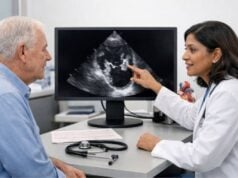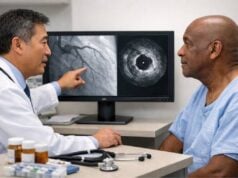
Cardiac sarcoidosis is a form of inflammatory heart disease caused by sarcoidosis, a condition in which clusters of immune cells (called granulomas) form in body tissues. When these granulomas involve the heart, they can disrupt electrical pathways, irritate the heart muscle, and leave behind scar tissue that weakens pumping over time. Some people first notice skipped beats or fainting, while others learn about it after an abnormal electrocardiogram or imaging test ordered for sarcoidosis elsewhere in the body. Because symptoms can be subtle and come and go, diagnosis is often delayed unless clinicians look for it on purpose. The good news is that many complications are preventable when inflammation is controlled early and rhythm risks are managed carefully. This article explains what cardiac sarcoidosis is, why it happens, who is at risk, what it feels like, how it is diagnosed, and what treatment and long-term management typically involve.
Table of Contents
- What cardiac sarcoidosis does
- What causes it and who is at risk
- Symptoms and major complications
- How cardiac sarcoidosis is diagnosed
- Treatment options and what to expect
- Management, prevention, and when to seek care
What cardiac sarcoidosis does
Cardiac sarcoidosis occurs when granulomas—tight clusters of inflammatory cells—form in heart tissue. These clusters can be active and inflamed, quiet and stable, or replaced over time by scar. That shifting biology explains why symptoms can be unpredictable: inflammation may flare, calm down, or slowly leave behind permanent changes.
How it affects the heart’s “wiring” and “muscle”
The heart has two jobs: conduct electricity in a precise pattern and pump blood efficiently. Cardiac sarcoidosis can disrupt both.
- Electrical disruption: Granulomas and scar can damage the conduction system, especially in the septum (the wall between the ventricles). This may cause slowed signals, heart block, or dangerous fast rhythms.
- Muscle involvement: Inflammation can weaken the heart muscle directly, while scarring can stiffen it. Over time this can reduce ejection fraction (how much blood the left ventricle pumps out with each beat) or cause symptoms of heart failure.
- Patchy distribution: Unlike many cardiomyopathies that affect the heart more evenly, sarcoidosis often hits in “islands,” which can make findings subtle and testing harder.
Common patterns clinicians look for
Cardiac sarcoidosis is often suspected when certain combinations appear:
- A person with known sarcoidosis develops unexplained fainting, palpitations, or shortness of breath.
- A person without known sarcoidosis presents with new high-grade atrioventricular block (especially if they are relatively young for that diagnosis).
- Ventricular arrhythmias occur without an obvious cause.
- Imaging shows inflammation or scar in a pattern that does not match coronary artery disease.
Why it is sometimes missed
There is rarely a single definitive test that works for everyone. Heart biopsy can miss disease because involvement is patchy, and symptoms may be intermittent. Many diagnoses are therefore built from a careful “total picture” that combines symptoms, rhythm testing, imaging, and evidence of sarcoidosis in other tissues.
A helpful way to think about cardiac sarcoidosis is as an inflammatory cardiomyopathy with two simultaneous threats: active inflammation today and arrhythmia risk from scar tomorrow. Management tries to address both.
What causes it and who is at risk
Sarcoidosis is driven by an immune response that becomes misdirected, forming granulomas in tissues. The exact trigger is still uncertain, but most experts view it as a mix of genetic susceptibility and environmental exposures that “prime” the immune system. Cardiac sarcoidosis represents heart involvement within that broader process.
What causes the heart to be involved
The underlying mechanism is inflammation that targets heart tissue:
- Immune cells enter the myocardium and form granulomas.
- Granulomas can interfere with normal cells and blood supply at a microscopic level.
- Healing may replace inflamed areas with scar, which can persist even if inflammation resolves.
This matters because treatment decisions often depend on whether the problem seems driven by ongoing inflammation (more responsive to immunosuppression) versus established scar (more likely to drive rhythm issues and reduced pumping even after inflammation is quiet).
Risk factors and higher-risk situations
Not everyone with sarcoidosis develops cardiac involvement, and cardiac sarcoidosis can also appear without obvious sarcoidosis elsewhere. Risk rises in several situations:
- Known systemic sarcoidosis (especially when lung, lymph node, skin, or eye involvement is established)
- Unexplained conduction disease such as new heart block, particularly in adults who are younger than typical for degenerative conduction problems
- Ventricular arrhythmias (sustained ventricular tachycardia or frequent complex ectopy) without a clear alternative cause
- Unexplained cardiomyopathy where imaging suggests inflammation or scar in a non-coronary pattern
- Family history and genetics: there is no simple “sarcoidosis gene,” but clustering in families suggests inherited susceptibility in some populations
Certain demographics have higher sarcoidosis rates overall, and cardiac involvement patterns may differ across populations. From a practical standpoint, the clinician’s job is not to guess risk from demographics alone, but to recognize clinical clues early.
Triggers that can unmask symptoms
Even when cardiac involvement is present, symptoms may become obvious only when the heart is stressed. Common unmasking factors include:
- Respiratory infections or systemic inflammatory flares
- Pregnancy and the postpartum period (immune shifts can change inflammatory activity)
- Stimulants, dehydration, or electrolyte imbalances that increase arrhythmia propensity
- Missed medications, especially when tapering immunosuppression too quickly
A useful risk mindset is this: cardiac sarcoidosis is uncommon, but the consequences can be serious enough that “low suspicion” should change to “active evaluation” when conduction disease, ventricular arrhythmias, or unexplained cardiomyopathy appears—especially with known sarcoidosis elsewhere.
Symptoms and major complications
Cardiac sarcoidosis has a wide symptom range. Some people feel entirely well and are diagnosed after screening tests; others present with life-threatening arrhythmias. Symptoms often reflect one of three problem areas: conduction disease, ventricular arrhythmias, or heart failure.
Early and common symptoms
Symptoms may be intermittent, and many are easy to misattribute to stress, anemia, or lung sarcoidosis. Common complaints include:
- Palpitations (fluttering, pounding, skipped beats)
- Lightheadedness, near-fainting, or fainting
- Unexplained fatigue or reduced exercise tolerance
- Chest discomfort that does not fit a classic “exertional angina” pattern
- Shortness of breath, especially when lying flat or with minimal exertion
Because symptoms can be vague, clinicians pay close attention to “red-flag” combinations, such as palpitations with fainting or sudden breathlessness with low blood pressure.
Complications that require urgent attention
The most serious complications are primarily electrical and pump-related:
- High-grade atrioventricular block: The signal from the atria to the ventricles slows or stops. This can cause dizziness, fainting, and dangerous bradycardia.
- Ventricular tachycardia and ventricular fibrillation: Fast rhythms from the ventricles can cause collapse or sudden cardiac death.
- Cardiomyopathy and heart failure: Inflammation and scarring can weaken the heart’s pumping function, leading to swelling, fluid in the lungs, and reduced organ perfusion.
- Pericardial involvement: Less commonly, inflammation affects the sac around the heart, leading to chest pain or fluid accumulation.
- Thromboembolism: When heart function is reduced or rhythm is abnormal, clot risk can rise in selected patients.
How symptoms map to underlying biology
One of the most helpful clinical insights is that symptom type can hint at whether inflammation or scar is dominating:
- Sudden new conduction disease or worsening symptoms over weeks may suggest active inflammation.
- Long-standing reduced pumping and recurrent ventricular arrhythmias may reflect scar-driven instability, even if inflammation is currently quiet.
In reality, many patients have both at once. This is why treatment commonly has two parallel tracks: suppress inflammation to reduce ongoing injury, and manage rhythm risk as if scar-related events can still occur.
If you are living with sarcoidosis and develop fainting, rapid heartbeat episodes, or a sudden drop in exercise tolerance, treat it as heart-relevant until proven otherwise. In cardiac sarcoidosis, earlier evaluation can be the difference between medication adjustment and a critical event.
How cardiac sarcoidosis is diagnosed
Diagnosing cardiac sarcoidosis often requires assembling evidence from multiple tests rather than relying on a single “yes or no” result. Clinicians aim to answer two practical questions: Is the heart involved? and Is inflammation active right now?
Clinical evaluation and baseline testing
Workup usually begins with history, exam, and rhythm assessment:
- Electrocardiogram (ECG): looks for conduction delays, heart block, QRS fragmentation, and rhythm abnormalities.
- Ambulatory rhythm monitoring: captures intermittent arrhythmias over 24 hours to several weeks, depending on symptoms and risk.
- Echocardiography: evaluates ejection fraction, wall motion abnormalities, ventricular size, valve function, and indirect signs of pulmonary hypertension.
- Blood tests: are supportive, not definitive. They can help assess inflammation, heart strain, and medication safety once treatment starts.
A normal ECG and echo do not fully exclude cardiac involvement, particularly early or patchy disease, but they help stratify risk and guide next steps.
Advanced imaging: CMR and FDG PET
Two imaging tools are especially central:
- Cardiac magnetic resonance (CMR): identifies scar and tissue changes. Late gadolinium enhancement can show areas of fibrosis in patterns that raise suspicion for inflammatory cardiomyopathy.
- FDG PET imaging: highlights metabolic activity consistent with inflammation. PET is also used to monitor response to immunosuppressive therapy when the clinical situation warrants it.
These tests are complementary: CMR is often strongest for detecting scar and structural impact, while FDG PET is often strongest for identifying active inflammation.
Tissue confirmation and why biopsy can be tricky
Biopsy of heart tissue can provide definitive proof, but sensitivity is limited because disease is patchy and biopsies sample small areas. Clinicians may increase yield by targeting biopsy toward abnormal regions identified on imaging or electroanatomic mapping. When extracardiac sarcoidosis is present, biopsy of a more accessible site (such as lymph node or skin lesion) can confirm systemic disease and support the overall diagnosis.
A practical diagnostic pathway
Many centers follow a stepwise approach:
- Identify symptoms and rhythm abnormalities that suggest heart involvement.
- Use echo to assess function and rule out obvious alternatives.
- Use CMR and or FDG PET to define scar and active inflammation.
- Confirm sarcoidosis in tissue when feasible and safe.
- Reassess risk: conduction disease, ventricular arrhythmias, and reduced ejection fraction drive management urgency.
Diagnosis is not just labeling. It is a risk-stratification process that determines who needs immunosuppression, who needs rhythm devices, and how closely follow-up should be structured.
Treatment options and what to expect
Treatment for cardiac sarcoidosis has three goals: control inflammation, prevent sudden rhythm events, and support heart function. Most patients need more than one strategy, and treatment usually evolves over time as disease activity changes.
Immunosuppressive therapy to control inflammation
When active inflammation is suspected or demonstrated, clinicians often use corticosteroids as initial therapy, then consider steroid-sparing agents to reduce long-term side effects. While exact regimens vary, the common principles are:
- Start with a dose strong enough to control inflammation.
- Reassess clinically and with objective markers (symptoms, rhythm burden, imaging, and heart function).
- Taper gradually to the lowest effective dose rather than stopping abruptly.
- Add a steroid-sparing agent when prolonged therapy is expected, relapse occurs during taper, or steroid toxicity emerges.
Steroid-sparing options can include medications such as methotrexate, azathioprine, mycophenolate, or biologic therapy in selected cases. Choice depends on comorbidities, pregnancy considerations, liver and kidney function, infection risk, and clinician experience.
Arrhythmia and conduction management
Because electrical complications can be sudden, rhythm management is central:
- Pacemaker therapy may be needed for significant atrioventricular block.
- Defibrillator therapy may be recommended for those at higher risk of life-threatening ventricular arrhythmias.
- Antiarrhythmic medications can reduce arrhythmia burden.
- Catheter ablation may help control recurrent ventricular tachycardia, especially when scar-driven circuits are present, though recurrence can still occur if inflammation persists.
A key clinical insight is that immunosuppression and ablation are not interchangeable. Suppressing inflammation can reduce triggers, but scar can still support arrhythmia circuits. Many patients benefit from combined approaches.
Heart failure therapy and supportive care
If heart pumping is impaired, clinicians use standard heart failure treatments, which may include medications that reduce workload and improve survival, plus diuretics for congestion. Lifestyle support also matters:
- Sodium moderation if fluid retention is an issue
- Gradual, supervised activity increases as stability improves
- Sleep and stress management, as poor sleep can worsen arrhythmia sensitivity
- Avoidance of stimulants that provoke palpitations in susceptible patients
What to expect after starting treatment
Improvement can be fast for conduction symptoms related to inflammation, slower for exercise tolerance, and variable for ventricular arrhythmias. Some patients show clear imaging improvement yet still need device therapy because scar remains. Most treatment plans include scheduled reassessments, because both overtreatment and undertreatment carry real risks: one increases infection and medication toxicity, the other increases the chance of progression and rhythm events.
The most effective treatment plans are personalized, measurable, and built around milestones: symptom control, rhythm stabilization, imaging response, and stable heart function over time.
Management, prevention, and when to seek care
Long-term management of cardiac sarcoidosis is about staying ahead of two curves: relapse of inflammation and the downstream effects of scar. Even when a person feels well, structured follow-up is not optional—it is the safety net that catches silent rhythm changes and early functional decline.
Follow-up that matches real risk
A practical management plan often includes:
- Regular rhythm surveillance: repeat ECGs and periodic ambulatory monitoring, especially after medication changes or new symptoms.
- Repeat assessment of heart function: echocardiography at intervals tailored to ejection fraction and symptom stability.
- Targeted repeat imaging: advanced imaging may be repeated when treatment response is uncertain, relapse is suspected, or major decisions (like tapering immunosuppression) are being considered.
- Medication safety monitoring: blood counts and liver and kidney tests are commonly tracked for immunosuppressive therapy, along with infection vigilance.
Many patients benefit from care coordination among cardiology, pulmonology or rheumatology, electrophysiology, and primary care. This reduces the chance that one organ system is treated in isolation while another deteriorates quietly.
Reducing relapse and progression risk
There is no guaranteed prevention strategy, but several practices reduce avoidable risk:
- Do not taper immunosuppression faster than your clinician recommends, even if you feel better.
- Treat infections early and report fevers, persistent cough, mouth sores, or unusual fatigue while immunosuppressed.
- Keep blood pressure, diabetes, and cholesterol controlled, because general cardiovascular health influences outcomes.
- Build an activity plan that is realistic: consistent moderate movement is often safer than cycles of overexertion and prolonged inactivity.
When to seek urgent medical care
Seek emergency care immediately for:
- Fainting, collapse, or near-fainting with palpitations
- Sudden severe shortness of breath, chest pain with sweating, or new confusion
- A sustained fast heartbeat that does not settle, especially with dizziness or low blood pressure symptoms
- New weakness or numbness on one side, trouble speaking, or other stroke-like symptoms
Contact your clinician promptly (same day when possible) for:
- New or worsening palpitations
- A noticeable drop in exercise tolerance over days to weeks
- Increasing ankle swelling, rapid weight gain over a few days, or worsening nighttime breathlessness
- Any signs of medication toxicity, including unusual bruising, persistent nausea, yellowing of eyes, or recurrent infections
Living with uncertainty without living in fear
Many people with cardiac sarcoidosis live full lives, especially when inflammation is controlled early and rhythm risk is managed proactively. A practical way to stay grounded is to focus on what is controllable: adherence, monitoring, and clear action plans for symptoms. With those in place, most of the anxiety shifts from “What if?” to “I know what to do if something changes.”
References
- Diagnosis and Management of Cardiac Sarcoidosis: A Scientific Statement From the American Heart Association 2024 (Guideline)
- Management of cardiac sarcoidosis 2024 (Consensus Statement)
- ERS clinical practice guidelines on treatment of sarcoidosis 2021 (Guideline)
- Prednisone vs methotrexate in treatment naïve cardiac sarcoidosis 2023 (Clinical Study)
Disclaimer
This article is for educational purposes only and does not provide medical advice, diagnosis, or treatment. Cardiac sarcoidosis can cause life-threatening rhythm problems and heart failure, and care must be individualized based on symptoms, imaging findings, heart function, and medication risks. If you have fainting, sudden severe shortness of breath, chest pain, or a fast heartbeat that does not resolve, seek emergency medical care right away. If you are taking immunosuppressive medicines, contact your clinician promptly for fever, signs of infection, or unusual side effects.
If you found this article useful, please share it on Facebook, X (formerly Twitter), or any platform you prefer, and follow us on social media. Your support by sharing helps our team continue producing clear, high-quality health content.