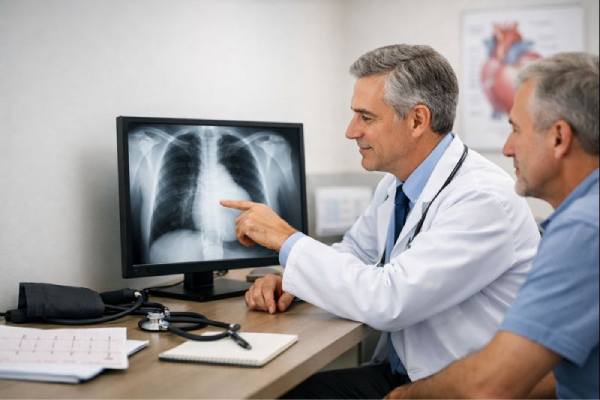
Cardiomegaly means an enlarged heart. It is not a diagnosis by itself so much as a sign that something has changed in the heart’s structure—often the muscle has thickened, the chambers have stretched, or both. Sometimes cardiomegaly is found incidentally on a chest X-ray. Other times it appears after months of shortness of breath, swelling, or fatigue that quietly signal heart failure. Because the word can sound alarming, it helps to know what it does and does not mean: an enlarged heart is not always permanent, and it is not always dangerous, but it always deserves an explanation. The goal is to identify the driver (such as high blood pressure, valve disease, cardiomyopathy, or fluid around the heart) and treat it early enough to protect rhythm, pump function, and long-term health.
Table of Contents
- What cardiomegaly means in the body
- What causes cardiomegaly?
- Symptoms and possible complications
- How cardiomegaly is diagnosed
- Treatment options and what to expect
- Management, prevention, and when to seek care
What cardiomegaly means in the body
Cardiomegaly describes an increase in the heart’s size, but “size” can change for different reasons—and those reasons matter. The heart can enlarge because the muscle becomes thicker (hypertrophy), because the chambers stretch and widen (dilation), or because both happen together. Each pattern has a different set of likely causes and different risks.
Hypertrophy (thickened muscle) often develops when the heart must push against higher pressure for long periods. The left ventricle may thicken in response to long-standing high blood pressure or aortic stenosis (a narrowed aortic valve). At first, thickening can be an efficient adaptation. Over time, however, the stiffened muscle may relax poorly, leading to high filling pressures and symptoms like breathlessness—especially with exertion or at night.
Dilation (stretched chambers) often reflects volume overload or weakened muscle. The ventricle becomes larger to maintain forward flow, but the stretched wall can contract less effectively and may allow valves to leak (for example, functional mitral regurgitation). Dilation also increases the risk of arrhythmias and blood clots forming in areas where blood flow becomes sluggish.
Importantly, cardiomegaly on a chest X-ray usually refers to an enlarged cardiac silhouette, not a precise measurement of chamber size. A classic screening threshold is a cardiothoracic ratio above 0.50 on a well-positioned, full-inspiration posterior-anterior (PA) chest X-ray. But the silhouette can look larger for non-heart reasons—portable anterior-posterior (AP) films, poor inspiration, obesity, chest wall shape, or fluid around the heart can all exaggerate apparent size.
Another key nuance: cardiomegaly can be physiologic in limited cases. Endurance athletes may develop “athlete’s heart” with mild, balanced chamber enlargement that improves with detraining. Pregnancy increases blood volume and can temporarily change heart dimensions. These situations still require thoughtful interpretation, especially if symptoms or abnormal testing is present.
Think of cardiomegaly as a clinical prompt: “The heart has remodeled.” The next step is to determine whether that remodeling is a benign adaptation, a reversible strain, or a marker of disease that needs treatment now.
What causes cardiomegaly?
Cardiomegaly has many possible causes, and more than one factor is often present at the same time. Clinicians usually group causes by the type of stress placed on the heart: pressure overload, volume overload, muscle disease, rhythm problems, and systemic conditions.
Common causes
- High blood pressure (hypertension): A leading driver of left ventricular hypertrophy. Even moderately elevated blood pressure, sustained over years, can remodel the heart.
- Coronary artery disease and prior heart attack: Damaged muscle can weaken and dilate, especially if large areas have been injured or if ischemia is ongoing.
- Cardiomyopathies (heart muscle disorders):
- Dilated cardiomyopathy (enlarged, weakened ventricle) can be genetic, viral/post-viral, toxic (including alcohol), or idiopathic.
- Hypertrophic cardiomyopathy causes thickened muscle and may enlarge the heart silhouette depending on anatomy.
- Restrictive/infiltrative diseases (such as amyloidosis) can enlarge the heart in a different way, often with stiffness rather than dilation.
- Valve disease:
- Aortic stenosis increases pressure load and thickening.
- Aortic or mitral regurgitation increases volume load and dilation.
- Long-standing fast heart rhythms: Persistent tachycardia (for example, uncontrolled atrial fibrillation with rapid rate) can lead to tachycardia-induced cardiomyopathy, which may improve once rate or rhythm is controlled.
- Congenital heart disease: Some defects increase volume or pressure load for years before being diagnosed.
- Pulmonary hypertension and chronic lung disease: These can enlarge the right side of the heart (right ventricular and right atrial enlargement).
Systemic and “whole-body” contributors
- Diabetes and metabolic syndrome: These worsen vascular and myocardial health and can accelerate remodeling.
- Chronic kidney disease: Fluid balance issues, hypertension, and anemia can increase cardiac workload.
- Thyroid disease: Untreated hyperthyroidism can raise heart rate and oxygen demand and contribute to enlargement.
- Anemia: Severe or prolonged anemia can drive a high-output state, straining the heart.
- Pregnancy-related conditions: Peripartum cardiomyopathy can cause significant enlargement and weakness late in pregnancy or postpartum.
Risk factors that make enlargement more likely
- Older age, family history of cardiomyopathy or sudden cardiac death
- Smoking, heavy alcohol use, stimulant use
- Poorly controlled blood pressure, high LDL cholesterol, diabetes
- Untreated sleep apnea
- Prior chemotherapy or chest radiation (in selected patients)
A practical insight: the most useful question is not only “Why is the heart enlarged?” but also “Is it enlarged because it is working too hard, too fast, against too much pressure, or because the muscle itself is sick?” That framing helps guide testing and treatment quickly.
Symptoms and possible complications
Many people with cardiomegaly have no symptoms, especially early on. The heart can remodel quietly for years while the body compensates. Symptoms usually appear when the enlargement begins to impair filling, pumping, or rhythm—or when the condition causing enlargement suddenly worsens.
Common symptoms
- Shortness of breath with exertion, lying flat, or waking at night gasping for air
- Fatigue and reduced exercise tolerance, often described as “I get tired much faster than I used to”
- Swelling in the ankles, legs, abdomen, or rapid weight gain from fluid
- Palpitations (fluttering, racing, or irregular heartbeat)
- Chest discomfort (which may reflect ischemia, strain, or associated coronary disease)
- Dizziness or fainting, especially when arrhythmias or outflow obstruction are involved
- Persistent cough or wheeze from fluid congestion in the lungs
Symptoms vary depending on which side of the heart is most affected:
- Left-sided dysfunction tends to cause breathlessness and lung congestion.
- Right-sided dysfunction more often causes leg swelling, abdominal fullness, and liver congestion.
- Biventricular involvement can cause a mixture of both.
Complications to understand
Cardiomegaly can increase the risk of problems that are driven by stretch, scarring, and pressure changes in the heart:
- Heart failure: Enlargement often reflects remodeling that can progress to reduced pump function or stiff filling (both can cause congestion).
- Arrhythmias: Enlarged atria raise the likelihood of atrial fibrillation. Dilated or scarred ventricles can increase the risk of more dangerous rhythms.
- Valve leakage: A stretched ventricle can pull valve leaflets apart, causing “functional” regurgitation that worsens dilation and symptoms.
- Blood clots and stroke: When the atria fibrillate or the ventricle contracts poorly, blood can pool and form clots. This is one reason clinicians evaluate the need for anticoagulation in certain settings.
- Sudden cardiac death (in select diseases): The risk depends on the underlying diagnosis (for example, certain genetic cardiomyopathies) and the degree of dysfunction or scarring.
What symptoms deserve urgent attention
Seek emergency evaluation if cardiomegaly is associated with:
- New chest pressure lasting more than a few minutes, especially with sweating, nausea, or breathlessness
- Fainting, severe dizziness, or a rapid sustained heartbeat
- Severe shortness of breath at rest, pink frothy sputum, or blue lips
- Confusion or signs of stroke (face droop, arm weakness, speech difficulty)
A helpful way to think about symptoms is “trend plus triggers.” A single tired day is not specific, but a clear trend—breathlessness worsening over weeks, swelling that returns after stopping diuretics, palpitations that become frequent—often signals that the heart’s remodeling is becoming clinically important.
How cardiomegaly is diagnosed
Because cardiomegaly is a sign, diagnosis focuses on two tasks: confirm whether the heart is truly enlarged, and identify why. Testing is usually stepped and efficient, starting with simple tools and moving to more specialized imaging when needed.
1) History and physical exam
Clinicians ask about breathlessness, swelling, chest pain, palpitations, fainting, alcohol or stimulant use, pregnancy/postpartum timing, and family history of cardiomyopathy or sudden cardiac death. The exam looks for fluid overload (leg swelling, lung crackles), murmurs suggesting valve disease, and signs of right-sided strain (neck vein distension, enlarged liver).
2) Chest X-ray (CXR)
A CXR can suggest an enlarged cardiac silhouette. The most commonly referenced screening metric is the cardiothoracic ratio (CTR), where a value above about 0.50 on a properly performed PA film suggests enlargement. However, clinicians interpret CXR carefully because:
- Portable AP films can overestimate heart size.
- Poor inspiration can make the heart look larger.
- Pericardial effusion (fluid around the heart) can mimic enlargement.
- Chest wall shape and body habitus can distort the silhouette.
So, a “cardiomegaly” note on an X-ray is often the start of evaluation—not the endpoint.
3) Electrocardiogram (ECG)
ECG can show patterns consistent with chamber enlargement, prior heart attack, conduction disease, or arrhythmias such as atrial fibrillation. ECG is supportive, but it cannot reliably quantify size on its own.
4) Echocardiogram (the workhorse test)
Transthoracic echocardiography is typically the most important next step. It can assess:
- Chamber dimensions and wall thickness
- Pump function (ejection fraction and other measures)
- Diastolic function (how well the heart relaxes)
- Valve structure and leakage/narrowing severity
- Pulmonary pressures and right-heart function
- Pericardial effusion
5) Blood tests and targeted evaluation
Common labs include kidney function, electrolytes, thyroid function, and biomarkers such as natriuretic peptides when heart failure is suspected. Additional tests may be used based on context (iron studies, inflammatory markers, genetic testing in familial disease).
6) Advanced imaging when needed
- Cardiac MRI can characterize scar, inflammation (myocarditis), and infiltrative diseases, and provide accurate chamber volumes.
- CT may help evaluate coronary arteries or structural anatomy in selected cases.
A practical takeaway: the most meaningful “diagnosis” is not cardiomegaly itself, but the specific condition behind it—because that determines whether enlargement is reversible, how urgent treatment is, and what monitoring is needed.
Treatment options and what to expect
There is no single treatment for cardiomegaly because treatment targets the underlying cause and the specific problems created by enlargement (congestion, low pump function, high filling pressures, and arrhythmias). Many patients improve substantially when therapy is matched to the mechanism driving remodeling.
Treat the driver
- Hypertension-related enlargement: Tightening blood pressure control is often central. Over time, improved pressure control can reduce hypertrophy and lower heart failure risk.
- Valve disease: Moderate to severe valve stenosis or regurgitation may require procedural repair or replacement. Treating valve disease early can prevent irreversible chamber dilation.
- Coronary disease: Revascularization, anti-ischemic therapy, and risk-factor control can prevent further injury and support recovery after a heart attack.
- Tachycardia-induced cardiomyopathy: Rate control or rhythm control can allow the heart to remodel back toward normal, sometimes within weeks to months.
- Toxin-related cardiomyopathy: Stopping heavy alcohol use or illicit stimulants can be a turning point. Some medication-related causes may require changing therapies under specialist guidance.
When heart failure is present
Treatment often includes a combination of therapies that:
- Reduce congestion (commonly diuretics for swelling and breathlessness)
- Lower the heart’s workload and improve remodeling
- Improve survival and reduce hospitalization risk in many heart failure phenotypes
Because medication selection depends on ejection fraction, blood pressure, kidney function, potassium, rhythm, and comorbidities, clinicians usually start low and titrate gradually. It is common to need adjustments every 2–6 weeks early in care.
Arrhythmia management
Enlarged atria and ventricles are more arrhythmia-prone. Depending on the rhythm and risk profile, treatment can include:
- Rate or rhythm control strategies
- Anticoagulation when stroke risk is elevated (especially in atrial fibrillation)
- Device therapy in selected patients (implantable defibrillator for certain high-risk ventricular arrhythmia settings, or cardiac resynchronization therapy when conduction delay contributes to poor function)
Advanced therapies (selected cases)
If cardiomegaly reflects advanced cardiomyopathy with persistent symptoms despite optimal medical therapy, clinicians may consider:
- Specialized heart failure programs
- Mechanical circulatory support in severe refractory cases
- Heart transplant evaluation in carefully selected patients
What to expect
Many people want a direct answer: “Will my heart shrink back?” Sometimes, yes—particularly when enlargement is driven by uncontrolled blood pressure, fast rhythms, reversible myocarditis, or toxins that can be removed. In other cases, the heart may not fully return to normal size, but symptoms and risk can still improve dramatically with the right therapy. The key is consistent follow-up and treating cardiomegaly as a marker of remodeling that deserves structured, long-term care.
Management, prevention, and when to seek care
Living with cardiomegaly is often less about a single intervention and more about building a plan that reduces strain on the heart, prevents flare-ups, and catches problems early. Management works best when it is specific, measurable, and realistic.
Daily management habits that protect the heart
- Track symptoms and trends: A simple log of breathlessness, swelling, and exercise tolerance can reveal early deterioration. Many clinicians recommend daily morning weights; a rapid gain over 2–3 days can signal fluid retention.
- Follow a heart-supportive eating pattern: Emphasize minimally processed foods, vegetables, fruit, legumes, whole grains, and unsalted nuts. If congestion is an issue, clinicians often discuss sodium reduction and fluid strategies tailored to the individual.
- Move consistently, not intensely: Regular walking or cycling with gradual progression often improves conditioning and reduces symptom sensitivity. Cardiac rehabilitation can be especially helpful after heart attack, heart failure hospitalization, or when fear of exertion is limiting recovery.
- Protect sleep and breathing: Treating sleep apnea can reduce blood pressure spikes, arrhythmia burden, and strain on the right heart.
- Avoid common remodeling accelerators: Smoking, heavy alcohol use, stimulant drugs, and unmonitored “energy” supplements can worsen enlargement and rhythm instability.
- Keep vaccinations current (as advised by a clinician), since respiratory infections can trigger decompensation.
Prevention focuses on the causes
Cardiomegaly prevention is largely cardiovascular prevention:
- Keep blood pressure controlled over years, not weeks.
- Treat diabetes and cholesterol with a long-term approach.
- Address obesity with sustainable habits and clinical support when needed.
- Seek evaluation for a strong family history of cardiomyopathy or sudden cardiac death.
A practical “action plan” for worsening symptoms
Ask your clinician for clear thresholds, such as:
- When to adjust diuretics (if prescribed).
- When to call the office urgently (same day).
- When to go to the emergency department.
When to seek urgent care
Go to emergency services immediately for:
- Chest pressure that is new, severe, or persistent
- Fainting, severe dizziness, or a rapid sustained heartbeat
- Severe shortness of breath at rest, blue lips, confusion, or signs of stroke
- Sudden, dramatic swelling or inability to lie flat due to breathlessness
Finally, cardiomegaly can be emotionally heavy. Many people feel stuck between “My tests are scary” and “I feel okay most days.” A grounded approach helps: treat the enlargement as a serious signal, but focus on what is controllable—cause identification, risk reduction, symptom monitoring, and steady follow-through.
References
- 2022 AHA/ACC/HFSA Guideline for the Management of Heart Failure: A Report of the American College of Cardiology/American Heart Association Joint Committee on Clinical Practice Guidelines 2022 (Guideline)
- 2023 Focused Update of the 2021 ESC Guidelines for the diagnosis and treatment of acute and chronic heart failure 2023 (Guideline)
- 2023 ESC Guidelines for the management of cardiomyopathies 2023 (Guideline)
- Measurement of Cardiothoracic Ratio on Chest X-rays Using Artificial Intelligence-A Systematic Review and Meta-Analysis 2024 (Systematic Review)
Disclaimer
This article is for educational purposes only and does not provide medical advice, diagnosis, or treatment. Cardiomegaly can be a benign finding or a sign of serious heart disease, and the right evaluation depends on your symptoms, medical history, and test results. If you have chest pain, severe shortness of breath, fainting, confusion, or signs of stroke, seek emergency care immediately. For personalized guidance on testing, medications, diet, and activity, consult a qualified clinician who can assess you directly.
If you found this article helpful, please share it on Facebook, X (formerly Twitter), or any platform you prefer, and follow us on social media. Your support helps our team continue producing high-quality health content.