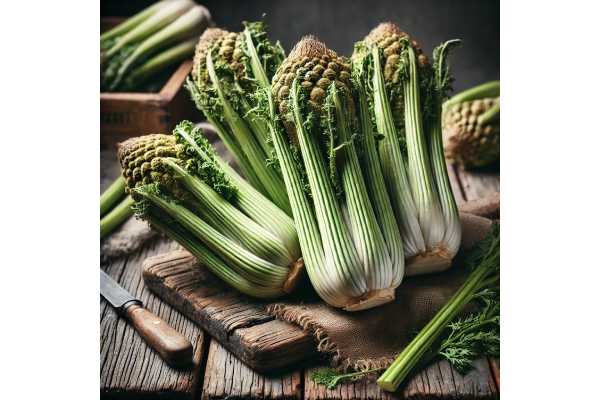
Cardoon is one of those vegetables that looks intimidating at first glance but rewards you if you give it a chance. This tall, silvery-green thistle is a close relative of the globe artichoke, and its thick, ribbed stalks are treated a bit like a more robust, aromatic celery. In traditional Mediterranean cooking, cardoon features in winter stews, gratins, and festive dishes, and even its flowers are used to curdle milk in certain cheeses.
Nutritionally, cardoon is a low-calorie, high-water vegetable that still manages to deliver meaningful amounts of fiber, potassium, magnesium, and folate, along with a variety of antioxidant polyphenols. Research on its species, Cynara cardunculus, suggests potential roles in supporting cholesterol balance, liver health, and oxidative stress, particularly when concentrated extracts are used. At the table, though, cardoon is valued just as much for its subtle, artichoke-like flavor and pleasant bitterness, which can cut through rich sauces and meats and complement beans, citrus, and olive oil.
Cardoon at a Glance
- Typical serving: 1 cup cooked cardoon (about 120 g) or 100 g raw, enjoyed several times per week as part of a varied diet.
- Low in calories (around 17–20 kcal per 100 g) yet a source of fiber, potassium, magnesium, and folate.
- Contains plant compounds from the Cynara family that are being studied for effects on blood lipids and liver function; evidence is strongest for concentrated extracts, not whole cardoon alone.
- Safety caveat: cardoon belongs to the Asteraceae family and may trigger reactions in people allergic to artichoke, ragweed, or related plants.
- People with significant bile duct disease, severe kidney disease, or strict sodium restrictions should discuss frequent cardoon or Cynara extract use with a healthcare professional.
Table of Contents
- Cardoon origins, forms and cooking
- Cardoon nutrition profile in detail
- Evidence based benefits of cardoon
- Cardoon intolerance, side effects and drug interactions
- Selecting cardoon, storage and sustainability
- Cooking cardoon for best nutrient retention
- Practical portions, swaps and cardoon FAQs
Cardoon origins, forms and cooking
Cardoon (Cynara cardunculus var. altilis) is a perennial thistle in the Asteraceae family and a close botanical relative of the globe artichoke. The edible portion is the thick, fleshy leaf stalk (petiole), which looks like oversized, ribbed celery with a silvery coating. Cardoon has long been cultivated around the Mediterranean, especially in Italy, Spain, France, and North Africa, where it is considered a classic winter vegetable.
The flavor is often described as a blend of celery, salsify, and artichoke: mildly bitter, slightly nutty, and aromatic. That bitterness is part of its appeal in cuisines that balance rich meats, anchovies, cheese, and olive oil with more assertive vegetables. Traditionally, cardoon is “blanched” in the field by tying or wrapping stalks to exclude light, which keeps them pale and tender.
Common culinary forms include:
- Fresh raw stalks (whole or trimmed, often sold in bundles).
- Prepared and trimmed stalks in markets, sometimes partially blanched.
- Bottled or canned cardoon pieces in brine or oil, more common in specialty shops.
- Flower heads (used similarly to small, spiny artichokes) in some regions.
- Dried flower pistils used as a traditional vegetable rennet to coagulate milk in certain regional cheeses.
In the kitchen, cardoon almost always needs some preparation to tame its strings and bitterness. Typical steps include trimming leaves and thorns, peeling away fibrous outer ribs, and soaking pieces in acidulated water. From there, cardoon lends itself to several cooking styles:
- Long, gentle boiling or braising until meltingly tender, then baked into gratins with cheese or béchamel.
- Simmering in broths and stews with beans, chickpeas, lamb, or veal.
- Brief pre-boiling followed by pan-frying, roasting, or grilling for more concentrated flavor.
- Using blanched stalks as a dipping vegetable with sauces such as bagna cauda or hummus.
Although you can eat very young, peeled cardoon raw in thin sticks, it is much more commonly eaten cooked, which softens the texture and reduces bitterness. Overall, cardoon is best thought of as a “structure and flavor” vegetable: it brings body and a gentle bitterness that supports, rather than dominates, a dish.
Cardoon nutrition profile in detail
Raw cardoon is mostly water (about 94%) and provides very few calories per 100 g—typically around 17–20 kcal. It contains modest carbohydrates, little fat, and small amounts of protein, which makes it suitable for energy-conscious eating patterns while still contributing valuable micronutrients.
Below is an overview of its composition per 100 g raw cardoon, using common Daily Value (DV) benchmarks for adults.
Macros and electrolytes (per 100 g raw)
| Nutrient | Amount per 100 g | Approx. %DV* | Comments |
|---|---|---|---|
| Energy | 17 kcal | 1% | Very low energy density |
| Water | ~94 g | – | High hydration |
| Protein | 0.7 g | 1–2% | Minor protein contribution |
| Total fat | 0.1 g | 0% | Essentially fat-free |
| Carbohydrates | 4.1 g | 1–2% | Mostly complex carbohydrates |
| Dietary fiber | 1.6–1.7 g | ~6% | Contributes to daily fiber intake |
| Sodium | ~170 mg | ~7% | High for a vegetable |
| Potassium | ~400 mg | 8–12% | Helps support fluid and blood pressure balance |
*Percent Daily Values are approximate and depend on the reference system used.
Vitamins (per 100 g raw)
| Vitamin | Amount per 100 g | Approx. %DV | Role |
|---|---|---|---|
| Vitamin C (ascorbic acid) | ~2 mg | 2–3% | Antioxidant; collagen formation |
| Folate (vitamin B9) | ~68 µg | ~17% | DNA synthesis; cell division |
| Vitamin B6 | ~0.1–0.12 mg | 6–9% | Amino acid and neurotransmitter metabolism |
| Vitamin A, D, B12 | ~0 | 0% | Not a meaningful source |
Cardoon is not a vitamin powerhouse compared with some leafy greens, but its folate and vitamin B6 content can meaningfully contribute to daily needs, especially when eaten regularly.
Minerals and trace elements (per 100 g raw)
| Mineral | Amount per 100 g | Approx. %DV | Role |
|---|---|---|---|
| Calcium | ~70 mg | ~5–7% | Bone health, muscle function |
| Magnesium | ~42 mg | ~10% | Muscle contraction, nerve and energy metabolism |
| Potassium | ~400 mg | 8–12% | Fluid balance, blood pressure regulation |
| Iron | ~0.7 mg | ~4–9% | Oxygen transport, enzymes |
| Phosphorus | ~23 mg | 2–3% | Bone and energy metabolism |
| Manganese, copper | Small amounts | 5–15% (each) | Antioxidant enzymes, connective tissue |
Phytonutrients and bioactives
Cardoon shares many bioactive compounds with artichoke, including various phenolic acids (such as caffeoylquinic acids), flavonoids, and bitter sesquiterpene lactones. These compounds are associated in research with antioxidant, bile-stimulating, and potentially cholesterol-lowering actions, particularly when standardized extracts are used.
Glycemic and acid–base aspects
With roughly 4 g total carbohydrates and about 1.6–1.7 g fiber per 100 g, cardoon has a low glycemic load and is unlikely to raise blood glucose significantly when eaten in typical portions. Its mineral profile (especially potassium and magnesium) also makes it a relatively alkaline-forming vegetable in many dietary scoring systems.
When interpreting these numbers, remember that cooking methods, trimming patterns, and whether the cardoon is packed in brine or oil can shift sodium and fat content. Fresh, home-prepared cardoon will usually be lower in sodium than canned or jarred versions.
Evidence based benefits of cardoon
Because cardoon is closely related to artichoke and belongs to the same Cynara cardunculus species group, many studies on “artichoke” or Cynara extracts are relevant. These studies usually use standardized leaf or whole-plant extracts rather than cooked stalks, so results cannot be translated directly into a “dose” of vegetable. Still, they help explain why cardoon is interesting from a health perspective.
1. Support for cholesterol and triglyceride management
Extracts from Cynara leaves have been associated, in clinical and experimental research, with modest reductions in total cholesterol, LDL cholesterol, and triglycerides. Proposed mechanisms include:
- Increased bile acid production and excretion, which uses up cholesterol.
- Antioxidant protection of lipids and cell membranes, potentially reducing LDL oxidation.
- Modest improvements in enzymes involved in lipid metabolism in the liver.
Eating whole cardoon stalks will not deliver the same concentrated dose of these bioactives, but including cardoon in place of higher-fat or refined side dishes can still support a heart-conscious eating pattern.
2. Potential liver and metabolic benefits
Preclinical and early clinical work suggests that Cynara extracts can support liver cells under metabolic stress, helping to modulate enzymes involved in detoxification and fat handling, and to reduce markers of oxidative damage. While this evidence focuses on extracts, cardoon as a food still contributes:
- Very low saturated fat and no cholesterol.
- Fiber and polyphenols, which may support a more favorable gut–liver axis.
- Minerals, especially magnesium and potassium, that are linked with healthier metabolic profiles in population studies.
3. Antioxidant and anti-inflammatory properties
Cardoon contains a mix of phenolic acids and flavonoids with documented antioxidant effects in laboratory assays. These compounds can neutralize reactive oxygen species and may modulate inflammatory pathways in cell and animal models. In real-life diets, cardoon will act alongside other vegetables, fruits, nuts, legumes, and whole grains to provide a broad spectrum of protective phytochemicals.
4. Digestive support and bile flow
Bitter compounds in cardoon, especially certain sesquiterpene lactones, are thought to stimulate digestive secretions, including saliva, gastric juices, and bile. Traditionally, cardoon and other Cynara-based preparations have been used as “digestive bitters,” particularly around heavy meals. While robust clinical evidence is limited, many people find that including a small serving of bitter vegetables like cardoon before or with a meal helps them feel more comfortably satisfied.
5. Weight-conscious, nutrient-dense side dish
At roughly 17–22 kcal per 100 g cooked and with a decent fiber content for the calories, cardoon is a classic example of a high-volume, low-energy-dense food. Replacing more energy-dense sides (creamy gratins, large portions of refined starches) with cardoon-based dishes can help reduce overall calorie intake without dramatically shrinking plate volume, which may support weight management efforts over time.
Overall, the strongest data relate to standardized Cynara extracts and metabolic health, while cardoon as a vegetable fits nicely into dietary patterns that are rich in vegetables, low in ultra-processed foods, and supportive of cardiovascular and liver health.
Cardoon intolerance, side effects and drug interactions
For most healthy people, cardoon eaten in culinary amounts is safe and well tolerated. However, several specific considerations are worth keeping in mind, especially if you plan to eat cardoon frequently or use concentrated Cynara preparations.
Allergy and cross-reactivity
Cardoon belongs to the Asteraceae (daisy) family, which also includes artichoke, chamomile, ragweed, and some lettuces. People who have experienced allergic reactions to artichoke, other Cynara species, or strong ragweed allergies may have a higher risk of reacting to cardoon. Symptoms could include itching in the mouth, hives, swelling, or, rarely, more serious reactions. If you suspect such an allergy, avoid cardoon and discuss testing with an allergist.
Digestive tolerance and bitterness
Cardoon’s bitter taste comes from sesquiterpene lactones and other compounds that can stimulate digestive secretions. In moderate amounts, this may aid digestion, but in sensitive individuals it can cause:
- Stomach discomfort or cramping.
- Loose stools, especially if eaten in large portions or if you are not used to high-fiber, bitter vegetables.
Peeling thoroughly, pre-boiling, and discarding the first cooking water can reduce bitterness and improve tolerance.
Sodium, nitrates, and kidney considerations
Raw cardoon naturally contains more sodium than many other vegetables. If it is canned or jarred in brine, sodium can be significantly higher. People on strict sodium-restricted diets should account for this and favor fresh or low-salt preparations, rinsing canned cardoon before use.
Like other leafy and stalky vegetables, cardoon can accumulate natural nitrates from the soil. In normal culinary quantities, this is not usually a concern for healthy adults, but people with certain rare metabolic conditions or very young infants should not rely heavily on high-nitrate vegetables preserved for long periods.
Gallbladder and bile duct issues
Because Cynara extracts can stimulate bile flow, they are sometimes used as herbal support for digestion and cholesterol control. In people with gallstones, bile duct obstruction, or certain gallbladder diseases, increased bile flow may aggravate symptoms or theoretically increase the risk of complications. While ordinary culinary servings of cardoon are unlikely to have the same effect as high-dose extracts, anyone with significant biliary disease should discuss frequent use of Cynara supplements and very large servings of bitter cardoon with their healthcare provider.
Medication interactions
There are no well-documented, severe drug interactions with cardoon as a food. However, people taking the following should use extra caution with Cynara supplements and, to a lesser extent, very large habitual servings of cardoon:
- Bile acid sequestrants or other cholesterol-lowering medications.
- Drugs that are strongly dependent on bile for absorption.
- Diuretics, due to combined effects on fluid and electrolyte balance.
In these cases, it is sensible to introduce cardoon gradually, monitor how you feel, and review any supplement use with a clinician or pharmacist.
Selecting cardoon, storage and sustainability
Cardoon is still a niche vegetable in many markets, so quality can vary. When you find it, it is worth taking a moment to select the best stalks, which will be easier to prepare and more pleasant to eat.
How to choose fresh cardoon
Look for:
- Firm, crisp stalks with no limp or rubbery sections.
- Pale green to whitish ribs without excessive browning or dark spots.
- Minimal cracking or splitting along the ribs.
- Leaves (if present) that are fresh-looking rather than wilted or yellowed.
Some traditional varieties are heavily ribbed and can have small thorns along the edges; wearing gloves when handling and trimming is not excessive. Blanched or wrapped stalks (paler and less green) are usually more tender and milder in flavor.
If you are buying jarred or canned cardoon:
- Choose products with short ingredient lists (cardoon, water, salt, perhaps an acid).
- Avoid jars with cloudy liquid, rusted lids, or an off smell once opened.
- Be aware of higher sodium content and adjust salting in your final dish.
Storage tips
Fresh cardoon behaves somewhat like celery but is more prone to drying out and browning:
- Wrap trimmed stalks in a damp cloth or paper towel and place in a perforated bag in the refrigerator.
- Use within 3–5 days for best texture and flavor.
- Once cut, keep pieces submerged in water with a little lemon juice or vinegar to prevent browning until you cook them.
- Cooked cardoon can be stored in an airtight container in the fridge for about 3 days; reheat gently.
Blanching and freezing is possible, but texture may soften further. To freeze, pre-boil cleaned pieces in acidulated water until just tender, cool quickly, drain thoroughly, and freeze in portions.
Sustainability aspects
Cardoon is a hardy, drought-tolerant plant well suited to Mediterranean climates. It can grow on marginal land and has been studied as a multipurpose crop for food, oil, animal feed, and even biomass and bioenergy production, which makes it interesting from a sustainability standpoint.
From a consumer perspective:
- Favor locally grown cardoon in season (typically cooler months) to reduce transport impact.
- Use as much of the stalk as possible by trimming efficiently.
- Add trimmings to stocks (if not too fibrous) before composting to reduce waste.
Cooking cardoon for best nutrient retention
Cardoon usually requires thorough cooking to become tender, but that does not mean you need to sacrifice all of its nutrients. A few preparation strategies can help balance palatability, safety, and nutrient preservation.
Step-by-step preparation
- Trim and clean
- Cut off leaves, tough base, and any very fibrous or heavily blemished sections.
- Remove any obvious thorns along the ribs.
- Peel fibers
- Use a paring knife or vegetable peeler to strip away the toughest strings from the outer ribs, similar to peeling celery.
- Cut and acidulate
- Slice into sticks or chunks.
- Immediately place pieces into a bowl of water with lemon juice or vinegar to reduce browning and bitterness.
- Pre-boil (optional but common)
- Simmer cardoon in salted, acidulated water for 20–40 minutes, depending on thickness, until just tender.
- Discarding this cooking water removes some bitterness and some water-soluble nutrients; keeping it for soups retains more nutrients but also more bitterness and sodium.
Cooking methods and nutrient impact
- Boiling and braising
- Traditional and effective for tenderness.
- Can lead to leaching of vitamin C, some B vitamins, and minerals into the cooking water.
- To retain more nutrients, use the cooking liquid as part of soups or sauces instead of discarding it.
- Steaming
- Preserves more vitamin C and water-soluble nutrients than prolonged boiling.
- Works especially well after an initial short pre-boil to remove some bitterness.
- Roasting or grilling
- After pre-cooking, roasting or grilling with a little oil caramelizes edges and concentrates flavor.
- Indirectly encourages use of modest amounts of healthy fats (like extra-virgin olive oil), which can improve satisfaction.
- Pressure cooking
- Speeds up softening of fibrous stalks.
- Short cooking time can help preserve some nutrients, but it is still a water-based method, so some leaching occurs.
Practical tips to balance taste and nutrition
- Keep pre-boiling time just long enough to soften fibers and mellow bitterness, not more.
- Cut stalks into uniform pieces so they cook evenly and you can avoid overcooking small sections.
- Pair cardoon with vitamin-C-rich ingredients (such as lemon, parsley, or bell peppers) in the same meal to support iron absorption and overall antioxidant intake.
- If sodium is a concern, reduce or omit salt in pre-boiling water and season more lightly at the end.
Used thoughtfully, cardoon can be both delicious and nutritionally meaningful, especially as part of mixed dishes that incorporate beans, whole grains, or other vegetables.
Practical portions, swaps and cardoon FAQs
Portion size for cardoon is flexible, but a few benchmarks are helpful:
- Typical serving: about 1 cup cooked cardoon (roughly 120 g) or 100 g raw.
- This portion usually provides about 20–30 kcal, 2–3 g fiber, around 400 mg potassium, and modest amounts of folate, magnesium, and vitamin C.
For most adults, including 1–2 servings of cardoon once or twice a week is reasonable within a varied vegetable pattern. People following mostly plant-based diets can certainly enjoy more, provided overall variety and tolerance are good.
Comparisons and smart swaps
- Versus celery
- Cardoon is more fibrous, more bitter, and has more potassium and sodium than celery. It works better cooked than raw in large amounts.
- Versus artichoke
- Artichokes typically provide more fiber per serving and somewhat more vitamin C. Cardoon offers similar families of polyphenols but in the stalks rather than the flower head.
- Versus burdock root or salsify
- Burdock and salsify are root vegetables with more starch and calories per 100 g. Cardoon is lighter and more mineral-focused, which may suit energy-conscious meal plans.
If a recipe calls for cardoon and you cannot find it, you can approximate the texture and behavior with a combination of celery (for structure) and artichoke hearts (for flavor), adjusting seasoning and cooking times.
Frequently asked questions
Is cardoon suitable for low-carb or ketogenic diets?
Yes, in moderation. With roughly 4 g total carbohydrates and about 2–3 g net carbohydrates per 100 g, cardoon is relatively low in carbs. Watch portion sizes if you follow a very strict carbohydrate limit.
Is cardoon low FODMAP?
Cardoon has not been extensively tested in standardized FODMAP protocols. Its fiber profile suggests it may be moderately fermentable. People with irritable bowel syndrome or sensitive digestion should start with small portions (½ cup cooked), assess their response, and adjust accordingly.
Can you eat cardoon leaves or flowers?
Culinary use focuses on the blanched stalks. Leaves are typically too bitter and tough to be pleasant in large amounts. The flower heads can be eaten in some traditions, and the dried pistils are used as a vegetable rennet in certain cheeses, but these uses are specialized and not usually part of everyday cooking.
Who should be cautious with cardoon?
- Individuals with known allergies to artichoke, ragweed, or other Asteraceae plants.
- People with significant gallbladder or bile duct disease, especially if also using Cynara supplements.
- Anyone on strict sodium or potassium restrictions (for example, with advanced kidney disease) should coordinate cardoon intake with their care team.
Used thoughtfully, cardoon can be a flavorful way to diversify vegetable intake, bring Mediterranean character to meals, and add fiber and micronutrients without excess calories.
References
- Bioactive Compounds from Cardoon as Health Promoters in Metabolic Disorders 2022 (Systematic Review)
- The Protective Effect of Cynara cardunculus Extract in Diet-Induced Metabolic Syndrome 2020 (RCT/Experimental)
- Bioactive Compounds, Health Benefits and Food Applications of Artichoke and Cardoon 2024 (Systematic Review)
- The Effect of Artichoke on Lipid Profile: A Review of Possible Mechanisms of Action 2018 (Review)
- Top 7 Cardoon Nutrition Facts and Health Benefits 2023 (Nutrition Summary)
Disclaimer
The information in this article is intended for general educational purposes and does not replace personalized medical advice, diagnosis, or treatment. Nutrient values are approximate and can vary with variety, growing conditions, and preparation methods. Health effects described for Cynara extracts come primarily from research using standardized preparations and should not be taken as proof that eating cardoon will produce the same outcomes. Always consult a qualified healthcare professional before making significant changes to your diet, using herbal supplements, or if you have underlying medical conditions or take prescription medications.
If you found this guide on cardoon useful, you are warmly invited to share it with others—whether on Facebook, X (formerly Twitter), or any platform you prefer. Thoughtful sharing helps more readers discover reliable nutrition information and supports the ongoing work of teams dedicated to producing clear, evidence-informed content.