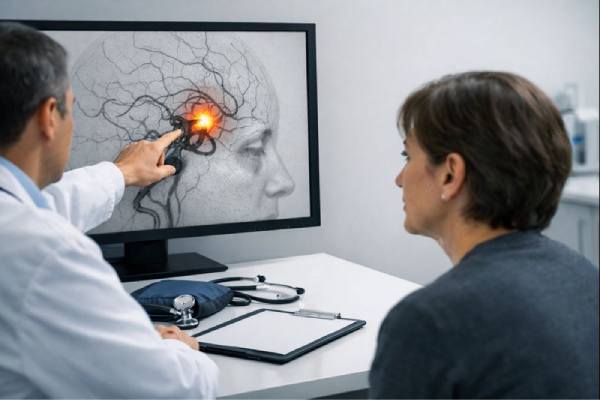
A carotid-cavernous fistula (CCF) is an abnormal connection between carotid arteries and the cavernous sinus, a venous “collecting space” behind the eye. Instead of blood flowing smoothly from arteries to tiny capillaries, some of it is shunted directly into veins under higher pressure. That pressure backs up into the eye’s draining veins and can also affect nerves that control eye movement and facial sensation. The result is a condition that often announces itself with striking eye redness, bulging, double vision, or a pulsing sound in the head—yet it can be mistaken for common eye problems. CCFs range from urgent, high-flow lesions (often after trauma) to slower, dural fistulas that may evolve gradually. Understanding the type is essential because it determines the risks, the tests you need, and whether observation or endovascular repair is the safest next step.
Table of Contents
- What it is and how it affects the body
- Causes and risk factors
- Symptoms and complications
- How it’s diagnosed
- Treatment options and what to expect
- Management, prevention, and when to seek care
What it is and how it affects the body
A carotid-cavernous fistula is an abnormal arteriovenous shunt involving the cavernous sinus, a venous channel located on each side of the pituitary gland behind the eye sockets. The cavernous sinus drains blood from the orbit and also houses (or sits beside) several cranial nerves and the internal carotid artery. When arterial blood enters this venous space at higher pressure, it disrupts normal drainage and irritates nearby nerves.
Why the cavernous sinus matters
The cavernous sinus is a crowded corridor. Structures affected by a CCF can include:
- Cranial nerves that move the eye (III, IV, VI), leading to double vision or a droopy eyelid
- Sensory branches of the trigeminal nerve (V1/V2), causing facial or eye pain, numbness, or tingling
- Venous pathways draining the eye, raising pressure in the orbit and inside the eye (intraocular pressure)
Because the orbit is a closed space, even a moderate rise in venous pressure can create visible signs—swollen conjunctiva, eyelid edema, and proptosis (eye bulging).
Direct vs indirect fistulas
Clinicians typically separate CCFs into two broad groups:
- Direct CCF (high-flow): a direct connection between the internal carotid artery and the cavernous sinus. This often happens after head or facial trauma, or less commonly after rupture of an intracavernous carotid aneurysm. Direct fistulas can produce dramatic symptoms quickly and may threaten vision or neurologic function if not treated.
- Indirect CCF (dural, usually lower-flow): connections form between small meningeal branches (from the internal carotid artery, external carotid artery, or both) and the cavernous sinus. Indirect fistulas often present more gradually and may be easier to confuse with thyroid eye disease, chronic conjunctivitis, or glaucoma.
A common anatomy-based labeling system (often discussed clinically) is the Barrow classification, which categorizes fistulas by arterial supply pattern. You do not need to memorize the labels to understand the practical takeaway: flow rate and venous drainage pattern are what predict danger.
What determines risk: where the blood drains
The biggest predictor of complications is not just “high-flow vs low-flow,” but venous outflow direction:
- Drainage into the superior ophthalmic vein tends to cause prominent eye findings.
- Drainage into deeper veins—especially with cortical venous reflux—can raise the risk of brain congestion, hemorrhage, or neurologic deficits and usually requires prompt treatment.
In short: a CCF is a plumbing problem where arterial pressure invades a venous system not designed for it. The symptoms reflect where that pressure goes and which nearby nerves are squeezed or irritated.
Causes and risk factors
Carotid-cavernous fistulas form through two main pathways: traumatic disruption of an artery or spontaneous development of dural shunts. Your risk profile helps clinicians predict the likely type, urgency, and safest treatment.
Traumatic causes
Direct, high-flow CCFs are strongly associated with trauma. Typical scenarios include:
- Motor vehicle collisions with skull base or facial fractures
- Falls with head impact
- Penetrating injuries (rare but high risk)
- Iatrogenic injury (uncommon): complications after surgery, endovascular procedures, or skull base interventions
In traumatic cases, symptoms can appear quickly, but delayed presentation also occurs—sometimes days to weeks after injury—especially when swelling and bruising initially dominate the picture.
Spontaneous causes
Indirect (dural) CCFs often arise without a single triggering event. Factors linked to spontaneous fistulas include:
- Increasing age (especially middle-aged and older adults)
- Hypertension and vascular fragility
- Conditions affecting connective tissue and vessel integrity
- Hormonal and hemodynamic changes (some cases are reported in association with pregnancy or the postpartum period)
A less common spontaneous pathway is rupture of an intracavernous carotid aneurysm into the cavernous sinus, which can create a direct fistula without trauma.
Underlying conditions that can raise suspicion
While many patients have no identifiable underlying disorder, clinicians may look more closely for predisposing factors when the presentation is atypical, bilateral, or recurrent:
- Known aneurysms or a history of aneurysm treatment
- Heritable connective tissue disorders (for example, disorders associated with arterial fragility)
- Prior radiation to the head and neck (vascular changes can appear years later)
- Coexisting dural arteriovenous fistulas elsewhere
Risk is not just “who gets it,” but “who gets complications”
A key clinical nuance is that two people with CCF can have very different risk even if they share the same basic diagnosis. Factors that tend to increase the likelihood of urgent problems include:
- High-flow direct shunts (often traumatic)
- Evidence of impaired venous drainage from the brain (cortical venous reflux)
- Rapid worsening of vision, rising intraocular pressure, or optic nerve compromise
- Severe cranial nerve palsies or progressive neurologic deficits
Conversely, some low-flow indirect fistulas may remain stable or even close spontaneously, especially when symptoms are mild and there are no high-risk drainage patterns on angiography.
The practical message: “CCF” is not a single risk level. The cause (traumatic vs spontaneous), the arterial supply, and—most importantly—the venous drainage pattern determine whether observation is reasonable or whether rapid endovascular repair is the safest choice.
Symptoms and complications
CCF symptoms are often eye-centered because the cavernous sinus drains the orbit. Many patients notice something is “wrong with the eye” before they suspect a vascular problem. Symptoms can be dramatic (especially with direct CCF) or subtle and slowly progressive (more typical for indirect CCF).
Common eye and orbit symptoms
These are the symptoms clinicians listen for most closely:
- Red eye that looks “engorged” rather than irritated (prominent, corkscrew-like conjunctival vessels)
- Chemosis (swollen conjunctiva that can look like clear, puffy tissue over the white of the eye)
- Proptosis (bulging eye), often pulsatile in high-flow cases
- Eyelid swelling and a heavy sensation around the eye
- Eye pain or pressure, sometimes with headache on the same side
- Double vision due to impaired eye movement
Neurologic and sound-related clues
Because arterial flow is entering a venous space, some people experience:
- Pulsatile tinnitus (a rhythmic “whooshing” sound), often on the same side
- An audible orbital bruit (a clinician may hear it with a stethoscope placed over the eye or temple)
- Cranial nerve palsies—especially abducens nerve (VI) palsy—causing horizontal double vision
- Facial numbness or altered sensation (V1/V2 involvement)
Vision-threatening signs
Vision risk is a central reason CCF is treated aggressively when needed. Warning signs include:
- Declining visual acuity or loss of contrast
- Increasing eye pain with nausea (possible acute pressure rise)
- Rising intraocular pressure (can worsen glaucoma or cause new optic nerve damage)
- Retinal or optic nerve changes due to venous congestion
- Corneal exposure and dryness from proptosis, which can lead to ulcers if untreated
Serious complications clinicians aim to prevent
Complications vary by fistula type and drainage pattern:
- Glaucoma and optic neuropathy from sustained elevated venous and intraocular pressure
- Intracranial hemorrhage or venous infarction (more likely when there is cortical venous reflux)
- Progressive neurologic deficits from venous congestion or reduced effective perfusion
- Severe epistaxis (rare, but possible when venous channels communicate with nasal drainage pathways)
- Cavernous sinus thrombosis-like picture (not the same disease, but severe venous congestion can mimic aspects of it)
Symptoms that suggest urgency
Seek urgent evaluation if any of the following occur:
- Rapid worsening of vision, severe eye pain, or sudden swelling
- New or worsening double vision with inability to move the eye normally
- Confusion, weakness, seizures, or severe headache
- A very noisy pulsatile sound that starts suddenly after trauma
A helpful mental model is this: CCF symptoms come from pressure going the wrong direction. The eye is often the first “pressure gauge,” and worsening vision is a sign you should not wait.
How it’s diagnosed
Diagnosing carotid-cavernous fistula requires combining clinical suspicion with vascular imaging. Because the red eye and swelling can mimic common conditions, the first step is recognizing a pattern that does not fit routine conjunctivitis or allergy.
Clinical evaluation: what raises suspicion
Clinicians typically ask targeted questions:
- Did symptoms start after head trauma, even weeks earlier?
- Is there pulsatile tinnitus or a whooshing sound?
- Is redness accompanied by proptosis, chemosis, or double vision?
- Is intraocular pressure elevated or difficult to control?
- Are symptoms one-sided (more typical) or bilateral (possible, especially in indirect fistulas)?
An eye exam may reveal:
- Corkscrew conjunctival vessels and chemosis
- Proptosis and limited eye movement
- Elevated intraocular pressure
- Optic nerve swelling or retinal venous congestion
Imaging tests: from screening to confirmation
Noninvasive imaging often comes first:
- CT or MRI of the orbit/brain: may show proptosis, enlarged extraocular muscles from congestion, and a dilated superior ophthalmic vein.
- CTA or MRA: can suggest early filling of venous structures, cavernous sinus enlargement, or abnormal vascular channels.
These tests can strongly suggest a CCF, but they may not fully define the fistula type or venous drainage risks.
The gold standard: catheter angiography
Digital subtraction angiography (DSA) is considered the definitive test because it:
- Identifies the arterial feeders (internal carotid, external carotid, or both)
- Determines whether the fistula is direct or indirect
- Maps venous drainage patterns, including cortical venous reflux
- Helps the treating team plan the safest endovascular route (transvenous vs transarterial) and materials
Because DSA can transition into treatment during the same session in appropriate cases, it is often used when symptoms are significant or the risk profile is high.
Conditions commonly confused with CCF
Clinicians often need to distinguish CCF from:
- Thyroid eye disease (proptosis and redness, but typically different vascular signs and history)
- Orbital cellulitis (pain and swelling with infection signs, often fever)
- Chronic conjunctivitis or allergy (redness without corkscrew vessels or bruit)
- Cavernous sinus thrombosis (serious infection-related clot; often systemic illness and cranial nerve findings)
- Primary glaucoma (elevated intraocular pressure without venous congestion pattern)
A key practical point: if a “red eye” does not behave like a routine eye problem—especially if it is accompanied by proptosis, double vision, elevated intraocular pressure, or pulsatile tinnitus—vascular evaluation is warranted. Early diagnosis protects vision and reduces the chance of dangerous venous drainage patterns causing brain complications.
Treatment options and what to expect
Treatment of carotid-cavernous fistula is highly individualized. The goal is to eliminate the abnormal shunt while preserving normal carotid blood flow when possible and protecting vision and brain function. Management choices depend on fistula type (direct vs indirect), symptom severity, and venous drainage risk.
When observation can be reasonable
Some indirect, low-flow fistulas without high-risk features may be managed conservatively, especially if:
- Symptoms are mild and stable
- Vision is preserved and intraocular pressure is controlled
- Angiography shows no dangerous venous drainage (such as cortical venous reflux)
In selected indirect cases, clinicians may consider manual carotid compression therapy (performed under instruction) to encourage spontaneous closure. This is not appropriate for everyone, and it must be guided by a specialist because it can carry risks in patients with carotid disease or other contraindications.
Endovascular therapy: the mainstay for most symptomatic CCFs
Endovascular repair is performed by neurointerventional specialists using catheters guided through blood vessels. Common approaches include:
- Transvenous embolization (often preferred for indirect CCF): a catheter is navigated through venous routes (commonly via the inferior petrosal sinus or alternative venous pathways) to reach the cavernous sinus. The fistula is closed using coils, liquid embolic agents, or both.
- Transarterial embolization (often used for direct CCF or selected anatomies): access is through the arterial system to the fistula site. Techniques can include coils, detachable balloons (where available and appropriate), and liquid embolics with careful protection of normal arteries.
- Flow diversion or covered stents (selected cases): stents may be used to reconstruct the carotid artery across the fistula, aiming to seal the connection while keeping the artery open. These options are typically reserved for specific anatomies and often require antiplatelet therapy.
- Parent artery occlusion (when necessary): if preserving the internal carotid artery is not safe or feasible, the artery may be intentionally closed—only after careful testing confirms the brain can tolerate it through collateral circulation. This is generally a fallback strategy, not a first choice.
What treatment success looks like
Many patients notice improvement in the most dramatic signs—pulsatile tinnitus, redness, swelling—over days to weeks. Cranial nerve palsies can take longer to improve, sometimes months, depending on how long the nerve was under stress.
Your clinicians may monitor:
- Eye pressure and optic nerve status
- Degree of proptosis and chemosis
- Resolution of diplopia and eye movement limitations
- Imaging/angiography confirmation of closure, especially when symptoms persist
Potential risks and side effects
Endovascular therapy is often highly effective, but risks can include:
- Stroke or transient neurologic symptoms
- Cranial nerve irritation or temporary worsening of double vision
- Venous injury, bleeding, or thrombosis in the treated pathways
- Recurrence or persistence of the fistula requiring retreatment
- If stents are used: bleeding risk from antiplatelet medication and the need for strict adherence
In practical terms, the safest outcome comes from matching the technique to the anatomy and risk pattern. For high-flow direct fistulas, timely closure is often urgent to protect vision and prevent neurologic complications. For low-flow indirect fistulas, the decision is more nuanced and balances symptom burden, eye risk, and angiographic danger signs.
Management, prevention, and when to seek care
After diagnosis—whether you are observed or treated—good management focuses on protecting vision, watching for recurrence, and responding quickly to red-flag symptoms. Many patients do well long term, but careful follow-up matters because symptoms can fluctuate and some fistulas can persist or reopen.
Short-term management goals
In the weeks after diagnosis or treatment, your care team typically prioritizes:
- Ophthalmology follow-up: checking visual acuity, eye movements, the cornea, and optic nerve health
- Intraocular pressure control: using drops as needed; pressure may normalize after fistula closure but can remain elevated temporarily
- Pain and exposure care: lubricating drops/ointments if the eye is exposed due to proptosis; treating corneal dryness early prevents ulcers
- Neurologic monitoring: tracking headaches, cranial nerve symptoms, and any new neurologic changes
If a stent was used, medication adherence becomes especially important. Missing antiplatelet doses can increase the risk of clotting within the stent.
Follow-up imaging and surveillance
Your clinicians may recommend follow-up imaging depending on the fistula type and treatment:
- Duplex or cross-sectional imaging can track orbital congestion trends, but it may not fully confirm closure.
- Repeat angiography may be recommended if symptoms persist, worsen, or recur—especially when the original fistula had high-risk drainage patterns.
Because improvement can be gradual, clinicians often track both objective measures (eye pressure, nerve function) and your day-to-day symptoms (tinnitus intensity, double vision frequency).
Prevention: what is and isn’t controllable
You cannot prevent many spontaneous dural fistulas with lifestyle measures alone, but you can reduce avoidable risks and protect recovery:
- Wear appropriate protective gear to reduce head trauma risk in high-risk activities.
- Manage blood pressure and vascular health if you have hypertension or other risk factors.
- Avoid delaying evaluation of new, unusual eye symptoms—early intervention prevents vision damage.
When to seek urgent or emergency care
Treat these as urgent:
- Rapidly worsening vision or sudden vision loss
- Severe eye pain with nausea/vomiting or marked pressure sensation
- New or worsening double vision, drooping eyelid, or inability to move the eye normally
- Sudden, severe headache, confusion, weakness, seizure, or fainting
- Significant eye swelling after trauma, especially if accompanied by a pulsatile sound
A reliable rule: if the eye looks progressively more swollen, red, painful, or vision is changing, do not wait for a routine appointment. The biggest preventable harm in CCF is delayed recognition of vision threat or dangerous venous drainage.
Long-term, many people return to normal function. The most important supportive steps are consistent follow-up, protecting the ocular surface, controlling eye pressure, and reporting any recurrence of pulsatile tinnitus, chemosis, or proptosis early—before the eye and nerves are stressed again.
References
- Neuro-Ophthalmic Manifestations of Carotid Cavernous Fistulas: A Systematic Review and Meta-Analysis 2024 (Systematic Review, Meta-Analysis)
- Carotid cavernous fistula (CCF) treatment approaches: A systematic literature review and meta-analysis of transarterial and transvenous embolization for direct and indirect CCFs 2021 (Systematic Review, Meta-Analysis)
- Clinical efficacy of endovascular treatment approach in patients with carotid cavernous fistula: A systematic review and meta-analysis 2023 (Systematic Review, Meta-Analysis)
- Endovascular and medical management strategies for carotid-cavernous fistulas: A safety and efficacy analysis 2024 (Cohort Study)
- Management of carotid cavernous fistulas: A single center experience 2023 (Cohort Study)
Disclaimer
This article is for educational purposes only and does not provide medical advice, diagnosis, or treatment. Carotid-cavernous fistula can threaten vision and, in some cases, cause serious neurologic complications. If you have sudden vision changes, severe eye pain, new double vision, or any stroke-like symptoms, seek emergency care immediately. Do not start, stop, or change eye drops, antiplatelet medicines, or other treatments without guidance from a qualified clinician who knows your case and imaging results.
If you found this article helpful, please share it on Facebook, X (formerly Twitter), or any platform you prefer, and follow us on social media. Your support through sharing helps our team continue producing clear, reliable health content.