Cataracts are a slow clouding of the eye’s natural lens, and they are one of the most common reasons people notice that “something is off” with their vision as they get older. The good news is that cataracts are usually treatable—and the modern approach is more personalized than many people realize. You do not need to wait until you are “blind” to get help, and you also do not need surgery the moment a cataract appears. For many people, the early phase is about recognizing specific symptoms, understanding what is driving the change, and adjusting lighting, eyewear, and habits to stay comfortable and safe.
This guide will help you spot early signs, understand the main causes and risk factors, learn what an eye exam is actually checking, and know when cataract surgery becomes the most practical next step.
Key Insights
- Cataracts often show up first as glare, reduced contrast, and night-driving difficulty, not total blur.
- The “right time” for surgery is usually based on how vision affects daily life, not a specific cataract size.
- Some cataracts progress slowly for years, while others worsen faster depending on type and risk factors.
- Sudden one-eye changes, pain, or flashes are not typical cataract symptoms and need prompt evaluation.
- Practical changes—better lighting, updated prescriptions, and UV protection—can extend comfort before surgery.
Table of Contents
- What cataracts actually do to vision
- Early signs people miss at first
- What causes cataracts and who gets them sooner
- How eye doctors diagnose and track cataracts
- When is cataract surgery needed?
- What helps now and how to prepare
What cataracts actually do to vision
A cataract is a clouding of the eye’s natural lens—the clear structure behind the colored iris that helps focus light onto the retina. When the lens becomes less transparent, light scatters instead of passing through cleanly. That scattered light is why cataracts can feel like a mix of blur, haze, glare, and washed-out contrast rather than a simple “out of focus” problem.
Why cataracts can feel worse in real life than on an eye chart
A standard eye chart tests sharpness (visual acuity) in a high-contrast setting: black letters on a bright white background. Cataracts often reduce contrast sensitivity first, meaning you can still read letters in a clinic but struggle in the situations that actually matter: driving at dusk, seeing a curb in dim lighting, reading gray text on a screen, or spotting faces across a restaurant.
Common “real world” effects include:
- Glare and halos around headlights or streetlights
- Washed-out colors (especially whites looking yellowed)
- Difficulty with night vision and low-light tasks
- Double or ghosting in one eye (monocular diplopia)
- Frequent prescription changes that do not fully solve the issue
The three common cataract patterns
Cataracts are often described by where the clouding sits in the lens:
- Nuclear cataract (nuclear sclerosis): tends to cause overall blur and sometimes a temporary shift toward nearsightedness. Some people notice they can read up close “better again” for a while (often called second sight), even as distance vision worsens.
- Cortical cataract: can create streaks or spokes from the edges inward and often contributes to glare and contrast problems.
- Posterior subcapsular cataract: sits toward the back of the lens and can be especially disruptive for reading, bright light glare, and night driving—even when it is relatively small.
Different patterns progress differently, and that helps explain why two people can have “cataracts” but very different daily experiences.
Early signs people miss at first
Many people expect cataracts to look like a steady, obvious blur. In practice, early cataract symptoms can be subtle, inconsistent, or easy to blame on fatigue, aging, or “just needing stronger glasses.” Paying attention to the pattern of symptoms—when they happen and what makes them worse—can help you recognize cataracts sooner and avoid unnecessary frustration.
Early symptoms that commonly show up first
- Glare sensitivity that feels out of proportion
You may notice that sunlight, bright indoor lighting, or oncoming headlights feel harsh. Some people start wearing sunglasses more often or feel compelled to dim screens and room lights. - Night driving becomes stressful
Headlights may starburst, halos may appear, and it becomes harder to judge distance. You might still “see” the road but feel less confident—especially in rain, fog, or unfamiliar areas. - Reduced contrast, especially in dim light
This can feel like everything is slightly faded: steps blend into the floor, dark clothing is harder to distinguish, and faces are less defined in low light. - Colors look dull or yellowed
Whites can take on a warmer, yellow tint. This shift is often gradual, so people notice it only when comparing one eye to the other. - Vision fluctuates, and glasses do not fully fix it
If you keep updating your prescription and still feel “off,” that can be a clue that clarity is being limited by lens clouding rather than focusing power alone.
Symptoms that are not typical for cataracts
Cataracts usually do not cause pain, redness, sudden severe vision loss, flashes of light, or a curtain-like shadow. Those symptoms can point to other eye conditions that need faster evaluation.
A practical self-check: if one eye seems worse, cover each eye separately and compare glare, halos, and color. Cataracts commonly develop at different rates between eyes, so asymmetry is common.
What causes cataracts and who gets them sooner
The lens is made of tightly organized proteins and water. Over time, those proteins can clump, oxidize, or change structure, reducing transparency. Aging is the most common driver, but it is not the whole story. Cataracts can develop earlier—or progress faster—when the lens experiences more oxidative stress, inflammation, metabolic strain, or direct injury.
Major risk factors you can recognize
- Age: Risk rises steadily with time, even in healthy eyes.
- Ultraviolet (UV) exposure: Years of sunlight exposure add up. Outdoor work and frequent sun exposure without UV-protective eyewear can speed lens changes.
- Smoking: Strongly linked with cataract risk and earlier onset.
- Diabetes and metabolic health: Elevated blood sugar over time can affect lens clarity.
- Steroid exposure: Long-term systemic steroids are a well-known risk; high-dose or long-duration inhaled steroids can also contribute.
- Eye injury or surgery: Trauma can cause cataracts earlier, sometimes months to years after the event.
- Inflammation inside the eye (uveitis): Chronic inflammation can accelerate lens clouding.
- Family history: Genetics can shape susceptibility and timing.
Medication and health conditions that matter
The goal is not to make you afraid of necessary medications—it is to help you monitor intelligently. If you need long-term steroids for a medical condition, the practical move is regular eye exams and a conversation about the lowest effective dose and alternatives when appropriate. Other medications can also be associated with cataract development in certain contexts, so a complete medication list at your eye visit is more useful than many people realize.
Why cataract type often matches the “why”
Risk factors can influence the cataract pattern:
- Steroid-related cataracts are often posterior subcapsular, which tends to cause glare and reading difficulty earlier.
- UV and smoking are frequently associated with nuclear changes over time.
- Trauma can cause irregular or rapidly progressing lens changes.
Even when you cannot change your past exposures, understanding them helps predict progression and guides follow-up timing.
How eye doctors diagnose and track cataracts
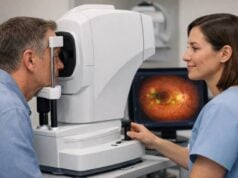
A cataract diagnosis is not just “yes or no.” A good eye exam identifies the cataract type, estimates how much it explains your symptoms, and checks for other issues that can mimic or coexist with cataracts—like dry eye, macular degeneration, glaucoma, or uncorrected astigmatism.
What the exam typically includes
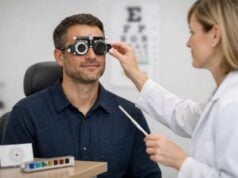
- Visual acuity testing: Measures sharpness with and without your current correction.
- Refraction: Determines whether updated glasses or contacts will improve vision meaningfully.
- Glare or contrast testing (sometimes): Useful if you complain about headlights or bright-light discomfort that is not reflected on the eye chart.
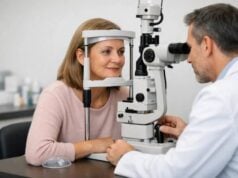
- Slit-lamp exam: The key cataract assessment. A microscope and bright light allow the clinician to see and grade lens clouding.
- Dilated retinal exam: Ensures that reduced vision is not primarily coming from retinal disease.
- Eye pressure and optic nerve check: Screens for glaucoma or other pressure-related issues.
Why “your cataract is mild” can still feel miserable
Two people can have similar-looking cataracts but different symptom burdens. A small posterior subcapsular cataract can be disproportionately bothersome, especially for reading and night driving. Meanwhile, a larger nuclear cataract may cause gradual blur that feels manageable for longer.
Also, cataracts and surface problems often stack. For example, dry eye can worsen blur and glare. Treating dry eye aggressively can sometimes clarify how much of the symptom is cataract versus surface irritation—an important distinction when considering surgery timing.
How progression is monitored
Progression is usually tracked by:
- Symptom changes (especially functional issues like driving)
- Repeat vision testing over time
- Changes seen on slit-lamp exam
- Increasing difficulty achieving good correction with glasses
If your symptoms are increasing but your exam seems stable, it is worth asking whether something else—like dry eye or medication effects—is also contributing.
When is cataract surgery needed?
Cataract surgery is the only definitive way to remove a cataract. But “needed” is usually a functional decision, not a dramatic threshold where you must wait until vision is severely impaired. In modern practice, the central question is: Does your vision limit daily life in a way that glasses, lighting changes, and medical management cannot reasonably fix?
Functional signs that it may be time
Surgery becomes more compelling when cataracts interfere with safety or independence, such as:
- You avoid night driving or feel unsafe driving in glare, rain, or dusk
- You struggle to read despite appropriate prescription and good lighting
- You have trouble recognizing faces, seeing steps, or navigating unfamiliar spaces
- Work tasks become slower or error-prone because of vision quality
- You have frequent prescription changes with limited improvement
- Vision in one eye is noticeably worse and creates imbalance between eyes
How clinicians decide if the cataract explains your symptoms
Your eye team considers:
- Cataract appearance and type (and whether it matches your symptom pattern)
- Best-corrected vision and whether glare reduces it substantially
- Retinal and optic nerve health (to estimate how much improvement to expect)
- Dry eye and surface health (because it can affect measurements and comfort)
- Your goals: driving, reading, sports, hobbies, and work demands
Reasons surgery might be recommended sooner
Sometimes surgery is advised earlier than expected, such as:
- The cataract prevents adequate examination or treatment of the retina
- Cataract-related swelling or lens changes increase risk of other problems
- The cataract progresses quickly (often with certain types or risk factors)
- Your lifestyle demands high-quality vision and symptoms are clearly cataract-driven
A useful framing is this: cataract surgery is elective in timing but not trivial in impact. The best timing is when the benefit is clear, the eye is optimized for accurate measurements, and you feel ready.
What helps now and how to prepare
If you are not ready for surgery—or your cataract is early—there are practical ways to reduce strain and keep your vision safer. The goal is not to “cure” the cataract with home remedies (there is no proven drop or supplement that reverses lens clouding), but to get the most usable vision while monitoring changes responsibly.
Practical steps that often make a real difference
- Update your prescription when it truly helps. Early cataracts can shift refraction. A timely update can improve comfort even if it does not eliminate glare.
- Improve lighting strategically. Add bright, even task lighting for reading and cooking. Aim the light at your work surface, not into your eyes.
- Use anti-glare and contrast tools. Matte screen protectors, larger text, high-contrast settings, and polarized sunglasses outdoors can reduce visual stress.
- Treat dry eye if present. Dry eye can amplify blur and glare and can affect the accuracy of surgical measurements later.
- Protect against UV exposure. Sunglasses that block UV and a brimmed hat are simple long-term investments.
Risk reduction that supports long-term eye health
You cannot change aging, but you can reduce avoidable drivers:
- If you smoke, quitting is one of the most meaningful steps for eye health.
- If you have diabetes, consistent blood sugar management supports lens and retinal health.
- If you require steroids, ask your clinician about the lowest effective dose and appropriate eye monitoring.
How to prepare if surgery may be on the horizon
Preparation is mostly about clarity—both optical and personal:
- Document your functional problems (night driving, glare, reading time) so the discussion is specific.
- Bring your medication list and history of eye issues, injuries, or inflammation.
- Ask what else might be affecting vision (dry eye, retinal conditions) and whether treatment could improve comfort now.
- Think about your visual priorities after surgery: distance driving, reading without glasses, computer work, and tolerance for halos.
If you approach cataracts as a gradual process rather than a sudden crisis, decisions become easier. You will know what to watch for, what to do now, and when surgery becomes the most practical and confidence-restoring step.
References
- Cataract in the Adult Eye Preferred Practice Pattern – PubMed 2022 (Guideline)
- Cataract Surgery—Indications, Techniques, and Intraocular Lens Selection – PMC 2023 (Review)
- Drugs associated with cataract formation represent an unmet need in cataract research – PMC 2022 (Review)
- Inhaled Corticosteroid Exposure and Risk of Cataract in Patients with Asthma and COPD: A Systematic Review and Meta-Analysis – PubMed 2023 (Systematic Review and Meta-Analysis)
- Cataract Induced by Glucocorticoids – PubMed 2025 (Review)
Disclaimer
This article is for educational purposes and does not replace personalized medical advice, diagnosis, or treatment. Vision changes can have multiple causes, some of which require prompt care. If you develop sudden vision loss, eye pain, new flashes or floaters, or a curtain-like shadow in your vision, seek urgent evaluation. For cataract symptoms, the best next step is a comprehensive eye exam to confirm the cause and discuss options tailored to your health, medications, and daily needs.
If you found this helpful, please consider sharing it on Facebook, X (formerly Twitter), or any platform you prefer. Your support helps our team continue producing clear, trustworthy health content.