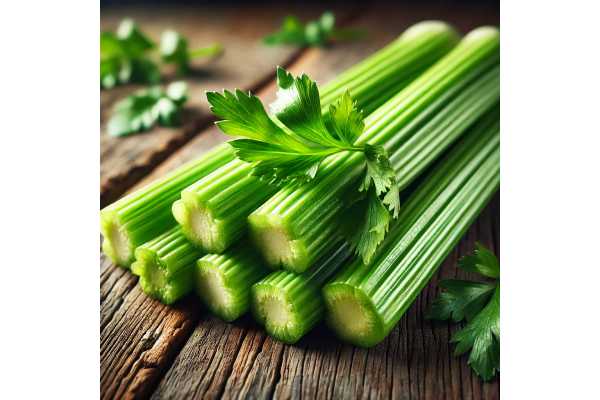
Celery is one of those vegetables that tends to sit quietly in the background of soups and stews, yet it does much more than add crunch. As a member of the Apiaceae family (along with carrots, parsley, and celeriac), celery brings a distinctive aromatic flavor, very low calorie content, and a useful mix of fiber, vitamins, and minerals. Per 100 g, raw celery provides only about 14–16 kcal, roughly 3 g of carbohydrate, small amounts of protein and fiber, and meaningful potassium, making it attractive for people who want volume and texture without many calories.
Beyond the nutrition label, celery appears in a surprising range of dishes: as crisp sticks with dips, finely chopped into salads, braised with other vegetables, and, more recently, juiced or blended into “detox” drinks. At the same time, it is classified as a major food allergen in some regions, and its FODMAP content, pesticide residues, and intensive juicing trends raise important safety questions. This guide looks at celery from both culinary and scientific angles so you can use it deliberately, not just by habit.
Nutrition Snapshot for Celery
- Roughly 14–16 kcal, ~3 g carbohydrate, ~1.6 g fiber, and 0.7 g protein per 100 g raw celery, plus potassium, vitamin K, and small amounts of vitamin C and folate.
- Regular intake of celery as part of a varied vegetable pattern may support heart health, weight management, and hydration, especially when it replaces more calorie-dense snacks or sides.
- Key safety issues include allergy and cross-reactivity with birch and mugwort pollen, FODMAP-related symptoms at larger portions, and potential pesticide residues on conventionally grown celery.
- A practical serving is about 1 cup chopped celery (~100 g) once daily or several times per week, adjusting frequency if you have digestive sensitivity or specific medical conditions.
- People with known celery allergy, severe pollen–food syndrome, advanced kidney disease, or strict low FODMAP prescriptions should seek personalized guidance before eating celery regularly.
Table of Contents
- Celery varieties uses and history
- Celery nutrition breakdown and macros
- Evidence informed benefits of celery
- Celery safety allergies and interactions
- Choosing storing and eco considerations
- Preparing and cooking celery well
- Portions comparisons and common questions
Celery varieties uses and history
Modern supermarket celery is usually the “pascal” type, bred for thick, crisp stalks and mild flavor, but the plant has a long and complex history. Wild celery (Apium graveolens) is thought to have originated around the Mediterranean and coastal Europe, where it grew in salty marshy areas. Historical records describe celery being used medicinally in ancient Greece and Rome, with culinary use emerging later as more palatable cultivated forms were developed.
Today, three main forms are common:
- Stalk celery: The familiar long, ribbed stems with leafy tops, usually eaten raw or cooked.
- Leaf celery: Grown primarily for its intense, parsley-like leaves used as a herb.
- Celeriac (celery root): Cultivated for its swollen underground stem; nutritionally distinct but botanically the same species.
Stalk celery is valued for its crisp texture and clean, aromatic flavor. It often appears as:
- A low calorie snack, paired with hummus, yogurt dips, or nut butter.
- A “flavor base” in soups, stews, and sauces, alongside onion and carrot.
- A crunchy component in salads, grain bowls, and slaws.
- A garnish, using leaves for freshness and color.
In recent years, celery juice has become popular in wellness circles, often promoted as a stand-alone morning drink. From a scientific standpoint, celery juice is essentially a concentrated form of certain nutrients and phytochemicals, with much of the fiber removed. That means it may deliver more potassium, nitrates, and certain bioactives per glass than the same volume of chopped celery, but it also lacks many of the benefits of chewing and fiber.
Celery seeds and seed extracts are another traditional use, featured in pickling spices, celery salt, and herbal preparations. Concentrated extracts of celery seed have been studied in relation to blood pressure and cardiometabolic markers in adults, although doses in those trials are far beyond what people would normally obtain from food alone.
Taken together, celery functions as both a flavoring and a vegetable in its own right, fitting easily into salads, cooked dishes, and snacks. Its low energy density and distinctive aroma make it a useful “volume booster” in meals that aim to be satisfying without excessive calories.
Celery nutrition breakdown and macros
Celery is often described as “mostly water,” which is true, but that does not mean it is nutritionally empty. Per 100 g of raw stalks, it provides a combination of hydration, modest fiber, and small yet meaningful amounts of several vitamins and minerals.
Macros and electrolytes (per 100 g, raw)
| Nutrient | Amount per 100 g | % Daily Value* |
|---|---|---|
| Energy | 14–16 kcal | 1% |
| Total carbohydrate | ~3.0 g | 1% |
| Dietary fiber | ~1.6 g | 6% |
| Total sugars | ~1.4 g | N/A |
| Protein | ~0.7 g | 2% |
| Total fat | ~0.2 g | <1% |
| Saturated fat | ~0.04 g | <1% |
| Sodium | ~30–80 mg | 1–3% |
| Potassium | ~260–300 mg | 5–6% |
*%DV approximated for a 2,000 kcal diet.
Celery’s energy density is extremely low, which is why a large stalk contributes very few calories. The fiber content, while not high per 100 g, becomes more meaningful when celery is used generously in salads, soups, or as a snack.
Vitamins (per 100 g, raw)
| Vitamin | Amount per 100 g | % Daily Value |
|---|---|---|
| Vitamin K (phylloquinone) | ~30–40 µg | 25–33% |
| Vitamin C (ascorbic acid) | ~3 mg | 3–4% |
| Folate (total folates as DFE) | ~30–40 µg | 7–10% |
| Vitamin A (as carotenoids) | ~20–25 µg | 2–3% |
| Vitamin B6 (pyridoxine) | ~0.07 mg | 4–5% |
| Thiamin (vitamin B1) | ~0.02 mg | 2% |
| Riboflavin (vitamin B2) | ~0.06 mg | 4–5% |
| Niacin (vitamin B3) | ~0.3 mg | 2% |
Vitamin K is the standout micronutrient, with celery contributing notably to clotting and bone health when eaten regularly. Folate and vitamin C are present in smaller yet useful amounts.
Minerals (per 100 g, raw)
| Mineral | Amount per 100 g | % Daily Value |
|---|---|---|
| Calcium | ~40–50 mg | 4–5% |
| Magnesium | ~10–12 mg | 3% |
| Phosphorus | ~25–30 mg | 2–3% |
| Iron | ~0.2 mg | 1–2% |
| Manganese | ~0.1 mg | 4–5% |
| Zinc | ~0.1 mg | 1% |
While celery is not a mineral powerhouse, its mix of potassium, calcium, and magnesium can contribute to a favorable electrolyte balance, particularly in diets that already emphasize plant foods.
Phytonutrients and other components
Celery contains a variety of bioactive compounds, including:
- Flavonoids such as apigenin and luteolin.
- Phthalides, aromatic molecules that may influence vascular tone.
- Furanocoumarins, which are involved in photosensitivity reactions in some occupational exposures.
These compounds have been studied in cell and animal models for anti-inflammatory, antioxidant, and vasodilatory effects and also appear in celery seed extracts used as herbal preparations.
From a glycemic perspective, celery is extremely low in carbohydrates and has a negligible impact on blood glucose when eaten in realistic serving sizes. Its low-calorie, high-water profile makes it a convenient way to add volume and crunch to meals without significantly changing energy intake.
Evidence informed benefits of celery
Most of what we know about celery’s health effects comes from three sources: its basic nutrient composition, trials on celery seed or powder supplements, and broader research on vegetable-rich dietary patterns. Together, these lines of evidence suggest several meaningful roles for celery in everyday eating.
1. Cardiometabolic support and blood pressure
Celery’s potassium, low sodium (in fresh form), and low energy density support cardiovascular health in a similar way to many other vegetables. Higher intakes of vegetables overall are consistently associated with lower risk of cardiovascular disease and improved blood pressure profiles.
Beyond this, randomized controlled trials of celery seed extracts and powder have shown modest reductions in blood pressure, fasting blood glucose, and lipid levels in adults with hypertension or metabolic issues. These studies use concentrated doses (often above 1 g per day of seed or extract), so their results cannot be directly applied to ordinary stalk consumption. However, they support the idea that celery’s phytochemicals are biologically active and may complement standard dietary advice for heart health.
2. Weight management and satiety
Because celery is very low in calories yet crunchy and voluminous, it can replace more energy-dense snacks like chips or crackers while still providing a sense of fullness. When used generously to bulk out salads, stir-fries, and soups, celery helps increase meal size and chewing time without adding many calories, a pattern that is often associated with easier weight management.
Celery also provides fiber, which contributes modestly to satiety and digestive health. While 1.6 g per 100 g is not high, multiple servings across the week can add up.
3. Hydration and electrolyte balance
Celery is more than 90% water, and its potassium content makes it useful as part of a hydrating snack or side dish, particularly in hot weather or for people who prefer to obtain electrolytes from foods rather than sweetened drinks.
4. Anti-inflammatory and antioxidant potential
Flavonoids such as apigenin and luteolin, present in celery leaves and stalks, are being investigated for their ability to modulate inflammatory pathways and oxidative stress in laboratory settings. While this does not mean celery alone will control inflammation, including flavonoid-rich vegetables in a diversified diet is consistent with evidence-based strategies for supporting long-term health.
5. Digestive health and microbiome
Celery’s fiber and water help keep stool soft and support regular bowel movements. For people without FODMAP sensitivity, including celery in mixed meals can gently increase fiber intake and contribute substrates for beneficial gut microbes. For those with irritable bowel syndrome, portion size becomes important and is discussed later.
Overall, celery is best viewed as a helpful component of an already balanced pattern rather than a miracle ingredient. Its advantages are clearest when it replaces less nutritious foods and when whole stalks and leaves are used more often than heavily sweetened or salted processed options.
Celery safety allergies and interactions
Although celery appears simple and harmless, it carries several important safety considerations, especially for people with allergies, digestive conditions, or specific medical treatments.
1. Celery as a major allergen
In the European Union and several other regions, celery is listed among the major food allergens that must be clearly declared on labels. Celery allergy can cause symptoms ranging from mild oral itching and tingling to generalized urticaria and, in some cases, severe reactions.
Many cases involve cross-reactivity between celery and pollen, particularly birch and mugwort. This pollen–food syndrome means that people with certain seasonal allergies may react to raw celery or celeriac because their immune system misidentifies structurally similar proteins. Cooking can reduce symptoms in some individuals, but not all. Anyone with suspected celery reactions should seek assessment from an allergy specialist and strictly follow their advice, as avoidance may need to include raw and cooked forms, seeds, spice blends, and celeriac.
2. FODMAP content and IBS
Celery contains mannitol, a polyol (sugar alcohol) that can be poorly absorbed and may provoke bloating, pain, or loose stools in susceptible people. Low FODMAP frameworks typically classify small servings of celery stalk as low in FODMAPs, with larger amounts moving into moderate or high mannitol territory.
Practical implications:
- People with irritable bowel syndrome in the strict elimination phase of a low FODMAP diet may need to avoid or tightly limit celery.
- Later, many individuals can tolerate modest servings (for example, a few thin slices in a salad or soup) without symptoms.
- Tolerance is highly individual, and working with a dietitian is advisable.
3. Kidney disease and potassium
While celery is not as potassium-dense as some other vegetables, its potassium content can become relevant for people with advanced chronic kidney disease or those on medications that significantly affect potassium handling. In those situations, total daily potassium and the cumulative effect of multiple foods, including celery, must be considered.
4. Photosensitivity and skin contact
Celery contains furanocoumarins, compounds that can cause photodermatitis when plant juices contact the skin and are then exposed to strong sunlight or UV light. This is mainly a concern for agricultural workers and people handling large quantities of celery in food service; it rarely causes problems in typical home cooking. Wearing gloves and washing exposed skin after extensive handling in bright environments can reduce risk.
5. Pesticide residues
Celery frequently appears on lists of produce with relatively higher detectable pesticide residues, largely because its surface is uneven and it is often eaten with the outer layers intact. While regulatory limits are set with wide safety margins, people who wish to reduce exposure may prefer organic celery when feasible, or at least wash and scrub stalks thoroughly under running water.
6. Interactions with medications and supplements
Most interaction concerns relate to concentrated celery seed extracts, not culinary celery. Trials of celery seed capsules in people with hypertension have reported improvements in blood pressure and lipid parameters without major safety problems, but these supplements may, in theory, interact with antihypertensive, diuretic, or anticoagulant medications. Anyone considering high-dose celery supplements should discuss this with their healthcare provider. Ordinary food use of celery stalks in moderate portions is generally compatible with common medications, as long as overall intake remains consistent.
Choosing storing and eco considerations
Good selection and storage practices can significantly improve celery’s flavor, texture, and nutrient retention, while thoughtful purchasing can support environmental goals.
How to select high-quality celery
When buying celery:
- Look for crisp, firm stalks. They should snap cleanly when bent and feel solid rather than hollow or rubbery.
- Check the color. Pale to medium green stalks with vibrant leaves usually indicate freshness. Yellowing, limp leaves or browning at the tips suggest age.
- Inspect the base. The cut end should not be excessively dry or split. A very dark, shriveled base indicates that the bunch has been stored for a long time.
- Smell it. Fresh celery has a clean, slightly peppery aroma; any sour or “off” smell is a warning sign.
Celery hearts (the tender inner stalks) are milder and often preferred for raw snacks, while outer stalks may be more suitable for cooking.
Storage at home
- Refrigeration: Store celery in the refrigerator, ideally in the crisper drawer. Wrapping it loosely in paper towel and placing it in a perforated bag can help maintain moisture without trapping excess condensation.
- Whole vs cut: Whole stalks tend to keep better than pre-cut pieces. Once chopped, store celery in an airtight container in the fridge and use within several days.
- Water method: For extra crispness, some people stand trimmed stalks in a jar with a small amount of water in the fridge. This can revive slightly limp celery but should be combined with regular water changes for food safety.
Freezing celery works reasonably well for soups and cooked dishes: blanch chopped pieces briefly, cool quickly, and freeze in single layers before transferring to containers. Texture will soften on thawing, so frozen celery is best reserved for recipes where crunch is not required.
Sustainability and food-waste reduction
Compared with animal products, celery has a relatively low greenhouse gas footprint. Environmental considerations focus more on water use, pesticide practices, and transport. To make celery use more sustainable:
- Buy in season and, where possible, from regional growers to reduce transport distances.
- Use the whole plant: leaves and smaller inner stalks make excellent additions to salads, stocks, and herb sauces.
- Incorporate trimmings into broths rather than discarding them.
Choosing organic celery can reduce exposure to certain pesticides and may support agricultural practices with lower environmental impact, although availability and cost vary by region. From a health perspective, however, eating adequate vegetables—whether organic or conventional—remains the primary priority.
Preparing and cooking celery well
Celery is more versatile than many people realize. Understanding how different preparation methods affect flavor, texture, and nutrients helps you match celery to your goals.
Basic preparation
Start by trimming the base of the bunch and separating the stalks. Rinse each stalk thoroughly under running water, paying attention to the inner curve where soil and grit can collect. If the outer strings are particularly tough, you can remove them with a vegetable peeler, especially for raw snack sticks. Leaves can be rinsed and used as a herb-like garnish.
Raw uses
- Snack sticks: Cut into lengths and serve with hummus, bean dips, or nut butters.
- Salads and slaws: Thinly slice or dice for crunch. Combining celery with apples, nuts, and a yogurt or vinaigrette dressing creates a classic flavor balance.
- Toppings: Finely chop leaves and tender stalks for sprinkling over soups, stews, and grain dishes.
Raw celery preserves all heat-sensitive nutrients such as vitamin C and certain enzymes, though it may be less tolerable for people with FODMAP sensitivity or pollen–food syndrome.
Cooking methods and nutrient retention
- Sautéing: Gently sautéing chopped celery in a small amount of oil as part of a soup or stew base softens the texture and concentrates flavor. Short cooking over moderate heat tends to preserve more vitamins than very long simmering, particularly if the cooking liquid is consumed.
- Braising and stewing: Extended simmering in soups or braises mellows celery’s flavor and makes it easier to chew, helpful for people with dental issues or those who prefer softer textures. Some water-soluble vitamins will leach into the cooking liquid, so serving the broth is important.
- Roasting: Tossing celery pieces with oil and roasting at moderate to high heat creates caramelized edges and a more robust, slightly sweet flavor. While some vitamin C is lost, the resulting dish may encourage higher overall vegetable intake.
- Stir-frying: Quick, high-heat cooking preserves some crunch and color and is ideal in mixed vegetable dishes with protein and whole grains.
Celery juice and smoothies
Celery juice and smoothies concentrate certain nutrients and phytochemicals but remove most of the fiber if the pulp is discarded. For people who enjoy the flavor and tolerate the FODMAP load, a small glass alongside a balanced meal can be reasonable. Claims that celery juice alone “detoxifies” the body or cures complex diseases are not supported by clinical evidence; liver and kidney function rely on overall health and diet rather than a single beverage.
Sodium awareness
Celery itself is naturally low in sodium, but celery salt and some celery-flavored seasonings can be high in added salt. When using these products, consider total sodium intake, especially if you have high blood pressure or are following medical guidance to limit salt.
Portions comparisons and common questions
Knowing realistic serving sizes and how celery compares with other vegetables helps you use it strategically in your diet.
Typical serving size and frequency
A commonly used vegetable serving is about 1 cup chopped celery, roughly 100 g. This portion provides:
- Around 14–16 kcal.
- About 3 g carbohydrate, including around 1.5–1.6 g fiber.
- Approximately 260–300 mg potassium and a meaningful share of daily vitamin K.
For most healthy adults, including 1 serving of celery daily or several servings per week is reasonable. Variety across vegetable types remains important; celery should complement, not replace, colorful vegetables and leafy greens.
Who may benefit most from regular celery intake?
- Individuals focusing on weight management, who can use celery to replace higher calorie snacks or bulk out meals.
- People seeking heart-friendly patterns, using celery in place of salted snacks and highly processed sides.
- Those aiming to increase vegetable variety, especially in soups, salads, and grain bowls where celery contributes aroma and crunch.
Who should limit or avoid celery?
- Anyone with a confirmed celery or celeriac allergy should avoid all celery-containing foods unless advised otherwise by an allergy specialist.
- People with severe pollen–food syndrome may need to avoid raw celery or rely on thoroughly cooked forms, depending on individual tolerance.
- Individuals with irritable bowel syndrome following a strict low FODMAP plan may need to limit portions to very small amounts or avoid celery entirely during elimination phases.
- Those with advanced kidney disease or on specific medications that affect potassium should factor celery into their overall potassium budget.
Comparisons with other vegetables
- Celery vs cucumber: Both are low-calorie and hydrating; celery typically provides more fiber, vitamin K, and potassium, while cucumber has a milder flavor and slightly less fiber.
- Celery vs carrot: Carrots deliver much more beta-carotene (vitamin A activity) and slightly more carbohydrates, while celery is lower in energy and emphasizes vitamin K and potassium.
- Celery vs celeriac: Celeriac is denser, with more carbohydrate, fiber, phosphorus, and vitamin B6 per 100 g, but fewer stalk-like crunch options. Combining both can diversify texture and nutrients.
Frequently asked questions
- Is celery a “negative-calorie” food?
No. Celery does contain calories, though very few. The body uses energy to digest food, but not enough to make celery calorie-negative in a meaningful way. Its real value lies in its low energy density and ability to replace more calorie-dense foods. - Is celery juice healthier than eating whole celery stalks?
Juice can concentrate some phytochemicals and potassium, but it removes most fiber and can deliver larger FODMAP loads more quickly. For most people, whole celery stalks within meals are a better default, with juice as an optional addition rather than a replacement. - Does celery help with detoxification?
The liver and kidneys handle detoxification using complex enzyme systems. While celery contributes hydration, antioxidants, and fiber, no evidence shows that it uniquely “detoxifies” the body. Its benefits should be understood within the context of an overall healthy lifestyle. - Is there a best time of day to eat celery?
There is no clinically proven “best time.” Many people enjoy celery as a snack between meals or alongside lunch and dinner. Those with IBS may choose to eat it with larger meals rather than on an empty stomach to improve tolerance.
References
- Nutrition Information for Raw Vegetables, 2017 (Government Dataset).
- Celery, Raw: Nutritional Value, Comparison and Facts, 2024 (Database Summary).
- Celery Nutrition Facts and Health Benefits, 2024 (Evidence-Based Consumer Summary).
- Effects of Celery (Apium graveolens) on Blood Pressure, Glycemic and Lipid Profile in Adults: A Systematic Review and Meta-Analysis of Randomized Controlled Trials, 2025 (Systematic Review and Meta-Analysis).
- Celery Allergy, 2022 (Patient Information and Clinical Overview).
- Is Celery Low FODMAP?, 2024 (Dietitian-Led FODMAP Guidance).
Disclaimer
The information in this article is intended for general educational purposes and does not replace individualized medical advice, diagnosis, or treatment. Nutrient needs, allergy risks, digestive tolerance, and medication interactions can differ considerably from person to person. If you have a history of food allergy, chronic illness, kidney disease, irritable bowel syndrome, or take prescription medications, consult your physician, registered dietitian, or other qualified health professional before making substantial changes to your celery intake or using celery-based supplements.
If you found this explanation of celery’s benefits and safety helpful, you are warmly invited to share it on Facebook, X (formerly Twitter), or any platform you prefer. Thoughtful sharing helps our team continue to produce balanced, evidence-informed nutrition content for a wider audience.