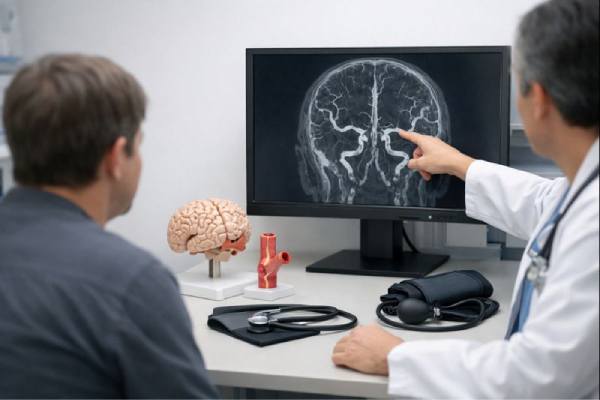
A cerebral aneurysm (also called an intracranial aneurysm) is a weak spot in a brain artery that bulges outward, like a thin area on a bicycle tire. Many aneurysms are small and never cause symptoms, and they’re often found by accident during brain imaging done for another reason. The concern is rupture: when an aneurysm tears, it can trigger bleeding around the brain (subarachnoid hemorrhage), which is a medical emergency.
If you or someone you love has been told “you have an aneurysm,” it’s normal to feel anxious. The helpful next step is to understand the aneurysm’s size, shape, and location—and your personal risk factors—because these details guide whether monitoring is safest or whether a procedure is worth the risk. This guide walks you through what to expect.
Table of Contents
- What is a cerebral aneurysm?
- What causes aneurysms and who is at risk?
- Warning signs, rupture symptoms, and complications
- How doctors diagnose and estimate rupture risk
- Treatment options and what to expect
- Living with an aneurysm: prevention and when to seek care
What is a cerebral aneurysm?
A cerebral aneurysm is a localized outpouching of an artery inside the skull. Most are saccular (“berry”) aneurysms, which look like a small sac attached to the side of a vessel, often at a branching point where blood flow creates more stress on the artery wall. Less common forms include fusiform aneurysms (a longer, spindle-shaped widening of the artery) and dissecting aneurysms (a tear in the inner lining of the vessel that allows blood to track into the vessel wall).
Aneurysms are often described by features that matter clinically:
- Size: small, medium, large, or giant (the cutoffs vary by guideline, but “giant” generally implies a very large aneurysm with higher complication risk).
- Neck width: narrow-neck vs wide-neck, which affects whether coils or other endovascular devices can stay securely in place.
- Location: anterior circulation (front of the brain) vs posterior circulation (back of the brain). Location can change both rupture risk and treatment strategy.
- Status: unruptured (no bleeding yet) vs ruptured (bleeding has occurred).
It helps to separate two different problems:
- Living with an unruptured aneurysm (often stable and monitored, sometimes treated to prevent future rupture).
- Managing a ruptured aneurysm (an emergency that prioritizes stabilizing the patient, preventing rebleeding, and treating complications such as vasospasm).
A key point: finding an aneurysm does not automatically mean you need surgery. Many people do best with careful follow-up and aggressive risk-factor control, while others benefit from preventive repair. The right plan comes from matching the aneurysm’s anatomy with your overall health and preferences.
What causes aneurysms and who is at risk?
Most cerebral aneurysms form over time from a combination of artery-wall vulnerability and hemodynamic stress (the force of blood flow at curves and branch points). Rather than one single cause, aneurysms are usually the end result of several contributors.
Common risk factors include:
- Age and sex: aneurysms become more common with age and are reported more often in women.
- High blood pressure: persistent hypertension increases stress on artery walls.
- Smoking: strongly linked to aneurysm formation, growth, and rupture risk; it also worsens blood-vessel inflammation.
- Family history: having a first-degree relative with a cerebral aneurysm or aneurysmal subarachnoid hemorrhage raises risk, especially with multiple affected relatives.
- Connective tissue and vascular disorders: conditions that affect vessel-wall structure can increase risk (for example, certain inherited connective tissue disorders).
- Polycystic kidney disease (autosomal dominant form): associated with a higher rate of intracranial aneurysms.
- Prior aneurysm rupture: if you’ve had one aneurysm rupture, the stakes are higher for monitoring or treating other aneurysms.
Not every aneurysm forms from “wear and tear.” Less common causes include:
- Dissections (a tear in the vessel lining), sometimes related to trauma or sudden neck movement.
- Infectious (“mycotic”) aneurysms, where infection weakens the vessel wall.
- Traumatic pseudoaneurysms, which can form after head injury or certain procedures.
Risk is also shaped by factors specific to the aneurysm:
- Posterior circulation location (such as the basilar artery region) often carries higher rupture risk than many anterior locations.
- Irregular shape (lobules, blebs, or a “daughter sac”) can signal instability.
- Growth over time on serial imaging is one of the clearest red flags.
If you’re unsure what risk category you fit into, ask your clinician to describe your aneurysm in plain language: size in millimeters, location, and whether the shape is smooth or irregular. That short description drives most management decisions.
Warning signs, rupture symptoms, and complications
Most unruptured aneurysms cause no symptoms. When symptoms occur, they usually come from the aneurysm pressing on nearby structures (mass effect) or from a small leak or clot-related irritation. Symptoms can vary depending on aneurysm location, but may include:
- New or worsening localized headache
- Pain around or behind one eye
- Double vision or drooping eyelid
- A dilated pupil or new sensitivity to light
- Facial numbness or weakness
- Less commonly, seizures or other focal neurologic symptoms
A ruptured aneurysm is different: it typically causes a sudden bleed into the space around the brain. The classic symptom is a thunderclap headache—a headache that reaches maximum intensity within seconds to a minute. Other rupture symptoms can include:
- Neck stiffness
- Nausea and vomiting
- Fainting or reduced alertness
- New neurologic deficits (weakness, speech trouble, vision changes)
- Seizure
Some people experience a warning event called a sentinel headache days to weeks before a major rupture, thought to be related to a small leak. Not every severe headache is a warning leak, but any sudden, explosive headache—especially if it is the “worst headache of my life”—should be treated as an emergency.
Complications after rupture can be serious and time-sensitive:
- Rebleeding: highest risk early, and often devastating.
- Vasospasm and delayed cerebral ischemia: narrowing of brain arteries days after bleeding can reduce blood flow and cause stroke-like deficits.
- Hydrocephalus: disruption of normal cerebrospinal fluid flow can raise pressure in the brain.
- Seizures
- Electrolyte disturbances and cardiac stress responses, which can complicate ICU care.
If you have an unruptured aneurysm, it’s wise to have a simple “action plan” written down: which symptoms mean “call the clinic” versus “call emergency services now.” That plan reduces hesitation during a high-stress moment.
How doctors diagnose and estimate rupture risk
Diagnosis starts with imaging. The three most common tools are:
- CTA (CT angiography): fast, widely available, and excellent for mapping aneurysm size and shape. It uses iodinated contrast and radiation.
- MRA (MR angiography): avoids radiation and is often preferred for long-term surveillance. Some MRA techniques can be done without contrast.
- DSA (digital subtraction angiography): an invasive catheter angiogram. It provides the highest detail and is often used when treatment is being planned or when noninvasive imaging is unclear.
If rupture is suspected, clinicians often begin with a non-contrast head CT to look for blood. If the CT is negative but suspicion remains high, further testing may be needed (based on timing and clinical judgment).
After an aneurysm is found, the next question is not just “is it there?” but “how risky is it?” Clinicians usually estimate rupture risk using a structured approach that weighs:
- Aneurysm size and location
- Aneurysm shape (smooth vs irregular, presence of blebs)
- Documented growth on repeat scans
- Personal factors: age, blood pressure control, smoking, family history, prior rupture
- Treatment risk based on anatomy and overall health
You may hear about scoring systems that help standardize decision-making. These tools don’t replace clinical judgment, but they help teams explain why one aneurysm is monitored while another is repaired.
Surveillance imaging schedules vary, but the logic is consistent: scan more often early (to establish stability), then space out scans if the aneurysm remains unchanged and risk factors are well controlled. If an aneurysm grows—even by a small amount—or develops a more irregular contour, clinicians usually reconsider intervention.
A practical tip: when you get your imaging report, ask for a short “trend summary” in your chart—size in millimeters and any comment on shape—so you can compare future scans without guessing.
Treatment options and what to expect
Treatment depends on whether the aneurysm is ruptured or unruptured, and on whether the safest choice is repair or monitoring.
Monitoring (conservative management)
For many unruptured aneurysms—especially small, stable ones—the safest path is surveillance plus risk reduction. Monitoring typically includes periodic CTA or MRA and strong attention to blood pressure and smoking cessation. This approach avoids procedure-related risks but requires reliable follow-up.
Endovascular treatment (through the blood vessels)
These procedures are performed from inside the artery, usually via a catheter placed in the wrist or groin:
- Coiling: tiny coils are placed inside the aneurysm sac to promote clotting and seal it off.
- Stent-assisted coiling: a stent helps keep coils from slipping out in wide-neck aneurysms.
- Flow diversion: a specialized stent placed in the parent artery redirects blood away from the aneurysm, encouraging it to seal over time. This can be useful for certain shapes and locations, but often requires dual antiplatelet therapy for a period, which matters if bleeding risk is a concern.
- Intrasaccular devices: for some aneurysms, devices placed in the sac can disrupt flow and promote closure.
Endovascular approaches can reduce recovery time for many patients, but they may require follow-up imaging to ensure the aneurysm stays sealed and does not recur.
Microsurgical clipping (open surgery)
A neurosurgeon places a clip across the aneurysm neck through a craniotomy to permanently exclude the aneurysm from circulation. Clipping can be highly durable, especially for certain aneurysm locations and shapes, but it is more invasive and recovery is usually longer than with endovascular repair.
What to expect around the decision
A high-quality decision process usually includes:
- A clear estimate of your aneurysm’s rupture risk over time.
- A clear estimate of treatment risks (stroke, bleeding, nerve injury, complications of anesthesia).
- A discussion of life factors: pregnancy plans, job demands, ability to attend follow-ups, comfort with uncertainty.
- A second opinion when the decision is borderline or the anatomy is complex.
For ruptured aneurysms, timing is urgent, and the main goal is to secure the aneurysm quickly to prevent rebleeding, then manage ICU-level complications.
If you feel stuck, ask your team to summarize options as: “monitoring is safer now because…” or “repair is safer overall because…”. That single sentence often reveals the real clinical reasoning.
Living with an aneurysm: prevention and when to seek care
Living with a cerebral aneurysm is partly medical and partly emotional. A good plan addresses both: reducing rupture risk while helping you feel confident about daily life.
Risk reduction that actually moves the needle
Focus on the factors with the strongest link to aneurysm growth and rupture:
- Stop smoking (including vaping nicotine). If quitting feels overwhelming, ask for a structured plan: medication options, counseling, and a quit date.
- Control blood pressure consistently. Home monitoring helps: aim for regular readings and bring a log to appointments.
- Treat sleep apnea if present. Poor sleep and untreated apnea can worsen blood pressure control.
- Keep cardiovascular risk in check: cholesterol management, diabetes control, and regular activity support vessel health.
Exercise, sex, and daily activity
Most people with a stable, unruptured aneurysm can remain active. As a practical approach:
- Favor moderate-intensity aerobic activity (for example, brisk walking, cycling, swimming) most days of the week.
- Be cautious with very heavy straining that spikes blood pressure (maximal lifts, breath-holding/Valsalva). If strength training matters to you, ask for individualized guidance rather than guessing.
Medications and substances to discuss with your clinician
- If you undergo stent or flow-diverter treatment, you may need antiplatelet medicines—ask exactly how long and what bleeding precautions to follow.
- Avoid making changes to aspirin or other blood thinners on your own; decisions depend on the aneurysm status and your stroke/heart risk.
- Be cautious with stimulants (including illicit drugs like cocaine or methamphetamine), which can acutely raise blood pressure and are strongly linked to hemorrhagic events.
When to seek urgent care
Call emergency services immediately for:
- A sudden, severe “thunderclap” headache
- Headache with fainting, seizure, confusion, stiff neck, or new neurologic deficits
- Sudden vision loss, severe double vision, or a new drooping eyelid paired with headache
For non-emergency but important changes (call your clinician promptly):
- New persistent headaches unlike your usual pattern
- New eye pain or visual symptoms
- New neurologic symptoms that come and go
Finally, it’s reasonable to ask your care team for a written follow-up plan: next imaging date, what symptoms matter, and who to contact after hours. Certainty reduces fear—and helps you live your life without constant “what if” thoughts.
References
- European Stroke Organisation (ESO) guidelines on management of unruptured intracranial aneurysms 2022 (Guideline)
- 2023 Guideline for the Management of Patients With Aneurysmal Subarachnoid Hemorrhage: A Guideline From the American Heart Association/American Stroke Association 2023 (Guideline)
- The Management of Intracranial Aneurysms: Current Trends and Future Directions 2024 (Review)
- Systematic Review and Meta-Analysis of Endovascular Therapy Effectiveness for Unruptured Saccular Intracranial Aneurysms 2024 (Systematic Review)
Disclaimer
This article is for educational purposes only and does not provide medical advice, diagnosis, or treatment. A cerebral aneurysm can range from low-risk and stable to life-threatening, and the safest plan depends on imaging findings, symptoms, and your medical history. If you think you may be having symptoms of an aneurysm rupture—especially a sudden, severe headache—seek emergency care immediately. For individualized guidance, review your situation with a qualified clinician (such as a neurologist, neurosurgeon, or interventional neuroradiologist).
If you found this article helpful, please consider sharing it on Facebook, X (formerly Twitter), or any platform you prefer, and follow us on social media. Your support through sharing helps our team continue producing trustworthy health content.