A cerebral embolism happens when a traveling blood clot (or other material) suddenly blocks an artery in the brain, cutting off oxygen to the tissue it supplies. It is one of the most common ways an ischemic stroke occurs, and it often arrives without warning—sometimes in people who felt fine an hour earlier. The urgent reality is simple: brain cells are highly sensitive to interrupted blood flow, so minutes matter. The hopeful reality is also clear: modern stroke care can reopen blocked arteries, limit disability, and prevent a second event—especially when treatment starts fast and the underlying source is found. This guide explains what cerebral embolism is, what causes it, who is at risk, how to recognize symptoms, how doctors confirm the diagnosis, and what treatment and long-term management typically involve.
Table of Contents
- What is cerebral embolism?
- What causes cerebral embolism?
- Symptoms and complications to watch for
- How cerebral embolism is diagnosed
- Treatments that restore blood flow
- Long-term management and prevention
What is cerebral embolism?
A cerebral embolism is a blockage in a brain artery caused by material that formed elsewhere and then traveled (“embolized”) into the brain’s circulation. In most cases, the embolus is a blood clot, but it can also be fatty material, tumor fragments, or air (far less common). When the embolus wedges into a narrowed or branching artery, it stops blood flow beyond that point.
To understand why this is so dangerous, it helps to think in terms of supply lines. The brain stores very little oxygen or glucose. If a major artery—such as the middle cerebral artery—becomes blocked, the affected region can stop functioning within minutes. That loss of function shows up as sudden symptoms like weakness, speech trouble, or vision loss. If flow is not restored, the area can progress from ischemia (reversible injury) to infarction (permanent tissue death).
Cerebral embolism is one mechanism of ischemic stroke, but it is different from a thrombotic stroke where a clot forms directly on a plaque in the same artery. Embolic strokes often have a more abrupt onset and can involve multiple territories if clots break into smaller pieces.
There are also important “near-miss” events:
- A transient ischemic attack (TIA) causes stroke-like symptoms that fully resolve, often within minutes to an hour. A TIA can be a warning sign of an embolic source that may strike again.
- A minor stroke may seem subtle—mild clumsiness or word-finding trouble—yet still represents real brain injury and a high short-term risk of recurrence without targeted prevention.
Clinically, the most useful mindset is: cerebral embolism is both an emergency and a clue. The emergency is restoring blood flow. The clue is identifying the source—often the heart or a neck artery—so the next embolus never forms.
What causes cerebral embolism?
Most cerebral emboli come from two broad places: the heart or large arteries (especially the carotid arteries and aortic arch). Pinpointing the source matters because prevention looks very different depending on the cause.
1) Cardioembolic sources (from the heart)
These clots form in areas of slow or turbulent blood flow, then dislodge and travel to the brain. Common causes include:
- Atrial fibrillation (AF): The upper chambers quiver instead of squeezing, allowing clots—often in the left atrial appendage—to form.
- Recent heart attack (myocardial infarction): Damaged heart muscle can create stagnant zones where clots develop.
- Heart failure with very low ejection fraction: Sluggish flow can promote clotting in the heart.
- Valve disease or prosthetic valves: Some valves increase clot risk; mechanical valves, in particular, usually require long-term anticoagulation.
- Infective endocarditis: Infected material (“vegetations”) can break off and embolize; this is often accompanied by fever or systemic symptoms.
2) Artery-to-artery embolism (from plaques)
Atherosclerotic plaque in the carotid artery or aortic arch can rupture or shed debris, sending clots downstream. Even without a complete carotid occlusion, unstable plaque surfaces can generate emboli.
3) Paradoxical embolism (a clot crosses over)
A clot formed in a leg vein (deep vein thrombosis) usually travels to the lungs. But if a person has a right-to-left shunt such as a patent foramen ovale (PFO), the clot can cross into arterial circulation and reach the brain. This is more likely when there is a DVT trigger (recent surgery, long flights, immobilization).
4) Less common causes
- Arterial dissection (a tear in the artery wall) can create clot and embolize.
- Hypercoagulable states (e.g., certain cancers, inherited thrombophilias) can make clots more likely.
- Air or fat embolism may occur with specific procedures or trauma.
Risk factors often overlap with vascular disease: high blood pressure, diabetes, smoking, high LDL cholesterol, obesity, inactivity, and older age. Importantly, embolic stroke can also happen in younger people—especially with AF that went unnoticed, a PFO plus DVT, or arterial dissection after neck trauma.
Symptoms and complications to watch for
Cerebral embolism typically causes sudden, focal neurological symptoms—meaning problems tied to a specific brain region. The classic pattern is abrupt onset: a person is speaking normally and then, in seconds to minutes, cannot find words or cannot move one side of the body.
Common symptoms include:
- Face drooping on one side
- Arm or leg weakness or numbness, often one-sided
- Speech difficulty: slurred speech, trouble finding words, or inability to understand language
- Vision loss: sudden blindness in one eye (often carotid-related) or loss of part of the visual field
- Severe imbalance or dizziness, especially with brainstem or cerebellar involvement
- Sudden confusion or altered awareness (more likely with large strokes)
A practical emergency screen is BE FAST:
- Balance: sudden loss of balance/coordination
- Eyes: sudden vision changes
- Face: facial droop
- Arm: arm weakness
- Speech: speech trouble
- Time: call emergency services immediately
Symptoms can also be brief. A TIA might last 5–20 minutes and fully resolve. That can create false reassurance. In reality, a TIA can be the body’s warning shot—often highest risk for a full stroke in the first 48 hours.
Potential complications
- Brain swelling with larger strokes, sometimes life-threatening.
- Hemorrhagic transformation: damaged tissue may bleed, especially after reperfusion.
- Seizures, either early or later due to scar tissue.
- Aspiration pneumonia from swallowing problems.
- Blood clots in the legs due to immobility.
- Long-term disability: weakness, aphasia, visual field loss, cognitive changes, depression, and fatigue.
Conditions that can mimic stroke (and why they still warrant urgent assessment):
- Low blood sugar, which can cause confusion or weakness
- Seizure with post-ictal weakness (Todd’s paralysis)
- Migraine with aura, especially with visual or sensory symptoms
- Inner ear disorders causing vertigo (though sudden focal weakness or speech trouble is not typical)
The key point is this: if symptoms are sudden and focal—even if they improve—treat it as an emergency. Rapid evaluation is the gateway to time-sensitive therapies and prevention of a second event.
How cerebral embolism is diagnosed
Diagnosis has two goals: confirm a stroke is happening (and rule out bleeding) and identify the embolic source so the treatment plan prevents recurrence.
1) Immediate assessment in the emergency setting
Clinicians start with a focused neurological exam, often using a standardized stroke scale, plus vital signs and blood glucose. The first imaging test is usually:
- Non-contrast CT head: fast and excellent for detecting bleeding. Early ischemic changes can be subtle.
- MRI brain (diffusion-weighted imaging): more sensitive for early ischemia, but availability and timing vary.
2) Confirming the blocked vessel and tissue at risk
To plan reperfusion therapy, hospitals often use:
- CT angiography (CTA) or MR angiography (MRA): maps arteries and shows where the blockage is.
- CT perfusion or MR perfusion: estimates “core” infarct (already injured) versus “penumbra” (at-risk but salvageable) in selected cases, especially when onset time is unclear or late.
3) Looking for the embolic source
Because emboli often come from the heart or large arteries, workup typically includes:
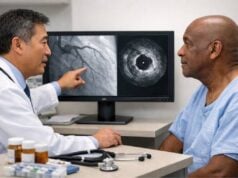
- Carotid ultrasound and/or CTA/MRA of the neck to assess carotid stenosis and plaque features.
- Electrocardiogram (ECG) to look for atrial fibrillation or recent heart attack patterns.
- Continuous heart rhythm monitoring in the hospital; some people need longer monitoring (patch monitor or implantable loop recorder) if AF is suspected but not captured.
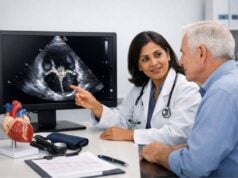
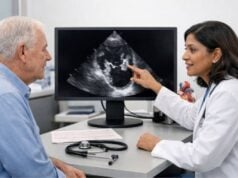
- Echocardiography (ultrasound of the heart):
- Transthoracic echo evaluates heart function, valves, and large clots.
- Transesophageal echo gives a closer look at the left atrial appendage, valves, and aortic arch plaque.
- Blood tests to guide safety and underlying causes: complete blood count, electrolytes, kidney function, clotting tests (especially if thrombolysis is considered), cholesterol profile, and diabetes screening.
4) When the cause remains unclear
Some embolic-appearing strokes are labeled cryptogenic or “embolic stroke of undetermined source.” In that situation, doctors often intensify monitoring for intermittent AF, re-check vascular imaging, and consider less common causes such as dissection or hypercoagulable states (especially in younger patients or those with cancer).
A helpful way to think about the diagnostic pathway is a funnel: first rule out bleeding, then find the blocked artery, then search upstream for the source. Each step directly changes treatment choices and safety.
Treatments that restore blood flow
Acute treatment focuses on reopening the blocked artery when appropriate, protecting brain tissue, and preventing early complications. Decisions are time-sensitive and depend on imaging, symptom severity, and bleeding risk.
1) Reperfusion treatments (time-critical)
- IV thrombolysis (“clot-busting” medicine): In eligible patients, intravenous thrombolytic therapy can dissolve or shrink clots. It is most effective when given early, and many systems use a 4.5-hour window from last known well for standard eligibility (with special imaging-based exceptions in some cases). Because it can increase bleeding risk, clinicians carefully screen for contraindications (recent surgery, active bleeding, certain brain findings, very high uncontrolled blood pressure, and others).
- Mechanical thrombectomy: For large-vessel occlusions (such as in the internal carotid or proximal middle cerebral artery), a catheter-based procedure can physically remove the clot. In selected patients with favorable imaging, thrombectomy can be effective up to 24 hours from last known well. It requires specialized stroke centers and rapid coordination.
2) Antithrombotic therapy (starting and timing matter)
- Antiplatelet therapy: If thrombolysis is not given, antiplatelets such as aspirin are often started early. If thrombolysis is given, antiplatelets are typically delayed until follow-up imaging confirms no hemorrhage.
- Anticoagulation: If the stroke is believed to be cardioembolic (especially atrial fibrillation), long-term prevention often requires anticoagulants rather than antiplatelets. The start date is individualized. Clinicians weigh:
- Infarct size and bleeding risk
- Any hemorrhagic transformation on imaging
- The urgency of preventing another embolus
A common practical approach is: smaller strokes may allow earlier anticoagulation; larger strokes often require a longer delay.
3) Supportive hospital care that prevents secondary injury
Even when reperfusion is not possible, high-quality stroke unit care improves outcomes:
- Blood pressure management: targets vary depending on whether thrombolysis/thrombectomy is used and overall stability.
- Oxygen and glucose control: avoiding low oxygen and extreme blood sugar levels helps protect vulnerable tissue.
- Swallow evaluation before food or oral medications to reduce aspiration risk.
- Early mobilization and DVT prevention (mechanical devices and, when safe, medication).
- Temperature management: treating fever, as elevated temperature can worsen injury.
4) Treating the embolic source
- Carotid stenosis: Significant symptomatic narrowing may be treated with carotid endarterectomy or stenting in selected patients, often on a defined timeline after stabilization.
- Endocarditis or valve issues: may require prolonged antibiotics or valve intervention.
- PFO with evidence of paradoxical embolism: selected patients may be considered for closure after careful evaluation.
The most important message: the “best” acute treatment is the one delivered fast, safely, and matched to the specific vessel blockage and the patient’s bleeding risk profile.
Long-term management and prevention
After an embolic stroke, the risk of recurrence is front and center—especially in the first weeks. Long-term management is usually a layered plan: prevent another clot, stabilize vessels, optimize recovery, and reduce risk factors that accelerate vascular disease.
1) Secondary prevention medications (tailored to the cause)
Your prevention strategy depends on where the embolus came from:
- Cardioembolic (e.g., atrial fibrillation): anticoagulation is often the cornerstone. Adherence is critical—missing doses can quickly reduce protection.
- Artery-to-artery embolism (carotid plaque): antiplatelet therapy and aggressive lipid lowering are typical, with procedural treatment for select levels of stenosis.
- Mixed or uncertain causes: clinicians may refine therapy as new rhythm monitoring or imaging results come in.
Common medication categories include:
- Antithrombotics: antiplatelets and/or anticoagulants as indicated
- Statins or other lipid-lowering therapy: often aiming for substantial LDL reduction
- Blood pressure control: consistent control lowers future stroke risk dramatically
- Diabetes management when applicable
2) Recovery and rehabilitation (start early, stay consistent)
Rehab is not only for severe strokes. Even mild deficits can improve with structured therapy:
- Physical therapy for strength, balance, gait, and endurance
- Occupational therapy for fine motor skills, daily tasks, and return-to-work planning
- Speech-language therapy for aphasia, articulation, and swallowing
- Cognitive rehabilitation when attention, memory, or executive function are affected
A practical tip: recovery often comes in plateaus. Many people improve over months, not days. Tracking small functional goals (walking distance, handwriting, meal prep) makes progress visible.
3) Lifestyle changes with measurable targets
Small changes add up when they are specific:
- Smoking: complete cessation is one of the highest-yield interventions.
- Physical activity: aim for regular weekly movement (your clinician may tailor intensity based on deficits and heart status).
- Diet pattern: emphasize vegetables, legumes, whole grains, fish, and unsalted nuts; reduce ultra-processed foods and excess sodium.
- Sleep: screen for obstructive sleep apnea if snoring, witnessed apneas, or daytime sleepiness are present—treatment can improve blood pressure and overall vascular risk.
- Alcohol and stimulants: keep intake modest and avoid binges; discuss substance use openly because it changes recurrence risk and medication safety.
4) Follow-up monitoring that prevents surprises
- Rhythm monitoring may continue after discharge to detect intermittent AF.
- Medication reviews catch interactions (especially with anticoagulants).
- Depression, anxiety, and post-stroke fatigue deserve direct treatment; they can strongly influence recovery and adherence.
When to seek urgent care again
Call emergency services immediately for any new stroke-like symptom—even if it lasts only minutes—or for severe headache with neurologic changes, sudden collapse, or new seizures.
Long-term success is usually not a single intervention. It is a well-matched cause-specific plan plus steady follow-through—made easier by clear goals, family support, and regular check-ins with the stroke care team.
References
- 2021 Guideline for the Prevention of Stroke in Patients With Stroke and Transient Ischemic Attack: A Guideline From the American Heart Association/American Stroke Association – PubMed 2021 (Guideline)
- 2024 Guideline for the Primary Prevention of Stroke: A Guideline From the American Heart Association/American Stroke Association – PubMed 2024 (Guideline)
- 2023 ACC/AHA/ACCP/HRS Guideline for the Diagnosis and Management of Atrial Fibrillation: A Report of the American College of Cardiology/American Heart Association Joint Committee on Clinical Practice Guidelines – PMC 2024 (Guideline)
- European Stroke Organisation (ESO) guidelines on intravenous thrombolysis for acute ischaemic stroke – PMC 2021 (Guideline)
Disclaimer
This article is for educational purposes only and does not replace medical advice, diagnosis, or treatment from a qualified clinician. Cerebral embolism is a medical emergency. If you or someone else has sudden weakness, speech trouble, vision loss, severe imbalance, confusion, or any symptoms of stroke—even if they improve—seek emergency care immediately. Treatment choices (including thrombolysis, thrombectomy, antiplatelets, and anticoagulants) must be individualized based on timing, imaging findings, medical history, and bleeding risk.
If you found this article helpful, please consider sharing it on Facebook, X (formerly Twitter), or any platform you prefer, and follow us on social media. Your support through sharing helps our team continue producing reliable health content.