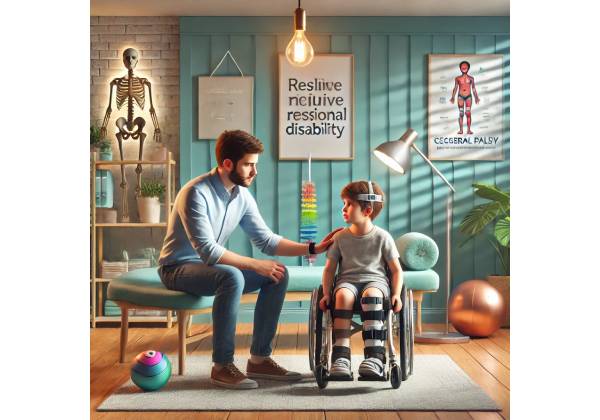
Behavioral and emotional problems in cerebral palsy are often harder to recognize than the motor symptoms people see first. Irritability may be driven by pain, communication frustration, fatigue, sensory overload, anxiety, or depression. Withdrawal may look like low motivation when it is actually social stress, embarrassment, or chronic exhaustion. Aggression or refusal may be a child’s way of signaling distress when speech, cognition, or self-regulation are already under strain.
That is why treatment works best when it does not treat behavior as a separate issue from the rest of the person’s health. Good care asks what the behavior means, what medical or environmental pressures are making it worse, which therapies are realistic for the person’s communication and movement needs, and how support can continue at home, school, work, and in adult life. Recovery in this setting usually means better regulation, less distress, safer behavior, stronger participation, and a more stable daily life rather than a cure for cerebral palsy itself.
Table of Contents
- What treatment needs to address
- Assessment before choosing treatment
- Building a multidisciplinary care plan
- Therapy and behavioral interventions
- Medication and co-occurring conditions
- Family, school, and everyday support
- Long-term outlook and urgent red flags
What treatment needs to address
Cerebral palsy does not automatically cause a psychiatric disorder, but it does raise the odds of emotional and behavioral difficulties for understandable reasons. The brain differences that affect movement can also affect attention, impulse control, sensory processing, executive function, communication, and mood regulation. On top of that, many people with cerebral palsy live with chronic pain, sleep disruption, fatigue, feeding difficulty, constipation, mobility barriers, frequent medical appointments, social isolation, bullying, and frustration about not being understood. Those pressures can shape behavior every day.
A treatment plan that focuses only on “stopping the behavior” usually misses the real problem. Distress-driven behavior may be a signal that something else is wrong. A child who suddenly becomes aggressive may be in pain. A teen who seems oppositional may be overwhelmed by communication demands, anxiety, or school stress. An adult who looks apathetic may be dealing with depression, exhaustion, or loss of support after transitioning out of pediatric care.
The most useful starting point is to think in layers:
- Neurologic and developmental factors: motor impairment, cognition, speech, sensory processing, epilepsy, autism, ADHD, learning difficulties
- Medical contributors: pain, reflux, constipation, muscle spasms, poor sleep, medication side effects, hearing or vision problems
- Psychological factors: anxiety, low mood, trauma, shame, social fear, frustration tolerance, emotional dysregulation
- Environmental factors: family stress, inaccessible settings, overstimulation, unrealistic expectations, limited communication supports
- Participation factors: friendships, school fit, independence, recreation, transition to adult services, work or caregiving strain
| Presentation | Possible drivers | Early treatment priorities |
|---|---|---|
| Irritability, outbursts, aggression | Pain, frustration, sensory overload, communication barriers, sleep loss | Medical review, behavior tracking, communication supports, calmer environment |
| Anxiety, avoidance, panic, clinginess | Uncertainty, sensory stress, past distressing procedures, social fear | Predictable routines, therapy, graded exposure, caregiver coaching |
| Withdrawal, sadness, loss of interest | Depression, fatigue, isolation, grief, chronic pain | Mood assessment, sleep and pain treatment, therapy, activity planning |
| Impulsivity, poor focus, emotional lability | ADHD, executive dysfunction, overload, unmet support needs | Diagnostic clarification, school supports, behavioral strategies, medication when appropriate |
This broader view makes treatment more effective and more humane. The goal is not simply to make a child quieter or an adult easier to manage. The goal is to reduce suffering, improve safety, and build a life that is more workable and more connected.
Assessment before choosing treatment
Before therapy or medication is chosen, the first job is to figure out what kind of problem is actually present. Behavioral and emotional symptoms in cerebral palsy can be easy to misread, especially when speech is limited or cognition is uneven. A person may not be able to explain fear, grief, embarrassment, or body discomfort in the way a clinician expects. As a result, anxiety may be missed, depression may be mislabeled as low motivation, and pain-related distress may be mistaken for defiance.
A thorough assessment usually combines information from several sources: the patient, caregivers, teachers, therapists, primary care clinicians, neurologists, and mental health professionals. It should also look at pattern and context. When does the behavior happen? What comes before it? What reliably makes it worse or better? Did it begin after a new medication, an orthopedic problem, a sleep decline, a school change, or a social loss?
Screening tools can help, but they should be interpreted carefully and adapted to the person’s communication and developmental profile. Standard anxiety screening and depression screening tools may still be useful, but the answers have to be read in context. For some patients, visual scales, caregiver observations, school reports, and behavior logs are more informative than a standard questionnaire alone.
A practical assessment often covers these areas:
- Pain and physical discomfort
Hip pain, muscle tightness, dental pain, reflux, constipation, headaches, skin irritation, and sleep-disordered breathing can drive sudden behavior change. - Communication and comprehension
If the person cannot easily express fear, frustration, or sensory overload, behavior may become their primary language. - Cognition and executive function
Planning, flexibility, attention, and working memory all affect behavior and coping. - Mood, anxiety, and trauma history
Medical procedures, repeated hospitalizations, falls, bullying, and dependency can all shape emotional responses. - Environment and demands
Some “behavior problems” occur mainly when expectations exceed the person’s motor, sensory, or communication capacity.
The most important point is that treatment should not begin from a guess. A rushed plan can lead to the wrong medication, unrealistic behavior goals, or blame placed on the child or family. A good assessment slows the process just enough to identify what is actually happening and what kind of support has the best chance of helping.
Building a multidisciplinary care plan
Once the pattern is clearer, treatment works best when it is coordinated rather than fragmented. Behavioral and emotional disorders in cerebral palsy rarely fit neatly inside one specialty. A psychologist may help with anxiety or aggression, but a physiatrist may need to address pain or spasticity first. A speech-language pathologist may uncover that the core problem is communication breakdown. An occupational therapist may identify sensory overload or fatigue. A psychiatrist may help with medication, but only after the wider picture is understood.
That is why a multidisciplinary plan matters. Depending on age and needs, the team may include primary care, neurology, rehabilitation medicine, psychology, psychiatry, speech therapy, occupational therapy, physical therapy, school personnel, and social work. In more complex cases, gastroenterology, sleep medicine, orthopedics, developmental pediatrics, or pain specialists may also matter.
A useful care plan usually includes:
- the main target problems, stated clearly
- likely contributors, not just symptoms
- what success would look like in daily life
- which clinician is responsible for each step
- how progress will be measured
- when the plan should be reviewed and adjusted
The goals should be functional, not vague. “Improve behavior” is too broad. Better goals sound more like these:
- reduce aggressive episodes from daily to once weekly
- help the child tolerate school transitions with one prompt instead of six
- improve sleep onset and reduce evening distress
- increase use of communication tools during frustration
- reduce panic symptoms during medical visits
- restore participation in one social or recreational activity
In many cases, a fuller mental health evaluation is needed alongside cognitive or learning assessment. For patients with significant attention, learning, or self-regulation problems, adapted neuropsychological testing can help separate mood symptoms from executive dysfunction, autism features, or broader cognitive differences. That distinction matters because the treatment approach changes depending on what is driving the difficulty.
A strong care plan also respects age and transition stage. A five-year-old with aggressive behavior needs a different framework than a college student with depression and social isolation, or an adult whose anxiety worsened after losing pediatric services. Treatment is more sustainable when it fits the person’s developmental level, communication style, and current responsibilities instead of copying a generic mental health plan.
Therapy and behavioral interventions
Psychological therapy can help people with cerebral palsy, but it often needs adaptation. Standard talk therapy may not fit someone with dysarthria, limited expressive language, slower processing speed, visual challenges, or major fatigue by late afternoon. That does not mean therapy is not appropriate. It means the format, pace, and goals should be adjusted thoughtfully.
For anxiety, adapted CBT for anxiety is often a strong option. It can help identify fear triggers, reduce catastrophic thinking, improve coping with uncertainty, and build more flexible responses to stressful situations. In cerebral palsy, CBT may need shorter sessions, visual supports, more concrete language, caregiver involvement, or more repetition. Some patients benefit from exposure-based work for medical anxiety, school refusal, social fear, or panic around movement and falls.
Broader therapy approaches may also help depending on the presentation. ACT can be useful when chronic stress, pain, and disability-related frustration are central. DBT-informed work may help with severe emotional swings, explosive reactions, or self-harm risk. Trauma-focused treatment may be appropriate when behavior changed after painful procedures, bullying, abuse, or repeated frightening medical experiences.
Behavioral interventions are often most effective when they are practical and environment-based rather than punishment-based. Helpful strategies include:
- identifying the real function of the behavior
- reducing triggers rather than escalating demands
- building predictable routines
- using visual schedules or transition warnings
- teaching replacement skills such as requesting a break
- reinforcing communication, not just compliance
- adjusting sensory input, noise, lighting, and timing
- coaching caregivers to respond consistently
Parent and caregiver training can be especially valuable in children with challenging behavior. It helps adults respond in ways that lower escalation, support regulation, and reduce the cycle in which distress and conflict feed each other. The aim is not permissiveness. It is a more accurate reading of what the behavior is communicating and a more effective response to it.
One practical rule is that therapy should match the person’s real-life obstacles. A child who melts down because they cannot express pain needs communication tools before long discussions about feelings. An adult with depression related to isolation and inaccessible transport may need social participation support and case management alongside therapy. The best psychological treatment is rarely just insight. It is insight plus adaptation plus daily-life problem solving.
Medication and co-occurring conditions
Medication can be helpful, but it is rarely the whole answer. In cerebral palsy, it should be used for a defined target and with close attention to side effects, swallowing issues, sedation, constipation, appetite changes, sleep disruption, and interactions with other medicines. The goal is to treat a specific disorder or symptom cluster, not to chemically suppress distress that actually needs environmental, communication, sleep, or pain intervention.
Medication is more likely to help when the diagnosis is reasonably clear. Examples include anxiety disorders, major depression, ADHD, severe irritability linked to a defined psychiatric or neurodevelopmental condition, obsessive-compulsive symptoms, or sleep problems that have not improved after the obvious medical and behavioral drivers are addressed.
A few common patterns illustrate where medication fits:
- Anxiety and depression: an SSRI may be considered when symptoms are persistent, impairing, and not improving enough with therapy and support alone.
- ADHD or major attention dysregulation: stimulant or non-stimulant treatment may help, especially when poor attention is worsening emotional control and school function.
- Severe aggression or self-injury: medication may sometimes be used, but only after pain, sensory overload, sleep loss, and communication barriers are reviewed carefully.
- Sleep-related worsening of mood or behavior: sleep treatment may reduce daytime behavioral problems more than a psychiatric medication would.
Co-occurring conditions matter a great deal. Anxiety, depression, ADHD, autism, intellectual disability, epilepsy, chronic pain, and sleep disorders can overlap in ways that make treatment look inconsistent if each issue is handled in isolation. For example, a child with untreated ADHD may appear emotionally explosive because they are constantly overloaded by demands they cannot organize. A teenager with autism traits may look oppositional when they are actually rigid, anxious, and overwhelmed by unpredictable social expectations.
That is why diagnostic clarification is often part of treatment. If the pattern suggests broader neurodevelopmental overlap, evaluation for issues such as ADHD in children or autism testing in children may directly affect the care plan. In adults, the same logic applies even though the diagnostic path may look different.
Medication decisions should also be reviewed over time. If a medicine helps a target symptom but blunts energy, worsens constipation, increases irritability, or reduces participation, the overall result may not be positive. In complex disability care, the right question is not just “Did the behavior decrease?” but “Is the person functioning and feeling better in real life?”
Family, school, and everyday support
Treatment becomes more durable when it extends beyond the clinic. Families, schools, employers, day programs, and support workers often determine whether gains hold or disappear. A good mental health plan for cerebral palsy should make daily life more predictable, more communicative, and less exhausting.
For families, this usually means reducing the constant need to improvise. Behavior often worsens when adults are guessing what the person needs, changing expectations from day to day, or operating in permanent crisis mode. Families benefit from simple shared rules, consistent responses, and a written plan for common situations such as transitions, school mornings, community outings, bedtime, and medical visits.
At school, support may need to include:
- communication aids or alternative and augmentative communication
- sensory accommodations
- predictable routines
- movement and rest breaks
- reduced overload during transitions
- behavior plans that are not punitive
- coordination between teachers, therapists, and caregivers
- social support, not just academic support
Sleep and stress deserve ongoing attention because both can destabilize mood and behavior fast. Many patients do better when the plan also includes basic sleep protection and practical stress-management strategies. When distress rises at night or poor sleep keeps amplifying the next day’s behavior, it can help to think about the broader link between sleep and mental health instead of treating insomnia as a separate inconvenience.
Caregiver support is not optional. Parents and other caregivers often carry high emotional, physical, and financial strain. When that strain goes untreated, the whole system becomes less stable. Support may include counseling, respite, social work help, training in behavioral response, or simply being included clearly in the treatment plan rather than blamed when a child is struggling.
Adults with cerebral palsy need the same kind of practical support, even though it often becomes harder to find after pediatric services end. Depression, anxiety, and social withdrawal can intensify during transitions to college, work, independent living, or more medically fragmented adult care. Treatment may need to include transportation planning, assistive technology, accessible counseling, vocational support, and help rebuilding social participation. Emotional recovery is much harder when the surrounding system remains inaccessible.
Long-term outlook and urgent red flags
The long-term outlook depends on how accurately the underlying problems are identified and how steadily support is maintained. Some behavioral and emotional problems improve substantially once pain, sleep disruption, communication barriers, and environmental overload are addressed. Others reflect a separate psychiatric disorder that needs structured therapy, medication, or both. In many cases, improvement is gradual rather than dramatic.
It helps to define recovery realistically. With cerebral palsy, recovery usually means better emotional regulation, fewer crises, more stable routines, better communication, lower caregiver stress, stronger participation, and improved quality of life. It does not necessarily mean that every symptom disappears. The right question is whether the person is safer, calmer, more understood, and more able to do what matters to them.
Several factors predict better outcomes:
- earlier recognition of emotional distress
- treatment that includes medical contributors, not just behavior
- communication supports that match the person’s abilities
- consistent caregiver and school strategies
- good follow-up instead of one-time crisis response
- attention to transitions from child to adult services
- goals that are functional and realistic
There are also situations where behavioral change should be treated as urgent. Rapid worsening can signal a medical or psychiatric emergency rather than a routine support problem. Prompt evaluation is important when there is:
- suicidal talk, self-harm, or clear hopelessness
- aggression that creates immediate danger
- sudden withdrawal with loss of eating, sleeping, or basic functioning
- hallucinations, marked confusion, or severe agitation
- abrupt personality change after a seizure, head injury, infection, or medication change
- behavior that strongly suggests uncontrolled pain or serious physical illness
The most important long-range message is that emotional and behavioral disorders in cerebral palsy are treatable, but they usually improve through coordinated care rather than a single intervention. The people who do best are those whose distress is taken seriously early, whose behavior is understood in context, and whose treatment plan supports the whole person across home, school, healthcare, and adulthood.
References
- The Mental Health of Children with Cerebral Palsy: A Review of the Last Five Years of Research 2025 (Review)
- Mental Health Diagnoses Risk Among Children and Young Adults With Cerebral Palsy, Chronic Conditions, or Typical Development 2024 (Case-Control Study)
- Providing a Primary Care Medical Home for Children and Youth With Cerebral Palsy 2022 (Clinical Report)
- Cerebral palsy in under 25s: assessment and management 2017 (Guideline)
- Cerebral palsy in adults 2019 (Guideline)
Disclaimer
This article is for general educational purposes only. Behavioral and emotional changes in cerebral palsy can be linked to pain, sleep problems, seizures, medication effects, communication difficulties, and mental health conditions, so this content is not a substitute for professional medical advice, diagnosis, or treatment. Seek prompt clinical care if symptoms are severe, rapidly worsening, or create a safety concern.
If this article was helpful, please share it on Facebook, X (formerly Twitter), or any platform you prefer.