Cerebrovascular disease is an umbrella term for conditions that disrupt blood flow to the brain. Because brain tissue is highly “energy-hungry,” even a brief interruption can injure cells, affecting speech, movement, vision, memory, or consciousness. Some events are sudden—like an ischemic stroke from a blocked artery or a hemorrhagic stroke from bleeding—while others develop quietly over years, such as narrowing of the carotid arteries or small vessel disease that can slowly erode thinking and balance. What makes this topic urgent is that many drivers are modifiable: blood pressure, smoking, diabetes, cholesterol, atrial fibrillation, and lifestyle patterns. Understanding how these problems start, what warning signs look like, and what modern evaluation and treatment involve can help you act quickly when it matters most—and steadily reduce risk over time.
Table of Contents
- What is cerebrovascular disease?
- What causes cerebrovascular disease?
- Early symptoms and complications
- How doctors diagnose it
- Treatment options and what to expect
- Long-term management and prevention
What is cerebrovascular disease?
Cerebrovascular disease refers to disorders of the blood vessels supplying the brain—arteries and veins—and the downstream brain injury that can follow when flow is blocked, reduced, or a vessel ruptures. People often use “stroke” as shorthand, but cerebrovascular disease is broader: it includes stroke and also the vessel problems that raise stroke risk or cause chronic brain changes.
A helpful way to think about it is by the mechanism—blocked flow, bleeding, or impaired drainage:
- Ischemic events (blockage): A clot can form on a narrowed artery (often from atherosclerosis), lodge from the heart (cardioembolism, commonly with atrial fibrillation), or arise from disease of small penetrating arteries deep in the brain (small vessel disease). Ischemic stroke is typically sudden and focal—one side weak, words slurred, vision lost on one side.
- Hemorrhagic events (bleeding): A vessel can rupture from chronic high blood pressure, an aneurysm, or other vessel abnormalities, causing bleeding within the brain or around it (such as subarachnoid hemorrhage). Bleeding can rapidly raise pressure in the skull and is often more immediately life-threatening.
- Transient ischemic attack (TIA): Symptoms similar to stroke that resolve completely. A TIA is a warning shot: the brain was briefly under-supplied, and the risk of a future stroke can be high without rapid evaluation and prevention.
- Chronic cerebrovascular disease: Over time, repeated small injuries—sometimes “silent”—can lead to gait problems, slowed thinking, mood changes, urinary urgency, or vascular cognitive impairment.
- Less common but important conditions: Cervical artery dissection (a tear in an artery wall), vasculitis (vessel inflammation), and cerebral venous thrombosis (clotting in brain-draining veins) can also fit under this umbrella.
The common thread is that the brain’s function depends on steady delivery of oxygen and glucose. When the supply falters, time matters—especially for sudden symptoms, where early treatment can preserve brain tissue and long-term independence.
What causes cerebrovascular disease?
Cerebrovascular disease rarely has a single cause. Most often it results from a chain of changes in blood vessels—damage to the inner lining, buildup of plaque, increased clotting tendency, or fragile vessel walls—combined with triggers that tip the system into an acute event.
The main biological pathways
1) Atherosclerosis (plaque and narrowing)
Plaque can develop in large arteries such as the carotids in the neck or major arteries inside the skull. Plaque may:
- Narrow the vessel and limit flow, especially during drops in blood pressure or dehydration.
- Rupture, exposing material that promotes clotting and suddenly blocks the artery.
2) Cardioembolism (clots from the heart)
Certain heart rhythms and structural problems can form clots that travel to the brain:
- Atrial fibrillation is a leading contributor because blood can pool in the atria and clot.
- Recent heart attack, weakened heart pumping, or valve disease can also increase risk.
3) Small vessel disease (deep brain arteries)
Tiny penetrating arteries can thicken and stiffen over years. This is strongly linked to:
- Long-standing high blood pressure
- Diabetes
- Aging and smoking
Small vessel disease is a common cause of lacunar stroke (small deep infarcts) and white matter changes that affect balance and cognition.
4) Vessel wall weakness or abnormal structure
- Aneurysms can rupture, causing subarachnoid hemorrhage—often experienced as a sudden, severe “worst headache.”
- Arteriovenous malformations (AVMs) and other vascular malformations can bleed.
- Hypertensive hemorrhage can occur when small arteries weaken from chronic pressure.
Risk factors you can and can’t change
Modifiable (actionable)
- High blood pressure (the single most important risk factor across stroke types)
- Tobacco exposure (including secondhand smoke)
- Diabetes and insulin resistance
- High LDL cholesterol and metabolic syndrome
- Atrial fibrillation and other rhythm problems
- Obesity, low physical activity, poor sleep (including sleep apnea)
- Excess alcohol, stimulant drugs (e.g., cocaine, methamphetamine)
- Chronic kidney disease, inflammatory conditions (in selected cases)
Non-modifiable (helpful for risk awareness)
- Older age, prior TIA/stroke, family history
- Certain genetic conditions (rare)
- Some sex-specific factors: pregnancy-related hypertension, preeclampsia history, and hormonal transitions can shape lifetime vascular risk
The practical takeaway: “cause” often means identifying the dominant pathway for an individual—plaque, heart rhythm, small vessels, or bleeding risk—because prevention strategies differ. A person with atrial fibrillation needs a different prevention plan than someone with carotid stenosis or uncontrolled hypertension.
Early symptoms and complications
Cerebrovascular symptoms are often abrupt—minutes, not days—because blood flow changes quickly. Knowing the classic warning signs can speed emergency care, and in stroke, minutes can translate into brain saved.
The most recognizable warning pattern
A useful memory aid is FAST:
- Face drooping on one side
- Arm weakness or numbness on one side
- Speech trouble (slurred speech, wrong words, inability to speak)
- Time to call emergency services immediately
But cerebrovascular events can look different depending on which brain area is affected. Other important sudden symptoms include:
- Vision changes: loss of vision in one eye, double vision, or loss of half of the visual field
- Severe dizziness or loss of balance, especially with inability to walk straight
- Sudden confusion or trouble understanding language
- New severe headache, particularly if it peaks instantly (a red flag for subarachnoid hemorrhage)
- Numbness, tingling, or weakness affecting face/arm/leg on one side
- Difficulty swallowing, choking, or drooling
- Sudden collapse or loss of consciousness (more common with major bleeding or large strokes)
TIA: symptoms that go away still matter
A TIA can cause any of the above symptoms but resolves fully—sometimes within minutes. The danger is psychological: people feel “back to normal” and delay care. Medically, a TIA is a high-priority warning because the short-term risk of a major stroke can be significant without prompt treatment changes.
Common complications after cerebrovascular events
Even when survival is good, complications can shape quality of life:
- Motor and walking problems: weakness, spasticity, foot drop, poor balance
- Speech and swallowing issues: aphasia (language), dysarthria (speech muscles), dysphagia (swallowing)
- Cognitive changes: slowed processing, executive dysfunction, memory difficulty; in some, vascular cognitive impairment
- Mood changes: depression, anxiety, emotional lability
- Seizures (especially after larger strokes or bleeding)
- Medical complications: aspiration pneumonia, deep vein thrombosis, pressure injuries, shoulder pain, urinary problems
If you notice sudden neurologic symptoms—even if mild or improving—treat it as an emergency. Early evaluation can open time-sensitive treatments and, just as importantly, prevent the next event.
How doctors diagnose it
Diagnosis of cerebrovascular disease has two parallel goals: (1) determine whether there is an acute event that needs urgent treatment, and (2) identify the underlying mechanism so prevention can be tailored.
Step 1: urgent assessment for stroke vs “mimics”
In emergency settings, clinicians quickly evaluate:
- Time last known well (the last moment the person was symptom-free)
- Vital signs, especially blood pressure, oxygen, temperature, and glucose
- A focused neurologic exam (often scored with a standardized tool)
Some conditions can mimic stroke—seizure with post-ictal weakness, migraine aura, low blood sugar, infection, or functional neurologic symptoms—so initial testing aims to separate these safely.
Step 2: brain imaging to distinguish blockage from bleeding
Imaging is central because treatment depends on stroke type:
- Non-contrast CT head is fast and excellent for detecting bleeding.
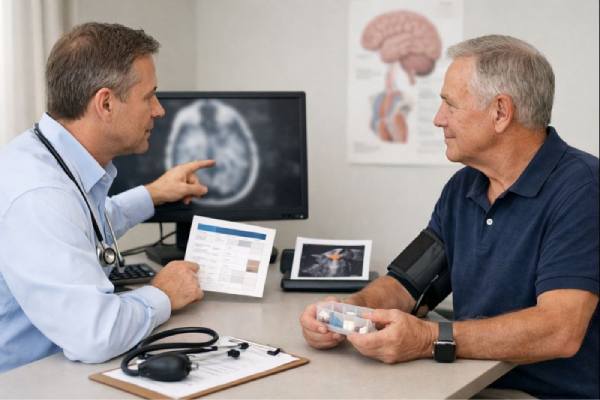
- MRI brain can detect early ischemic injury and small strokes that CT may miss.
- If a large artery blockage is suspected, CT angiography (CTA) or MR angiography (MRA) can map arteries and identify a target for procedures.
Step 3: vessel and heart evaluation to find the source
To determine why the event happened, testing may include:
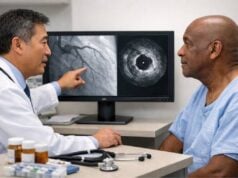
- Carotid ultrasound or CTA/MRA of the neck for carotid narrowing or dissection
- ECG and heart rhythm monitoring to detect atrial fibrillation (sometimes requiring longer monitoring if initial tests are normal)
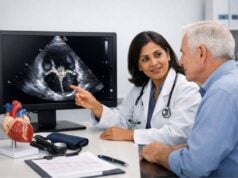
- Echocardiogram to look for heart clots, valve disease, or structural causes of emboli
Step 4: labs and risk factor profiling
Blood work commonly checks:
- Blood counts, electrolytes, kidney function
- Blood sugar control (including longer-term markers)
- Cholesterol profile
- Coagulation tests (especially if on blood thinners or bleeding is suspected)
In selected cases—especially younger patients or unusual presentations—doctors may evaluate for less common causes such as autoimmune vasculitis, inherited clotting tendencies, infections, or drug exposures.
What diagnosis looks like in chronic disease
Chronic cerebrovascular disease is often found when imaging shows:
- White matter changes (small vessel disease)
- Small old “silent” infarcts
- Microbleeds (tiny prior hemorrhages)
This shifts the focus to long-term risk reduction and symptom management (balance, cognition, mood), even if no dramatic event occurred.
Good diagnosis is detective work: the best prevention plan depends on whether the dominant driver is plaque, heart rhythm, small vessel damage, or bleeding risk.
Treatment options and what to expect
Treatment depends on whether the problem is a blocked artery, bleeding, or a high-risk warning event like TIA. In all cases, early action is valuable: it can limit brain injury and prevent recurrence.
Acute ischemic stroke: reopening blood flow
When an artery is blocked, the priority is restoring perfusion when safe:
- Intravenous thrombolysis (“clot-busting” medication) may be offered to eligible patients within a defined time window from symptom onset, after imaging rules out bleeding and contraindications.
- Mechanical thrombectomy is a catheter-based procedure to remove a clot from a large brain artery in carefully selected patients based on imaging and timing.
In parallel, teams manage oxygen, fever, blood sugar, and blood pressure—because extremes can worsen injury. Swallowing is assessed early to reduce aspiration risk, and early mobilization is encouraged when safe.
Hemorrhagic stroke and subarachnoid hemorrhage: controlling bleeding and pressure
For bleeding inside the brain or around it, priorities shift:
- Stabilize blood pressure to reduce ongoing bleeding risk.
- Reverse anticoagulation if the person is on blood thinners (when applicable).
- Manage brain swelling and elevated intracranial pressure.
- In aneurysmal subarachnoid hemorrhage, treatment often includes securing the aneurysm (coiling or clipping) and intensive monitoring for complications such as vasospasm and hydrocephalus.
TIA and secondary prevention: preventing “the next one”
Many treatments are about risk reduction after an event:
- Antiplatelet therapy (commonly aspirin or alternatives) for many non-cardioembolic ischemic strokes and TIAs
- Anticoagulation for atrial fibrillation-related stroke prevention (this is different from antiplatelets)
- Statins and lipid management for vascular risk reduction
- Blood pressure optimization with a personalized medication plan
- Addressing carotid disease: carotid endarterectomy or stenting may be considered in selected patients with significant narrowing and appropriate anatomy and risk profile
Rehabilitation: treatment that continues after the hospital
Recovery is not passive. Rehabilitation targets function:
- Physical therapy for walking, strength, balance, spasticity
- Occupational therapy for dressing, bathing, fine motor skills, home safety
- Speech-language therapy for communication and swallowing
- Cognitive and mood support when thinking speed, attention, or depression becomes limiting
What to expect emotionally and practically
It is common to experience fatigue, frustration, and uneven progress. Many people improve for months; some continue to make gains beyond a year with consistent practice. The best outcomes come from combining medical prevention (to avoid recurrence) with structured rehab (to regain function), plus strong follow-up for blood pressure, rhythm issues, cholesterol, and diabetes.
Long-term management and prevention
Long-term management has a clear aim: reduce the chance of another cerebrovascular event while supporting daily function and quality of life. The most effective plans are specific, measurable, and revisited regularly.
A practical prevention checklist
1) Blood pressure: make it visible
If you take away one habit, consider home blood pressure monitoring. Use a validated upper-arm cuff, measure at the same times of day, and bring logs to appointments. Consistent control is one of the strongest protective steps across stroke types.
2) Medication adherence with a “why” attached
Many people stop medicines when they feel well. It helps to link each one to a purpose:
- Antiplatelet or anticoagulant: reduces clot risk (the choice depends on the cause)
- Statin or lipid therapy: stabilizes plaque and lowers vascular risk
- Antihypertensives: protects small and large brain vessels
If side effects occur, don’t “white-knuckle” them—ask about alternatives; many classes can be substituted.
3) Move in a sustainable way
A realistic target for many adults is building toward 150 minutes per week of moderate activity (walking counts) plus strengthening sessions. For stroke survivors, therapy-guided routines can be adapted for balance or one-sided weakness.
4) Food patterns that protect vessels
A Mediterranean-style approach is often easier than strict dieting:
- Emphasize vegetables, beans, whole grains, nuts, olive oil, and fish
- Limit ultra-processed foods, sugary drinks, and excess salt
- If weight loss is needed, focus on repeatable meals rather than perfection
5) Stop smoking completely
“Cutting down” is a step, but risk drops most with full cessation. Combine behavioral support with proven tools if needed.
6) Sleep and rhythm checks
Untreated sleep apnea and undiagnosed atrial fibrillation can quietly raise stroke risk. If you snore loudly, have witnessed pauses in breathing, or have daytime sleepiness, ask about evaluation. If palpitations occur, mention them—sometimes longer-term monitors are needed to catch intermittent arrhythmias.
Living day-to-day after an event
- Reduce falls: footwear, lighting, assistive devices, and balance training matter.
- Plan for cognitive load: breaks, simple routines, and single-tasking reduce overwhelm.
- Treat mood as medical: depression and anxiety after stroke are common and treatable.
- Consider driving and work carefully: neuro symptoms and reaction time can change; formal assessment may be appropriate.
When to seek urgent care
Call emergency services immediately for any sudden neurologic symptom—weakness, speech trouble, facial droop, new vision loss, severe sudden headache, or inability to walk straight. Even if symptoms resolve (possible TIA), urgent evaluation can prevent a disabling stroke in the near future.
References
- 2024 Guideline for the Primary Prevention of Stroke: A Guideline From the American Heart Association/American Stroke Association – PubMed 2024 (Guideline)
- 2021 Guideline for the Prevention of Stroke in Patients With Stroke and Transient Ischemic Attack: A Guideline From the American Heart Association/American Stroke Association – PubMed 2021 (Guideline)
- European stroke organisation (ESO) guideline on cerebral small vessel disease, part 2, lacunar ischaemic stroke – PMC 2024 (Guideline)
- 2023 Guideline for the Management of Patients With Aneurysmal Subarachnoid Hemorrhage: A Guideline From the American Heart Association/American Stroke Association – PubMed 2023 (Guideline)
Disclaimer
This article is for general educational purposes and does not provide medical advice, diagnosis, or treatment. Cerebrovascular symptoms can be a medical emergency. If you or someone else has sudden weakness, facial drooping, speech trouble, vision loss, severe sudden headache, or new loss of balance, call local emergency services immediately. For personalized guidance—especially if you have risk factors such as high blood pressure, diabetes, atrial fibrillation, prior TIA/stroke, or take blood thinners—work with a qualified clinician who can evaluate your situation and tailor prevention and treatment.
If you found this helpful, please consider sharing it on Facebook, X (formerly Twitter), or any platform you prefer, and follow us on social media. Your support through sharing helps our team keep producing reliable, high-quality health content.