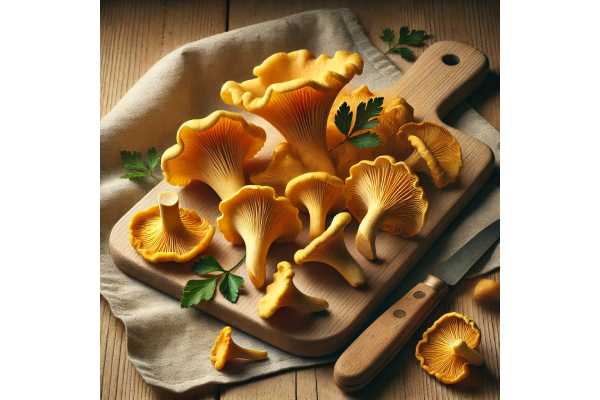
Chanterelles (Cantharellus spp.) are among the most celebrated wild mushrooms, prized for their golden hue, trumpet-like shape, and a distinctive aroma often compared to apricot and mild pepper. In the kitchen, they sear beautifully, concentrate in flavor as they cook, and pair naturally with butter, eggs, poultry, and fresh herbs. Nutritionally, chanterelles are light in calories yet rich in dietary fiber, potassium, and niacin, and—when exposed to ultraviolet (UV) light—can provide meaningful amounts of vitamin D2. They also contain ergothioneine and beta-glucans, bioactive compounds of growing scientific interest.
Because chanterelles are mycorrhizal (they form living partnerships with trees), they aren’t widely cultivated; most are foraged. That makes correct identification, careful cleaning, and proper storage especially important. This guide brings together the culinary know-how and the science: how chanterelles are identified and selected, what their nutrition looks like per 100 g, the best ways to cook them while protecting delicate nutrients, and the evidence behind potential health benefits and safety considerations.
Top Highlights
- Provides fiber (≈3.8 g/100 g), potassium (~500 mg/100 g), and UV-dependent vitamin D2 (up to ~10 µg/100 g).
- Bioactives include ergothioneine and beta-glucans with emerging evidence for immune and metabolic support.
- Typical serving: 75–100 g cooked (about 1–1½ cups) up to 2–3 times weekly as part of varied meals.
- Safety caveat: misidentification risks (jack-o’-lantern and false chanterelle); always cook thoroughly.
- People with IBS sensitive to polyols (mannitol) or with gout concerns should limit portions.
Table of Contents
- Meet the chanterelle
- Chanterelle nutrition per 100 g
- Chanterelle benefits with evidence
- Risks, sensitivities and interactions
- Choosing well, sustainability and storage
- Cooking methods and nutrient retention
- Portions, swaps and FAQs
Meet the chanterelle
Chanterelles are a group of wild mushrooms (notably Cantharellus cibarius in Europe and North America) that fruit in late spring through autumn depending on region. They partner with living trees—oak, beech, spruce, fir, pine—drawing water and minerals in exchange for sugars. This symbiosis is why you rarely see true chanterelles farm-grown; their seasonal, forest-foraged origin is part of their charm and a reason for their premium price.
Identification, briefly (for context, not a foraging license):
- False gills, not true gills. Instead of thin knife-like blades, chanterelles have shallow, forked ridges that are decurrent (running down the stem).
- Aroma and color. A clean fruit/apricot note and egg-yolk to golden color; flesh is pale and firm.
- Growth habit. Typically scattered or in loose groups on forest floors among leaf litter or moss, not dense clusters on wood.
Common look-alikes and how they differ (at a glance):
- Jack-o’-lantern (Omphalotus spp.). Bright orange, grows in tight clusters on wood or buried roots, has true gills and can be faintly bioluminescent in the dark. It causes significant gastrointestinal upset if eaten.
- False chanterelle (Hygrophoropsis aurantiaca). Deeper orange to tawny, thinner flesh, true gills (not blunt ridges), often with a darker depressed cap center.
Culinary character:
Chanterelles concentrate as they cook, developing a savory depth balanced by gentle fruitiness. They’re superb in simple applications that spotlight texture—pan-seared with butter, folded into soft scrambles, tossed with pappardelle, or spooned over roast chicken. Their ridged surface and firm flesh hold sauces well without disintegrating.
Why cooks value them nutritionally:
They’re low in calories and fat yet provide fiber, potassium, and niacin (vitamin B3). When exposed to sunlight or UV processing, their natural ergosterol converts to vitamin D2, making chanterelles a practical way to lift vitamin D intake—especially in seasons with limited sun.
Sourcing note:
Because chanterelles are wild, quality varies with weather and handling. Look for firm caps without slime, minimal bug tunnels, and a fresh, fruity scent. See the “Choosing well, sustainability and storage” section for specifics.
Chanterelle nutrition per 100 g
Values below refer to raw chanterelles unless noted. Actual numbers vary by species, habitat, moisture, and post-harvest handling. Percent Daily Values (%DV) are based on adult reference intakes.
Macros and electrolytes (per 100 g)
| Nutrient | Amount | %DV |
|---|---|---|
| Energy | 38 kcal | — |
| Water | 90 g | — |
| Protein | 1.5 g | 3% |
| Total fat | 0.5 g | 1% |
| Saturated fat | 0.1 g | 0% |
| Total carbohydrate | 6.9 g | 3% |
| Dietary fiber | 3.8 g | 14% |
| Total sugars | ~1.0 g | — |
| Sodium | 10 mg | 0% |
| Potassium | 506 mg | 11% |
Vitamins (per 100 g)
| Vitamin | Amount | %DV |
|---|---|---|
| Niacin (B3) | ~4.0 mg | 25% |
| Riboflavin (B2) | ~0.30 mg | 23% |
| Pantothenic acid (B5) | ~1.0 mg | 20% |
| Folate (DFE) | ~40 µg | 10% |
| Vitamin D2 (not UV-exposed) | ~0.5 µg | 3% |
| Vitamin D2 (UV-exposed or sun-dried)* | ~10 µg | 50% |
*UV light (or sunlight) can markedly raise vitamin D2 in mushrooms. See “Cooking methods and nutrient retention” for practical sun-exposure tips.
Minerals (per 100 g)
| Mineral | Amount | %DV |
|---|---|---|
| Iron | ~1.0 mg | 6% |
| Copper | ~0.30 mg | 33% |
| Selenium | ~2.5 µg | 5% |
| Phosphorus | ~45 mg | 4% |
| Magnesium | ~15 mg | 4% |
| Calcium | ~15 mg | 1% |
| Zinc | ~0.7 mg | 6% |
Bioactives and other components
| Component | Typical amount per 100 g | Notes |
|---|---|---|
| Ergothioneine | ~3–7 mg | Diet-derived antioxidant; concentrated in mushrooms. |
| Beta-glucans | ~0.3–0.6 g | Soluble fibers linked to immune and metabolic effects (fresh-weight estimate). |
| Provitamin A carotenoids | ~0.5–1.0 mg | Pigments contributing to golden color; composition varies by species. |
| Mannitol (polyol) | ~0.5–1.3 g | A FODMAP; may trigger symptoms in sensitive individuals. |
| Purines | Moderate (~50–80 mg) | Consider if managing gout. |
Glycemic and acid–base metrics
| Metric | Estimate |
|---|---|
| Glycemic Index (GI) | Very low (<20) |
| Glycemic Load (GL, per 100 g) | ~1–2 |
| PRAL (acid load) | ≈ −4.5 mEq/100 g (alkaline-forming) |
Additives and contaminants (context):
Fresh chanterelles are typically additive-free. As wild mushrooms, they can accumulate environmental residues (e.g., soil particles, trace heavy metals, or radiocesium in certain regions). See safety guidance in “Risks, sensitivities and interactions.”
Chanterelle benefits with evidence
1) A practical, food-based source of vitamin D2 (when UV-exposed).
Mushrooms naturally contain ergosterol, a molecule that converts to vitamin D2 under UV light. UV-treated or sun-exposed chanterelles can deliver roughly 10 µg (400 IU) vitamin D2 per 100 g—about half the daily value—making them a helpful option in low-sun seasons or for people with limited outdoor exposure. Unlike supplements, a serving of UV-exposed mushrooms also adds fiber and potassium, and fits naturally into meals.
2) Fiber and beta-glucans for metabolic and digestive support.
That ~3.8 g of fiber per 100 g (with a portion as soluble beta-glucans) supports satiety and bowel regularity. Beta-glucans are being studied for effects on post-meal glucose, lipids, and immune signaling. While typical chanterelle portions are modest, the combination of low calories, fiber, and water makes them a smart ingredient for calorie-aware cooking.
3) Ergothioneine and carotenoids—dietary antioxidants from whole foods.
Ergothioneine is a unique amino-acid–like antioxidant concentrated in mushrooms and transported in the human body by a dedicated carrier (OCTN1). Observational and mechanistic research associates higher ergothioneine exposure with healthier aging markers, and chanterelles contribute alongside other mushrooms. Their golden pigments include carotenoids that add additional antioxidant capacity.
4) Potassium and low sodium for heart-smart meal building.
With ~500 mg potassium per 100 g and essentially no sodium, chanterelles fit DASH-style meal patterns. Using them to replace some salty meat or cheese in a dish can lower sodium density while preserving savory depth through natural glutamates and 5′-nucleotides.
5) Overall mushroom intake and long-term outcomes.
Large observational analyses link higher total mushroom consumption with lower risks for certain cancers. These data are associative (not proof of causation) and usually don’t isolate chanterelles from other species. Still, chanterelles help diversify mushroom intake, bringing a distinct mix of fibers, minerals, and bioactives.
Practical ways to realize the benefits:
- Make UV-exposed chanterelles part of brunch: pan-sear and fold into scrambled eggs or tofu; finish with fresh herbs.
- Build potassium-rich dinners: chanterelles with wilted spinach, lentils, or roasted squash.
- Choose fiber-forward grain bowls: farro or barley tossed with sautéed chanterelles and olive oil vinaigrette.
- Plan seasonal rotation: enjoy chanterelles when in season, and alternate off-season with cultivated mushrooms (oyster, shiitake, cremini) to maintain variety.
Risks, sensitivities and interactions
1) Misidentification is the primary hazard.
Jack-o’-lantern mushrooms (Omphalotus illudens/olearius) resemble chanterelles to the untrained eye but have true gills, grow in tight clusters on wood or buried roots, and can cause significant gastrointestinal distress (nausea, vomiting, cramps, diarrhea). False chanterelles (Hygrophoropsis aurantiaca) are another look-alike with true, blade-like gills and thinner, more delicate flesh. If you forage, learn from experienced identifiers, check multiple characteristics (false gills, growth habit, aroma), and when uncertain, do not eat the find.
2) Always cook thoroughly.
Raw mushrooms—including chanterelles—can be tough to digest and may lead to gastrointestinal upset. Cooking breaks down chitin, releases water, and enhances digestibility and flavor. A proper sauté, braise, or roast also reduces microbial risk from wild harvest and improves nutrient availability from cell walls.
3) FODMAPs and digestive sensitivity.
Chanterelles contain mannitol (a polyol). People with IBS sensitive to polyols may experience bloating or discomfort from large portions. Start with ≤50 g cooked to test tolerance; many find ~75–100 g acceptable when eaten with other foods.
4) Purines and gout management.
Mushrooms are a moderate purine source. If you’ve been advised to limit purines, keep portions modest (e.g., 75–100 g cooked), and emphasize hydration and balanced meals. Most individuals with gout can include mushrooms in moderation under medical guidance.
5) Environmental residues (context-dependent).
As forest products, wild mushrooms may accumulate radiocesium in specific regions impacted by historical fallout; levels vary by species and site. Public health guidance generally considers moderate consumption of wild mushrooms safe from a radiation-protection standpoint. If you often forage in regions with known contamination, follow local advisories. Heavy metals can also accumulate in some soils; sourcing from clean habitats and diversifying the diet reduce risk.
6) Medication interactions and allergies.
IgE-mediated allergy to chanterelles is uncommon. As with any new food, those with multiple food allergies should try small portions first. Chanterelles have negligible vitamin K and generally do not interact with anticoagulants like warfarin, but personalized advice from your clinician always takes precedence. People with known mold/fungal allergies might experience cross-reactivity; monitor symptoms.
Quick safety checklist:
- Source from reputable sellers or forage with expert confirmation.
- Cook fully (no raw tasters).
- For sensitive digestion: smaller portions, chew well, and pair with other foods.
- Store and reheat safely (see next section).
- Follow regional advisories if regularly consuming wild mushrooms.
Choosing well, sustainability and storage
Selecting quality chanterelles
- Look and feel: Caps should be firm, fleshy, and dry—not slimy or spongy. Stems stout, not hollow or water-logged.
- Color: From pale yellow to deep golden; avoid browning or gray patches.
- Aroma: Clean, fruity (often apricot), and woodsy. Any sour or fishy note is a red flag.
- Trimming: A bit of forest soil at the base is normal; heavy clumps of dirt or extensive worm tunnels suggest poor handling or age.
Sustainability and ethical harvest
- Mycorrhizal ethics: Because chanterelles partner with living trees, harvest lightly. Cut or pinch at the base, avoid raking forest duff, and leave small or old specimens to spread spores.
- Local ecosystems: Follow regional limits and avoid compacting soil around fruiting zones. Rotate picking areas across the season.
- Why sustainability matters: Overharvesting and habitat disturbance reduce future flushes and harm the forest organisms that enable chanterelles to exist. Responsible foraging supports long-term availability.
Cleaning and prep
- Dry methods first: Brush away debris with a soft brush or clean cloth; use a toothpick at the gill ridges.
- Minimal water: A quick rinse only if necessary, then blot dry. Prolonged soaking turns chanterelles water-logged and mutes flavor.
- Trim smartly: Remove the dirty stem end; split large specimens to check for bugs.
Storage
- Short-term (fresh): Refrigerate unwashed chanterelles in a breathable container (paper bag or a vented box lined with a towel). They keep 3–5 days at best.
- Cooked: Refrigerate in shallow containers and use within 3–4 days.
- Freezing: Best after a pre-sauté to drive off moisture; cool quickly, spread on a tray to freeze, then bag airtight for up to 6–8 months.
- Drying: Chanterelles can be dehydrated, but some people find rehydrated texture softer than sautéed-then-frozen. Use a low–moderate heat dehydrator until crisp; store airtight with a desiccant.
- Pickling/confiting: Acid or fat mediums add shelf life and bring delicious pantry options; keep refrigerated and use clean utensils.
Buying tips
- Peak season varies by region; prices are highest at season start and drop with abundant flushes.
- Favor vendors who keep mushrooms cool and shaded, with debris lightly brushed rather than water-washed.
- If buying pre-cleaned, verify they’re chanterelles (not false chanterelles) and check for uniform ridged “false gills.”
Cooking methods and nutrient retention
The dry-sauté foundation
Chanterelles hold a surprising amount of water. Start them in a hot, dry skillet to “weep” their internal moisture. Once the pan sizzles and the liquid releases, stir until most water evaporates. Then add fat (butter, olive oil, or ghee), aromatics (shallot, garlic, thyme), and finish with salt. This sequence gives excellent browning and concentrated flavor without sogginess.
Heat, texture, and nutrients—what to know
- Fiber and minerals: Heat doesn’t degrade fiber; potassium and copper remain stable if you retain the pan juices. Avoid boiling and discarding the liquid.
- Vitamin D2: If your mushrooms were UV-exposed (commercially treated or sun-dried), D2 is relatively heat-stable at typical sauté/roast temperatures. Keep cook times reasonable (5–10 minutes after adding fat) to minimize losses.
- Water-soluble B vitamins: Niacin and riboflavin are fairly stable; retain any released juices by reducing them into the sauce instead of draining.
- Carotenoids: Chanterelles’ yellow pigments are fairly stable with quick sautéing and roasting. Pair with a little fat to aid absorption.
UV-boosting at home (optional)
If you have fresh chanterelles and sunshine, you can increase D2 naturally:
- Slice or split large mushrooms to expose more surface area.
- Place gill-side up on a clean rack in direct midday sun for 30–60 minutes (longer at higher latitudes or in cool seasons).
- Cook the same day or refrigerate promptly; do not leave out for hours in warm weather.
- Expect a mild, pleasant intensification of aroma after sunning.
Best cooking methods
- Sauté/pan-roast: The gold standard for weeknights; works for most dishes.
- Roast: High heat (220–230 °C / 425–450 °F) on a preheated sheet; toss with oil and roast 10–15 minutes until edges crisp.
- Braise: For larger, firm specimens; brief braise in stock, wine, or cream 8–12 minutes.
- Confit: Slow cook in olive oil or butter until tender; refrigerate covered in fat (food-safety aware).
- Avoid prolonged boiling: It leaches flavor and nutrients into water you’ll likely discard.
Flavor pairings that support nutrition
- Herbs: Thyme, tarragon, chives, parsley.
- Acid: A splash of sherry or white wine lifts aromas and reduces richness.
- Vegetables: Leeks, fennel, spinach, asparagus, and winter squash.
- Proteins: Eggs, chicken, trout, and beans.
- Whole grains: Farro, barley, buckwheat—potassium and fiber allies.
Time-savvy meal templates
- Soft scramble: Dry-sauté → butter → shallot → eggs → chives.
- Creamy pasta: Roast chanterelles → toss with pappardelle, crème fraîche, lemon zest, parsley.
- Grain bowl: Sauté → deglaze with sherry → fold into warm farro with toasted walnuts.
Portions, swaps and FAQs
Right-sized portions
- Everyday serving: 75–100 g cooked (≈1–1½ cups), 2–3 times per week as part of varied meals.
- Lower-FODMAP trial: Start at ≤50 g cooked and assess tolerance.
- Dried conversions: 10 g dried ≈ 70–90 g fresh after rehydration (depends on cut size and dryness).
How chanterelles compare with other mushrooms
- Versus white button (Agaricus): Chanterelles tend to offer more carotenoids and can deliver comparable or higher potassium per portion; white buttons are easier to find and often cheaper.
- Versus shiitake: Shiitake bring distinct lentinan beta-glucans and umami; chanterelles give a fruit-pepper aroma and firmer texture.
- Versus oyster: Oysters are highly sustainable and mild; chanterelles are seasonal and denser, with better browning behavior.
Budget and availability tips
- Buy at peak flush for better prices; split a bulk purchase with friends and pre-sauté-freeze for later.
- Stretch with vegetables and grains (leeks, spinach, farro) so 100–150 g serves two generously.
Common questions
Are chanterelles good for vitamin D?
Yes—if they’ve been exposed to UV (commercial treatment or a short sunbath at home). Non-UV-exposed specimens contribute only small amounts. See “Cooking methods and nutrient retention” for practical UV tips.
Are they safe for kids and pregnancy?
Yes, when correctly identified, well cooked, and sourced from trusted sellers or foragers. As with any wild food, start with small portions. If pregnant, avoid foraged products from regions with known contamination and adhere to food-safety norms.
Can I eat chanterelles raw?
It’s best to avoid raw. Cooking improves digestibility and flavor and reduces microbial risk.
Do chanterelles cause headaches or flushing with alcohol?
Unlike certain ink caps, chanterelles aren’t known for alcohol reactions. If you notice personal sensitivity, simply avoid that pairing.
How long do they last?
Fresh chanterelles keep 3–5 days refrigerated when dry-stored in breathable packaging. Cooked chanterelles keep 3–4 days refrigerated or up to 6–8 months frozen (after pre-sautéing).
Quick swaps if chanterelles are unavailable
- Oyster mushrooms (budget-friendly, good texture for sauté/roast).
- Cremini/portobello (widely available; deeper umami, less fruity).
- Hedgehog mushrooms (Hydnum) if in season—similar firm bite, distinct flavor.
References
- Nutritional, Nutraceutical, and Medicinal Potential of Cantharellus cibarius Fr.: A Comprehensive Review 2024 (Systematic Review)
- Mushrooms: a food-based solution to vitamin D deficiency to include in dietary guidelines 2025 (Systematic Review)
- Higher Mushroom Consumption Is Associated with Lower Risk of Cancer: A Systematic Review and Meta-Analysis of Observational Studies 2021 (Systematic Review)
- Ergothioneine: an underrecognised dietary micronutrient required for healthy ageing? 2023 (Systematic Review)
- Radioactive caesium in wild mushrooms: the quantity is decreasing in the long term 2024 (Government Advisory)
Disclaimer
This article is educational and does not replace personalized advice from your healthcare professional. Wild mushrooms must be correctly identified and always cooked before eating. If you have medical conditions (e.g., IBS, gout, kidney disease), take medications, are pregnant, or plan to introduce chanterelles to children, consult a qualified clinician or registered dietitian for guidance tailored to you.
If you found this guide useful, please consider sharing it with friends or on Facebook, X (formerly Twitter), or your favorite platform. Your support helps us continue creating high-quality, reader-first resources.