Chicken of the woods is the bright, coral-like shelf mushroom that earns its name honestly: tender young fronds cook up with a fibrous, “chickeny” bite and a lemony, savory aroma. Most cooks meet it as Laetiporus sulphureus—the sulfur-yellow species on hardwoods—though several close relatives fruit on oaks, beeches, cherries, and some conifers. In the pan it browns like meat, takes on marinades, and stands up to roasting, frying, braising, and grilling. Nutrition-wise, it’s low in calories, provides modest protein and fiber, and—like other mushrooms—contributes B vitamins, potassium, copper, and selenium. It’s also rich in fungal polysaccharides and ergosterol, the precursor to vitamin D₂. The catch: identification and cooking technique matter. Some people react to chicken of the woods, especially when it’s old, undercooked, or harvested from problematic host trees. This guide shows you how to select tender clusters, cook them well, and store or preserve the harvest safely—plus what benefits to expect and what risks to avoid.
Key Takeaways
- Young, tender fronds deliver meaty texture with few calories; good stand-in for chicken in many recipes.
- Typical serving is 75–100 g cooked, 1–2 times weekly in season, as part of a varied diet.
- Main safety caveat: thorough cooking and careful sourcing; avoid specimens from toxic hosts and skip mature, woody shelves.
- People with mushroom/mold allergies, sensitive digestion, or on immunosuppressants should avoid foraged specimens and choose vetted suppliers.
Table of Contents
- Detailed Overview
- Nutrition Profile
- Evidence-Based Health Benefits
- Risks, Allergies and Interactions
- Selecting, Quality, Sustainability and Storage
- Preparation, Cooking and Nutrient Retention
- Portions, Comparisons and FAQs
Detailed Overview
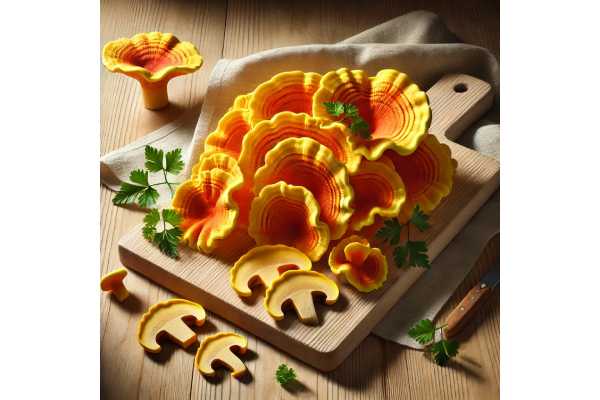
Chicken of the woods refers to a group of polypore mushrooms in the genus Laetiporus, notably L. sulphureus (sulfur shelf), L. cincinnatus (often peach-pink undersides and a rosette at the base of hardwoods), and regionally L. gilbertsonii, L. conifericola, and others. Unlike gilled mushrooms, Laetiporus forms overlapping shelves of soft flesh with a velvety top surface (orange to salmon) and a pore layer beneath (yellow to cream). Fruiting bodies emerge on standing trunks, stumps, or large logs from late spring through autumn after warm rains. Young edges are thick yet supple; as they mature, the shelves become brittle, waterlogged, or woody. Culinary quality tracks that maturity curve: the tender outer 2–5 cm of a fresh flush yields the best texture.
Flavor lives in the intersection of protein-like chew, a lemony note, and gentle umami. When seared, surfaces brown and deepen to roasted poultry aromas; when braised, strands pull apart. This duality—crisp edges with succulent fibers—makes the species unusually versatile: cutlets, kebabs, “wings,” tacos, schnitzel, gyros, pot pies, and curries all work. The fungal cell walls, largely chitin and β-glucans, absorb marinades readily but also require adequate heat to become digestible. Treat Laetiporus as you would poultry: trim, brine or marinate, cook through, then finish for texture.
Ecologically, these mushrooms are saprotrophs and parasites of hardwoods (especially oaks), slowly decomposing lignin and cellulose. Responsible harvest helps forests by removing only part of a flush and leaving mycelium intact. Because the fruiting is bound to specific host trees and sites, flavor and digestibility vary by species, substrate, and rainfall. Many cooks find L. cincinnatus (often at tree bases) milder and more tender than high-trunk L. sulphureus.
Identification hinges on pores (never gills), vivid colors, and growth on wood. Look-alikes include other polypores (mostly inedible or unpalatable rather than deadly) and the gilled, bioluminescent jack-o’-lantern (Omphalotus illudens/olearius), which grows in dense clusters at the base of hardwoods but—critically—has true gills, not pores, and causes severe gastrointestinal upset. If you see gills, it is not chicken of the woods.
Use window: pick young, firm, and bright shelves; avoid waterlogged, bug-ridden, or crumbly masses. In the kitchen, think “thoroughly cooked and well-seasoned.” A simple method—parcooking in a flavorful liquid before browning—solves most texture and digestibility complaints and lays a foundation for almost any cuisine.
Nutrition Profile
Mature nutrient databases rarely list Laetiporus by species; however, analyses of wild culinary mushrooms and polypores provide a reliable baseline. Values below reflect typical per 100 g raw edible portions of young, tender shelves. Cooking concentrates nutrients modestly as water is driven off.
Macros & Electrolytes (per 100 g raw)
| Nutrient | Amount | %DV |
|---|---|---|
| Energy | 22–35 kcal | — |
| Water | ~88–92 g | — |
| Protein | 3.0–4.5 g | 6–9% |
| Total Fat | 0.2–0.6 g | <1% |
| Saturated Fat | 0.03–0.10 g | <1% |
| Carbohydrate | 3–6 g | — |
| Dietary Fiber | 1.5–3.0 g | 5–11% |
| Total Sugars | 1–2 g | — |
| Sodium | 5–15 mg | 0% |
| Potassium | 300–450 mg | 6–10% |
| Magnesium | 10–18 mg | 2–4% |
Carbohydrates (per 100 g raw)
| Component | Amount | Notes |
|---|---|---|
| Starch | ~0 g | Mushrooms store little starch |
| Fiber (β-glucans, chitin) | 1.5–3.0 g | Structural polysaccharides |
| Available carbs | ~2–3 g | Low glycemic impact |
Fats & Fatty Acids (per 100 g raw)
| Component | Amount | Comment |
|---|---|---|
| Total Fat | 0.2–0.6 g | Very low overall |
| Polyunsaturated Fat (linoleic-rich) | 0.10–0.25 g | Aroma precursors |
| Monounsaturated Fat (oleic) | 0.04–0.12 g | Minor |
| Saturated Fat | 0.03–0.10 g | Minor |
| Cholesterol | 0 mg | Plant-like sterol profile (ergosterol) |
Protein & Amino Acids
| Measure | Value | Notes |
|---|---|---|
| Protein | 3.0–4.5 g | Modest for low-calorie food |
| Amino acids | Present | Glutamic/aspartic acids support umami |
Vitamins (per 100 g raw)
| Vitamin | Amount | %DV |
|---|---|---|
| Riboflavin (B2) | 0.25–0.45 mg | 19–35% |
| Niacin (B3) | 3.0–4.5 mg | 19–28% |
| Pantothenic acid (B5) | 1.0–1.6 mg | 20–32% |
| Folate (B9) | 20–35 µg | 5–9% |
| Vitamin D₂ (UV-exposed) | 5–20 µg | 25–100% |
Minerals (per 100 g raw)
| Mineral | Amount | %DV |
|---|---|---|
| Phosphorus | 80–120 mg | 6–10% |
| Copper | 0.20–0.35 mg | 22–39% |
| Selenium | 6–12 µg | 11–22% |
| Zinc | 0.6–1.0 mg | 5–9% |
| Iron | 0.5–1.2 mg | 3–7% |
Bioactives/Phytonutrients
| Class | Presence | Relevance |
|---|---|---|
| Ergosterol | Yes | Precursor of vitamin D₂ (with UV) |
| β-Glucans | Yes | Fiber with research interest in immune modulation |
| Ergothioneine & Glutathione | Variable | Endogenous antioxidants concentrated in fungi |
| Phenolic compounds | Yes | Contribute to antioxidant capacity in vitro |
Allergens & Intolerance Markers
| Potential Issue | Context |
|---|---|
| Fungal proteins | Rare true allergy; more common is GI intolerance if undercooked or old |
| Biogenic amines | Can rise in poorly stored/aged mushrooms |
Additives & Fortification
- Fresh wild mushrooms: none.
- Processed products (pickled, jarred): check for added salt (sodium) and acids.
Contaminants/Residues
- Wild fungi can reflect local soils. Avoid roadside, industrial, or pesticide-treated areas; purchase from traceable sources.
Label notes: %DV uses adult references; vitamin D₂ appears only if UV-exposed or sun-dried. Cooking drives off water; a 100 g cooked portion often represents ~130–160 g raw.
Evidence-Based Health Benefits
High flavor, low calorie. Young Laetiporus delivers substantial sensory payoff for very few calories and minimal fat, enabling “craveable” meals that align with weight-management or heart-smart goals. Because it sears and shreds, it can stand in for poultry in familiar dishes without the saturated fat of many meats.
Dietary fiber and fungal polysaccharides. The fiber matrix—chitin plus β-glucans—adds to daily fiber intake and contributes to fullness. In the broader mushroom literature, β-glucans are associated with immune and cholesterol effects; while the serving size of Laetiporus is modest, including it within a mushroom-rich pattern can support fiber diversity.
Micronutrient support. Like other culinary mushrooms, chicken of the woods offers B-complex vitamins (riboflavin, niacin, pantothenic acid) important for energy metabolism, and minerals such as copper, selenium, and potassium. Copper supports iron mobilization and collagen cross-linking; selenium is required for glutathione peroxidases; potassium helps offset sodium’s blood-pressure effects across the total diet.
Ergosterol to vitamin D₂. Mushrooms uniquely synthesize vitamin D₂ from ergosterol when exposed to UV-B. If you sun-dry slices or purchase UV-treated mushrooms, you can substantially increase D₂ content. Brief cooking retains much of it, contributing a plant-compatible vitamin D option.
Culinary route to better dietary patterns. Because Laetiporus behaves like a “center-of-plate” protein in texture and technique, it invites vegetable-forward meals that still feel hearty: grain bowls with roasted mushrooms and greens; tacos with shredded Laetiporus and salsa; curries and stews studded with browned chunks. These swaps improve overall dietary quality by displacing red/processed meats in some meals.
Sodium flexibility. Mushrooms’ umami and nucleotide content broaden perceived savoriness, so you can season more lightly. If you brine Laetiporus for texture, you can still control final sodium by rinsing and balancing with acids and aromatics.
Economy and sustainability benefits (indirect). Seasonal foraging or purchasing from local, licensed foragers reduces transport miles and supports woodland stewardship. Because dishes built around Laetiporus center on whole foods (grains, legumes, vegetables), the total plate footprint often drops relative to meat-heavy alternatives.
Keep claims grounded. Extract studies on mushroom polysaccharides and phenolics are promising but don’t equate to clinical outcomes from standard portions of chicken of the woods. Enjoy it as part of a varied diet; don’t rely on it as a supplement or treatment.
Risks, Allergies and Interactions
1) Misidentification and look-alikes. True chicken of the woods has pores, not gills. The most notorious orange look-alike is jack-o’-lantern (Omphalotus), a gilled mushroom that causes severe GI distress and famously glows faintly in the dark. Always examine the underside: tiny pores = polypore (Laetiporus); blade-like gills = not chicken of the woods.
2) Host-related reactions. Some Laetiporus species growing on conifers (e.g., L. conifericola) or eucalyptus are linked anecdotally to more GI upsets. Hardwood-grown (especially oak) specimens are generally better tolerated. Unless you’re experienced with your local species complex, favor oak-origin mushrooms sold by reputable foragers.
3) Age and preparation. Old, waterlogged, or bug-damaged shelves are far more likely to cause digestive complaints. Undercooked Laetiporus can be chewy and harder to digest. Thorough cooking—often after a brief par-simmer—reduces issues for many diners.
4) Allergies and sensitivities. True mushroom allergy exists but is uncommon. More often, people report intolerance (nausea, cramps) to wild mushrooms; this can be idiosyncratic. If you’re new to Laetiporus, start with a small serving (~50 g cooked), well-cooked, and avoid alcohol at the same meal if you’re sensitive.
5) Food safety. Wild mushrooms spoil quickly at room temperature. Refrigerate promptly (1–4 °C), cook within 24–48 hours, and reheat leftovers to steaming hot. Discard specimens with sour or fishy odors, sliminess, or conspicuous mold.
6) Drug and condition considerations. No well-documented drug interactions at culinary doses. If you’re immunocompromised, pregnant, or have chronic GI disease, avoid foraged mushrooms and stick to vetted commercial supply cooked thoroughly. Those on potassium-restricted diets should count the moderate potassium in larger portions.
7) Myths to ignore. Silver-spoon tests, onion color changes, or garlic darkening do not detect toxicity. Only morphology, ecology, and—when needed—expert analysis can confirm identity.
Emergency step if things go wrong. If delayed vomiting/diarrhea (6–24 h) follows a wild-mushroom meal or you suspect misidentification, seek urgent medical care and contact a poison center. Bring leftovers and photos of the site and specimen.
Selecting, Quality, Sustainability and Storage
Selecting the best clusters
- Color & texture: Look for vivid orange tops with sulfur-yellow pores. Edges should be thick yet pliable, not brittle or soggy. Press gently; they should spring back.
- Location on tree: Young, tender shelves at the outer margins or newly emerged “petals” cook best. Deep, corky interior flesh is often woody—trim it away.
- Aroma: Clean, lemony, mildly mushroomy. Sourness, fishiness, or a sharp bitter smell are red flags.
- Clean cut & base: Prefer cuts that show fresh, moist flesh without brown oxidation. Avoid dirt-crusted bases.
Sustainability and ethics
- Harvest modestly from a flush, never stripping a tree. Leave small or very young fruit bodies to mature and sporulate.
- Cut cleanly without gouging the wood; avoid raking or tearing mycelial mats.
- Respect local rules and private land. Support licensed foragers who practice traceable, habitat-friendly harvesting and cold-chain handling.
Transport and storage
- Field to fridge: Keep cool and dry in a breathable bag or basket; never sealed plastic in the field.
- Refrigeration: 1–4 °C. Spread on a tray lined with paper towels; do not stack thickly.
- Shelf life: 2–3 days at best for prime texture and aroma.
- Freezing: Par-cook (see below), drain well, cool, then freeze flat in thin layers. Quality remains good for sautés and stews for 2–3 months.
- Drying: Less common because Laetiporus can dry tough. If drying, slice thin and plan to rehydrate for soups and long braises rather than quick sautés.
- Pickling or pressure-canning: Possible when par-cooked first; follow tested, modern recipes and proper acidification.
Quality defects to reject
- Water-soaked, spongy texture; pronounced bitterness on a tiny taste (spit out test sample); blackening, slime, or insect tunneling through most of the flesh; mushrooms cut away from the host with the origin unknown (reduces ID/host confidence).
Preparation, Cooking and Nutrient Retention
Prep essentials
- Trim smartly. From each shelf, keep the outer 2–5 cm that bends without cracking; discard corky interior and any buggy parts.
- Rinse quickly (if needed). Briefly swish in cold water to remove sawdust or grit; drain thoroughly; pat dry.
- Uniform pieces. Slice into cutlets (1–1.5 cm thick) or batons for even cooking.
Two-stage “guaranteed tender” method
- Stage 1: Par-simmer (flavor base). Cover pieces with a liquid you want in the final dish (salted water, light stock, wine + water). Simmer gently 10–15 minutes until flexible and aromatic. Drain well (reserve liquid for sauce).
- Stage 2: Brown & finish. Sear in a film of oil or butter over medium-high heat 3–5 minutes per side until brown at the edges. Finish with aromatics (garlic, thyme), acid (lemon, sherry), and fat (olive oil, butter) to glaze.
Alternative techniques
- Schnitzel: Pound par-cooked cutlets, dredge in seasoned flour, egg, and crumbs. Shallow-fry until crisp and cooked through; finish with lemon.
- Tacos/gyros: Shred par-cooked pieces; sauté with spices (cumin, smoked paprika, oregano) until browned; splash with vinegar or citrus.
- Curry or stew: Brown par-cooked chunks; simmer in sauce 10–15 minutes to meld.
- Grill or roast: Toss with oil and herbs; roast at 220 °C (425 °F) 15–20 minutes, flipping once, after a 5–10 minute par-simmer.
Seasoning framework
- Acid: Lemon, sherry vinegar, sumac — brighten and balance any bitterness.
- Fat: Olive oil, ghee, butter — carry aromatics and improve mouthfeel.
- Herbs & spices: Thyme, rosemary, paprika, garlic, pepper; soy or miso for umami depth.
- Salinity: Use measured salt; mushrooms amplify savoriness, letting you season lighter.
Nutrient retention tips
- B vitamins & minerals: Avoid prolonged boiling and discard-the-liquid approaches; use the par-simmer liquid in your sauce or grains to keep water-soluble nutrients.
- Vitamin D₂ (if UV-exposed): Bake, sauté, or braise rather than long boiling; typical home methods retain a substantial fraction.
- Fat management: Mushrooms sponge oil; add fat in stages and let surfaces brown before the next addition.
Digestibility and safety
- Cook through. Aim for tender throughout; raw or half-cooked pieces can cause cramps.
- Test batch. If you’re new to the species or to a specific host tree, try a small serving the first time.
- Alcohol note. Some people report sensitivity when combining certain wild mushrooms with alcohol; if you’re cautious, separate the first tasting from drinks.
Zero-waste ideas
- Reduce the par-simmer liquid to glaze roasted vegetables or grains.
- Chop trimmings for stock; pressure-cook with onions and herbs for a savory base.
Portions, Comparisons and FAQs
Portions and frequency
- Cooked serving: 75–100 g (about 1–1½ cups cooked pieces).
- Raw to cooked yield: Expect 25–35% weight loss from trimming and cooking.
- Frequency: 1–2 times per week in season is typical for enthusiasts; prioritize variety across different mushroom species.
Chicken of the woods vs. other popular mushrooms
| Feature | Chicken of the woods (Laetiporus) | Oyster (Pleurotus) | Shiitake (Lentinula) | Button/Crimini (Agaricus) |
|---|---|---|---|---|
| Texture | Fibrous, meaty, shreddable | Tender, silky | Firm, chewy | Tender, spongy |
| Best uses | Cutlets, schnitzel, stews, tacos | Quick sautés, stir-fries | Braises, grills, dashi | Everyday sautés, salads |
| Flavor | Lemony, savory, roasted poultry-like | Mild, sweet | Woodsy, savory | Mild, earthy |
| Prep must | Trim to tender edges; cook through | Minimal; fast cook | Remove tough stems; cook well | Simple prep |
| Common pitfalls | Using old/woody shelves; undercooking | Overcrowding (steams) | Undercooked (chewy) | Overcooking (soggy) |
FAQs
Can I eat it without par-cooking?
Yes—some specimens sauté beautifully from raw if very young and tender. Par-simmering is a safety/texture hedge for variable wild harvests.
Why was my batch bitter?
Likely too old, waterlogged, or from a problematic host. Trim more aggressively, add an acid finish, or repurpose to a highly seasoned stew. When in doubt, compost it.
Is it safe to freeze raw?
Raw freezing often yields spongy texture and off aromas. Par-cook first, cool quickly, then freeze in thin layers.
Does it work in vegetarian “chicken” salads?
Yes. Dice cooked, chilled pieces; fold with yogurt or mayo, celery, herbs, lemon, and mustard. Texture is convincingly meaty when the pieces are small.
What about pressure-canning?
Pressure-canning low-acid mushrooms requires precise, tested procedures. If you’re not experienced, choose freezing or pickling instead.
Why do some people get sick while others don’t?
Individual sensitivity, species/host differences, age of the mushroom, and cooking thoroughness all matter. Start small, cook well, and source carefully.
References
- A Review of Mushrooms as a Potential Source of Dietary Vitamin D 2018 (Systematic Review)
- Mushrooms: A rich source of the antioxidants ergothioneine and glutathione 2017
- Mushroom Poisoning 2020 (Review)
- Edible wild mushrooms: Nutritional value, bioactive compounds, and health benefits 2022 (Review)
- UV induced conversion during drying of ergosterol to vitamin D in various mushrooms: Effect of different drying conditions 2020 (Review)
Disclaimer
This article is for general education and is not a substitute for professional medical advice, diagnosis, or treatment. Never consume wild mushrooms unless their identity and suitability have been confirmed by a qualified expert. If you have food allergies, are pregnant, immunocompromised, or take prescription medications, consult your clinician before adding wild mushrooms to your diet. If you suspect mushroom poisoning, seek emergency care immediately and contact your local poison information center.
If you found this guide helpful, please consider sharing it on Facebook, X (formerly Twitter), or any platform you prefer. Your support helps us continue producing careful, reader-first resources.