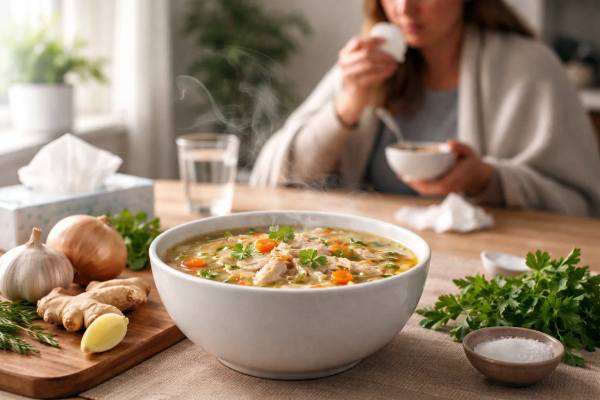
When a cold hits, chicken soup is more than comfort food. A warm bowl can make breathing feel easier, soothe a scratchy throat, and take the edge off fatigue when your appetite is low. Part of the benefit is simple physics—heat, steam, and hydration—but the ingredients matter too. Broth delivers fluid and electrolytes, chicken adds easy-to-digest protein, and classic aromatics like onion, garlic, and ginger provide flavor that can feel “clearing” when your senses are dulled. Soup also fits how colds actually unfold: symptoms come in waves, and a gentle, repeatable routine often helps more than a single remedy.
This article explains why chicken soup can ease common cold symptoms, how to build an ingredient list that supports recovery, and how to make a few reliable soups without much effort. You will also learn when soup is not enough and it is time to consider medical guidance.
Quick Overview
- Warm soup can temporarily improve nasal comfort and help mucus move more easily, especially when congestion is thick.
- Brothy soups support hydration and can be easier to tolerate than solid meals when appetite is low.
- Store-bought soups can be very high in sodium, which may not suit everyone with blood pressure, kidney, or heart concerns.
- For best use, aim for small bowls 2–3 times daily during peak symptoms and pair with rest and steady fluids.
Table of Contents
- Why chicken soup can help
- What the evidence actually shows
- Best ingredients and smart substitutions
- Easy recipes for any energy level
- How to serve, store, and reheat safely
- When soup is not enough
Why chicken soup can help
Chicken soup helps in a practical, layered way: it can make symptoms feel more manageable even when it does not “kill” the virus. Think of it as a supportive tool that targets the most annoying parts of a cold—congestion, throat irritation, cough triggers, low appetite, and dehydration.
Warmth, steam, and airway comfort
Warm liquids can feel immediately soothing because they:
- Moisten irritated throat tissue and reduce the dry, tickly sensation that drives cough.
- Provide gentle heat that can loosen sticky secretions and make nasal passages feel more open.
- Add steam exposure during eating, which many people experience as short-term relief from stuffiness.
That relief is usually temporary, but repetition matters. A cold is often worst over a few days, and small symptom reductions throughout the day can add up to better rest and hydration.
Hydration with more “staying power”
People often underestimate how much fluid they lose during a cold—faster breathing, fever, and mouth breathing can all dry you out. Soup is helpful because it is hydrating and also slightly “anchoring”: the salt, protein, and carbohydrates can make fluids feel more satisfying than plain water, which may help you keep drinking.
Nourishment when appetite is low
When you are sick, appetite often drops before your body’s needs do. Soup works because it is:
- Easy to chew and swallow.
- Flexible in portion size (a few spoonfuls still count).
- Gentle on an unsettled stomach when compared with greasy or very spicy meals.
Ingredients that can support recovery routines
Soup’s “helper” ingredients tend to be the ones people naturally include:
- Aromatics (onion, garlic, scallion, ginger) that improve palatability and may encourage eating.
- Vegetables that add potassium, carotenoids, and vitamin C-rich options like carrots, leafy greens, and peppers.
- Herbs and spices that can make the meal feel more clearing and encourage slow, mindful breathing while eating.
The key point: chicken soup is not magic, but it is a well-designed delivery system for warmth, fluid, and gentle nutrition—three things that consistently help people feel and function better during a cold.
What the evidence actually shows
Chicken soup sits in a rare category: a home remedy that is both culturally widespread and scientifically plausible. The research base is not enormous, and results vary by soup type and study design, but there are a few consistent themes that are useful for real-world decisions.
Short-term nasal effects are measurable
In controlled testing, hot liquids—including hot chicken soup—have been associated with temporary increases in how quickly nasal mucus moves. That does not mean the cold resolves faster, but it may explain why many people notice a “clearing” feeling soon after eating. The effect appears to be time-limited, which matches lived experience: you feel better for a bit, then symptoms creep back as tissues dry or mucus thickens again.
Anti-inflammatory activity is plausible, but not a cure
Colds feel bad largely because of your immune response: swelling, mucus production, and inflammatory signaling. Soup cannot switch that off (and you would not want it to), but some research supports the idea that components of chicken soup can influence immune activity in ways that could theoretically reduce symptom intensity. Importantly, these findings do not prove that soup prevents complications or replaces evidence-based care for high-risk people. They support a more modest claim: soup may contribute to symptom relief and comfort.
Nutrition and behavior are part of the benefit
One overlooked reason soup “works” is behavioral. It encourages:
- A pause in the day to sit, breathe, and warm up.
- A predictable hydration habit.
- Calorie and protein intake without effortful cooking or chewing.
Those behaviors are not placebo—they are supportive physiology. Better hydration and nutrition can reduce headache, lightheadedness, and exhaustion, and they support sleep, which is often the most important recovery tool.
What soup cannot reliably do
It is just as important to name the limits:
- Soup does not reliably shorten illness duration for everyone.
- It does not replace medical evaluation if you have severe symptoms, high-risk conditions, or worsening breathing.
- It does not “detox” infection out of the body.
A balanced interpretation is simple: chicken soup is a low-risk, often helpful strategy for symptom management, especially when it is part of a broader plan that includes rest, steady fluids, and appropriate over-the-counter choices when needed.
Best ingredients and smart substitutions
A “good” cold-time chicken soup is not about perfection. It is about choosing ingredients that support hydration, easy digestion, and a comforting sensory experience—while fitting your health needs.
Start with a broth that fits your body
Broth is the base, and it is where many store-bought soups run into trouble.
- Homemade or low-sodium broth is ideal if you have hypertension, kidney disease, heart failure, or you are trying to limit salt.
- Regular broth can be reasonable if you are sweating, not eating much, or you tend to feel lightheaded with low intake.
- If you are unsure, use a split strategy: low-sodium broth plus a small, controlled pinch of salt at the table.
Practical tip: taste matters. If a soup tastes flat, you may not finish it. Boost flavor with acid (lemon), aromatics, and herbs before you reach for extra salt.
Protein choices that stay gentle
- Chicken thighs stay tender and are forgiving if simmered longer.
- Chicken breast works if you add it late or poach gently to avoid dryness.
- Shredded rotisserie chicken is a high-energy-day shortcut (discard skin if grease bothers your stomach).
- If you prefer lighter options, bone-in pieces can create a richer broth without much fat if you skim the surface.
Vegetables that help without adding effort
Choose a mix of soft-cooking vegetables and one or two brighter additions for freshness:
- Soft base: carrot, celery, onion, zucchini, mushrooms, potato, sweet potato.
- Add near the end: spinach, kale, peas, corn, chopped bell pepper.
If chopping feels like too much, frozen mixed vegetables are perfectly acceptable. The goal is consistency, not culinary performance.
Herbs, spices, and “feel-better” add-ins
- Ginger can be calming for nausea and adds warmth.
- Garlic adds strong flavor when your taste is muted.
- Turmeric and black pepper provide depth and color.
- Fresh herbs (parsley, dill, cilantro) add brightness that can make a bowl more appealing.
Keep spice moderate. Very spicy soup can irritate an already raw throat or trigger coughing in some people.
Smart swaps for common constraints
- Gluten-free: use rice, potatoes, or gluten-free noodles.
- Lower carb: swap noodles for extra vegetables and shredded cabbage.
- Dairy-free: most classic chicken soups already are; avoid cream-based versions if congestion feels worse with heavier foods.
- Sensitive stomach: skip heavy fat, reduce chili heat, and keep the broth clear.
A strong “cold soup” formula is simple: hydrating broth + tender protein + easy vegetables + aromatics + a small amount of starch for comfort.
Easy recipes for any energy level
These recipes are designed for real sick days: low prep, flexible ingredients, and forgiving timing. Use what you have. The best recipe is the one you can actually make (or ask someone to make) while you are under the weather.
1) Classic recovery chicken noodle soup
Ingredients
- Broth (homemade, boxed, or bouillon-based), enough for 3–4 bowls
- Onion and garlic (or powder if that is easier)
- Carrot and celery (fresh or frozen)
- Shredded chicken (cooked)
- Noodles or rice
- Optional: lemon juice, parsley, black pepper
Method
- Simmer onion and carrot in broth until tender.
- Add noodles or rice and cook until just done.
- Stir in shredded chicken for the last few minutes to warm through.
- Finish with lemon and pepper to brighten the flavor.
Why it helps: it is reliable hydration plus mild calories, and it is easy to keep down when appetite is low.
2) Ginger-garlic chicken and rice soup
Ingredients
- Broth
- Fresh ginger (or ground ginger) and garlic
- Chicken thighs or shredded cooked chicken
- Rice (white rice cooks fastest)
- Optional: scallions, spinach, a small drizzle of sesame oil
Method
- Add ginger and garlic to simmering broth for 5–10 minutes.
- Add rice and cook until tender.
- Add chicken and a handful of spinach at the end, just until wilted.
Why it helps: ginger can feel settling when you are queasy, and rice makes the soup gentle and filling without heaviness.
3) Lemon-egg style chicken soup (without fuss)
This is inspired by a classic lemon and egg soup, but simplified for low energy.
Ingredients
- Broth and shredded chicken
- Cooked rice (leftover rice works well)
- 1–2 eggs
- Lemon juice
- Optional: dill or parsley
Method
- Warm broth with chicken and rice until steaming.
- In a bowl, whisk eggs with lemon juice.
- Slowly whisk a few spoonfuls of hot broth into the egg mixture (this gently warms it).
- Pour the egg mixture back into the pot while stirring. Keep heat low and stir until slightly thickened. Do not boil hard.
Why it helps: it is soft, comforting, and often easier to eat when your throat is sore and your appetite is limited.
Customization guide in one minute
- Need more calories: add potatoes, noodles, or a spoonful of olive oil.
- Need lighter: use clear broth, rice, and extra vegetables.
- Want more “clearing” feel: add ginger, black pepper, and a squeeze of lemon.
- Cooking feels impossible: use broth, frozen vegetables, and pre-cooked chicken.
The goal is repeatability. A simple soup you can make twice during a cold is usually more helpful than an elaborate recipe you make once.
How to serve, store, and reheat safely
Soup works best when you treat it as a supportive routine, not a one-time fix. Temperature, timing, and safe storage all matter—especially if you are cooking while tired or sharing food with others.
Serving strategies that improve comfort
- Serve warm, not scalding. Very hot liquids can irritate a sore throat and increase cough reflex in some people. A comfortably hot temperature is enough for steam and soothing.
- Small bowls beat one huge bowl. During peak symptoms, appetite and energy fluctuate. A smaller serving is easier to finish and can reduce nausea.
- Pair soup with steady fluids. Soup counts as fluid, but do not let it become your only intake. Sip water or warm tea between bowls.
- Use timing to your advantage. Many people find a bowl in late afternoon or evening improves sleep by calming cough triggers and reducing the “dry throat” cycle.
Salt, spice, and reflux considerations
- If you are prone to reflux, very fatty soup or heavy late-night portions can worsen throat irritation and cough. Choose a clearer broth and finish eating at least a couple of hours before lying down.
- If blood pressure is a concern, emphasize low-sodium broth and boost flavor with lemon, herbs, garlic, and pepper.
- If you are congested, keep dairy and heavy cream soups optional. Some people feel thicker mucus subjectively with richer soups, even if the effect is not universal.
Storage and reheating safety basics
When you are sick, it is easy to lose track of time in the kitchen. Simple rules help prevent foodborne illness:
- Cool soup in smaller containers so it chills faster.
- Refrigerate promptly after cooking and do not leave a big pot on the counter for long stretches.
- Reheat until piping hot; for soups, bringing it to a boil is a straightforward safety signal.
- If you are serving someone at higher risk (pregnant, older adult, immune-compromised), be extra careful with storage time and reheating thoroughness.
A realistic “sick-day” setup
If you have the energy once, make a pot and portion it immediately:
- Two containers for the next day.
- One or two containers to freeze.
- One small portion ready to reheat quickly.
That setup reduces decision fatigue, keeps food safer, and makes it far more likely you will actually use soup as a recovery tool.
When soup is not enough
Chicken soup is supportive, but it should never delay care when symptoms suggest something more serious than a routine cold. Use soup as part of self-care, and keep an eye on how the overall illness is trending.
Signs you should seek urgent evaluation
Get urgent medical help if you have:
- Shortness of breath at rest, trouble speaking full sentences, or worsening breathing
- Chest pain or pressure that feels heavy, spreading, or unusual for you
- Blue or gray lips, fainting, confusion, or extreme drowsiness
- Coughing up significant blood
- A high fever that persists, returns after improving, or comes with shaking chills and marked weakness
When to contact a clinician soon
Consider medical guidance if:
- Symptoms last longer than about 10 days without clear improvement
- A cough becomes severe, keeps you from sleeping for multiple nights, or is accompanied by wheezing
- You develop ear pain, facial pain with thick nasal discharge, or dehydration you cannot correct
- You are in a higher-risk group: asthma, COPD, heart disease, immune suppression, pregnancy, or older age with a noticeable drop in function
How to use soup within a full plan
A strong home-care approach is layered:
- Rest and consistent fluids.
- Warm soup once or twice daily for comfort and nutrition.
- Symptom-targeted choices (saline rinses, honey for cough if appropriate, fever reducers when needed).
- A clear threshold for care if breathing worsens, fever escalates, or symptoms change sharply.
Soup is best viewed as a practical ally: it can improve comfort, support hydration, and make it easier to eat. But if your body is signaling distress—especially around breathing, chest symptoms, or severe weakness—treat that as the priority and seek evaluation.
References
- Were Our Grandmothers Right? Soup as Medicine—A Systematic Review of Preliminary Evidence for Managing Acute Respiratory Tract Infections – PMC 2025 (Systematic Review)
- Immunomodulatory effects of chicken soups prepared with the native cage-free chickens and the commercial caged broilers – PMC 2022
- The treatment of mild upper respiratory tract infections – a position paper with recommendations for best practice – PMC 2023 (Position Paper)
- Effects of drinking hot water, cold water, and chicken soup on nasal mucus velocity and nasal airflow resistance – PubMed 1978 (Clinical Trial)
- Safe Food Handling | FDA 2024 (Guidance)
Disclaimer
This information is for educational purposes only and is not a substitute for professional medical advice, diagnosis, or treatment. While chicken soup can support hydration and comfort during a cold, it cannot assess or treat serious illness. Seek urgent medical care for severe or worsening shortness of breath, chest pain or pressure, bluish lips, fainting, confusion, or any rapidly worsening symptoms. If you have asthma, COPD, heart disease, are pregnant, are immunocompromised, or are caring for a young child or older adult, consider a lower threshold for contacting a clinician.
If you found this article useful, please share it on Facebook, X (formerly Twitter), or any platform you prefer.