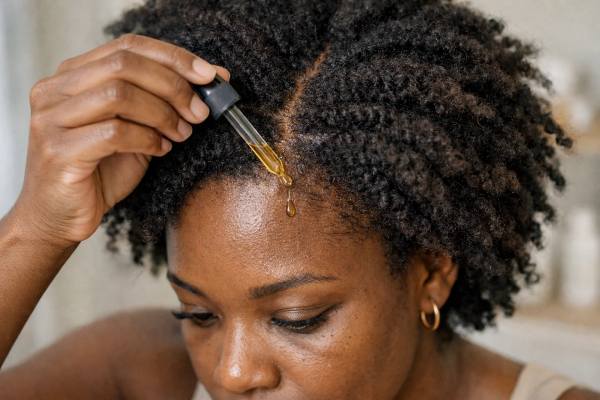
Coily hair can look glossy and feel touchably soft, yet still come with a familiar frustration: a scalp that feels tight or itchy, lengths that seem to “drink” product, and ends that dry out faster than you expect. This isn’t a personal failure or a sign you are doing everything wrong. Coily patterns have unique structure and oil distribution, and those differences change how moisture moves, how buildup accumulates, and how quickly the scalp gets out of balance under protective styles, workouts, and low-humidity weather.
This guide is designed to help you make calm, evidence-informed choices without harsh rules. You’ll learn why coily hair often feels dry even when the scalp is oily, how to tell true dryness from dandruff and irritation, which oils can help (and when they backfire), and how to choose a wash frequency that supports both scalp comfort and length retention. The goal is simple: a scalp that feels quiet and hair that stays resilient between wash days.
Quick Overview
- Scalp dryness in coily hair often reflects uneven oil distribution, product buildup, and barrier irritation—not “not enough oil.”
- A consistent cleanse-and-condition routine usually improves comfort more than extreme wash stretching or constant oiling.
- Oils can reduce friction and slow water loss, but heavy scalp oiling can worsen itch and flaking in some people.
- Start with weekly cleansing, then adjust by one day at a time based on itch, flakes, and how quickly the roots feel coated.
- Persistent burning, thick scale, oozing, or sudden shedding should be evaluated rather than managed with more oils.
Table of Contents
- Why coily hair feels drier
- Dry scalp versus dandruff patterns
- Oils that help and hurt
- Wash frequency and cleansing strategy
- Moisture layering for lasting comfort
- Troubleshooting itch flakes and breakage
Why coily hair feels drier
Coily hair is not “dry by default,” but it is more likely to feel dry because of how the strand is shaped and how oils move. A coil has more bends and twists than straighter patterns. Those turns create more points where the cuticle can lift with friction, and they slow the natural spread of sebum (your scalp’s oil) down the length. That’s why you can have an oily scalp and still have dry-feeling mids and ends.
Sebum distribution is uneven, not absent
Sebum is a lubricant. It reduces friction, adds shine, and helps slow water loss from the hair surface. In coily hair, sebum often stays close to the scalp rather than traveling smoothly down the shaft. A common result is this “split experience”:
- Roots can feel coated or itchy by day 4–7, especially under gels or edge products.
- Lengths feel rough or “thirsty” sooner, especially at the crown and ends.
- You can overcompensate by oiling the scalp heavily, then feel greasier roots without truly fixing length dryness.
Hydration and lubrication are different jobs
Many routines treat dryness as one thing, but it is usually two separate needs:
- Hydration: water content and water-binding ingredients that keep hair flexible.
- Lubrication: oils, butters, and conditioning agents that reduce friction and slow moisture loss.
Coily hair often needs both, but in the right order. If you apply heavy oils to hair that is already dehydrated, you may trap in a dry state: it feels smoother for a day, but then becomes stiff and tangly again. This is why “my hair loves oils” can be true, while “my scalp hates oils” is also true.
Porosity and wear patterns change the plan
Coily hair can be low porosity (water beads and resists) or high porosity (absorbs fast, dries fast), and many people have a mix: lower porosity near the roots and higher porosity at the ends due to weathering and styling. If you want help matching product weight and layering to porosity signals, low versus high porosity care can help you choose between lighter hydrators and richer sealants without guesswork.
Friction, tension, and microclimates matter
Dryness is often triggered by environment and styling, not just shampoo. Tight styles, frequent re-twisting, rough detangling, and sleeping without protection can roughen cuticles and increase water loss. Protective styles can also create a warm microclimate at the scalp, where sweat and product buildup accumulate. That mix can feel like dryness (tightness and itch) even when the scalp is actually coated.
Dry scalp versus dandruff patterns
“Dry scalp” is a phrase people use for almost any flaking, but the cause matters because the fix can be opposite. Some scalps need gentler cleansing and barrier support. Others need more consistent cleansing and targeted anti-dandruff treatment. Coily hair adds a layer of complexity because longer intervals between washes and heavier products can make flaking look worse, even when the underlying issue is irritation or buildup.
What true dryness often looks and feels like
Dryness is usually a barrier issue: the scalp skin is not holding water well, or it is irritated by products, friction, or frequent hot-water washing. Clues that point toward dryness and irritation include:
- Fine, powdery flakes that dust off easily
- Tightness or “paper-dry” feeling after washing
- Itch that flares after using fragranced products or strong clarifiers
- Sensitivity when you scratch or brush the scalp
In these cases, the most helpful shift is often gentle cleansing plus barrier support, not heavy oiling over buildup.
What dandruff and seborrheic patterns look like
Dandruff and seborrheic dermatitis are often linked to scalp inflammation and yeast overgrowth in oily areas. They can occur even if your lengths feel dry. Clues include:
- Greasy or waxy flakes that stick to the scalp or hair
- Itch that improves right after washing and returns quickly
- Flaking concentrated at the hairline, crown, or behind the ears
- Scalp odor and a “coated” feeling at the roots
These patterns often improve with consistent cleansing and the right active ingredients, but the routine has to be adapted so coily lengths do not get stripped in the process.
Contact irritation can mimic both
A very common, under-recognized cause is product irritation—especially from fragrance, essential oils, strong preservatives, or hair dyes. If a new product triggers burning, redness, or sudden flaking within days, treat it like skin irritation first: stop the product, simplify the routine, and give the scalp time to calm.
A quick triage approach that prevents weeks of guessing
Try this for 2–3 weeks:
- Choose one gentle shampoo as your baseline cleanser.
- If flakes are greasy and sticky, add an anti-dandruff wash once weekly (scalp-focused).
- If flakes are fine and scalp feels tight after washing, prioritize a soothing conditioner on lengths and avoid heavy scalp oils.
If you want a clear guide to separating these patterns (and how each responds to cleansing frequency), dandruff versus dry scalp differences and treatments can make the decision less confusing.
Oils that help and hurt
Oils can be a powerful tool for coily hair, but they are not automatically a scalp-dryness cure. Think of oils as “friction management” and “water-loss management,” not as hydration itself. Used well, they can reduce breakage during detangling, soften the feel of hair, and help maintain styles. Used poorly—especially on the scalp—they can trap buildup and trigger itch.
What oils can realistically do
Oils help most when the problem is mechanical dryness: hair feels rough because cuticles are raised and strands are rubbing against each other. A thin oil layer can:
- Improve slip during finger detangling and combing
- Reduce snagging at the ends and around knots
- Make styles last longer by reducing frizz from friction
- Help slow water loss after you hydrate hair with water-based products
This is why many people love oils on lengths but feel worse when oils are applied directly to the scalp.
Scalp oiling: when it helps and when it backfires
Scalp oiling can be soothing if your scalp is truly dry and your skin tolerates the oil. It can backfire if your itch is driven by dandruff, buildup, or irritation. Heavy oiling may:
- Increase the “coated” feeling at roots
- Make flakes stick and clump
- Encourage more scratching because the scalp feels dirty sooner
- Create a cycle where you add oil to soothe, then need stronger shampoo to remove it
If you like the ritual of scalp oiling, it helps to follow a structured approach rather than “more is better.” scalp oiling benefits and risks can help you choose amount, timing, and scalp signals that suggest you should pause.
How to choose an oil for coily hair
Instead of chasing a trendy oil, choose by texture and goal:
- Light oils (for fine strands or easy buildup): small amounts on ends for slip.
- Medium oils (most common sweet spot): pre-shampoo on lengths, or a drop-based seal over leave-in.
- Heavy oils and butters (coarse hair, very high porosity ends): best as a thin layer on lengths, not as daily scalp coverage.
A practical rule: if oil makes your scalp itchier within 24–48 hours, stop scalp application and move oil to the lengths only.
Best timing: pre-shampoo and post-hydration
Two timing windows tend to work well:
- Pre-shampoo oiling on lengths: Apply to mids and ends 30–60 minutes before washing to reduce friction during cleansing and detangling.
- Seal after hydration: Apply a small amount after a water-based leave-in or moisturizing cream to slow moisture loss.
Avoid daily re-oiling without cleansing. Layering oil over old product is a common route to “my scalp feels dry but also greasy,” which is usually buildup plus irritation.
Wash frequency and cleansing strategy
Wash frequency is one of the biggest levers for scalp comfort, but it has to be paired with technique that protects coily lengths. Washing too rarely can increase buildup and itch; washing too often with harsh products can dry and tangle the hair shaft. The goal is not a perfect number—it’s a scalp that feels calm and lengths that stay resilient between washes.
A realistic starting point for most coily routines
If you want a dependable baseline, start with weekly cleansing for 2–3 weeks, then adjust. Weekly washing is often frequent enough to prevent heavy buildup, while giving you time to moisturize and style without constant disruption.
Then adjust by one step:
- If itch, odor, or sticky flakes build quickly, move toward every 4–6 days.
- If the scalp feels calm but lengths feel overly stripped, keep weekly washing but change products and technique before you stretch much farther.
Scalp-first cleansing, length-protecting technique
A coily-friendly wash strategy is less about “washing less” and more about washing smarter:
- Saturate thoroughly with lukewarm water.
- Apply shampoo to the scalp in sections and massage with fingertips.
- Let the lather rinse through the lengths instead of scrubbing them.
- Condition lengths immediately after rinsing shampoo.
- Detangle only when hair has slip (conditioner or mask), starting at the ends.
This protects the cuticle and reduces the “wash day damage” that often gets mislabeled as dryness.
Co-washing, low-lather cleansers, and clarifying
Co-washing can work well for some people, especially if the scalp is not dandruff-prone and products are lightweight. But if you use gels, edge products, heavy butters, or dry shampoo, you often need a real cleanser regularly.
A balanced rotation can look like:
- Most washes: gentle shampoo or low-lather cleanser
- If dandruff-prone: add an anti-dandruff wash weekly or every other week, scalp-focused
- Every 3–6 weeks: clarifying wash if you notice residue, dullness, or “product film” at the roots
If you want a straightforward way to match wash frequency to scalp type (and avoid extremes that backfire), how often to wash by scalp type can help you personalize the schedule without turning it into a stressful project.
Special cases: workouts and protective styles
- Frequent workouts: sweat salts can irritate the scalp. If you cannot wash more often, consider a scalp rinse and gentle scalp cleanse midweek, then restyle with minimal manipulation.
- Protective styles: scalp buildup and itch often increase under braids or twists. A dilute scalp cleanse (scalp-only) once weekly can reduce discomfort without fully undoing the style.
The best wash schedule is the one that keeps you from scratching. Scratching is a fast track to irritation and breakage.
Moisture layering for lasting comfort
Moisture routines for coily hair work best when they are built like a system: hydrate, condition, then seal—while keeping the scalp environment clean enough to stay calm. The mistake many people make is treating dryness with more and more layers until the hair feels coated and the scalp feels itchy. A better approach is to use fewer layers, placed intentionally, and refreshed on a predictable schedule.
The “water first” principle
If your hair feels stiff, rough, or tangly, it often needs hydration before it needs more oil. Hydration can come from:
- Water during wash day
- Water-based leave-ins
- Light mists or refresh sprays (especially for ends)
Then you use conditioner and sealants to keep that hydration from disappearing too quickly.
Conditioners and masks: what to prioritize
For coily hair with dryness, prioritize:
- Slip and detangling ability (less breakage)
- Softness and flexibility (better curl formation)
- Consistent conditioning frequency (more important than “strongest mask”)
A weekly deep condition is common, but the more useful question is: does your hair feel easier to detangle and less “grabby” afterward? If not, consider product fit or application technique rather than adding extra steps.
Barrier support for the scalp
A dry-feeling scalp often benefits from barrier-supportive ingredients and a less irritating routine. Look for scalp-friendly approaches that reduce friction and calm itch rather than simply “adding oil.” If your scalp tends to feel tight or reactive, ceramides and scalp barrier dryness can help you understand why barrier repair can matter as much as moisturizing.
Refresh strategy that does not create buildup
A practical refresh plan often looks like this:
- Every 2–3 days: refresh ends with a small amount of water-based leave-in or a light mist, then seal lightly.
- Midweek scalp check: if the scalp is itchy, prioritize cleansing sooner rather than adding oil.
- Avoid constant re-layering: if you need to add heavy product daily to feel okay, the routine may be masking buildup or the wrong product weight.
A simple example routine
- Wash day (weekly): shampoo scalp, condition lengths, detangle, apply leave-in, seal ends lightly.
- Day 3–4: refresh ends with light hydration and minimal sealant.
- Day 5–7: if itch or flakes rise, wash earlier; if scalp is calm, maintain style and protect at night.
This kind of structure reduces the impulse to “chase moisture” with endless products that eventually irritate the scalp.
Troubleshooting itch flakes and breakage
When coily hair and scalp dryness feel persistent, it helps to troubleshoot with clear cause-and-effect. The goal is to identify whether you are dealing with dryness, buildup, dandruff, irritation, mechanical damage, or a combination—and then make one change at a time so you can actually see what helps.
If the scalp itches but looks clean
Common culprits include fragrance sensitivity, essential oils, tight styles, and hot water. Try a two-week “quiet scalp” reset:
- Use a fragrance-minimized shampoo and avoid new actives.
- Reduce tension: loosen styles, avoid sharp edges from clips, and limit re-twisting.
- Keep water lukewarm and shorten scrub time.
- Avoid scalp oiling during the reset.
If itch persists, look beyond dryness. A scalp can itch from inflammation even when it is not dry.
If flakes are sticky or scalp feels coated
This often points to buildup and/or dandruff patterns. Focus on cleansing consistency and rinse quality:
- Add one extra wash day (for example, every 4–6 days instead of weekly).
- Ensure thorough rinsing (residue can mimic oiliness and itch).
- Use a clarifying wash occasionally if heavy products are part of your routine.
Avoid “scratching to clean.” Scratching creates micro-injury that keeps the scalp reactive.
If hair breaks even when the scalp feels better
Breakage is often the hidden reason dryness feels endless. When ends are frayed, they tangle, and tangles create more breakage. Prioritize:
- Detangling with slip and patience
- Trimming when ends are splitting or knotting repeatedly
- Reducing heat and high-tension styles
- Protecting hair at night (low-friction scarf or pillowcase)
A key clue: if you see many short pieces without a bulb, that is breakage, not shedding from the root.
When to get medical help
Dryness is common, but certain signs deserve prompt evaluation:
- Burning pain, swelling, oozing, or open sores
- Thick, adherent scale with hair loss
- Sudden patchy hair loss or rapid shedding
- Persistent itch that does not improve with a simplified routine
- Bumps, pustules, or tender areas that suggest infection or folliculitis
If you want a clinician-style checklist for which symptoms are “watch and adjust” versus “book a visit,” itchy scalp causes and when to worry can help you decide without spiraling.
The most reliable signal you are on track
A healthy plan makes the scalp feel quietly normal: less itch, fewer flakes, and less urge to scratch. Lengths should feel easier to detangle and less prone to snapping. When those two things improve together, you usually do not need more products—you need more consistency.
References
- Afro-textured hair care: a narrative review and recommendations for dermatologists – PMC 2026 (Review)
- Hair Oils: Indigenous Knowledge Revisited – PMC 2022 (Review)
- The Impact of Shampoo Wash Frequency on Scalp and Hair Conditions – PMC 2021
- An Overview of the Diagnosis and Management of Seborrheic Dermatitis – PMC 2022 (Review)
Disclaimer
This article is for educational purposes only and does not provide medical advice, diagnosis, or treatment. Scalp itching, flaking, and dryness can have multiple causes, including dandruff, dermatitis, allergic reactions, and infections that may require professional care. Stop using any product that causes burning, swelling, hives, blistering, or worsening irritation, and seek medical attention if symptoms are severe or persistent. If you have patchy hair loss, painful scalp lesions, oozing, fever, or rapidly increasing shedding, consult a qualified healthcare professional or dermatologist promptly.
If you found this guide useful, consider sharing it on Facebook, X (formerly Twitter), or your preferred platforms so others can build a calmer scalp routine and reduce breakage without fear-based rules.