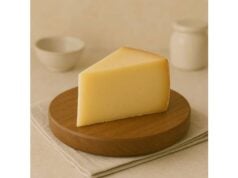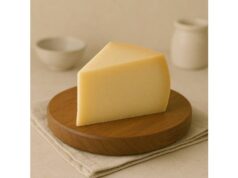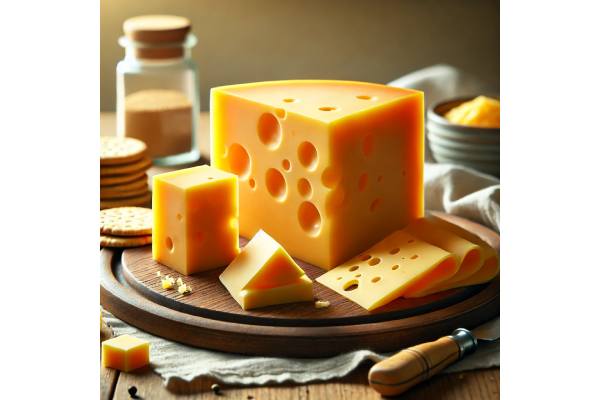
Colby cheese is a mild, semi-firm American original that melts cleanly, slices neatly, and fits into weeknight cooking as easily as it crowns a cheeseboard. Born in Wisconsin in the late 19th century, Colby is made from cow’s milk, often lightly colored with annatto, and washed-curd–style to produce its characteristically open, springy body and milky-sweet flavor. Compared with sharper, longer-aged cheeses, Colby is less tangy and melts more evenly, making it a kitchen workhorse for grilled cheese, macaroni and cheese, burgers, casseroles, and quesadillas. Nutritionally, it offers high-quality protein and a significant amount of calcium and phosphorus that support bones and teeth. Like other full-fat cheeses, it is also a concentrated source of saturated fat and sodium, so portion awareness matters. When purchased pasteurized and handled properly, Colby cheese is safe for most people, though people on specific diets (such as MAOI therapy) should take extra care with aged varieties. This guide unpacks how to choose, store, cook, and enjoy Colby while keeping nutrition and safety front and center.
Fast Facts
- Provides about 24 g protein and 685 mg calcium per 100 g, supporting bone and muscle health.
- Typical serving is 28 g (1 oz) once per day in balanced diets; adjust if limiting saturated fat or sodium.
- Contains milk proteins and lactose; choose pasteurized products and store cold to reduce safety risks.
- People on MAOI medications and those with milk allergy or severe lactose intolerance should limit or avoid.
Table of Contents
- Colby cheese: detailed overview
- Colby cheese nutrition profile (per 100 g)
- Health benefits of Colby cheese
- Colby cheese risks, allergies and interactions
- Selecting quality Colby cheese and storage
- Cooking Colby cheese and nutrient retention
- Portions, comparisons and FAQs about Colby cheese
Colby cheese: detailed overview
Colby is one of the few truly American cheese styles. Developed in the 1880s in Colby, Wisconsin, it uses a “washed-curd” method: after cutting the curd, some whey is drained and replaced with warm water. This step reduces acidity, yielding a supple body and mild, slightly sweet flavor with tiny mechanical openings rather than a tight, glassy paste. The result is a cheese that melts cleanly without oiling off, browns evenly under heat, and plays well with other ingredients—ideal for grilled cheese sandwiches, au gratin potatoes, casseroles, tacos, omelets, burgers, baked pasta, and snack boards.
Colby is often sold young—typically 1 to 3 months of age—so its flavors stay gentle. You will find it in blocks, longhorn cylinders, deli slices, shredded packs, and in the marbled Colby–Monterey Jack blend (“Colby Jack”). By standard of identity in the United States, Colby is made from cow’s milk, may include annatto (for color), must contain at least 50% milkfat in the solids, and no more than 40% moisture. These benchmarks keep the style consistent across producers while allowing modest variability in flavor development and texture.
From a nutrition standpoint, Colby provides high-quality complete protein and is rich in minerals that build and maintain bone—most notably calcium and phosphorus. It contains small amounts of B vitamins (riboflavin and B12) and trace minerals like zinc and selenium. As a full-fat cheese, it is also high in saturated fat and contributes sodium, which are nutrients many people monitor. Because cheese is nutrient-dense, relatively small portions deliver both benefits and significant calories.
Culinarily, Colby sits between the creaminess of young Jack and the firmness of mild Cheddar. It shreds smoothly and melts uniformly, making it a frequent choice where even melt and mild dairy sweetness support the dish rather than dominate it: stovetop mac and cheese, queso-style dips, breakfast scrambles, burritos, sheet-pan nachos, and stuffed baked potatoes. On a board, it balances cured meats and tart fruit, and its friendly profile makes it popular with children and crowd-pleasing at parties.
Finally, safety and special diets: choose pasteurized milk Colby and keep it refrigerated. People with milk allergy must avoid it; those with lactose intolerance may tolerate small amounts because aged cheeses are naturally lower in lactose, but individual thresholds vary. People taking monoamine oxidase inhibitor (MAOI) medications must be cautious with aged cheeses due to tyramine. Each of these considerations is discussed in detail in later sections.
Colby cheese nutrition profile (per 100 g)
The following values represent typical compositions for Colby cheese per 100 g. Percent Daily Value (%DV) calculations use current U.S. labeling DVs for adults and children ≥4 years. Actual products vary by brand, milk composition, salt level, and aging.
Macros and electrolytes (per 100 g)
| Nutrient | Amount | %DV |
|---|---|---|
| Energy | 394 kcal | — |
| Water | 39.5 g | — |
| Protein | 23.8 g | 48% |
| Total fat | 32.1 g | 41% |
| Saturated fat | 20.2 g | 101% |
| Carbohydrate | 2.6 g | 1% |
| Total sugars | 0.5 g | — |
| Dietary fiber | 0 g | 0% |
| Sodium | 604 mg | 26% |
| Potassium | 76 mg | 2% |
Fats and fatty acids
| Component | Amount | %DV |
|---|---|---|
| Saturated fatty acids | 20.2 g | 101% |
| Trans fat | ~0–1 g | — |
| Cholesterol | 95 mg | — |
Protein and amino acids
| Component | Amount | %DV |
|---|---|---|
| Protein (complete) | 23.8 g | 48% |
Vitamins
| Vitamin | Amount | %DV |
|---|---|---|
| Vitamin A (RAE) | 264 µg | 29% |
| Riboflavin (Vitamin B2) | 0.38 mg | 29% |
| Vitamin B12 | 0.83 µg | 35% |
| Vitamin D | 0.2–0.5 µg (varies) | 1–3% |
Minerals
| Mineral | Amount | %DV |
|---|---|---|
| Calcium | 685 mg | 53% |
| Phosphorus | 457 mg | 37% |
| Zinc | 3.1 mg | 28% |
| Selenium | 15 µg | 27% |
| Iodine | varies by feed/salt | — |
Allergens and intolerance markers
- Milk proteins (casein, whey) present.
- Contains lactose in small amounts; many aged cheeses are naturally low in lactose, but sensitivity differs.
Additives and fortification
- Annatto is commonly used for color.
- Sliced or cut Colby may legally include sorbates (mold inhibitors) at regulated levels; labels must indicate if used.
- Shredded products may include anti-caking agents (e.g., cellulose).
Glycemic and acid–base metrics
- Glycemic impact is minimal due to very low carbohydrate.
- Cheese is acid-forming (positive PRAL), which is normal for protein-rich foods.
Notes: Values are representative of standard Colby cheese and reflect analyses from federal food composition databases and U.S. cheese standards of identity. Always check your product’s label for exact amounts.
Health benefits of Colby cheese
Supports bone and tooth health. Colby is notably rich in calcium (about 685 mg per 100 g) and phosphorus (roughly 457 mg per 100 g), two minerals that form hydroxyapatite, the primary mineral in bones and enamel. Adequate daily intake of calcium and phosphorus, along with vitamin D from other foods or sunlight exposure, helps maintain skeletal integrity throughout life. Even modest servings—28 g (1 oz)—contribute meaningfully toward calcium needs.
Complete protein for muscle repair. With about 24 g of protein per 100 g, Colby supplies complete dairy protein (casein and whey), containing all essential amino acids. A 28 g serving delivers ~7 g of protein, which can help round out meals where plant proteins or grains may be lower in specific amino acids. Pairing Colby with beans or whole grains improves overall protein quality of a meal.
Dental-friendly properties beyond minerals. Cheese stimulates saliva, which helps neutralize acids after eating. The buffering effect of cheese, together with its calcium and phosphate content, can reduce enamel demineralization when consumed at the end of meals or snacks. As part of an overall oral hygiene routine, this can be a tooth-friendly choice compared with sugary desserts.
Convenient nutrient density. Because cheese is concentrated, small amounts deliver substantial nutrition: besides calcium and protein, Colby provides riboflavin and vitamin B12, both involved in energy metabolism and red blood cell formation. For people with lower appetites—older adults, post-operative patients, or athletes between training sessions—compact energy and protein can be helpful.
Meal design and weight management. Cheese can fit into calorie-conscious plans when portions are measured. Its protein and fat contribute to satiety. Combining a small amount of Colby with high-fiber foods (vegetables, whole grains) can create satisfying meals that help control hunger. For example, topping a baked sweet potato with 14–28 g (½–1 oz) shredded Colby adds flavor and protein without requiring a large portion.
Culinary substitution for smoother melts. Colby’s mild flavor and even melt make it a useful stand-in where sharp cheeses overpower delicate ingredients. Swapping part of a sharper cheese with Colby can maintain creaminess while reducing the need for added cream or butter in sauces.
Context matters. Cheese is not a multivitamin; it lacks fiber and vitamin C, and it is relatively high in saturated fat and sodium. The benefits above are best realized in the context of an overall diet rich in fruits, vegetables, legumes, whole grains, nuts, seeds, and lean proteins. When used as a flavorful accent rather than the main calorie source, Colby can be a positive contributor to balanced eating patterns.
Colby cheese risks, allergies and interactions
Milk allergy. People with an IgE-mediated milk allergy must avoid Colby entirely. Even trace exposures can provoke reactions ranging from hives to anaphylaxis. Read ingredient lists and watch for cross-contact in delis where slicers touch multiple cheeses and meats.
Lactose intolerance. Colby is naturally low in lactose compared with fresh cheeses, but not zero. Many lactose-intolerant individuals tolerate 6–12 g lactose per day in divided amounts when consumed with meals; however, tolerance varies widely. If lactose is a problem, start with 14 g (½ oz) servings and observe symptoms, or choose lactose-free cheese options.
Saturated fat and sodium. Per 100 g, Colby contains about 20 g saturated fat (≈100% DV) and ~604 mg sodium (≈26% DV). For heart health, most people should moderate saturated fat and sodium intake. Practical strategies include: using Colby as a flavor accent (14–28 g), choosing lower-sodium accompaniments (fresh tomatoes, whole-grain bread without added salt toppings), and balancing dairy choices across the day.
Food safety and Listeria. Pasteurization and proper refrigeration are key. Hard and semi-hard cheeses made from pasteurized milk, such as Colby, are generally safe for the general population when stored at ≤4 °C (≤40 °F), wrapped well, and consumed by the “best by” period. Individuals at higher risk for severe listeriosis—pregnant people, adults ≥65, and those with weakened immunity—should avoid cheeses made from unpasteurized milk and be cautious with deli-sliced cheeses unless heated to steaming hot (74 °C/165 °F). Heating kills Listeria and is a simple mitigation step for higher-risk groups.
Drug–food interaction: MAOIs and tyramine. Aged cheeses can accumulate tyramine, which may precipitate hypertensive crises in people taking classic MAOI antidepressants. Colby is typically sold young and tends to be lower in tyramine than long-aged cheeses, but levels rise with age and storage. People on MAOIs should follow a tyramine-restricted diet, avoid aged cheeses, and verify with their clinician whether their specific medication requires strict avoidance.
Histamine intolerance. Some individuals report symptoms (flushing, headache, hives) after eating histamine-rich or histamine-liberating foods. Aged cheeses can contain variable histamine. Freshly packaged, younger Colby is likely better tolerated than long-held or repeatedly temperature-abused cheese.
Infants and young children. Colby can be part of a healthy diet after 12 months of age when dairy is introduced, provided there is no milk allergy. Offer small, thin slices or finely shredded cheese to reduce choking risk, and prefer pasteurized products.
Storage-linked spoilage risks. Mold growth on hard or semi-hard cheese that penetrates only the surface can often be addressed by cutting away at least 2.5 cm (1 inch) around and below the spot; however, extensive mold or slimy, off-odor surfaces call for discarding. If in doubt, throw it out.
Selecting quality Colby cheese and storage
How to read the label. Quality Colby should list: pasteurized milk, cultures, salt, and enzymes; annatto is optional for color. If sorbate (a mold inhibitor) is used in sliced or cut forms, regulations require a clear statement (“…added to retard mold growth”). Shredded Colby may include anti-caking agents like cellulose; these keep shreds free-flowing and do not indicate poor quality.
What to look for in-store.
- Appearance: Uniform medium-yellow to orange color if colored; pale cream if uncolored. The paste should be slightly open (tiny, evenly scattered “mechanical” openings) rather than totally glassy.
- Texture: Supple and slightly springy, not crumbly or rubbery.
- Aroma and flavor: Clean, milky, faintly sweet; no sour, rancid, or bitter notes.
- Format: Blocks, longhorns, deli slices, shreds, and Colby Jack (marbled with Monterey Jack). Choose the format that suits your cooking plans to minimize rework and waste.
Sustainability and animal welfare considerations. Many brands now provide sourcing information, from cooperative dairy farms to third-party certifications. If sustainability matters to you, consider:
- Local or regional dairies to reduce transport emissions.
- Animal welfare certifications or cooperative models that support farmer income stability.
- Packaging that is recyclable or uses reduced plastic content.
While these factors do not directly change nutrition, they align the purchase with broader values.
Transport and home storage.
- Temperature: Keep cheese at ≤4 °C (≤40 °F). Use insulated bags for long trips home, especially in hot weather.
- Wrapping: For blocks, wrap first in parchment to limit surface moisture, then place in a loose plastic bag or reusable silicone pouch to prevent drying. For opened shreds, press out air before sealing.
- Placement: Store in the cheese drawer or rear of the refrigerator where temperatures are steadier.
- Cross-contamination: Use a clean knife and cutting board. Avoid slicing cheese after raw meat on the same surface.
Shelf life and “use by.” Unopened blocks typically keep several weeks refrigerated; once opened, plan to use within 7–14 days for best quality. Shredded Colby has a shorter quality window after opening due to increased surface area. If you see surface moisture (“sweating”), blot gently and rewrap.
Freezing guidance. Freezing is safe but affects texture. Shredded Colby freezes better than blocks; pack in airtight bags, label, and use within 2–3 months. Thaw in the refrigerator; thawed cheese is best melted in cooked dishes rather than served fresh.
Troubleshooting quality.
- Dry or crumbly texture: Likely from prolonged storage or low humidity—re-wrap with parchment plus a looser outer layer.
- Ammonia or sharp sour smell: Discard.
- Mold: For small surface spots on a firm piece, trim at least 2.5 cm (1 inch) around and below the mold; rewrap fresh. If mold appears throughout, discard.
Cooking Colby cheese and nutrient retention
Best uses for Colby’s melt. Colby excels where you want smooth, even melt without assertive sharpness: grilled cheese, quesadillas, casseroles, frittatas, baked mac and cheese, potato gratins, and soups. For extra pull and browning, blend Colby with a small portion of sharper cheeses (e.g., mild Cheddar, aged Jack, or a touch of Parmesan).
Techniques for silky sauces and fewer clumps.
- Make a base. Start with a béchamel (butter + flour + milk) or a starch-thickened base.
- Lower the heat. Add shredded Colby off the boil to prevent breaking; gentle heat helps proteins stay emulsified.
- Shred fine. Finer shreds melt quickly and evenly, reducing the need for prolonged heat.
- Acid moderation. Highly acidic bases (e.g., tomato) can cause separation—balance with a small amount of dairy (milk/cream) or thicken first.
- Toss with starch. For fondue or queso, toss cheese with a teaspoon of cornstarch per cup of shreds before melting to stabilize.
Retaining nutrients.
- Protein and minerals are heat-stable; cooking does not meaningfully reduce calcium or phosphorus.
- Fat-soluble vitamins (A, D) are stable during typical home cooking but can be lost if fat separates and is discarded. Keep sauces emulsified to retain micronutrients.
- Sodium and fat management. Use Colby as a “seasoning” rather than the main component. For example, a vegetable-laden skillet finished with 14–28 g (½–1 oz) shredded Colby adds richness without pushing sodium or saturated fat too high.
Smart pairings to balance the plate.
- High-fiber sides: Roast broccoli, Brussels sprouts, or a bean salad.
- Whole grains: Brown rice, whole-wheat pasta, or quinoa help round out the amino acid profile and add fiber.
- Acidic counterpoints: Fresh tomatoes, pickled onions, or a squeeze of lemon cut richness and brighten flavors.
- Lean proteins: Turkey, chicken, or beans reduce reliance on cheese for total protein.
Food safety during cooking and holding. Heat dishes containing Colby until they are steaming hot, especially for higher-risk individuals. Hold hot dishes at safe temperatures and refrigerate leftovers promptly in shallow containers. Reheat leftovers to steaming and consume within 3–4 days.
Reducing waste. If you have trimmings or ends, grate and freeze for later use in omelets, quesadillas, or casseroles. Save clean rinds (if present) to enrich soups; remove before serving. For sandwiches, shave thin slices—often, less is more for flavor and texture.
Portions, comparisons and FAQs about Colby cheese
What is a sensible serving? A typical portion is 28 g (1 oz)—about 1 inch cube or a thin pair of deli slices. In many balanced diets, 1 serving per day is a reasonable starting point. If you are monitoring saturated fat or sodium closely, consider 14–21 g (½–¾ oz) and rely on herbs, spices, and vegetables to carry more of the flavor.
How does Colby compare with Cheddar and Monterey Jack?
- Flavor and texture: Colby is milder and slightly moister than mild Cheddar, with a more open texture. Monterey Jack is similar in melt but creamier and often whiter; Colby Jack blends both for balanced melt and flavor.
- Nutrition: Standard (full-fat) Colby, Cheddar, and Jack are broadly similar in calories, protein, calcium, saturated fat, and sodium. Differences among brands and moisture levels often exceed differences among styles. Low-fat versions reduce fat and calories but melt differently and can be saltier.
- Culinary use: Choose Colby for gentle dairy notes and smooth melt; Cheddar for sharper tang or when you want browning; Jack for creamier melt or when you want less color.
Is Colby low in lactose? Yes, relative to fresh cheeses. Lactose falls during cheesemaking and aging. Many people with lactose intolerance tolerate aged cheeses in small amounts, especially with meals. Everyone’s threshold is different—experiment with small portions.
Is Colby safe during pregnancy? When made from pasteurized milk and handled properly, semi-firm cheeses like Colby are generally considered safe for pregnant people. Avoid cheeses made from unpasteurized milk. Deli-sliced cheeses should be heated to steaming for extra assurance if you are in a higher-risk group.
What about sodium and saturated fat? Cheese can fit into heart-healthy patterns when used thoughtfully. Combine modest servings with plenty of vegetables and whole grains. If your healthcare professional has given specific targets, measure portions and choose lower-sodium sides (e.g., fresh fruit, unsalted nuts, whole-grain bread without salty toppings).
Does Colby contain probiotics? Most Colby is made with starter cultures, but the cheese is usually not marketed for live probiotics, and surviving counts after production and storage are highly variable. If you want probiotic benefits, choose foods specifically labeled for live and active cultures (e.g., certain yogurts or kefir).
How long does Colby last after opening? For best quality, use within 1–2 weeks when wrapped properly and refrigerated. Shredded forms have shorter quality windows due to greater surface area. Freeze shreds you cannot use within a week.
Can I eat the rind? Most retail Colby is rindless or has a thin, edible coating from packaging; if you encounter wax-coated cheese, remove the wax before eating.
Budget tips. Buy blocks and shred at home for cost savings; vacuum-sealed “longhorn” portions often provide good value. Use a small amount of Colby to finish dishes rather than as the base ingredient.
References
- USDA FoodData Central 2025.
- eCFR :: 21 CFR 133.118 — Colby cheese. 2025.
- How Listeria Spread: Soft Cheeses and Raw Milk | Listeria Infection | CDC 2025.
- Safer Food Choices for Pregnant Women | Food Safety | CDC 2025.
- The Prescriber’s Guide to the MAOI Diet—Thinking Through Tyramine Troubles 2022.
Disclaimer
This article provides general information about Colby cheese, including nutrition, uses, and safety. It is not a substitute for personalized medical advice, diagnosis, or treatment. Dietary needs vary by individual health status, medications, and goals. If you have a medical condition, food allergy, are pregnant, or take prescription medicines (including MAOIs), consult your healthcare professional or a registered dietitian before making dietary changes.
If you found this guide useful, please consider sharing it on Facebook, X (formerly Twitter), or your preferred platform to support our work creating clear, trustworthy nutrition resources. Thank you.