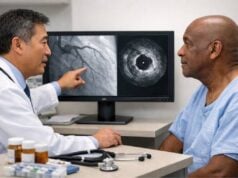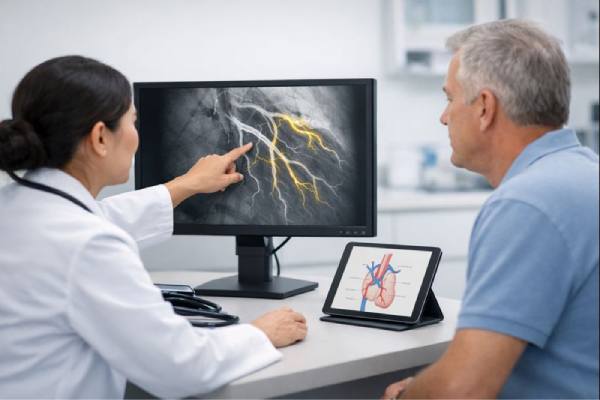
When a major artery narrows or closes, your body may try to “detour” blood through smaller connecting vessels called collaterals. In some people, these natural bypass routes are plentiful and responsive; in others, they are sparse, slow to enlarge, or prone to spasm. The result is what many clinicians describe as a collateral circulation disorder—a practical, patient-centered way to explain insufficient backup blood flow when tissues need it most.
This problem can show up in the legs (pain with walking or nonhealing ulcers), the heart (angina), the brain (worsening stroke symptoms), or the intestines (pain after meals). Understanding why collateral flow fails—and what improves it—often changes day-to-day decisions about exercise, medications, and when procedures are truly needed.
Table of Contents
- What is collateral circulation disorder?
- What causes poor collateral blood flow?
- Symptoms and complications by body area
- How doctors diagnose collateral problems
- Treatments that improve perfusion
- Daily management, prevention, and when to seek care
What is collateral circulation disorder?
Collateral circulation is a network of small artery-to-artery connections that can reroute blood around a blockage. Many collaterals exist quietly from birth, especially near “border zones” where two arteries meet. When a main artery becomes narrowed (stenosis) or blocked (occlusion), pressure differences across these connections increase. If conditions are favorable, collaterals dilate quickly and—over weeks to months—some can enlarge structurally to carry more flow.
A collateral circulation disorder is not one single disease with one lab test. It is a functional problem: the backup network is insufficient for the tissue’s needs. That insufficiency can come from:
- Too few collaterals (low baseline “collateral reserve”).
- Poor collateral function (spasm, stiffness, high resistance, impaired dilation).
- Slow remodeling (collaterals do not enlarge enough over time).
- High demand or rapid blockage (the detour exists, but is overwhelmed).
Two biological processes are often discussed here, and the difference matters:
- Angiogenesis: growth of tiny capillaries, usually triggered by low oxygen (hypoxia). This can improve microcirculation, but capillaries alone rarely replace a large artery’s capacity.
- Arteriogenesis: enlargement of pre-existing small arterial connections into higher-capacity “natural bypass” vessels, triggered mainly by shear stress (changes in flow forces along the vessel wall).
A useful way to think about this is the “collateral reserve” concept. Some people start with a bigger reserve (more and larger connections). Others start low, and risk factors like smoking, diabetes, and aging can shrink reserve further. The same degree of blockage can therefore feel very different from one person to the next.
Importantly, collaterals are not always purely protective. In certain conditions (for example, fragile abnormal collateral networks in some cerebrovascular diseases), collaterals can be inefficient and occasionally contribute to bleeding risk. That is one reason diagnosis needs to focus on where the issue is and how those vessels behave under stress.
What causes poor collateral blood flow?
Collateral failure is usually multifactorial. A clear, practical way to organize causes is to ask three questions: Do you have enough collaterals? Do they open when needed? Do they remodel over time?
1) Low baseline collateral “starting supply”
People vary widely in how many native collaterals they have and how large they are. Genetics likely plays a meaningful role, but so do early-life factors that influence vascular development. If baseline collateral supply is low, even excellent medical therapy cannot fully compensate during a major occlusion—the backup roads simply are not there.
2) Endothelial dysfunction and impaired dilation
Collateral vessels rely on the endothelium (the vessel’s inner lining) to sense flow changes and release relaxing signals. When the endothelium is unhealthy, collaterals may:
- Fail to dilate fully during exertion.
- Constrict more easily (higher resting tone).
- Respond poorly to natural signals like nitric oxide.
Common drivers include smoking, diabetes, high blood pressure, high LDL cholesterol, chronic inflammation, and chronic kidney disease.
3) Rapid blockage vs. slow narrowing
Collaterals adapt best when narrowing happens gradually. A slowly progressing blockage (months/years) creates repeated “training sessions” for the collateral network. A sudden clot or abrupt closure can outpace collateral opening, especially in tissues with high oxygen demand like the brain and heart.
4) Remodeling failure (poor arteriogenesis)
Even when collaterals open, long-term protection depends on structural growth—widening of the collateral lumen and wall remodeling. This process is influenced by:
- Adequate shear stress stimulus (often aided by regular walking or supervised exercise in PAD).
- Controlled inflammation (too little or poorly regulated inflammatory signaling can blunt remodeling; excessive inflammation can damage vessels).
- Healthy smooth muscle and extracellular matrix remodeling.
5) Competing hemodynamics and “steal” phenomena
In some settings, blood can be diverted away from an at-risk region toward an area with lower resistance. This can worsen symptoms during exertion or after certain medications. Clinicians may describe this as a “steal” pattern, especially in complex cerebrovascular or coronary settings.
Key risk factors you can act on
- Tobacco exposure (current or past)
- Diabetes (especially if A1c is persistently high)
- High LDL cholesterol and low HDL cholesterol
- High blood pressure, particularly if long-standing
- Sedentary lifestyle and deconditioning
- Obesity and metabolic syndrome
- Sleep apnea (untreated)
- Chronic kidney disease
- Older age
- Family history of early vascular disease
The most encouraging point: while you cannot rewrite baseline anatomy, you can often improve collateral function and reduce tissue demand through structured exercise, risk-factor control, and targeted medications—sometimes enough to delay or avoid invasive procedures.
Symptoms and complications by body area
Symptoms depend on which tissue is under-supplied and whether the shortfall appears at rest, during stress, or only during acute events. Many people feel fine at rest because resting blood flow needs are modest; problems appear when demand rises (walking, climbing stairs, emotional stress, heavy meals).
Legs and feet (common in peripheral artery disease)
Typical symptoms:
- Claudication: cramping, aching, or tightness in calf, thigh, or buttock with walking that improves with rest.
- Heaviness or fatigue in the legs during exertion.
- Cold foot, color changes, slower nail growth, or hair loss on the legs.
Concerning signs suggesting severe ischemia:
- Rest pain in the foot (often worse at night; may improve when dangling the foot).
- Nonhealing sores or ulcers, especially on toes or pressure points.
- Black tissue (gangrene) or spreading skin infection.
Complications:
- Chronic limb-threatening ischemia, infection, amputation risk, reduced mobility, and loss of independence.
Heart (coronary circulation)
Typical symptoms:
- Chest pressure, tightness, or burning with exertion (angina), sometimes felt in the jaw, shoulder, back, or arm.
- Shortness of breath or unusual fatigue with activity.
- Symptoms triggered by cold weather, heavy meals, or emotional stress.
Complications:
- Heart attack risk, rhythm disturbances, heart failure exacerbations, and reduced exercise tolerance.
Brain (cerebral circulation)
Symptoms may be transient or persistent:
- Sudden weakness or numbness on one side
- Speech trouble (slurred speech or difficulty finding words)
- Vision loss in one eye or part of the visual field
- Severe imbalance or trouble walking
- New confusion
Collateral status can influence how quickly brain tissue becomes irreversibly injured during a stroke. Strong collaterals may preserve a “penumbra” (at-risk but salvageable tissue) longer; poor collaterals can lead to faster progression and worse outcomes.
Complications:
- Ischemic stroke, hemorrhagic transformation after reperfusion in some cases, disability, and recurrence risk if underlying stenosis is untreated.
Intestines (mesenteric circulation)
Possible symptoms:
- Cramping abdominal pain after meals
- Unintended weight loss (due to fear of eating)
- Diarrhea or nausea in some cases
Complications:
- Acute mesenteric ischemia is a medical emergency and can become life-threatening quickly.
When symptoms are an emergency
Seek urgent help for:
- Chest pain or pressure lasting more than a few minutes, or with sweating, nausea, or breathlessness.
- Any new stroke-like symptom (even if it resolves).
- Sudden, severe leg pain with a cold/pale limb, numbness, or inability to move the foot.
- Sudden severe abdominal pain, especially with vomiting or blood in stool.
These can signal acute vessel closure where collateral flow is not keeping up.
How doctors diagnose collateral problems
Diagnosis usually combines symptoms + risk profile + objective blood-flow testing. Because “collateral circulation disorder” is functional, the goal is to measure (1) the severity of the main blockage, and (2) whether tissues still receive enough perfusion at rest and during stress.
Step 1: History and targeted exam
Clinicians look for patterns that suggest ischemia:
- Exertional leg pain that predictably stops with rest
- Exercise-limited chest pressure
- Transient neurologic symptoms
- Nonhealing wounds
On exam, they may check:
- Pulse strength at multiple levels
- Skin temperature and color
- Capillary refill and wound characteristics
- Blood pressure differences between arms (sometimes relevant in certain vascular conditions)
Step 2: Noninvasive vascular testing
For legs:
- Ankle-brachial index (ABI): compares ankle to arm pressure. It can detect PAD and quantify severity.
- Toe-brachial index (TBI): helpful when arteries are stiff/calcified (common in diabetes and kidney disease).
- Duplex ultrasound: measures blood flow and estimates stenosis.
- Exercise ABI or treadmill testing: reveals demand-related perfusion failure even when resting measures seem borderline.
For heart:
- Stress testing (exercise or medication-based) with ECG, echocardiography, or nuclear imaging to detect ischemia.
- Coronary CT angiography for anatomy in selected patients.
- Echocardiography to assess heart function and other contributors to symptoms.
For brain:
- CT angiography (CTA) or MR angiography (MRA) to map stenosis/occlusion.
- Perfusion imaging (CTP or MR perfusion) in acute stroke settings to estimate salvageable tissue.
- Transcranial Doppler in some centers to assess flow dynamics.
Step 3: Invasive or advanced assessments (when needed)
If symptoms are severe or decisions about procedures are on the table:
- Catheter angiography can visualize vessels directly and estimate collateral filling patterns.
- In coronary disease, some labs use measures of collateral function such as pressure- or flow-based indices during angiography (used selectively).
Lab work and risk profiling
Collateral problems often track with vascular risk. Clinicians commonly check:
- Lipid panel (LDL and triglycerides)
- A1c (average glucose control)
- Kidney function
- Inflammatory and clotting risk factors when clinically indicated
What a “good” workup accomplishes
A strong evaluation answers three practical questions:
- Where is the bottleneck? (location and severity of obstruction)
- Is perfusion adequate? (rest and stress)
- What is the safest path to improvement? (medical therapy, exercise rehab, procedure, or a combination)
That clarity prevents two common pitfalls: dismissing symptoms because a scan “doesn’t look that bad,” or rushing to an intervention when symptoms are driven more by deconditioning, anemia, lung disease, or microvascular dysfunction than by a fixable blockage.
Treatments that improve perfusion
Treatment is usually built from three layers: optimize the blood, optimize the vessels, and restore flow when necessary. The best plan depends on the body area involved and the urgency of the situation.
1) Risk-factor therapy that protects vessels
These treatments do not “create a new artery overnight,” but they can improve endothelial function, reduce plaque progression, and lower the chance of sudden closure:
- Antiplatelet therapy (often used in atherosclerotic disease): helps reduce clot-related events.
- Cholesterol lowering (especially statins): stabilizes plaque and improves vascular biology.
- Blood pressure control: reduces vessel wall stress and stroke risk.
- Diabetes management: improves endothelial signaling and lowers infection/wound risk.
- Smoking cessation: one of the fastest ways to improve vascular tone and reduce ongoing injury.
2) Structured exercise as “collateral training”
For many people with stable leg claudication, supervised exercise therapy is a cornerstone. It works through multiple mechanisms:
- Repeated bouts of increased flow raise shear stress, supporting arteriogenesis.
- Muscles become more efficient, lowering oxygen demand at a given workload.
- Microvascular function improves, and inflammation shifts in a healthier direction.
A common approach is interval walking: walk until moderate discomfort, rest until it eases, repeat for a set time. Over weeks, the distance improves even if the blockage is unchanged.
3) Symptom-directed medications
Depending on the territory:
- For stable angina: antianginal medications can reduce demand and improve exercise capacity.
- For leg claudication: certain medications may improve walking distance in selected patients (not appropriate for everyone, especially with certain heart conditions—this is individualized).
- For stroke prevention: antithrombotic choices depend on the cause (atherosclerosis, atrial fibrillation, dissection, etc.).
4) Revascularization to restore primary flow
When collateral flow cannot meet demand—or when tissue is threatened—restoring flow may be necessary:
- Endovascular procedures (balloon angioplasty, stenting) can reopen narrowed vessels.
- Surgical bypass may be preferred in certain anatomies or advanced disease.
- In acute ischemic stroke, reperfusion therapies (clot-busting medication in eligible patients and/or mechanical thrombectomy) can be lifesaving; collateral status helps guide urgency and expected benefit.
5) Wound and tissue-protection strategies
In severe limb ischemia:
- Meticulous wound care and infection control
- Pressure offloading and protective footwear
- Rapid evaluation for revascularization when ulcers or rest pain appear
6) Emerging and specialized approaches
You may hear about therapies aimed at “building new vessels,” such as growth-factor, gene, or cell-based strategies, external counterpulsation, or conditioning techniques. Some show promise in research settings, but availability and proven benefit vary. If someone is offered an expensive, nonstandard vascular “regeneration” program, it is reasonable to ask:
- What outcomes are measured (walking distance, ulcer healing, amputation avoidance)?
- Is it part of a regulated clinical trial?
- What are the risks, and who oversees complications?
A practical rule: if a therapy claims dramatic results without clear measures, shared decision-making, and follow-up plans, treat it cautiously.
Daily management, prevention, and when to seek care
Living with collateral insufficiency is often about protecting reserve—keeping your current perfusion safety margin as strong as possible—while reducing the odds of sudden vessel closure.
A realistic weekly plan
Many clinicians aim for:
- 150 minutes/week of moderate aerobic activity (often split across 4–6 days), adjusted for symptoms.
- 2 days/week of strength work (legs, hips, core) to reduce walking strain.
- If you have leg claudication: structured walking intervals are often more effective than “just try to walk more.”
A simple interval template (adjust to your condition and clinician advice):
- Warm up 5 minutes.
- Walk until moderate discomfort (not maximal).
- Rest until symptoms ease.
- Repeat for 30–45 minutes total.
- Cool down and stretch.
Consistency matters more than intensity. Collateral adaptation is a long-game biology.
Nutrition that supports vascular health
Helpful patterns include:
- A Mediterranean-style plate: vegetables, legumes, whole grains, fish, olive oil, nuts
- Adequate protein for healing (especially if ulcers are present)
- Lower sodium if blood pressure or heart failure is an issue
- If you have diabetes: focus on carbohydrate quality and meal timing to avoid wide glucose swings
Foot and skin care for lower-limb disease
If you have poor leg perfusion:
- Inspect feet daily (especially between toes).
- Moisturize dry skin, but keep spaces between toes dry.
- Trim nails carefully; consider podiatry if vision or flexibility is limited.
- Avoid heating pads on numb feet (burn risk).
- Break in new shoes slowly; prioritize fit and toe room.
Medication adherence and monitoring
If you take antiplatelets, statins, blood pressure meds, or diabetes meds, the benefit depends on regular use. A practical approach is to track:
- Home blood pressure (a few times/week)
- Walking distance or time-to-symptoms (weekly)
- Wound photos (if applicable, same lighting and angle)
- A1c and lipids on the schedule your clinician recommends
When to call your clinician soon
- New or worsening claudication that limits daily life
- A sore on the foot that does not improve within 1–2 weeks
- Rest pain in the foot, especially at night
- Increasing angina symptoms or reduced activity tolerance
- Recurrent transient neurologic symptoms
When to seek emergency care
Go urgently for:
- Chest pressure with shortness of breath, sweating, nausea, fainting, or symptoms lasting more than a few minutes
- Sudden face droop, arm weakness, speech difficulty, vision loss, severe imbalance, or confusion
- A suddenly cold, pale, painful leg or foot; new numbness; inability to move the ankle or toes
- Sudden severe abdominal pain, especially with vomiting, fever, or blood in stool
A final, practical takeaway
Collateral circulation disorder is often manageable when you treat it as both a vascular problem and a training problem: you protect vessels with risk-factor therapy and you teach tissues to use oxygen more efficiently with structured movement. When symptoms cross into tissue threat—rest pain, ulcers, neurologic deficits, or unstable chest pain—rapid evaluation is essential, because collaterals have limits.
References
- 2024 ACC/AHA/AACVPR/APMA/ABC/SCAI/SVM/SVN/SVS/SIR/VESS Guideline for the Management of Lower Extremity Peripheral Artery Disease: A Report of the American College of Cardiology/American Heart Association Joint Committee on Clinical Practice Guidelines 2024 (Guideline)
- Collateral blood vessels in stroke and ischemic disease: Formation, physiology, rarefaction, remodeling 2025 (Review)
- Collateral Circulation in Ischemic Stroke: An Updated Review 2023 (Review)
- Vascular Endothelial Growth Factor (VEGF) and Its Role in the Cardiovascular System 2024 (Review)
- The Effects of Exercise on Coronary Collateral Circulation: A Review 2022 (Review)
Disclaimer
This article is for educational purposes only and does not replace medical advice, diagnosis, or treatment from a licensed clinician. Problems related to poor collateral circulation can involve serious conditions such as heart attack, stroke, or limb-threatening ischemia. If you have sudden chest pain, new neurologic symptoms (weakness, speech or vision changes), a cold/pale painful limb, or severe abdominal pain, seek emergency care immediately. For ongoing symptoms, medications, and exercise planning—especially if you have heart disease, diabetes, kidney disease, or active wounds—work with your healthcare team to tailor a safe, effective plan.
If you found this article helpful, please share it on Facebook, X (formerly Twitter), or any platform you prefer, and follow us on social media. Your support through sharing helps our team continue producing clear, high-quality health content.