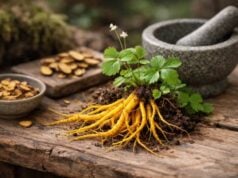
Compass plant (Silphium laciniatum) is a tall prairie perennial best known for its distinctive, deeply cut leaves and its reputation for “pointing” north to south. In traditional North American herbal practice, the plant is also remembered as “rosinweed” because it exudes a fragrant, sticky resin from the stem and leaf bases. While not a mainstream modern supplement, compass plant has a long folk history for respiratory complaints, occasional digestive sluggishness, and topical use on minor skin irritations.
What makes it interesting is its chemistry: Silphium species produce bitter sesquiterpene lactones, resinous terpenes, and polyphenols that plants often use for defense. Those same compounds are the reason compass plant is approached with both curiosity and caution. If you are considering it, the smartest path is conservative use, clear goals, and a strong emphasis on safety, especially for people prone to plant allergies.
Essential Highlights
- May offer mild respiratory and throat support in short-term, traditional use, but human evidence is limited.
- Start low: 1–2 g dried root in 240 mL hot water, up to 2 times daily for 7–14 days.
- Resin and bitter compounds can trigger skin reactions or stomach upset in sensitive people.
- Avoid if pregnant or breastfeeding, or if you have a strong ragweed or Asteraceae allergy.
Table of Contents
- What is compass plant?
- Active compounds in Silphium
- Does it support respiratory health?
- Ways to use compass plant
- Dosage and timing
- Side effects and interactions
- What the evidence really shows
What is compass plant?
Compass plant is a long-lived perennial in the sunflower family (Asteraceae) native to North American tallgrass prairie regions. Mature plants can reach well over 1.5–2 meters, with sturdy stems, bright yellow flower heads, and a deep taproot that helps them survive drought and prairie fires. The “compass” nickname comes from the tendency of its large basal leaves to align roughly north–south, reducing midday sun exposure and water loss.
In herbal contexts, you may also see it called rosinweed. That name points to one of its defining traits: the plant can produce a sticky resin that collects near stem joints and leaf bases. Historically, the resin was sometimes chewed (much like a primitive chewing gum), and the root or aerial parts were prepared as teas or decoctions in certain regional traditions. Today, it is more often encountered in native plant gardens, prairie restoration projects, and botanical discussions than on supplement shelves.
If you are foraging, sustainability matters. Compass plant grows slowly and relies on its deep root system; harvesting the root usually kills the plant. Responsible practice focuses on cultivated sources, very small amounts, and minimal disturbance to wild populations. Also keep in mind that “rosinweed” is a shared common name used for several Silphium species. Correct identification is essential because different species can vary in resin content and bitter compounds, and misidentification is a common source of unpleasant reactions.
From a practical health perspective, compass plant is best understood as a niche, traditional herb with limited modern clinical validation. That is not the same as “ineffective,” but it does mean you should treat it as an experiment with careful limits, not as a primary therapy for chronic disease.
Active compounds in Silphium
Compass plant is chemically “busy,” and most of its potential effects trace back to a few compound families that plants use for defense and signaling.
Sesquiterpene lactones are among the most characteristic compounds in many Asteraceae plants. They are typically bitter and can have biologically active effects in laboratory studies, including antimicrobial and anti-inflammatory signaling in certain models. They are also a major reason for caution: sesquiterpene lactones are well-known sensitizers that can contribute to allergic contact dermatitis in susceptible individuals, especially with repeated exposure.
Resinous terpenes are another signature feature, particularly in plants labeled “rosinweed.” Terpenes are a broad class that includes fragrant compounds and sticky resins. In traditional practice, resinous plants are often used for “warming” applications: expectoration, chest rubs, and topical support. The resin is also part of why handling the plant can irritate skin in sensitive people.
Polyphenols and phenolic acids (often including compounds in the caffeic or chlorogenic acid family) are widely distributed in plants and are associated with antioxidant capacity in lab testing. In Silphium species, researchers have reported meaningful polyphenol content and antioxidant activity in extracts of leaves and other parts. In real-world terms, this suggests potential support for the body’s oxidative balance, but it does not automatically translate into a clear clinical outcome like “lower inflammation” or “better lung function.”
Polysaccharides and storage carbohydrates are possible contributors as well. Many members of the sunflower family store carbohydrates in forms that can behave like fibers in the diet, though the exact profile varies by species and plant part. If compass plant preparations act gently on digestion for some people, mild fiber-like effects and bitter stimulation may both play a role.
If you want an evidence-based mental model, think of compass plant as a bitter, resinous Asteraceae herb. That profile often fits traditional use for mucus and sluggishness, while also carrying a higher allergy risk than mild culinary herbs. For a broader view of how plant flavonoids and related compounds are discussed in herbal practice, you may find it helpful to compare with chamomile’s active compound profile, which is generally gentler and better studied for common wellness goals.
Does it support respiratory health?
Respiratory support is the most frequently cited traditional use for compass plant, especially in older North American herbal references that discuss “rosinweed” remedies. The logic of this use is understandable: resinous, bitter plants were commonly used to encourage expectoration, soothe irritated airways through topical applications, or provide a warming sensation that people associated with “opening” the chest.
In practical terms, compass plant is sometimes described as a short-term option for:
- A “stuck” cough where mucus feels difficult to clear
- Occasional chest tightness linked to cold air or seasonal irritation
- Throat irritation where a resinous tea or diluted tincture is used cautiously
That said, compass plant is not a first-line herb today for a simple reason: it lacks modern clinical research in humans for asthma, bronchitis, or chronic cough conditions. For someone with significant respiratory symptoms, the risk of delaying proper care is more important than the potential upside of an under-studied herb. Think of compass plant as a historical footnote that may have mild, supportive effects in some people, not as a substitute for medical evaluation, inhalers, or evidence-based therapies.
If you choose to explore it, consider the mechanism-based reasons it might feel helpful. Bitter compounds can stimulate secretions and reflexes that some people interpret as “clearing.” Resinous constituents can also create a coating sensation when prepared as a weak tea, which may briefly ease throat scratchiness. These are plausible, but they are still hypotheses rather than proven outcomes.
A practical approach is to compare compass plant to more commonly used, better tolerated respiratory herbs. For example, horehound for cough and throat support is a classic bitter herb with a clearer modern herbal tradition and more common safety guidance. If you do not tolerate bitterness well, or if you have a history of ragweed-type allergies, horehound or other alternatives may be a safer place to start.
Most importantly, avoid self-treating serious symptoms: wheezing, shortness of breath, chest pain, fever lasting more than a few days, or coughing up blood require prompt medical attention.
Ways to use compass plant
Compass plant is used in a few traditional formats, and the best choice depends on your goal and your sensitivity to bitter or resinous plants. Because standardized commercial products are uncommon, the most realistic preparations are simple and conservative.
Tea or infusion (aerial parts) is the gentlest entry point. A weak infusion can be used for occasional throat or digestive “sluggishness” support. Because bitterness varies widely, start with a small amount and keep the steep time modest (10–15 minutes). If the tea is intensely bitter, reduce the dose rather than forcing it. Some people tolerate the leaf better than the root, while others find the leaf more irritating. Your response is the guide.
Decoction (root) is a more traditional approach when a stronger preparation is desired. A decoction means simmering the root gently (often 15–25 minutes). This can pull out more bitter and resinous compounds. Because compass plant is not a mainstream decoction herb today, keep the concentration low and use short durations.
Tincture is sometimes used when people want small, measured doses without drinking a large volume of bitter tea. If you use a tincture, choose reputable sourcing and start with a very low dose to evaluate tolerance. Alcohol extracts can concentrate resinous constituents, which may increase the chance of irritation for some people.
Topical use is sometimes described for minor skin discomfort, but this is where allergy risk deserves extra respect. Handling the fresh plant can irritate skin in sensitized individuals, and resin-containing preparations can act like a “test patch” for allergic contact dermatitis. If you explore topical use, dilute heavily and patch test first. For broader context on plant-based topical approaches (with very different chemistry and safety considerations), compare with comfrey’s traditional skin applications.
Simple, cautious preparation tips:
- Use cultivated or responsibly sourced material when possible.
- Prefer low concentration and short duration over “strong and fast.”
- Do a tolerance check: one small dose, then wait 24 hours.
- If skin exposure is likely, wear gloves and wash hands promptly.
Compass plant is a good example of an herb where “how you use it” matters as much as “what it is.” A careful method reduces unpleasant reactions and helps you learn whether it has any meaningful benefit for you.
Dosage and timing
There is no universally established, clinically validated dosage for compass plant. Most guidance is rooted in traditional practice patterns for bitter, resinous herbs and must be interpreted conservatively. The goal is to use the lowest effective dose for the shortest time.
For tea (aerial parts, dried):
- Start: 1 g dried leaf (about 1 teaspoon, loosely packed) in 240 mL hot water
- Steep: 10–15 minutes, then strain
- Frequency: once daily for 2–3 days to assess tolerance
- Typical upper range: up to 2 g per 240 mL, up to 2 times daily, for 7–14 days
For decoction (root, dried):
- Start: 0.5–1 g dried root in 240–300 mL water
- Simmer: 15–25 minutes, then strain
- Frequency: once daily initially
- Typical upper range: 1–2 g daily total, for no more than 7–10 days unless guided by a qualified clinician
For tincture (common traditional style, such as 1:5 in 30–50 percent alcohol):
- Start: 0.5–1 mL once daily
- Typical range: 1–2 mL up to 2 times daily
- Keep duration short: 7–14 days unless you have a specific plan and good tolerance
For topical, diluted use:
- Patch test first on a small area for 24 hours
- Use dilution rather than “straight resin,” especially if you have a history of plant allergies
Timing considerations:
- Many people prefer bitter herbs 10–20 minutes before meals if the goal is digestive stimulation, but compass plant’s resinous profile can be irritating for some. If bitterness upsets your stomach, take it with food instead.
- If the goal is cough support, a small dose in the evening may feel more practical, but do not use any preparation that worsens wheezing or tightness.
If you are looking for a more established bitter-herb dosing pattern for comparison, dandelion root use and safety provides a helpful reference point because it is more commonly used and has clearer modern guidance.
Stop early if you notice escalating stomach upset, headache, dizziness, rash, or throat swelling. With under-studied herbs, “listen early” is a safety skill, not overcaution.
Side effects and interactions
Compass plant’s main safety story is sensitivity. As a member of the Asteraceae family, it may trigger reactions in people who are prone to ragweed-type allergies or who have a history of reacting to resinous or bitter composites. The risk is not theoretical: certain compound groups common in this plant family are recognized sensitizers, and repeated exposure can increase reactivity over time.
Possible side effects include:
- Skin irritation, itching, or rash, especially with direct plant contact or topical use
- Digestive upset: nausea, stomach burning, cramps, or diarrhea (often dose-related)
- Headache or lightheadedness in sensitive users
- Mouth or throat irritation from very bitter or resin-rich preparations
Who should avoid compass plant:
- Pregnancy and breastfeeding, because safety data is insufficient
- Children, unless guided by a qualified clinician
- People with known Asteraceae allergy (ragweed, chrysanthemum, some daisies) or a history of allergic contact dermatitis
- Anyone with severe asthma or frequent wheezing who is tempted to self-treat instead of seeking appropriate care
Medication and condition cautions:
- If you take blood pressure medications or diuretics, be cautious with any herb that might influence fluid balance or blood pressure indirectly through digestive stimulation or mild diuretic effects.
- If you take lithium, extra caution is reasonable because changes in hydration and sodium balance can affect lithium levels.
- If you use multiple herbs with strong bitter or irritant profiles, you may increase the chance of stomach irritation.
When to stop and seek help:
- Hives, swelling of lips or face, throat tightness, or shortness of breath
- A spreading rash, blistering, or severe itching after topical exposure
- Persistent vomiting, severe abdominal pain, or signs of dehydration
A useful mindset is that compass plant is not a “daily tonic” herb. If it is used at all, it fits best as a short, purposeful trial with a clear stop point. If you need longer-term support, choose herbs with a better safety record and more established dosing guidance.
What the evidence really shows
Compass plant sits in an unusual space: it is historically noteworthy, chemically interesting, and ecologically important, yet clinically under-studied for human health outcomes. Most of what modern research can say with confidence falls into three categories.
First, phytochemistry is real. Researchers have identified distinctive natural products in Silphium laciniatum and related Silphium species, including bitter and resin-associated compounds. This supports the idea that the plant can have biologically active effects. It does not, by itself, prove a specific benefit such as “treats asthma” or “reduces inflammation,” but it helps explain why the plant drew attention in traditional medicine.
Second, laboratory testing suggests antioxidant potential in extracts. Studies of Silphium species commonly report measurable antioxidant activity and meaningful polyphenol content. This supports cautious statements like “may support oxidative balance,” but it does not guarantee outcomes you can feel. Antioxidant assays are useful for screening, not for predicting whether a tea will meaningfully change symptoms in a complex condition.
Third, safety evidence is stronger than benefit evidence in one specific way: the Asteraceae family’s sensitizing potential is well described, and sesquiterpene lactones are a known issue for contact allergy. That is why, even in the absence of large clinical trials, a careful safety posture is justified.
So how should a reader use this information?
- If you are simply curious, consider learning about compass plant as a prairie species first. Its ecological role is fascinating, and cultivation is more aligned with conservation than wild harvesting.
- If you are looking for symptom relief, especially for respiratory issues, prioritize herbs and approaches with better human evidence and clearer safety profiles. Compass plant is rarely the best first choice.
- If you still want to try it, treat it like a pilot study: low dose, short duration, no mixing with many other new herbs, and a clear plan to stop.
For many people, a better evidence-to-risk balance comes from more commonly used immune and respiratory herbs. For example, echinacea for immune support and common respiratory concerns is far more widely used, easier to source responsibly, and has clearer modern guidance.
The most honest conclusion is also the most useful: compass plant may have mild, traditional supportive uses, but it should not be oversold. Your best protection is a conservative approach and realistic expectations.
References
- Digging Deep for New Compounds from the Compass Plant, Silphium laciniatum 2015 (Clinical-Adjacent Phytochemistry)
- The sesquiterpene lactone mix: A review of past, present and future aspects 2023 (Review)
- A Comparative Study of Silphium spp. Antioxidant Activity 2023 (Research Article)
- Characteristics of Selected Silphium Species as Alternative Plants for Cultivation and Industry with Particular Emphasis on Research Conducted in Poland: A Review 2022 (Review)
Disclaimer
This article is for educational purposes only and does not replace medical advice, diagnosis, or treatment. Herbs can cause side effects and interact with medications, and individual sensitivity varies widely. If you are pregnant, breastfeeding, managing a chronic condition (especially asthma or severe allergies), or taking prescription medications, speak with a qualified healthcare professional before using compass plant or any new herbal product. Seek urgent medical care for symptoms such as breathing difficulty, facial or throat swelling, or a rapidly spreading rash.
If this guide was useful, consider sharing it on Facebook, X (formerly Twitter), or your preferred platform to help others make safer, better-informed decisions.