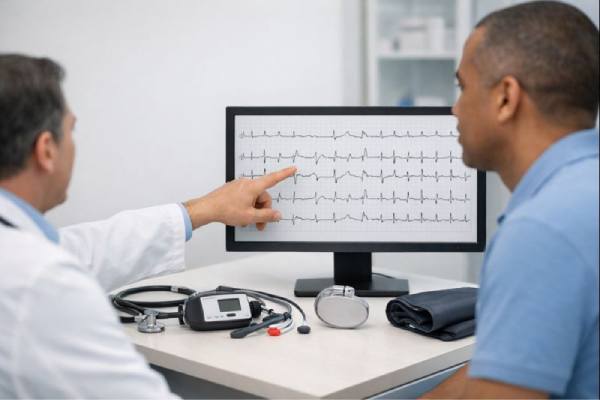
A conduction disorder of the heart is a problem in the electrical wiring that tells your heart when to beat. Instead of a smooth, well-timed signal traveling from the upper chambers (atria) to the lower chambers (ventricles), the message may move too slowly, take a detour, or stop altogether. Some conduction problems are harmless findings on an ECG. Others can cause fainting, dangerous slow heart rates, heart failure symptoms, or sudden cardiac arrest.
What makes this topic tricky is that “conduction disorder” is a broad label. It includes common issues like bundle branch block and more urgent problems like high-grade atrioventricular (AV) block. The good news is that modern testing can usually pinpoint the level of trouble, and treatments—from adjusting medications to implanting a pacemaker—are often highly effective when matched to the cause and the person’s symptoms.
Table of Contents
- What a conduction disorder is
- Common types and what they mean
- Causes and reversible triggers
- Risk factors and high-risk situations
- Symptoms, complications, and red flags
- How conduction disorders are diagnosed
- Treatment, management, and what to expect
What a conduction disorder is
Your heart beats because an electrical signal starts in the sinoatrial (SA) node, spreads through the atria, pauses briefly in the atrioventricular (AV) node, then travels down the His–Purkinje system to activate the ventricles. This sequence is fast and coordinated on purpose: the atria squeeze first to fill the ventricles, and the ventricles contract next to send blood to the lungs and the body.
A conduction disorder means that part of this electrical pathway is delayed, blocked, or rerouted. The result can be:
- Slow heart rate (bradycardia) because signals arrive late or do not arrive.
- Uncoordinated chamber timing when atria and ventricles lose their normal relationship.
- Electrical “detours” (bundle branch blocks) that delay activation of part of the ventricle, sometimes widening the QRS on ECG.
- Rate-limiting behavior during exertion, where the heart cannot speed up properly (often called chronotropic incompetence).
It helps to think in levels:
- SA node or atrial conduction problems can cause slow sinus rhythm or pauses.
- AV node and AV conduction problems can cause first-, second-, or third-degree AV block (increasingly severe forms of impaired signal passage from atria to ventricles).
- His–Purkinje (intraventricular) problems can cause right bundle branch block (RBBB), left bundle branch block (LBBB), or fascicular blocks.
Not all conduction disorders are emergencies. Many are incidental ECG findings, especially if you feel well and have no structural heart disease. But a key clinical principle is this: symptoms change the meaning. A conduction abnormality that is “benign” on paper becomes urgent if it causes fainting, very low blood pressure, chest pain, or signs of poor blood flow.
Another important idea is reliability. Some conduction disorders are stable day to day; others are intermittent. A person may have a normal ECG at rest but develop high-grade block during sleep, after a medication dose, or when the vagus nerve is activated (for example, with vomiting or straining). That is why clinicians care not only about one ECG, but also the story: timing, triggers, and what you were doing when symptoms appeared.
Common types and what they mean
“Conduction disorder” is an umbrella term, so clarity starts with naming the specific pattern. These are the most common categories clinicians look for on an ECG, and what they often mean in real life.
AV block (a signal problem between atria and ventricles)
- First-degree AV block: the signal gets through, but more slowly than usual (a prolonged PR interval). Many people have no symptoms. It can be normal in athletes, but it can also reflect medication effects or underlying conduction disease.
- Second-degree AV block: some atrial beats do not conduct to the ventricles.
- Mobitz I (Wenckebach) often occurs at the AV node level and can be benign, especially during sleep or in well-trained athletes.
- Mobitz II is more concerning because it often reflects disease below the AV node and can progress to complete block.
- Third-degree (complete) heart block: no atrial signals conduct. The ventricles rely on a slower escape rhythm. This can cause severe symptoms and usually requires urgent evaluation.
Bundle branch and fascicular blocks (a delay within the ventricles)
- Right bundle branch block (RBBB): delayed activation of the right ventricle. It may be incidental, but it can also appear with pulmonary disease, congenital heart disease, or structural changes.
- Left bundle branch block (LBBB): delayed activation of the left ventricle. This often carries more clinical weight because it can be associated with cardiomyopathy, coronary disease, or valve disease, and it can reduce pumping efficiency by creating dyssynchrony.
- Fascicular blocks: partial blocks within the left bundle system. They can be benign alone, but combinations (like bifascicular block) can increase concern for progression.
Sinus node dysfunction and pauses
This includes persistent slow sinus rhythm, sinus pauses, or “tachy-brady syndrome,” where the heart alternates between fast atrial rhythms and slow pauses. Symptoms often relate to inadequate heart rate during daily activity.
Why the label matters
Two people can both be told they have a “conduction disorder,” yet have very different risk. A stable first-degree AV block in a healthy runner is not the same as intermittent high-grade AV block in an older adult taking multiple heart-rate–slowing medications. The ECG pattern, the presence of symptoms, and the overall heart structure guide what happens next.
A practical takeaway is to ask two specific questions at diagnosis:
- Where is the block or delay located (SA node, AV node, or His–Purkinje system)?
- Is it stable, or does it come and go (especially with exertion, sleep, or medication timing)?
Those answers shape the urgency, the workup, and whether monitoring alone is reasonable or pacing support should be considered.
Causes and reversible triggers
Conduction disorders arise when the heart’s electrical tissue is slowed, inflamed, starved of blood, injured, or affected by medications and metabolic changes. Clinicians often organize causes into two buckets: reversible triggers (where conduction may recover) and structural or progressive disease (where conduction problems are more likely to persist).
Common reversible causes
- Medication effects: Drugs that slow conduction through the AV node can unmask or worsen block, especially in combination or when kidney function changes. Common examples include beta blockers, certain calcium channel blockers (verapamil or diltiazem), digoxin, and some antiarrhythmic medications.
- Electrolyte disturbances: High potassium (hyperkalemia) is a classic cause of slowed conduction and dangerous rhythms. Severe magnesium or calcium abnormalities can also interfere with electrical stability.
- Low thyroid function (hypothyroidism): Can contribute to bradycardia and conduction slowing.
- Infection and inflammation: Myocarditis can disturb conduction. In some regions, Lyme disease is a notable cause of AV block that may improve with antibiotics.
- Transient increased vagal tone: Sleep, vomiting, pain, or straining can temporarily increase “braking” signals to the heart, triggering pauses or AV block in susceptible people.
Structural or progressive causes
- Age-related fibrosis and degeneration: Over time, scarring can affect the conduction system, particularly in older adults.
- Coronary artery disease and heart attack: Reduced blood flow can impair conduction. The location matters: some infarcts cause temporary AV nodal block, while others damage deeper conduction tissue.
- Cardiomyopathy and heart failure: Structural remodeling can stretch or scar pathways, and LBBB may both reflect and worsen pumping inefficiency.
- Infiltrative and autoimmune disease: Conditions such as sarcoidosis or amyloidosis can involve the conduction system and cause fluctuating or progressive block.
- Congenital conditions and genetics: Some conduction disorders run in families or occur with congenital heart disease. Genetic forms may appear earlier in life and sometimes progress.
Procedure-related conduction problems
Cardiac surgery and catheter-based procedures can injure conduction tissue. Valve interventions near the septum are a well-known risk. Some post-procedure blocks improve over days, but others persist and require pacing.
A practical “reversibility” checklist
If a conduction disorder appears suddenly, clinicians often ask:
- Did a medication change occur in the last 1–14 days?
- Is there dehydration, kidney injury, or a new illness that could raise drug levels?
- Are electrolytes abnormal, especially potassium?
- Was there a recent infection, fever, or tick exposure?
- Did symptoms begin around a procedure?
When a reversible trigger is found and corrected, conduction may improve, but follow-up still matters. A reversible stressor can reveal an underlying fragile conduction system, and recurrence is possible if similar conditions return.
Risk factors and high-risk situations
Risk factors for conduction disorders reflect both the likelihood of developing conduction system disease and the likelihood that a mild conduction issue will become symptomatic. Some risks relate to your biology and medical history; others relate to context—such as medication combinations, dehydration, or recent procedures.
Higher-risk groups
- Older adults, particularly with known conduction findings (prolonged PR interval, bundle branch block, or prior episodes of high-grade AV block).
- People with structural heart disease, including cardiomyopathy, significant valve disease, congenital heart disease, or prior heart attack.
- Patients with inflammatory or infiltrative disease, such as sarcoidosis or amyloidosis.
- People with chronic kidney disease, because electrolyte shifts and medication accumulation can develop quickly.
- Those with a family history of conduction disease or sudden unexplained death, especially if conduction problems appear at a younger age.
Medication and interaction risks
Conduction disorders often become clinically important when several “small” factors align. Common high-risk setups include:
- Two AV-node–slowing medications used together (for example, a beta blocker plus verapamil/diltiazem).
- AV-node–slowing medication combined with dehydration or kidney function decline.
- Digoxin use with low body weight, kidney disease, or interacting medications.
- Use of certain antiarrhythmics without close monitoring.
A practical safety habit is to treat any new dizziness, near-fainting, or unusually slow pulse within days of a medication change as a reason to check in promptly.
Procedure-related risk
After valve procedures or heart surgery, clinicians monitor closely for conduction changes because the risk can be highest in the first hours to days. Even when an early block improves, some people remain at risk for later recurrence, depending on the procedure type and baseline conduction.
Situations that amplify symptoms
Even a moderate conduction delay can become symptomatic when the body needs a higher heart rate and cannot get it. Common examples:
- Fever or infection
- Bleeding or anemia
- Dehydration from vomiting, diarrhea, heat exposure, or diuretics
- Thyroid shifts
- Sleep apnea (which can trigger nocturnal bradycardia and pauses)
Why “risk” is not only about numbers
People often focus on a single heart-rate number. In conduction disorders, the pattern matters more than the average. Repeated pauses, intermittent dropped beats, or a slow escape rhythm can be more dangerous than a steady rate in the 40s in a well-conditioned person.
If you are told you have a conduction disorder, ask whether your pattern is considered stable and what symptoms should prompt urgent evaluation. That conversation often prevents the two common mistakes: ignoring a serious warning sign, or overreacting to a benign ECG finding.
Symptoms, complications, and red flags
Many conduction disorders cause no symptoms and are found incidentally. When symptoms occur, they usually reflect one of two problems: the heart rate becomes too slow to maintain blood flow, or the heart loses effective timing between atria and ventricles, reducing cardiac output.
Common symptoms
- Lightheadedness or dizziness, especially on standing or exertion
- Fatigue and low stamina, feeling “slowed down” in daily tasks
- Shortness of breath, particularly during activity or when lying flat
- Chest pressure or discomfort, sometimes due to low blood flow or an underlying heart issue
- Palpitations, especially when conduction issues alternate with fast rhythms
- Near-fainting or fainting (syncope), which can be abrupt and dangerous
In older adults, symptoms may appear as confusion, falls, or a sudden decline in function rather than a clear complaint of dizziness.
Complications to understand
- Injury from syncope: Falls and accidents are a major real-world risk.
- Heart failure worsening: Severe bradycardia and poor coordination can lead to fluid retention and reduced exercise tolerance.
- Worsening arrhythmia risk in vulnerable hearts: Long pauses and severe bradycardia can sometimes trigger more dangerous rhythms, particularly when electrolytes are abnormal or ischemia is present.
- Progression of conduction disease: Some patterns (such as Mobitz II AV block or combined fascicular blocks) can progress to higher-grade block.
Red flags that require urgent care
Seek urgent evaluation (emergency services if severe) when conduction symptoms include:
- Fainting or near-fainting, especially without warning
- Chest pain, pressure, or new shortness of breath at rest
- Confusion, extreme weakness, or signs of low blood pressure (cold, clammy skin; trouble staying awake)
- A very slow pulse with symptoms (for many people, persistent rates below about 40 beats/min with dizziness or weakness is concerning)
- New conduction findings after a recent heart procedure
- Symptoms shortly after starting or increasing a heart-rate–slowing medication
How to describe symptoms in a way that helps clinicians
When symptoms are intermittent, details matter. Helpful specifics include:
- What you were doing (sleeping, exercising, standing up, straining, after a dose)
- How long it lasted (seconds vs minutes)
- Whether you lost consciousness
- Any associated signs (sweating, nausea, chest pressure, shortness of breath)
- Whether you checked your pulse or smartwatch data at the time
This information helps clinicians choose the right monitor and determine whether the conduction disorder is likely the true cause or an incidental finding.
How conduction disorders are diagnosed
Diagnosis starts with confirming the electrical pattern and then answering the deeper question: is the problem isolated and stable, or is it a marker of broader heart disease? The evaluation usually moves from simple tests to targeted studies based on risk.
Core tests
- 12-lead ECG: The most important first test. It can identify AV block, bundle branch blocks, fascicular blocks, sinus pauses, and clues to prior heart injury. Clinicians assess PR interval, QRS width, rhythm regularity, and whether P waves relate consistently to QRS complexes.
- Continuous monitoring:
- In the hospital, telemetry can catch intermittent block or pauses.
- At home, Holter monitors (often 24–48 hours) or longer event monitors can capture symptoms that occur only a few times per week.
- Echocardiogram: Evaluates heart structure and pumping function. This is especially important when LBBB is present, when symptoms suggest heart failure, or when clinicians suspect cardiomyopathy or valve disease.
Lab work to find treatable drivers
Clinicians often check:
- Electrolytes (especially potassium)
- Kidney function
- Thyroid function when clinically suggested
- Markers of heart injury if ischemia is suspected
- Medication levels when appropriate (for example, digoxin in selected cases)
When more specialized testing is used
- Exercise testing: Helps when symptoms occur during exertion and there is concern that the heart cannot increase rate appropriately or develops block with activity.
- Electrophysiology (EP) study: A catheter-based test that maps conduction and can localize the level of block (AV node vs His–Purkinje). It is not needed for every patient, but it can clarify ambiguous cases or guide device decisions.
- Advanced imaging: Cardiac MRI or PET may be considered when inflammation or infiltrative disease is suspected (for example, unexplained conduction disease in a younger adult, or conduction disease with systemic symptoms).
Interpreting “incidental” findings
An important part of diagnosis is avoiding over-treatment of patterns that may not be clinically meaningful. For example, a stable RBBB in an asymptomatic person with a normal echocardiogram can be monitored. In contrast, an LBBB plus reduced pumping function, or an AV block pattern that causes syncope, usually needs a more active plan.
A useful rule clinicians apply is: symptoms + documented conduction abnormality at the time of symptoms carries far more diagnostic weight than an abnormal ECG in isolation. That is why symptom-triggered monitoring often becomes the turning point in the workup.
Treatment, management, and what to expect
Treatment depends on three factors: the type of conduction disorder, the presence of symptoms or instability, and whether a reversible cause is likely. The goal is not simply to “normalize the ECG,” but to protect blood flow to the brain and organs, prevent dangerous pauses, and address underlying disease.
When treatment is urgent
If a person is fainting, confused, hypotensive, or has chest pain with a slow or unreliable rhythm, clinicians treat it as an emergency. Immediate steps can include:
- Stabilizing airway, breathing, and circulation
- Stopping or reversing contributing medications when appropriate
- Correcting electrolytes (especially high potassium)
- Using temporary support to raise the heart rate
Temporary support may involve:
- Transcutaneous pacing (pacing pads on the skin) as a rapid bridge
- Transvenous temporary pacing (a pacing wire via a vein) when longer temporary support is needed
- Infusions that increase heart rate and blood pressure in selected cases as a bridge, not a long-term solution
Addressing reversible causes
When a clear trigger is present, treatment focuses on removing it:
- Adjusting or discontinuing AV-node–slowing drugs
- Treating infection or inflammation when suspected
- Managing ischemia and optimizing oxygen delivery
- Treating thyroid disorders or metabolic problems
Even when conduction improves, follow-up is important because recurrence can happen, and some “reversible” cases reveal an underlying fragile conduction system.
Permanent devices: pacemakers and more
A permanent pacemaker is the most common definitive treatment for symptomatic high-grade AV block, complete heart block, or sinus node dysfunction with significant pauses. The device ensures a minimum heart rate and can restore better atrial–ventricular coordination in appropriate patients.
Key practical points:
- Pacemakers are chosen and programmed based on rhythm pattern, activity needs, and underlying heart structure.
- Many people feel better within days because dizziness and fatigue from bradycardia improve quickly.
- Ongoing device checks (often remote) monitor battery, lead function, and rhythm trends.
In some patients with LBBB and reduced pumping function, clinicians may consider cardiac resynchronization therapy or conduction system pacing approaches to improve coordination and reduce heart failure symptoms, depending on the overall clinical picture.
What you can do day to day
- Keep an updated medication list and review it after any illness or hospitalization.
- Stay hydrated and seek care early for vomiting, diarrhea, or fever if you are prone to bradycardia or taking rate-slowing drugs.
- Track symptoms with context (time, trigger, duration), not just heart-rate numbers.
- If you have a device, follow post-implant precautions and attend scheduled checks.
Most importantly, treatment should match the person, not the ECG alone. A well-constructed plan reduces risk, improves quality of life, and prevents the common cycle of repeated dizziness or unexplained falls before the true rhythm cause is captured.
References
- 2021 ESC Guidelines on cardiac pacing and cardiac resynchronization therapy 2021 (Guideline)
- 2023 HRS/APHRS/LAHRS guideline on cardiac physiologic pacing for the avoidance and mitigation of heart failure 2023 (Guideline)
- Cardiac Conduction Disorders Due to Acquired or Genetic Causes in Young Adults: A Review of the Current Literature 2025 (Review)
- Cardiac conduction diseases: Understanding the molecular mechanisms to uncover targets for future treatments 2024 (Review)
Disclaimer
This article is for educational purposes only and does not provide medical advice, diagnosis, or treatment. Heart conduction disorders can range from harmless ECG findings to medical emergencies. If you have fainting, near-fainting, chest pain, severe shortness of breath, confusion, or signs of low blood pressure, seek urgent medical attention. Decisions about monitoring, medication changes, or pacing devices should be made with a licensed clinician who can interpret your ECG findings in the context of your symptoms and overall health.
If you found this article helpful, please share it on Facebook, X (formerly Twitter), or any platform you prefer, and follow us on social media. Your support through sharing helps our team continue producing clear, high-quality health content.