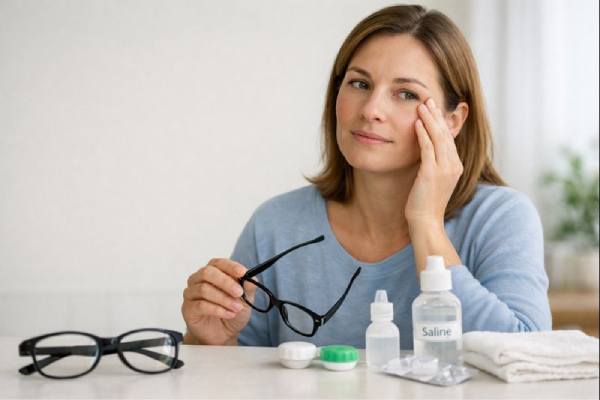
Contact lenses are supposed to disappear once they are on your eyes—clear vision, easy movement, and a comfortable “nothing there” feel. When an allergy develops, that promise flips quickly: lenses start to feel gritty, your eyes itch, and you may notice stringy mucus or redness that gets worse the longer you wear them. For many people, the most frustrating part is the uncertainty. Is it the lens material, the cleaning solution, seasonal pollen trapped under the lens, or something more serious like an infection?
The good news is that most contact lens–related allergic reactions improve when you remove the trigger and let the eye surface calm down. The better news is that you usually do not have to give up contact lenses forever—you just need the right switch, whether that is a daily disposable lens, a peroxide-based care system, a different lens design, or a temporary break in favor of glasses. This guide helps you recognize patterns, reduce risk, and choose safer next steps.
Quick Overview
- Removing lenses early and staying out of them for a few days is often the fastest way to stop the inflammatory cycle.
- Many “contact lens allergies” are reactions to deposits or solutions, not to the lens itself, and switching care systems can be decisive.
- Daily disposable lenses reduce buildup and exposure to care chemicals, making them a common first-choice switch.
- Avoid restarting contact lens wear until redness, itching, and mucus have clearly settled; restarting too soon often resets the problem.
- Seek urgent care for significant pain, light sensitivity, reduced vision, or a one-eyed problem that escalates quickly.
Table of Contents
- What contact lens allergy feels like
- Why it happens and what is really triggering it
- Is it allergy, dry eye, or an infection
- What to do right now for relief
- What to switch to so you can wear lenses again
- How to prevent a repeat and protect your eyes
What contact lens allergy feels like
A contact lens allergy is usually less about a single dramatic moment and more about a pattern: symptoms ramp up with wear time, improve when lenses are removed, and then recur faster the next day. People often describe it as “my lenses suddenly don’t agree with me,” even if the same brand worked for years.
Common symptoms include:
- Itching (often the most telling symptom). Itching that makes you want to rub your eyes is more typical of allergy than simple dryness.
- Redness, especially across the whites of the eyes or under the upper eyelid.
- Stringy or ropy mucus, sometimes noticed on the lens when you remove it.
- Watery tearing that paradoxically coexists with dryness and burning.
- Lens awareness: the lens feels scratchy, “thick,” or like it is sliding.
- Fluctuating blur that improves with blinking, then returns.
- Reduced wearing time: you used to tolerate 10–12 hours, and now you are miserable after 2–4.
Two clues are especially useful:
1) Upper-lid irritation and “slimy” mucus
Allergic inflammation often involves the underside of the upper eyelid. If you feel irritation most strongly when you blink—or your lens feels like it is catching—this can reflect inflammation of the lid lining. The mucus can feel sticky and may smear vision.
2) Symptoms peak late in the day
When allergy is driven by buildup on the lens (protein, lipids, environmental particles) or by a solution reaction, symptoms often worsen the longer the lens stays on the eye. Many people feel “okay” in the morning and deteriorate by afternoon.
Not every reaction is classic allergy. Some are more accurately called hypersensitivity or toxic irritation, where chemicals or preservatives inflame the surface without a true allergy mechanism. From a practical perspective, the steps are similar: remove the lens, reduce exposure to triggers, and switch the system that is provoking the response.
If you wear contacts and notice a new combination of itching, redness, mucus, and shrinking tolerance, treat it as a real signal. Pushing through—especially by rubbing—can prolong recovery and raise the risk of corneal injury.
Why it happens and what is really triggering it
Many people assume they are “allergic to contacts,” but the lens is often only the stage. The most common triggers are deposits, care products, and mechanical friction—with seasonal allergens acting as fuel.
Deposits on the lens surface
Your tears naturally contain proteins, oils, and inflammatory molecules. Over time, these can coat a lens. Deposits are more likely when:
- replacement schedules are stretched (for example, a monthly lens worn for 6–8 weeks)
- lenses are exposed to smoke, dust, cosmetics, or aerosols
- tear film is unstable (dry eye, eyelid inflammation, meibomian gland problems)
- allergies are already active (pollen season)
Deposits matter because they can roughen the lens surface and act like a magnet for irritants. They also increase friction with the underside of the upper lid.
Giant papillary conjunctivitis and contact lens–induced papillary conjunctivitis
A classic contact lens–associated allergic condition is giant papillary conjunctivitis, also called contact lens–induced papillary conjunctivitis. It involves enlarged bumps (papillae) under the upper eyelid and is linked to a combined effect of mechanical rubbing plus immune reaction to deposits.
Typical triggers include:
- long wearing time or sleeping in lenses
- non-disposable or less frequently replaced lenses
- lenses with higher stiffness (higher modulus) that interact more with the lid
- heavy deposit formation
- underlying allergy tendency (atopy)
Contact lens solutions and preservatives
Sometimes the main problem is not the lens but what touches it:
- multipurpose solutions (clean, disinfect, store) include preservatives that can irritate some eyes
- incomplete rinsing or “topping off” old solution increases chemical exposure
- sensitivity can develop over time, even if the product was tolerated before
This often shows up as burning on insertion, redness that starts soon after lens wear, or chronic low-grade irritation that never fully resolves.
Seasonal allergies trapped under the lens
During pollen seasons, a contact lens can act like a collector. Allergens can become concentrated against the conjunctiva, intensifying itching and swelling. If symptoms are dramatically worse outdoors or during certain months, seasonal allergy is likely adding momentum—even if the underlying issue is deposits or solution sensitivity.
A practical takeaway: you do not need to guess the one perfect cause. You can often improve symptoms by switching the variables with the highest payoff—replacement schedule, care system, and wear habits—while treating the eye surface so it can rebuild a stable tear film.
Is it allergy, dry eye, or an infection
It is easy to mislabel contact lens discomfort. The right label matters because infections require urgent treatment, while allergy and dryness respond to different strategies. Use the pattern below as a decision aid—not as a diagnosis.
Signs that point strongly to allergy or hypersensitivity
- Itching is the main symptom, especially if you want to rub.
- Stringy or ropy mucus rather than thick yellow discharge.
- Both eyes are involved (though one can be worse).
- Symptoms worsen with wear time and improve when lenses are removed.
- Symptoms flare during allergy seasons or after exposure to pets, dust, or outdoor wind.
Signs that suggest dry eye or eyelid inflammation instead
Dry eye and eyelid inflammation (like blepharitis or meibomian gland dysfunction) often mimic allergy. Clues include:
- burning, stinging, or sandy feeling more than itching
- blur that clears briefly with blinking
- symptoms worse with air conditioning, heating, long driving, or intense screen time
- morning crusting at the lash line and oily lid margins
- discomfort improves with lubricating drops and frequent breaks
Dry eye can also trigger “reflex tearing,” which looks watery but is still dryness-driven.
Red flags for infection or corneal involvement
Stop lens wear and seek urgent evaluation if you have any of the following:
- moderate to severe pain, especially if it feels deep rather than scratchy
- light sensitivity that makes it hard to keep the eye open
- reduced vision that does not clear with blinking
- a white spot on the cornea or a hazy area over the colored part of the eye
- one eye suddenly much worse than the other
- thick yellow-green discharge, eyelids stuck shut, or swelling that escalates quickly
Contact lens wear increases the stakes because corneal infections can progress fast. “Just allergy” typically feels uncomfortable and itchy; infection more often feels painful, light-sensitive, and visually threatening.
A simple timeline test
Ask: When do symptoms start?
- Immediately on insertion or within 30 minutes: solution reaction, surface toxicity, or a compromised cornea.
- After several hours: deposits, friction, allergy buildup, or dryness.
- After many days of wear: replacement schedule issues, poor hygiene, case contamination, or smoldering inflammation.
If you are unsure, err on the side of safety: stop lens wear and get checked—especially if pain, light sensitivity, or reduced vision is present.
What to do right now for relief
When your eye surface is inflamed, the fastest way out is usually to stop re-triggering it. Think of contact lens allergy like a loop: lens wear causes irritation, irritation destabilizes tears, unstable tears increase deposits and friction, and the next day starts worse. The goal is to break that loop.
Step 1: Remove lenses and pause wear
If symptoms are active, remove the lenses as soon as you can do so safely. In many mild to moderate cases, a 48–72 hour break makes a noticeable difference. If your eyes are still red, itchy, or producing mucus at day three, extend the break and plan an eye exam.
Do not “test tolerance” by putting lenses back in for an hour. That often reactivates inflammation and delays recovery.
Step 2: Use comfort measures that do not add new irritants
- Cool compresses for 5–10 minutes can reduce itching and swelling.
- Preservative-free lubricating drops are often better tolerated during flare-ups, especially if you need them more than 4 times per day.
- Avoid eye rubbing, even if it feels like the only thing that helps. Rubbing can worsen swelling and can damage the cornea, especially in contact lens wearers.
If you use allergy eye drops or other medicated drops, follow your clinician’s guidance. A key point: do not restart contact lenses until your eye surface feels calm again.
Step 3: Clean up the “contact lens ecosystem”
Even before you switch brands, do these practical resets:
- Replace your lens case (old cases can harbor residue and microbes).
- Discard old solution and start with a fresh bottle.
- If you wear reusable lenses, consider discarding the current pair, especially if they are near the end of their replacement window or visibly coated.
- Review hygiene basics: wash hands, dry them fully, and avoid water contact with lenses.
Step 4: Decide if this needs same-week evaluation
You should arrange an eye exam promptly if:
- symptoms persist beyond several days off lenses
- you have repeated episodes each time you restart
- you have significant eyelid swelling, marked redness, or persistent mucus
- you suspect you need a different lens design or care system but are not sure which variable is responsible
And again, seek urgent care for pain, light sensitivity, reduced vision, or a one-sided rapidly worsening presentation.
Relief often starts with “less”—less exposure, less friction, fewer chemicals—followed by a more deliberate, better-matched lens plan once your eyes are calm.
What to switch to so you can wear lenses again
Most people can return to contact lenses after an allergic episode, but the restart should be strategic. The best switch depends on your likely trigger: deposits, solution sensitivity, seasonal allergy load, or mechanical friction.
Switch 1: Daily disposable lenses
If you want the highest-probability improvement, daily disposables are often the first recommendation because they:
- minimize deposit buildup (fresh surface every day)
- reduce exposure to care solutions and preservatives
- lower the chance of “case-related” problems
Daily disposables can be especially helpful if your symptoms build late in the day or during allergy seasons.
Switch 2: A peroxide-based care system for reusable lenses
If you prefer monthly or two-week lenses, a major upgrade can be switching from multipurpose solution to a hydrogen peroxide system that is properly neutralized. This reduces exposure to certain preservatives and can improve comfort in people who react to multipurpose solutions.
Important safety point: peroxide systems must be used exactly as directed and fully neutralized before lenses touch the eyes. Using peroxide incorrectly can cause a painful chemical injury.
Switch 3: A different lens material or design
If deposits or friction are suspected, discuss:
- material changes (some eyes tolerate one material better than another)
- lower-modulus lenses if lid interaction seems prominent
- edge design changes if you feel lens awareness with blinking
- more frequent replacement even within reusable categories (for example, switching from monthly to two-week)
If your eyes are borderline dry, a lens marketed for improved surface wettability or moisture retention may help, but the fit and replacement schedule still matter more than marketing claims.
Switch 4: Rigid gas permeable, hybrid, or scleral lenses
For some people—especially those with significant deposits, chronic intolerance, or corneal irregularities—soft lenses become a recurring problem. Alternatives include:
- Rigid gas permeable lenses: smaller lenses with different tear dynamics; can reduce certain deposit patterns and may provide excellent optics.
- Hybrid lenses: rigid center with a soft skirt for comfort.
- Scleral lenses: larger lenses that vault the cornea and hold a reservoir of fluid; helpful in some dry eye and corneal conditions, but require careful hygiene and professional fitting.
These options are not “last resorts,” but they do require expertise and follow-up.
Switch 5: Glasses during peak allergy months
If your symptoms are strongly seasonal, one of the simplest, most effective strategies is to wear glasses during the worst weeks and use contacts on lower-allergen days. This reduces total allergen exposure and friction during the most reactive period.
A smart restart plan is gradual: once your eyes are quiet, start with shorter wear times for several days, use conservative lubrication if recommended, and stop early at the first sign of itching or mucus. Comfort is not something you “train through” with allergy—pushing usually backfires.
How to prevent a repeat and protect your eyes
Preventing recurrence is less about perfection and more about reducing the few high-impact risks that drive inflammation. Think in three buckets: time, cleanliness, and surface stability.
Time: keep wear and replacement schedules honest
Two patterns strongly predict recurrence: long wearing times and stretched replacement.
- Stay within the intended replacement schedule. If a lens is labeled monthly, treat it as 30 days from opening—not “30 wears.”
- Avoid sleeping in lenses unless explicitly prescribed for overnight wear.
- Consider a “hard stop” wearing time during recovery phases, such as 6–8 hours, and build up only if eyes stay quiet.
If your symptoms start reliably after a certain number of hours, that is a useful diagnostic marker. It suggests cumulative exposure (deposits, dryness, allergens) and points toward daily disposables, peroxide care, or shorter wear.
Cleanliness: reduce chemical and microbial stress
Even when allergy is the main problem, poor hygiene amplifies inflammation and risk.
- Replace cases regularly and let them air-dry fully.
- Never top off old solution.
- Keep lenses away from water (showering, swimming, rinsing in tap water).
- Remove lenses before using sprays (hair spray, cleaning products), then wash hands before reinserting.
If you have reacted to solutions in the past, be cautious about switching among multipurpose solutions. A peroxide-based system or a clinician-directed alternative may be a more stable long-term plan.
Surface stability: treat the eyelids and tear film
Many “lens allergies” recur because the eye surface never fully stabilizes. Addressing the tear film lowers deposits and reduces friction.
Helpful strategies can include:
- consistent eyelid hygiene if you have oiliness, flaking, or morning crusting
- managing environmental dryness (humidifier, avoiding direct fans, taking screen breaks)
- using lubricating drops appropriately, especially preservative-free if frequent
- controlling seasonal allergies with a plan rather than reacting late
Know when a repeat episode means “change the plan”
If you have repeated flare-ups despite improved hygiene and shorter wear, that usually means the current system is not compatible with your eyes right now. Consider:
- daily disposables rather than reusable lenses
- peroxide care rather than multipurpose
- a different lens modality (rigid, hybrid, scleral)
- a temporary break from lenses while treating underlying ocular surface disease
Your eyes should not feel like a daily negotiation. A well-matched contact lens setup tends to be boring: predictable comfort, stable vision, and no need to “power through.” If boredom is not your experience, it is time to switch something meaningful.
References
- Allergic Conjunctivitis: Review of Current Types, Treatments, and Trends 2024 (Review)
- Common Ophthalmic Preservatives in Soft Contact Lens Care Products: Benefits, Complications, and a Comparison to Non-Preserved Solutions 2021 (Review)
- A Review of Contact Lens-Related Risk Factors and Complications 2022 (Review)
- Contact Lens–Related Complications 2023 (Clinical Reference)
Disclaimer
This article is for educational purposes and does not replace personalized medical advice, diagnosis, or treatment. Contact lens–related symptoms can range from mild irritation to urgent, vision-threatening conditions. Stop wearing contact lenses and seek prompt care if you have significant pain, light sensitivity, worsening redness, reduced vision, or symptoms that are much worse in one eye. For recurring discomfort, schedule an eye exam to identify the trigger and get a safe plan for switching lenses or care systems.
If you found this article useful, please consider sharing it on Facebook, X (formerly Twitter), or any platform you prefer. Your support helps our team continue producing high-quality, trustworthy health content.