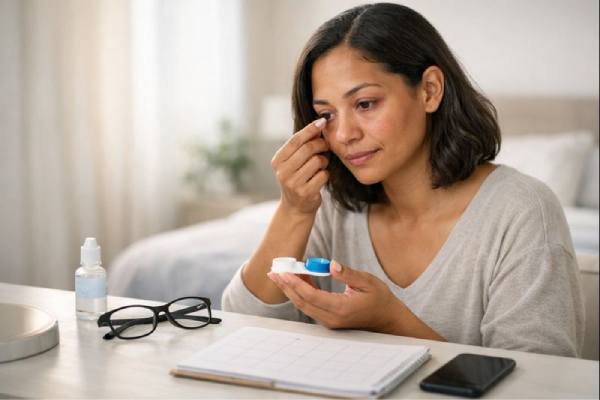
Contact lenses are designed to be safe and comfortable when they are worn within the schedule your eyes can tolerate. Overwear happens when that schedule quietly drifts—an extra hour becomes three, an occasional nap becomes routine, and “just this once” turns into most weekdays. The result is often subtle at first: dryness late in the day, redness that fades overnight, or a lens that feels harder to ignore. Over time, those signals can turn into inflammation on the eye surface, a sore and light-sensitive eye, or a cornea that struggles to recover between wear days.
The good news is that overwear is usually reversible when you respond early and give your eyes the break they are asking for. The more important news is that certain symptoms should never be pushed through, because contact lens overwear can raise the risk of corneal injury and infection. This guide helps you recognize the difference, understand the risks, and choose a safe timeline for stopping and restarting.
Essential Insights
- Removing lenses early and switching to glasses can stop mild overwear symptoms from escalating into a longer recovery.
- Late-day dryness and redness often reflect oxygen and tear-film stress, not “weak eyes,” and usually improve with a better wear schedule.
- Pain, light sensitivity, and reduced vision are not normal overwear symptoms and need prompt evaluation.
- Many people can restart lenses within days to weeks, but only after the eye surface is calm and the trigger is addressed.
- Use a clear rule: if comfort drops before mid-day or worsens day after day, reduce wear time and plan a checkup.
Table of Contents
- What contact lens overwear looks like
- Why overwear stresses the cornea
- Risks you should take seriously
- How long to stop wearing lenses
- How to restart contact lenses safely
- Preventing overwear in real life
What contact lens overwear looks like
Overwear is less about a single “too long” number and more about a predictable pattern: your eyes feel okay early, then symptoms build with time, and your recovery overnight is no longer complete. Many people miss the early signals because they are not dramatic. They are the kind of discomfort you can power through—until you cannot.
Early symptoms that often mean you are pushing the limit
These are common signs of mild overwear:
- Dryness or burning that starts late afternoon or evening
- Redness that improves after you remove lenses but returns faster the next day
- A scratchy, gritty sensation that feels like “something is in my eye”
- Vision that becomes hazy and clears briefly after blinking
- Increasing need for lubricating drops to reach the end of the day
- A lens that feels “stuck” or less mobile when you blink
These symptoms often show up first on screen-heavy days, travel days, and days with air conditioning or heating. That is not a coincidence. Those environments increase tear evaporation and make it harder for the eye surface to stay stable during long hours of wear.
Symptoms that suggest inflammation, not just dryness
When overwear continues, the eye can shift from simple dryness into a more inflamed state:
- Persistent redness, especially around the colored part of the eye
- Light sensitivity that is new or worsening
- Aching discomfort rather than mild scratchiness
- Tearing that does not match how “dry” the eye feels
- Mucus or discharge, especially if the lids feel sticky
Inflammation is your cue to stop experimenting with “one more hour.” The longer you wear lenses on an inflamed surface, the longer it often takes to recover.
One-eye problems are particularly informative
Many people assume overwear should affect both eyes equally. In reality, one eye can become the “weak link” due to:
- a slightly tighter lens fit on that eye
- more dryness or incomplete blinking on one side
- a small scratch or micro-irritation that becomes amplified by continued wear
If one eye repeatedly becomes red or uncomfortable first, treat it as a sign that something about the lens fit, lens condition, or eye surface health needs attention.
A quick self-check that works
Track your “comfortable wearing time” for one week. That means the number of hours you can wear lenses before you first notice meaningful discomfort, redness, or blur. If that number is shrinking week to week, you are likely accumulating stress faster than your eyes can recover.
Overwear is not a character flaw. It is a mismatch between what your eyes can tolerate and what your schedule demands. Once you identify the pattern, you can fix the mismatch instead of forcing your eyes to adapt.
Why overwear stresses the cornea
To understand overwear, it helps to know what the cornea needs to stay healthy. The cornea is clear and avascular, which means it does not have its own blood supply. It relies on oxygen moving through the tear film from the air, plus nutrients delivered through tears and the inner eye. A contact lens changes that environment. Modern lenses are engineered to be highly oxygen-permeable, but they still create a barrier and alter tear flow.
Reduced oxygen and slower “breathing”
When you wear a lens for long hours, the cornea can experience relative hypoxia (lower oxygen availability), especially if the lens fit is tight, the lens is older or deposited, or you are wearing lenses with limited oxygen transmission. Hypoxia can cause:
- subtle corneal swelling that makes the eye feel tired or heavy
- increased redness as the eye works harder to maintain oxygen supply
- slower recovery after long wear days
Sleeping in lenses amplifies this because closed eyes already reduce oxygen, and a lens adds another layer. Even “just a nap” can tip a borderline eye into inflammation.
Tear film disruption and friction
A contact lens divides the tear film into front and back layers and changes how tears spread with blinking. Over time, that can increase friction between the eyelid and the lens surface. Friction rises when:
- blinking becomes incomplete during screen work
- the lens surface becomes less wettable as the day goes on
- deposits form on the lens, roughening the surface
- the eye becomes dry or inflamed, reducing tear quality
This is why overwear often feels worse late in the day. It is not just fatigue. It is a real change in surface conditions.
Microtrauma and a more vulnerable surface
The corneal surface is protected by an epithelium that acts like a barrier. With overwear, tiny areas of epithelial disruption can occur, especially if you keep lenses in while your eyes are dry or irritated. Microtrauma matters because it can:
- increase sensitivity and “foreign body” sensation
- create entry points for bacteria
- trigger sterile inflammatory infiltrates that mimic infection symptoms
The key insight is that overwear is not only about comfort. It changes the biology of the eye surface in ways that can make small problems bigger.
Inflammation and the “less recovery” loop
Overwear often creates a loop:
- long wear increases dryness and friction
- friction increases inflammation
- inflammation destabilizes the tear film
- a destabilized tear film increases deposits and discomfort
- the next day starts with less reserve
Once you are in this loop, doing nothing but adding more drops is rarely enough. You usually need a real break from lenses, plus a plan to reduce the trigger (shorter wear time, different lens type, improved fit, or better surface treatment).
Understanding the mechanism is useful because it makes your next steps more rational. You are not guessing. You are reducing oxygen stress, lowering friction, and giving the surface time to rebuild its barrier.
Risks you should take seriously
Most contact lens overwear leads to discomfort and redness that improves with a break. But the risk profile changes when overwear becomes frequent or when symptoms include pain, light sensitivity, or reduced vision. Those signs can indicate corneal involvement, and corneal problems can worsen quickly in contact lens wearers.
Common non-infectious complications linked to overwear
These issues can be painful and disruptive, even when not infectious:
- Contact lens acute red eye: a sudden red, irritated eye often linked to sleeping in lenses or extended wear. It can feel gritty and light-sensitive.
- Corneal infiltrates: inflammatory “spots” in the cornea that can occur from immune response to bacteria on the lens surface, deposits, or mechanical irritation. They can look alarming and may require clinical evaluation to distinguish from infection.
- Corneal staining and abrasions: areas where the surface layer is disrupted, often due to dryness, friction, or a damaged lens.
These problems are a sign your current wear pattern is not safe for your eyes right now.
Infectious risk: why overwear can raise the stakes
Microbial keratitis is a corneal infection that can threaten vision. Not every red eye is an infection, but overwear increases risk by:
- reducing oxygen and slowing surface healing
- increasing microtrauma
- increasing time of exposure to microbes on the lens and in the case
- encouraging “risky” behaviors, such as sleeping in lenses or stretching replacement
Infections can progress faster than people expect. The cost of waiting can be high.
Symptoms that should be treated as urgent
Remove lenses immediately and seek prompt evaluation if you have:
- moderate to severe pain (not just dryness)
- significant light sensitivity
- reduced vision that does not clear with blinking
- a one-eye problem that worsens quickly
- a white spot, haze, or visible defect on the cornea
- swelling of the eyelids with increasing redness
- thick discharge or eyelids sticking shut
A useful guideline is this: overwear discomfort is usually annoying and improves after lens removal. Corneal complications often feel sharp, painful, light-sensitive, or visually threatening.
Why “I will just wait overnight” can be risky
Many people assume that if they sleep without lenses, the eye will reset by morning. Sometimes it does. But if you have corneal involvement, a night of waiting can allow an infection or inflammatory process to deepen. If symptoms are strong enough that you are hesitant to open the eye, do not try to self-manage.
Long-term risks of repeated overwear
Repeated hypoxia and inflammation can contribute to:
- chronic dryness and reduced contact lens tolerance
- corneal neovascularization (new blood vessel growth toward the cornea)
- persistent redness and irritation
- greater likelihood of future complications from smaller triggers
The goal is not to scare you away from contacts. It is to make risk visible so you can act early. Overwear is often the first warning that your lenses, schedule, and eye surface are out of balance.
How long to stop wearing lenses
“How long should I stop wearing contacts?” is one of the most common questions, and it deserves a practical answer. The safest approach is not a single number. It is a tiered plan based on symptom severity and how quickly your eyes recover once lenses are removed.
First rule: stop now if symptoms are active
If you have redness, burning, gritty sensation, or blurred vision that developed during wear, remove the lenses and switch to glasses. Continuing to wear lenses “to get through the day” often turns a short break into a longer recovery.
Mild overwear: typically 24 to 48 hours
This category often includes:
- late-day dryness and mild redness
- mild scratchiness without significant pain
- mild blur that improves with blinking
- symptoms that improve quickly after lens removal
A 1–2 day break is often enough for the surface to calm if you avoid rubbing, stay hydrated, and minimize environmental dryness. If the eye is clearly better the next day and nearly normal by day two, you may be able to restart with shorter wear time and a better plan.
Moderate overwear or recurrent irritation: typically 3 to 7 days
Consider a longer break if:
- redness persists into the next day
- you have noticeable light sensitivity
- your eye feels sore rather than just dry
- you have stringy mucus or significant tearing
- the problem repeats each time you restart lenses
This longer pause allows the epithelium and tear film to stabilize. During this time, it is often wise to review what triggered the episode: long wear days, sleeping in lenses, stretching replacement, or a lens care system that irritates your eyes.
Severe symptoms or suspected corneal involvement: stop and get evaluated
If you have pain, marked light sensitivity, or reduced vision, do not choose a “wait it out” timeline. Get an eye exam promptly. The right break length depends on what is found and how it is treated. In some cases, the safest plan may involve:
- medicated drops prescribed by a clinician
- a longer lens-free period, sometimes weeks
- discarding the current lenses and replacing the lens case
- changing lens type or wear schedule before restarting
Do not restart until you meet clear “green light” criteria
Regardless of the timeline, restart only when:
- redness is minimal and steadily improving
- there is no pain or significant light sensitivity
- vision is stable with glasses
- you can blink comfortably without a scratchy sensation
If you restart while symptoms are still present, you often reactivate the same cycle and end up needing a longer break than you would have initially.
If you are unsure, choose the conservative option
A helpful perspective is that a few lens-free days protect weeks of future comfort. If you keep pushing through borderline symptoms, you may train your eyes into a pattern of chronic intolerance. When in doubt, stop longer, not shorter, and make your restart deliberate rather than impulsive.
How to restart contact lenses safely
Restarting is the moment when many people accidentally undo their recovery. They feel better, put lenses back in for a full day, and end up red and irritated again by evening. A safer restart treats your eyes like a healing surface that needs a gradual return to load.
Step 1: reset the variables you can control
Before you restart, reduce the chance you are reintroducing the same trigger:
- If the lenses you wore during the episode are reusable, consider discarding them.
- Replace the lens case if it is older, cloudy, scratched, or if you are not sure about your cleaning consistency.
- Start with fresh solution and do not top off.
- Check the replacement schedule and reset the “open date” so you are not wearing old lenses longer than intended.
If overwear was linked to sleeping in lenses, decide in advance how you will prevent a repeat. A bedside case and glasses can do more than willpower.
Step 2: restart with shorter wearing time
A practical ramp-up looks like this:
- Day 1: 4 to 6 hours
- Day 2: 6 to 8 hours
- Day 3: 8 to 10 hours if comfortable
If discomfort returns early, stop and reassess. This is not a test you should “push through.” The first sign of recurring irritation is useful information that something still needs to change.
Step 3: protect the tear film during restart
During the first week back, treat dryness proactively:
- Take a brief glasses break during long screen sessions.
- Blink fully and intentionally during focused work.
- Use lubrication in a planned way if recommended, rather than waiting for a late-day crash.
The goal is to maintain a stable surface while your eyes rebuild tolerance.
Step 4: consider a comfort-oriented switch if overwear keeps happening
Repeated overwear episodes often mean your lens system is too demanding for your real life. High-payoff switches include:
- daily disposable lenses to reduce deposits and “end-of-cycle” discomfort
- an alternative lens material or design if friction is a major factor
- a refit if one eye is consistently worse or lenses feel tight or unstable
- a peroxide-based care system if you suspect solution sensitivity with reusable lenses
You do not need to “earn” these changes. If your schedule is long and your environment is dry, your lenses should be chosen for that reality.
Step 5: know when you need a refit, not another break
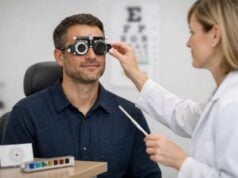
If you repeatedly lose comfortable wearing time, especially if one eye is consistently worse, an eye exam is often the fastest path forward. A small fit mismatch can turn a normal day into constant inflammation. The right lens fit should feel quiet and stable, not like something you manage hour by hour.
Restarting safely is less about courage and more about structure: new lenses, clean storage, shorter hours, and a willingness to stop at the first meaningful warning sign.
Preventing overwear in real life
Most people know the rules: do not sleep in lenses, replace them on schedule, and do not wear them too long. The harder part is applying those rules on normal human days—late nights, travel, deadlines, and the occasional “I forgot my case.” Prevention works best when it is built into your environment, not left to memory.
Use a personal wearing-time limit, not a generic one
Instead of aiming for the maximum printed on a box, aim for your own “comfort limit.” If you tend to get dry at 10 hours, plan for 8–9 hours. You will often feel better long-term because you are not repeatedly inflaming the surface.
A simple metric to track is: how many hours can you wear lenses before you first notice dryness, redness, or blur? If that number falls, reduce wear and reassess.
Build in exit ramps for high-risk days
Overwear often happens because you have no alternative. Make the alternative easy:
- Keep backup glasses at work, in your bag, or in your car.
- Keep a small lens kit available for unexpected removal.
- Decide ahead of time that travel days, illness days, and very dry days are “glasses days.”
This reduces the chance you will make a risky choice under pressure.
Protect against the biggest risk multipliers
Certain habits disproportionately increase risk:
- sleeping or napping in lenses
- exposing lenses to water (showering, swimming)
- stretching replacement schedules
- topping off old solution in the case
If you only improve four habits, make it those four. They address both comfort and safety.
Match lens choice to your life, not your wish list
If your days regularly run long, or you work in dry environments, consider lenses that reduce the cost of long wear. Daily disposables are often a practical prevention tool because they reduce deposits and allow you to discard lenses after an unexpectedly long day.
If you repeatedly feel “stuck lenses” or pressure, ask about fit adjustments. A lens that fits poorly can make even reasonable wear times feel like overwear.
Respect warning signs as early alarms
Overwear often announces itself before it becomes a problem:
- you need drops earlier in the day
- your eyes look red more often
- the lens feels harder to ignore
- comfort is worse after screen-heavy days
When those signs appear, reduce wear time for a week and see if your baseline improves. If it does, you likely prevented a larger flare.
Prevention is not about never making mistakes. It is about having a system that keeps one mistake from turning into a week-long recovery. The goal is sustainable lens wear that feels predictable, not a daily gamble.
References
- A Review of Contact Lens-Related Risk Factors and Complications – PMC 2022 (Review)
- Contact Lens–Related Complications – StatPearls – NCBI Bookshelf 2023 (Clinical Reference)
- Preventing Eye Infections When Wearing Contacts | Healthy Contact Lens Wear and Care | CDC 2025 (Government Guidance)
- Clinical features, risk factors and outcomes of contact lens-related bacterial keratitis in Nottingham, UK: a 7-year study – PMC 2024
Disclaimer
This article is for educational purposes and does not replace personalized medical advice, diagnosis, or treatment. Contact lens overwear can cause irritation, inflammation, and in some cases serious corneal complications that require urgent care. Remove your lenses and seek prompt evaluation if you have significant pain, light sensitivity, reduced vision, rapidly worsening redness, symptoms that are much worse in one eye, or any concern for a corneal injury or infection. For recurring overwear symptoms, schedule an eye exam to review lens fit, wear schedule, and the safest lens and care system for your eyes.
If this article helped you, please consider sharing it on Facebook, X (formerly Twitter), or any platform you prefer. Your support helps our team continue producing high-quality, trustworthy health content.