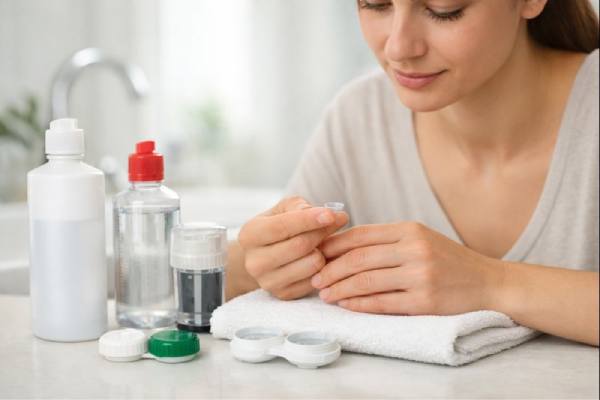
Contact lens solutions can feel interchangeable—until your eyes burn, your lenses haze, or irritation shows up out of nowhere. In reality, solutions are part cleanser, part disinfectant, and part “surface conditioner” that keeps a lens comfortable and safe to wear. Different formulas use different disinfecting agents, preservatives, and wetting ingredients, which means they can vary in how well they control microbes, how they interact with certain lens materials, and how likely they are to trigger dryness or sensitivity. The right choice can improve comfort, reduce deposit buildup, and lower infection risk—especially for reusable lenses. The wrong match can cause stinging, redness, and reduced wearing time, even when your prescription is perfect. This guide breaks down the main types of solutions, the safety rules that matter most, and how to recognize common reactions so you can fix problems early and protect your eyes.
Key Takeaways
- Using the correct disinfecting system can reduce discomfort and lower the risk of serious eye infections.
- Multipurpose solutions are convenient, but some people react to preservatives or specific disinfectants.
- Saline rinses lenses but does not disinfect them, so it cannot replace a true disinfection step.
- Never put unneutralized hydrogen peroxide in your eye; always use the provided case and wait the full neutralization time.
- If irritation persists for more than 1–2 weeks after a careful routine reset, schedule an eye exam to check for dry eye, allergy, or fit issues.
Table of Contents
- Do solutions actually change safety and comfort?
- Which type of solution should you use?
- The non-negotiable safety rules for any system
- Why solutions cause burning, redness, or blurry lenses
- Best options for sensitive or dry eyes
- When to stop wearing lenses and get checked
Do solutions actually change safety and comfort?
Yes—especially for reusable soft lenses and rigid gas permeable (RGP) lenses. A solution is not just “storage liquid.” It is the system that removes debris, kills germs, and prepares the lens surface to sit on the tear film without irritating the cornea. When people say, “My lenses suddenly feel bad,” the cause is often one of three things: a change in tear film (dryness or allergy), a mismatch between lens material and solution chemistry, or a breakdown in cleaning and disinfection habits.
To understand why solutions matter, it helps to separate what you want them to do:
- Clean: remove deposits like proteins, lipids, cosmetics, and environmental grime.
- Disinfect: kill bacteria and fungi and reduce the overall microbial load.
- Condition: keep the lens surface wettable so vision stays stable and comfort lasts.
- Preserve: stay uncontaminated in the bottle and in the case between uses.
Different products prioritize these goals differently. Some are “all-in-one” systems that aim for convenience. Others rely on stronger disinfection chemistry but require strict steps and waiting periods.
Comfort differences can be surprisingly specific. For example, one person may tolerate a multipurpose solution for years, then develop burning or redness after a brand switch. Another person may have great comfort but recurring “fogging” because deposits are not being removed effectively. Still another may have no obvious discomfort but may be at higher infection risk if they top off old solution or expose lenses to water.
The biggest practical point: solutions interact with your lens type, your tear film, and your habits. If any one of those changes—new lens material, more screen time and dryness, travel with different water exposure, a rushed routine—the “same” solution can suddenly stop working for you. The goal is not perfection; it is a stable routine that keeps the lens clean, disinfected, and comfortable day after day.
Which type of solution should you use?
Choosing a contact lens solution is less about brand and more about matching the system to your lenses and your eyes. The main categories below cover most real-world use.
1) Multipurpose solution (MPS)
This is the most common “all-in-one” option for reusable soft lenses. It typically cleans (to a degree), disinfects, rinses, and stores. The convenience is real, but so is variability: different MPS formulas use different disinfecting agents and preservatives, which can affect comfort and reactions.
Best for:
- People who want a simple routine they will actually follow
- Soft lens wearers without known sensitivity issues
Watch-outs:
- Can cause stinging or redness in sensitive eyes
- Disinfection strength varies by formula and by how carefully you rub and rinse
2) Hydrogen peroxide-based systems
These systems disinfect very effectively, but they require strict steps. The lens case includes a neutralizing component that converts hydrogen peroxide into a gentle solution over time. This is a strong option for people who react to multipurpose preservatives or who want robust disinfection.
Best for:
- Sensitive eyes and recurrent irritation with MPS
- People motivated to follow directions precisely
Watch-outs:
- If you insert lenses before full neutralization, it can cause intense burning and injury
- You must use the provided case and wait the specified time (often 4–6 hours)
3) Saline
Saline is for rinsing—think of it as “sterile salt water.” It does not disinfect. It can be helpful as a rinse step in some routines, but it cannot replace a true disinfection system.
Best for:
- Rinsing after cleaning steps (when recommended)
- RGP routines that specify it
Watch-outs:
- Not a disinfectant; using saline alone can raise infection risk
4) Daily cleaners and enzymatic cleaners
These products help remove deposits (especially protein and lipid buildup). They are not usually stand-alone disinfectants, so they are typically paired with a disinfection step.
Best for:
- People with heavy deposits, cosmetics use, or “foggy” lenses
- Some RGP wearers (depending on the regimen)
5) RGP-specific products
Rigid lenses often need separate wetting, cleaning, and disinfection steps. Using soft-lens products on RGP lenses (or the reverse) can reduce comfort and performance.
A practical selection rule: if you have recurrent burning, redness, or unexplained dryness, hydrogen peroxide-based disinfection or a preservative-free regimen is often worth discussing—provided you can follow the steps reliably.
The non-negotiable safety rules for any system
Most contact lens complications are not “bad luck.” They are predictable outcomes of shortcuts that let microbes survive, grow, and reach the eye. A safe routine is not complicated, but it is specific—and it must be consistent.
Rule 1: Disinfect every time you remove reusable lenses
“Storing” is not the same as disinfecting. If you take lenses out and put them into old solution, you are creating a warm, damp environment where microbes can persist.
Rule 2: Rub and rinse unless your clinician told you not to
Even with “no-rub” labeling, gentle rubbing improves debris removal and reduces film that can protect microbes. A simple approach:
- Wash and dry hands fully (drying matters).
- Place lens in palm, add solution, and rub gently for the time on the label.
- Rinse both sides with fresh solution before storing.
Rule 3: Never “top off” the case
Mixing fresh solution with old used solution dilutes disinfecting power and allows biofilm to build inside the case. Always empty, rinse the case with fresh solution (not water), and let it air-dry upside down with caps off.
Rule 4: Keep lenses and cases away from water
Water exposure is a major risk factor for sight-threatening infections. Avoid:
- Rinsing lenses or cases with tap water
- Showering or swimming with lenses
- Handling lenses with wet hands
Rule 5: Respect time and chemistry
- Multipurpose solutions need full soak time to disinfect.
- Hydrogen peroxide systems must fully neutralize before lenses touch your eyes.
- Do not transfer solutions into travel containers unless they are designed for that product and kept clean.
Rule 6: Replace the case regularly
Cases develop biofilm over time, even with good care. A common best practice is replacing the case at least every 1–3 months, and sooner if it looks cloudy, cracked, or slimy.
Rule 7: Do not “rescue” a contaminated lens
If a lens fell into a sink or touched a questionable surface, the safest option is to discard it (or follow a clinician-approved decontamination plan for certain lens types). Infection treatment is far more costly than a replacement lens.
These habits protect the cornea—the clear front window of your eye. The cornea has no blood vessels, which makes infection harder to fight and a reason prevention matters so much.
Why solutions cause burning, redness, or blurry lenses
If you feel burning the moment lenses go in, or if your eyes look red and irritated after a few hours, it is tempting to blame “dry eyes” and move on. Sometimes that is correct. But solution-related reactions are common—and often fixable once you identify the pattern.
1) Preservative or disinfectant sensitivity
Many multipurpose solutions contain disinfecting agents and preservatives that are safe for most people but irritating for some. Sensitivity can appear as:
- Stinging on insertion that fades after minutes
- Redness or a “hot” feeling later in the day
- Itching or swelling of the lids
- Decreased wearing time that improves when you skip lenses
What helps:
- Switching to a different chemistry (not just a new scent or bottle)
- Considering a hydrogen peroxide-based system if sensitivity is persistent
- Avoiding frequent “trial swapping” every few days, which makes patterns hard to interpret
2) Solution-lens incompatibility and surface staining
Some solution and lens material combinations can cause temporary surface disruption of the cornea, sometimes described clinically as staining. You might notice:
- Mild discomfort and light sensitivity
- Vision that fluctuates for the first hours of wear
- A feeling that the lens is “scratchy” despite looking clean
What helps:
- Trying a different solution type
- Ensuring a proper rub and rinse step to remove residues
- Confirming you are not over-soaking or mixing products
3) Residue and “chemical carryover”
If you store lenses, then insert them with excess solution still on the lens, you may be delivering concentrated ingredients directly to the eye surface—especially if you did not rub and rinse. This is also where hydrogen peroxide mistakes become dangerous: inserting a lens soaked in unneutralized peroxide can cause intense pain and injury.
What helps:
- Following the full regimen, including rinse steps when indicated
- Never shortcutting peroxide neutralization
- Using only one system at a time (do not mix brands or steps)
4) Contamination and biofilm
If symptoms start after months of “fine,” think about the case. Biofilm in a case can contaminate fresh solution and re-seed the lens daily. Signs include:
- Lenses that feel dirty soon after insertion
- Recurrent irritation that resets briefly with a new case
- Musty smell or cloudy case walls
What helps:
- New case, stricter drying, and no topping off
- Replacing solution bottles that may be contaminated
5) Allergy overlap
Seasonal allergies can mimic solution sensitivity with itching, redness, and lens intolerance. The difference is timing: allergy often tracks pollen seasons and comes with itching, whereas solution sensitivity often shows insertion sting or consistent daily irritation.
If symptoms are new, stop lens wear for 24–48 hours, reset the routine with a fresh case and fresh solution, and look for repeatable triggers. Persistent pain, light sensitivity, or reduced vision should be treated as urgent until proven otherwise.
Best options for sensitive or dry eyes
“Dry eyes” in contact lens wearers is often a mix of true tear film instability and lens surface issues: deposits, incomplete blinking, and solution chemistry that disrupts comfort. The goal is to keep the lens surface wettable and reduce anything that inflames the ocular surface.
Start with a two-week comfort reset
For two weeks, commit to a stable routine so you can judge cause and effect:
- Use one disinfection system consistently (no mixing brands).
- Rub and rinse every time.
- Replace the case immediately and keep it dry between uses.
- Reduce water exposure to zero.
- Increase blink quality during screens (brief blink breaks).
If symptoms improve, you learned your eyes respond to lower irritation load. If they do not, you likely need a different system or an eye exam.
When hydrogen peroxide-based systems make sense
These are often a strong choice for:
- Burning on insertion with multipurpose solutions
- Recurrent redness without clear allergy symptoms
- People who want robust disinfection and fewer preservative exposures
They can be especially useful if your eyes react to multiple multipurpose products. The tradeoff is strict compliance: you must neutralize fully and use the provided case. If you are likely to “rush” your routine, this option may not be safe for you.
When multipurpose solutions can still work well
If you prefer MPS for convenience, you can improve tolerance by:
- Prioritizing rub and rinse to reduce residue
- Avoiding topping off (a major driver of case contamination)
- Choosing a formula that feels consistently comfortable rather than chasing marketing claims
Dryness-focused strategies that pair well with any solution
- Increase font size and slightly lower screen height to reduce eye opening
- Use preservative-free lubricating drops compatible with contact lenses if your clinician approves
- Limit contact lens wear time on high-screen or high-wind days
- Consider whether daily disposable lenses would reduce deposit buildup and solution exposure
A simple decision guide
- Sting at insertion + redness: suspect solution sensitivity or peroxide neutralization error.
- Fogging and blur later in the day: suspect deposits, incomplete cleaning, or dry eye.
- Itching and seasonal pattern: suspect allergy overlap.
- One eye worse: consider airflow, lens fit, or uneven tear film.
If you cannot get stable comfort despite careful habits, it is not a personal failure. It is a signal to evaluate lens fit, tear film health, and whether your eyes need a different care system or a different lens modality.
When to stop wearing lenses and get checked
Contact lenses are safe for many people, but the cornea is unforgiving when something goes wrong. Knowing when to stop wearing lenses—and not “test it again tomorrow”—is a key safety skill.
Stop lens wear immediately and seek urgent care if you have:
- Moderate to severe eye pain (not just mild dryness)
- Light sensitivity that makes you squint or avoid bright rooms
- Noticeably reduced vision that does not clear with blinking
- A red eye that is worsening over hours
- Discharge, crusting, or a feeling of swelling around the eye
- A white or gray spot on the cornea (even small)
- Symptoms that begin after swimming, showering, or water exposure with lenses
These patterns can indicate an infection or corneal inflammation. Waiting can increase the risk of scarring and permanent vision impact.
Book a non-urgent eye appointment soon if you notice:
- Burning or stinging that persists beyond a solution and case reset
- Recurrent “episodes” of redness after lens wear
- Increasing lens intolerance (you can wear lenses for fewer hours each week)
- Frequent reliance on lubricating drops just to tolerate lenses
- Persistent itching and mucus-like stringing (often allergy-related)
What to do before your appointment
- Bring your lenses, case, and solution bottles so the routine can be reviewed
- Write down the timeline: when symptoms start, how long they last, and whether one eye is worse
- Note any changes: new brand, new case type, travel, new makeup, new medications, new screen habits
Common clinical findings that change the plan
- Dry eye disease or eyelid gland dysfunction: may require targeted lid care or prescription therapy.
- Allergic conjunctivitis: may require allergy management and changes in lens wear schedule.
- Lens fit issues: a lens that fits too tightly or moves poorly can reduce oxygen delivery and increase inflammation.
- Corneal staining or inflammation: may prompt a switch in solution type, lens material, or replacement frequency.
A final reminder: “discomfort” is not the same as “danger,” but persistent pain, light sensitivity, and decreased vision are never normal in contact lens wear. If your eyes are telling you to stop, listen first—then get evaluated and return to lens wear with a safer, better-matched system.
References
- Common Ophthalmic Preservatives in Soft Contact Lens Care Products: Benefits, Complications, and a Comparison to Non-Preserved Solutions – PMC 2021 (Review)
- Differential Antimicrobial Efficacy of Preservative-Free Contact Lens Disinfection Systems against Common Ocular Pathogens – PMC 2022 (Comparative Study)
- Biocidal Efficacies of Contact Lens Disinfecting Solutions Against International Organization for Standardization (ISO) Compendial Organisms – PMC 2024 (Comparative Study)
- About Cleaning, Disinfecting, and Storing Contact Lenses | Healthy Contact Lens Wear and Care | CDC 2025 (Guidance)
Disclaimer
This article is for educational purposes only and does not provide medical advice, diagnosis, or treatment. Contact lens discomfort and redness can be caused by dryness, allergies, solution sensitivity, lens fit problems, or eye infections, and these conditions can look similar without an in-person exam. Stop wearing contact lenses and seek urgent medical care for severe eye pain, new light sensitivity, sudden or persistent vision changes, a rapidly worsening red eye, discharge, or any suspected corneal injury. For ongoing irritation or recurring reactions, schedule an eye exam to determine the safest lens and solution routine for your eyes.
If you found this article useful, please consider sharing it on Facebook, X (formerly Twitter), or any platform you prefer. Your support helps our team continue producing high-quality, reader-focused health content.