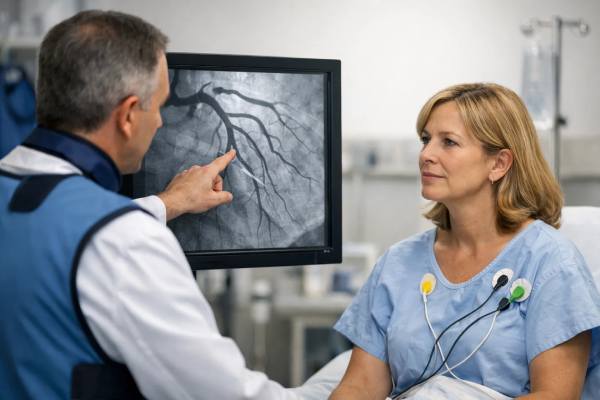
A coronary artery dissection happens when layers of a heart artery separate, creating a false channel within the vessel wall. Blood can track into that space and form an intramural hematoma (a pocket of blood in the wall), squeezing the true channel where blood should flow. The result can look and feel like a classic heart attack—even in people who are young and have few traditional risk factors. Some dissections occur spontaneously (often called spontaneous coronary artery dissection, or SCAD), while others happen after procedures, trauma, or severe strain. Because treatment choices differ from atherosclerotic coronary disease, early recognition matters: what helps one cause of chest pain may harm another. This guide explains what coronary artery dissection is, who is at risk, how it is diagnosed, which treatments are used, and how to live safely afterward.
Table of Contents
- What is coronary artery dissection?
- What causes coronary artery dissection?
- Symptoms and possible complications
- How it is diagnosed
- Treatment options and what to expect
- Life after dissection, prevention, and when to seek help
What is coronary artery dissection?
A coronary artery dissection is a tear or separation within the wall of a coronary artery—the vessels that supply oxygen-rich blood to heart muscle. Think of the artery wall as a layered tube. In a dissection, those layers split apart. Blood can enter the split and create either:
- An intimal tear (a flap in the inner lining) that lets blood slip into the vessel wall, or
- An intramural hematoma (bleeding inside the wall itself) that expands like a bruise.
Either way, the true lumen (the “real” channel) can become narrowed or blocked. When that happens, the downstream heart muscle is starved of oxygen, causing ischemia and sometimes myocardial infarction (heart attack).
Coronary artery dissection is not one single disease; it is a mechanism that can occur in different settings:
- Spontaneous coronary artery dissection (SCAD): A non-atherosclerotic, non-traumatic event that often affects younger or middle-aged people, disproportionately women. SCAD is increasingly recognized as an important cause of acute coronary syndrome in people without typical plaque-related disease.
- Iatrogenic dissection: A dissection triggered by medical procedures, such as coronary angiography, stent placement, or catheter manipulation.
- Traumatic dissection: Related to blunt chest trauma (for example, a motor vehicle collision) or, rarely, extreme mechanical stress to the chest.
- Dissection associated with severe atherosclerosis: Less commonly, plaque disease can predispose to tears, and the presentation can overlap with typical coronary artery disease.
Why definitions matter: SCAD behaves differently than plaque rupture. Many SCAD arteries heal on their own over weeks, and aggressive stenting can be technically difficult because the “problem” sits within the wall, not as a simple fixed blockage. That is why diagnosis is more than labeling chest pain—it changes the plan.
What causes coronary artery dissection?
Coronary artery dissection occurs when the artery wall becomes vulnerable and then experiences a trigger that initiates a tear or bleeding within the wall. The causes and risk factors depend on whether the dissection is spontaneous (SCAD) or secondary to another event.
Common contributors in spontaneous coronary artery dissection (SCAD)
SCAD is best understood as a “two-part” story: predisposition plus trigger.
Predisposing conditions (make the artery wall more fragile):
- Fibromuscular dysplasia (FMD): An abnormal growth pattern in medium-sized arteries. Many people with SCAD are later found to have FMD in other vessels (such as kidney or neck arteries).
- Hormonal states and female sex: SCAD is more common in women, and risk appears higher during pregnancy and the postpartum period, when vascular biology and blood volume shift rapidly.
- Connective tissue disorders: Conditions like vascular Ehlers-Danlos syndrome or Marfan syndrome are uncommon but important because they change counseling and screening.
- Inflammatory or autoimmune disease: A small subset of cases occur in the setting of systemic inflammation, though causality is not always clear.
- Genetic and familial factors: Most SCAD is sporadic, but family clustering suggests inherited susceptibility in some people.
Triggers (increase stress on the vessel wall):
- Sudden intense physical exertion (heavy lifting, sprinting, “one-rep max” effort)
- Severe emotional stress (acute grief, panic, intense conflict)
- Valsalva-like strain (straining with constipation, vomiting, severe coughing)
- Stimulants (including illicit stimulants) and abrupt blood-pressure surges
Causes in non-spontaneous dissections
Iatrogenic dissections can occur during coronary procedures when devices irritate the vessel lining or when contrast injection enters the wrong plane. These are managed differently because the dissection may extend quickly and can sometimes require immediate intervention.
Traumatic dissections result from direct injury to the chest. They may involve other heart injuries (contusion, valve trauma) and require a broader trauma evaluation.
A practical takeaway: if someone experiences a coronary dissection without classic risk factors for plaque disease, clinicians often consider SCAD and then look for associated vascular conditions (especially FMD) to reduce the chance of missing a larger pattern.
Symptoms and possible complications
Coronary artery dissection most often presents like a typical acute coronary syndrome. The challenge is that the symptoms do not reliably distinguish SCAD from plaque-related heart attack—so people should treat symptoms seriously and seek urgent care.
Common symptoms
- Chest pain or pressure (often central; may radiate to arm, jaw, neck, or back)
- Shortness of breath
- Sweating, nausea, or lightheadedness
- Palpitations or a racing heartbeat
- Unusual fatigue (sometimes prominent in women)
- In some cases, symptoms are intermittent because the degree of narrowing can change as the intramural hematoma expands or decompresses.
SCAD can occur in people who look “low-risk” on paper—young, active, no diabetes, normal cholesterol history—so the mismatch between appearance and severity can delay diagnosis. That delay matters because ongoing ischemia can damage heart muscle.
Possible complications
Complications depend on which artery is involved, how much of the vessel is affected, and whether the dissection disrupts electrical stability.
- Myocardial infarction (heart attack): Reduced blood flow can injure heart muscle. The size of injury ranges from small to extensive.
- Ventricular arrhythmias: Dangerous rhythms (ventricular tachycardia or fibrillation) can occur during acute ischemia and may cause collapse.
- Heart failure: If enough muscle is affected, the heart’s pumping function can weaken, leading to fluid retention and exercise intolerance.
- Cardiogenic shock: Rare but life-threatening; occurs when the heart cannot maintain blood pressure and organ perfusion.
- Recurrent dissection: Some people experience another SCAD event in a different segment or artery months to years later.
- Psychological impact: Many survivors report persistent anxiety, fear of exertion, sleep disruption, or post-traumatic stress symptoms after a sudden cardiac event.
Red flags that require emergency action
Call emergency services (rather than driving yourself) for:
- Chest pain lasting more than 5–10 minutes
- Chest pain with fainting, severe shortness of breath, or new confusion
- A rapid, irregular heartbeat with dizziness
- Symptoms occurring in pregnancy or within weeks after delivery
Even if symptoms fade, a dissection can still be present. A “better” moment does not guarantee the artery has stabilized.
How it is diagnosed
Diagnosis starts the same way as any suspected heart attack—because speed protects heart muscle. The difference is that clinicians must keep coronary artery dissection on the list of possibilities, especially in younger patients, postpartum patients, or those without classic plaque risk factors.
First-line emergency evaluation
- Electrocardiogram (ECG): May show ST-elevation, ST-depression, T-wave changes, or may be nonspecific early on.
- Cardiac biomarkers (troponin): Usually rise when heart muscle is injured. A normal early troponin does not fully rule out a developing event, so repeat testing is common.
- Basic labs and chest imaging: Help exclude other dangerous causes of chest pain and guide medication choices.
- Echocardiogram (ultrasound of the heart): Can identify wall-motion abnormalities, reduced ejection fraction, or complications like mitral regurgitation.
Confirming the diagnosis
Coronary angiography is the main test used in the acute setting. Dye outlines the artery, revealing patterns that can suggest dissection. In SCAD, the angiogram may show:
- A classic double-lumen or flap (less common)
- A long smooth narrowing (common)
- A focal narrowing that can mimic plaque disease
Because angiography shows the lumen—not the wall—some cases are ambiguous. When the diagnosis remains uncertain, clinicians may use intracoronary imaging:
- Optical coherence tomography (OCT): Very high resolution; can show a tear, intramural hematoma, and true/false lumens.
- Intravascular ultrasound (IVUS): Deeper penetration; helpful when blood or anatomy limits OCT.
These tools can clarify diagnosis but are used selectively. Advancing a wire and imaging catheter carries risk of extending the dissection, so the team balances certainty against safety.
Additional testing after stabilization
Once the acute phase is controlled, evaluation often broadens to look for associated vascular conditions and to map risk:
- Imaging of other arteries (commonly head/neck and kidney vessels) to look for fibromuscular dysplasia or aneurysms
- Cardiac MRI in select cases to measure the amount of heart muscle injury and assess recovery
- Review of triggers and medications, including hormonal therapies and stimulant exposure
A key principle: diagnosis is not only “Is there a blockage?” but “What kind of blockage is this?”—because management strategies diverge sharply between SCAD and plaque rupture.
Treatment options and what to expect
Treatment depends on stability, the artery involved, and the dissection type. In many SCAD cases, the safest strategy is not the most aggressive one.
Acute treatment goals
- Restore and maintain adequate blood flow to heart muscle
- Prevent clot formation where blood flow is disturbed
- Control pain and blood pressure to reduce stress on the artery wall
- Monitor for rhythm problems in the first critical hours to days
In emergency care, patients may initially receive therapies similar to other acute coronary syndromes. Once SCAD is suspected or confirmed, the care plan often becomes more individualized.
Conservative management (often preferred in stable SCAD)
If blood flow is preserved and symptoms are controlled, clinicians frequently choose conservative therapy because many SCAD lesions heal spontaneously over time. Conservative care typically includes:
- Beta-blockers to reduce heart rate and arterial wall stress
- Antiplatelet therapy (often aspirin; sometimes dual therapy for a limited time depending on the case)
- Control of blood pressure with appropriate medications
- Avoidance of thrombolytics in many suspected SCAD cases, because breaking clots can sometimes worsen bleeding into the artery wall
When procedures are needed
Intervention is more likely when there is:
- Ongoing or recurrent ischemic pain
- Large territory at risk (such as left main involvement)
- Hemodynamic instability, malignant arrhythmias, or shock
- Complete vessel occlusion with poor perfusion
Options include:
- Percutaneous coronary intervention (PCI) with stenting: Can be lifesaving, but in SCAD it can be technically challenging. The dissection plane can extend, and the intramural hematoma can propagate beyond the stent edges.
- Coronary artery bypass grafting (CABG): Considered when dissections involve critical segments or PCI fails. Long-term, bypass grafts can sometimes close if the native artery heals and competes for flow, so CABG decisions weigh short-term necessity against long-term anatomy.
Recovery expectations
Most people stay in the hospital long enough for rhythm monitoring and symptom stabilization. A follow-up plan typically includes:
- Medication optimization (especially heart-rate and blood-pressure control)
- A referral to cardiac rehabilitation tailored to dissection recovery
- Guidance on activity restrictions during the first healing phase (often weeks)
Pregnancy-associated SCAD requires specialized counseling. Future pregnancy decisions involve cardiology, maternal-fetal medicine, and individualized risk discussion, because physiologic stress and hormonal shifts can influence recurrence risk.
Life after dissection, prevention, and when to seek help
Living after a coronary dissection is a blend of healing, rebuilding confidence, and reducing avoidable risk. Many people feel physically better long before they feel emotionally safe, especially if the event was sudden and unexpected.
Recovery and daily management
Cardiac rehabilitation is one of the most practical tools for recovery. A good program helps you:
- Reintroduce aerobic activity gradually (walking, cycling, low-impact training)
- Learn safe exertion targets using heart rate, symptoms, and perceived effort
- Address fear of activity with supervised exposure and education
- Improve blood pressure, sleep, and stress resilience
Many clinicians advise avoiding heavy isometric strain (for example, breath-holding while lifting very heavy weights) during the healing period and, for some patients, long term. Instead, a safer approach is:
- Moderate loads you can lift while breathing normally
- Higher repetitions with controlled technique
- Avoiding “max effort” lifts or competitive pushing, especially early on
Medication adherence matters. Beta-blockers and blood-pressure control can reduce arterial wall stress. If you have reduced heart function after the event, additional heart-failure medications may be needed.
Screening and prevention strategies
After SCAD, clinicians often look beyond the heart:
- Screening for fibromuscular dysplasia and other arterial abnormalities can identify risks that would otherwise remain silent.
- If a connective tissue disorder is suspected (based on family history or physical features), targeted genetic evaluation may be recommended.
Lifestyle choices also support vascular health even if you never had plaque disease:
- Don’t smoke or vape nicotine products
- Keep blood pressure in a healthy range
- Prioritize sleep and treat sleep apnea if present
- Use stress-management tools that you can maintain (breathing exercises, structured therapy, or mindfulness-based techniques)
When to seek urgent care
Seek emergency evaluation for:
- New or worsening chest pain, pressure, or tightness—especially if it resembles the original event
- Shortness of breath at rest, fainting, or a rapid irregular heartbeat
- New neurologic symptoms (sudden weakness, trouble speaking, severe headache), particularly if you have known vascular abnormalities elsewhere
Finally, it helps to name a realistic goal: “return to a full life with appropriate guardrails,” not “return to exactly who I was before.” With the right follow-up, many people resume work, exercise, travel, and family life—while staying alert to symptoms that deserve prompt attention.
References
- 2025 ACC/AHA/ACEP/NAEMSP/SCAI Guideline for the Management of Patients With Acute Coronary Syndromes: A Report of the American College of Cardiology/American Heart Association Joint Committee on Clinical Practice Guidelines 2025 (Guideline)
- Spontaneous coronary artery dissection (SCAD): A contemporary review 2024 (Review)
- Spontaneous Coronary Artery Dissection: A Narrative Review of Epidemiology and Public Health Implications 2025 (Narrative Review)
- 2023 ESC Guidelines for the management of acute coronary syndromes 2023 (Guideline)
Disclaimer
This article is for educational purposes only and does not replace individualized medical advice, diagnosis, or treatment. Coronary artery dissection can be life-threatening and requires urgent evaluation when symptoms occur. If you have chest pain, shortness of breath, fainting, or other signs of a heart emergency, call your local emergency number immediately. If you have been diagnosed with coronary artery dissection or SCAD, follow your cardiology team’s guidance closely, including medication use, activity recommendations, and follow-up imaging or screening.
If you found this article helpful, please consider sharing it on Facebook, X (formerly Twitter), or any platform you prefer, and following us on social media. Your support through sharing helps our team continue producing high-quality health content.