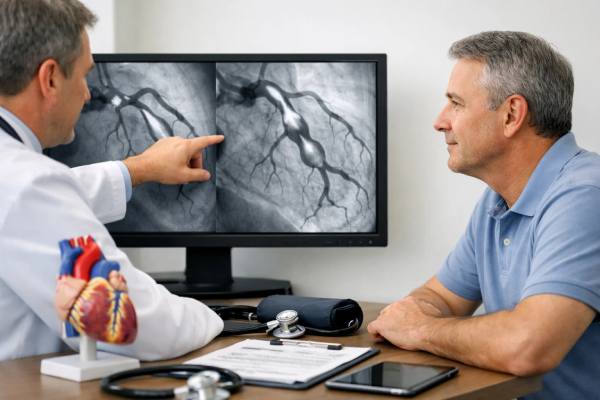
Coronary artery ectasia (CAE) is an abnormal widening of one or more coronary arteries—the vessels that supply oxygen-rich blood to the heart muscle. Many people first learn they have CAE after testing for chest pain or an unexpected finding during coronary angiography. The condition can be quiet for years, yet the widened segment may slow blood flow, encourage clot formation, and increase the chance of angina or even a heart attack. CAE is often linked with atherosclerosis (plaque disease), but it can also appear with inflammatory conditions or connective tissue disorders, and sometimes it is present from birth. Understanding what “ectasia” means, how it differs from a coronary aneurysm, and what treatments are most helpful can make the diagnosis far less intimidating—and can help you focus on the practical steps that lower risk over time.
Table of Contents
- What is coronary artery ectasia?
- What causes it and who is at risk?
- Symptoms, complications, and red flags
- How doctors diagnose coronary ectasia
- Treatments: medicines, procedures, follow-up
- Living with CAE: prevention and when to seek care
What is coronary artery ectasia?
Coronary artery ectasia means a coronary artery is wider than expected for that person’s anatomy. Clinicians usually define ectasia as a segment that measures at least 1.5 times the diameter of a nearby “normal” segment. When the widening is more focal and pouch-like, it is often called a coronary aneurysm; when it is more diffuse—stretching along a longer portion of the vessel—“ectasia” is the more common label. In practice, the two can overlap, and the most important issue is not the name but the way abnormal widening changes blood flow.
A healthy coronary artery delivers blood in a smooth, efficient stream. A widened segment can behave like a slow eddy in a river: flow becomes sluggish, small whirlpools form, and blood spends longer “dwelling” in that zone. That matters because slower flow increases the chance that platelets stick together and a clot forms. Even if a clot does not fully block the ectatic segment, tiny fragments can break off and travel downstream, causing micro-emboli that irritate the heart muscle and provoke chest pain.
CAE is also described by extent and pattern. One common approach groups cases from diffuse involvement of multiple vessels to milder, more localized disease. This pattern helps estimate risk: more widespread ectasia generally creates more opportunity for slow flow and clotting, especially if the patient also has narrowings from plaque.
It is worth emphasizing a practical point: CAE is not automatically a crisis. Many people live with it safely, especially when risk factors are controlled and treatment is tailored to the size of the ectatic segment, symptoms, and whether there is coexisting obstructive coronary artery disease. The best plan starts with understanding whether CAE is an isolated finding, part of broader plaque disease, or linked to an inflammatory or inherited condition—because those contexts guide the next steps.
What causes it and who is at risk?
Most adult cases of coronary artery ectasia are associated with the same process that causes typical coronary artery disease: atherosclerosis. Plaque can weaken and remodel the artery wall over time. Instead of narrowing uniformly, some segments expand outward (“positive remodeling”), leaving a widened lumen but a structurally abnormal vessel wall. In that setting, CAE often coexists with more classic narrowings elsewhere in the coronary tree.
Other causes are less common but clinically important because they change what doctors look for and how they monitor you:
- Inflammatory and vasculitic conditions: Illnesses that inflame blood vessels can damage the coronary wall. A well-known example is Kawasaki disease (more often diagnosed in childhood), but other vasculitides can be relevant in adults.
- Connective tissue disorders: Conditions affecting collagen and elastin can reduce arterial wall strength. When suspected, clinicians may look for clues such as hypermobility, unusual bruising, lens issues, or a family history of aneurysms.
- Congenital (present from birth) variants: Some people likely have a predisposition to abnormal arterial structure without a single trigger.
- Iatrogenic or traumatic factors: Prior coronary interventions can rarely contribute to localized aneurysm-like changes, usually near treated segments.
Risk factors often mirror those for coronary artery disease because of the strong link with atherosclerosis. Commonly discussed contributors include:
- Smoking (current or prior)
- High blood pressure
- Elevated LDL cholesterol or low HDL cholesterol
- Diabetes or insulin resistance
- Obesity and central adiposity
- Sedentary lifestyle
- Chronic kidney disease
- Male sex (reported more often in many series)
- Family history of premature cardiovascular disease
A useful way to think about risk is to separate risk of having CAE from risk of complications from CAE. A person with mild ectasia and excellent control of blood pressure and LDL may have a very different outlook than someone with large, multi-vessel ectasia plus active smoking and untreated diabetes. This is why the “why” behind CAE—atherosclerotic, inflammatory, congenital—matters as much as the diameter measurement on an imaging report.
Symptoms, complications, and red flags
Many people with coronary artery ectasia have no symptoms, especially if there are no significant narrowings and the ectatic segments are not large. When symptoms occur, they often resemble other forms of coronary disease because the final pathway is the same: the heart muscle is not getting enough blood at the moment it needs it.
Common symptoms include:
- Chest pressure, tightness, or burning with exertion, emotional stress, heavy meals, or cold exposure
- Shortness of breath during activity or when lying flat (sometimes a clue to heart strain or heart failure)
- Unusual fatigue that feels out of proportion to typical fitness level
- Palpitations (a sensation of skipped beats or racing)
- Atypical discomfort in the jaw, neck, back, or upper abdomen—particularly in older adults, women, and people with diabetes
Complications are largely driven by altered flow and clot risk:
- Thrombosis within the ectatic segment: Slow flow can allow clots to form locally.
- Distal embolization: A clot fragment can travel downstream and block smaller branches, sometimes causing chest pain even without a major narrowing.
- Acute coronary syndrome (ACS): CAE can coexist with plaque rupture elsewhere, or thrombosis may occur in the ectatic area itself.
- No-reflow or slow-flow phenomenon during procedures: Interventions may be technically more challenging when vessels are dilated and flow dynamics are unusual.
- Arrhythmias: Any ischemia—whether from emboli, spasm, or plaque—can irritate the heart’s electrical system.
- Rupture: This is considered rare in coronary aneurysm/ectasia compared with other arterial aneurysms, but it is part of why very large aneurysmal changes get careful specialist attention.
Red flags warrant urgent evaluation because they can signal a heart attack, dangerous arrhythmia, or another emergency:
- Chest pain/pressure lasting more than 10 minutes, especially with sweating, nausea, or shortness of breath
- New fainting or near-fainting
- Severe breathlessness at rest, new confusion, or cyanosis (blue lips)
- Sudden one-sided weakness, facial droop, or speech difficulty
- A rapid, sustained heartbeat with dizziness or chest discomfort
If you have a known diagnosis of CAE, the most practical mindset is this: the condition can be stable for years, but new or changing symptoms deserve attention promptly because the risk picture can shift with age, plaque progression, dehydration/illness, or medication changes.
How doctors diagnose coronary ectasia
Diagnosis begins with the same basics used for other heart conditions: your symptom history, cardiovascular risk factors, family history, blood pressure measurement, and a focused exam. From there, clinicians choose tests that answer two key questions: (1) how enlarged are the arteries and where, and (2) is the heart muscle at risk from reduced blood flow or clotting?
Common diagnostic tools include:
- Electrocardiogram (ECG): Looks for signs of ischemia, prior heart attack, or rhythm problems. It can be normal even when CAE is present.
- Blood tests: In urgent settings, cardiac troponin helps detect heart muscle injury. Other labs may assess cholesterol, glucose control, kidney function, and inflammation when relevant.
- Echocardiogram (ultrasound of the heart): Evaluates pumping function, wall motion changes suggestive of ischemia, valve disease, and pericardial issues. It does not reliably “see” coronary ectasia directly, but it shows consequences.
- Coronary angiography: Often considered the reference standard when CAE is suspected or when symptoms suggest an acute coronary syndrome. It outlines the lumen and can demonstrate slow-flow, clot, or coexisting narrowings.
- CT coronary angiography (CTCA): A noninvasive way to visualize coronary anatomy, useful for defining the size and length of dilated segments and for follow-up in selected patients.
- Intravascular ultrasound (IVUS) or optical coherence tomography (OCT): Specialized tools used during angiography that image the vessel wall from the inside. They can help distinguish true aneurysmal change from artifact, define plaque burden, and guide stent choice when procedures are needed.
A thoughtful workup also considers underlying causes. For example, a younger patient with ectasia and few traditional risk factors might prompt questions about prior childhood Kawasaki disease, systemic inflammatory symptoms, unusual skin/joint findings, or a family history of aneurysms. In contrast, an older patient with calcified plaque and typical risk factors may not need an extensive inflammatory evaluation.
Finally, clinicians often assess functional impact—how much the condition affects oxygen delivery—using stress testing (exercise or pharmacologic), perfusion imaging, or, during angiography, pressure-based measurements. These tests help decide whether symptoms come from obstructive disease, microvascular dysfunction, spasm, embolic phenomena, or a combination—because treatment differs for each.
Treatments: medicines, procedures, follow-up
Treatment for coronary artery ectasia is individualized because CAE can range from an incidental finding to a driver of recurrent ischemic events. The plan typically targets three areas: prevent clots, treat coexisting plaque disease, and reduce triggers for ischemia.
Medication strategies commonly include:
- Antiplatelet therapy: Many patients receive an antiplatelet such as aspirin, especially when CAE coexists with atherosclerosis. If a person has had an acute coronary syndrome or a coronary stent, dual antiplatelet therapy (DAPT) may be used for a defined period based on cardiology guidance.
- Anticoagulation in selected cases: Because ectatic segments can harbor clot, some patients at higher thrombotic risk (for example, large ectasia, visible thrombus, recurrent events despite antiplatelet therapy) may be considered for anticoagulation. This decision must balance bleeding risk, age, kidney function, fall risk, and concurrent medications.
- High-intensity lipid-lowering therapy: If CAE is associated with plaque disease, LDL lowering is one of the most powerful long-term risk reducers. Statins also have anti-inflammatory and plaque-stabilizing effects.
- Blood pressure control: ACE inhibitors/ARBs and other agents reduce arterial stress and help protect the heart muscle.
- Anti-anginal therapy: Beta-blockers can reduce oxygen demand and stabilize exertional angina. Calcium channel blockers may be preferred if vasospasm is suspected. Nitrates can help classic angina in many patients, but in some people with ectatic segments and slow-flow physiology, nitrates may worsen symptoms—so response should be monitored rather than assumed.
- Diabetes and weight management: Glucose control and weight reduction reduce event risk over time and improve exercise tolerance.
Procedures are considered when there is significant obstructive disease, ongoing ischemia, or a high-risk aneurysmal segment:
- Percutaneous coronary intervention (PCI): Stenting can be more complex in ectatic vessels because sizing is challenging and flow patterns may increase thrombosis risk. Interventionalists may use IVUS/OCT to select stent size and optimize results.
- Covered stents or exclusion techniques: In selected aneurysm-like segments, devices that isolate the dilated area from circulation can be considered, though anatomy must be suitable.
- Coronary artery bypass grafting (CABG): CABG may be preferred when there is diffuse obstructive disease, multi-vessel involvement, or anatomy not well suited to PCI.
Follow-up usually includes symptom monitoring, medication adherence checks, and risk-factor tracking. Imaging follow-up is not “one-size-fits-all.” A cardiologist may recommend periodic CTCA or repeat angiography in people with large or changing aneurysmal segments, recurrent symptoms, or uncertain anatomy—while others may need only clinical follow-up and standard coronary prevention care.
The most effective treatment plans are explicit about goals: fewer symptoms, fewer ischemic events, and fewer clot-related complications—achieved through a combination of targeted antithrombotic decisions and strong prevention fundamentals.
Living with CAE: prevention and when to seek care
Living well with coronary artery ectasia is less about constant vigilance and more about building a reliable routine that reduces clotting risk, slows plaque progression, and helps you recognize meaningful symptom changes early.
Daily and weekly habits that matter:
- Medication consistency: Antiplatelet or anticoagulant therapy only works when taken as prescribed. If you miss doses, do not “double up” without advice; contact your clinician for a safe plan.
- Hydration during illness or travel: Dehydration can thicken blood and may worsen slow-flow symptoms in some people. Aim for steady fluid intake unless you have heart failure or kidney disease with fluid restrictions.
- Aerobic activity: Many patients do well with moderate-intensity exercise (for example, a goal of about 150 minutes per week), adjusted to symptoms and supervised recommendations. If you have angina, structured cardiac rehabilitation can be an excellent way to rebuild confidence safely.
- Strength training with common sense: Resistance work can be beneficial, but avoid breath-holding and extreme straining. Use lighter weights and higher repetitions, and stop if you get chest discomfort, dizziness, or unusual breathlessness.
- Dietary pattern: A Mediterranean-style approach—vegetables, legumes, fruit, whole grains, fish, nuts, olive oil—supports lipid control and vascular health. If you have high blood pressure, reducing sodium is often as important as choosing “healthy” foods.
- Smoking cessation: If there is one change that rapidly shifts risk, it is stopping smoking. Pair medication support with counseling if needed.
- Sleep and stress management: Poor sleep and chronic stress increase blood pressure and worsen metabolic risk. Aim for consistent sleep timing and address sleep apnea if suspected.
Practical prevention goals to discuss with your clinician:
- LDL and triglyceride targets based on your overall risk profile and whether you have established coronary disease
- A blood pressure goal you can reliably reach without side effects
- A diabetes plan that prioritizes both glucose and cardiovascular outcomes
- A clear antithrombotic plan (what you take, why, and what to do before procedures or dental work)
When to seek medical care is often the hardest part, because people worry about “overreacting.” A useful rule is to treat new, escalating, or different symptoms as meaningful. Seek urgent evaluation for chest pain at rest, chest pressure lasting more than 10 minutes, fainting, severe shortness of breath, or stroke-like symptoms. For non-urgent but important issues—more frequent exertional chest tightness, declining exercise tolerance over weeks, medication side effects, or easy bruising/bleeding on blood thinners—contact your cardiology team promptly rather than waiting for the next routine visit.
With the right prevention foundation and a plan that matches your anatomy and symptom pattern, many people with CAE remain stable and active for years.
References
- Antithrombotic therapy in adults with ectatic coronary artery disease: a systematic review and network meta-analysis 2025 (Systematic Review)
- Treatment and Outcome of Patients With Coronary Artery Ectasia: Current Evidence and Novel Opportunities for an Old Dilemma 2022 (Review)
- Coronary Artery Ectasia: Review of the Non-Atherosclerotic Molecular and Pathophysiologic Concepts 2022 (Review)
- Inflammatory Biomarkers in Coronary Artery Ectasia: A Systematic Review and Meta-Analysis 2022 (Systematic Review)
Disclaimer
This article is for educational purposes only and does not replace personalized medical advice, diagnosis, or treatment. Coronary artery ectasia can carry different risks depending on vessel size, symptoms, coexisting coronary disease, and individual bleeding risk if blood-thinning medications are used. If you have chest pain, severe shortness of breath, fainting, or stroke-like symptoms, seek emergency care immediately. For ongoing care, discuss testing, medication choices, exercise limits, and follow-up plans with a qualified clinician who can evaluate your personal history and imaging results.
If you found this article helpful, please consider sharing it on Facebook, X (formerly Twitter), or any platform you prefer, and follow us on social media. Your support through sharing helps our team continue producing clear, high-quality health content.