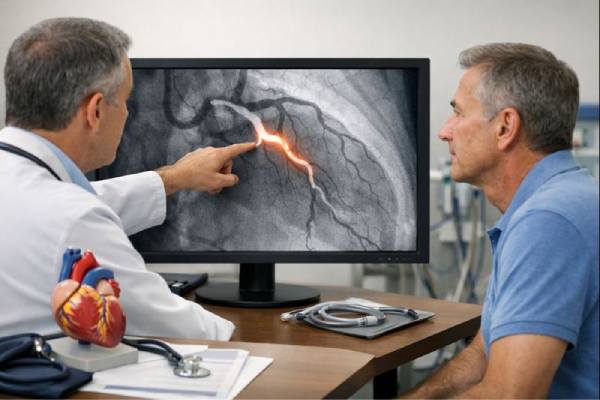
A coronary artery fistula is an unusual “shortcut” blood vessel that lets blood flow from a coronary artery into a heart chamber or nearby vessel instead of through the heart’s smallest nutrient vessels. Many fistulas are found by chance during imaging for another reason, and some never cause trouble. Others, especially larger or more winding fistulas, can slowly strain the heart or “steal” blood away from the heart muscle when you need it most, such as during exercise. Because symptoms can be vague, the condition is often misunderstood until targeted testing is done. The good news is that modern imaging can map a fistula in detail, and treatment—when needed—is usually very effective, using either catheter-based closure or surgery. This article explains what a coronary artery fistula is, why it happens, how it feels, and what daily management looks like.
Table of Contents
- What is a coronary artery fistula?
- Why do coronary fistulas form?
- Symptoms and possible complications
- How is it diagnosed?
- Treatment options and what recovery looks like
- Long-term management and when to seek care
What is a coronary artery fistula?
Your coronary arteries sit on the outside of the heart and branch into tiny vessels that deliver oxygen to the heart muscle. A coronary artery fistula (CAF) is an abnormal connection that diverts blood from a coronary artery into a heart chamber (like the right ventricle), a large vessel (such as the pulmonary artery), or another low-pressure structure (like the coronary sinus). Instead of feeding the heart muscle in a controlled way, some blood takes the easier route through the fistula.
A helpful way to picture it: imagine a garden hose (the coronary artery) with a side hole that drains into a bucket (a heart chamber). Water still flows forward, but part of it leaks away, and the pressure at the end of the hose may drop.
CAF can vary widely, and that variation matters more than the name itself. Clinicians often describe fistulas by:
- Where they start (origin): right coronary artery, left anterior descending artery, left circumflex, or left main.
- Where they end (drainage site): right-sided chambers and the pulmonary artery are common drainage points because they are lower pressure.
- Size and flow (shunt): small fistulas may have minimal impact; larger ones can cause volume overload.
- Shape and course: a short, straight fistula is usually easier to close than a long, tortuous one with multiple branches.
- Single vs multiple connections: some people have one channel; others have several small channels or multiple drainage sites.
There are two main ways a fistula can affect the body:
- “Steal” phenomenon: blood preferentially flows through the low-resistance fistula, which can reduce blood supply to the downstream heart muscle, especially during exertion.
- Volume overload: if the fistula drains into a low-pressure chamber or vessel, extra blood returns to the heart and lungs, which can enlarge heart chambers over time and contribute to heart failure symptoms.
Many people live for years without symptoms, particularly when the fistula is small. When symptoms appear, they tend to do so gradually—often as exercise intolerance or intermittent chest discomfort rather than a sudden dramatic event. That slow, subtle course is one reason diagnosis can be delayed.
Why do coronary fistulas form?
Most coronary artery fistulas are congenital, meaning the person is born with them. During fetal development, the early heart has temporary channels and connections that normally remodel into a mature coronary circulation. A fistula can form when some of those connections persist or when normal remodeling is incomplete. This is not caused by anything a parent did during pregnancy, and in most cases there is no clear genetic pattern.
Some fistulas are acquired later in life. These are less common but important because the underlying trigger may guide treatment. Acquired causes include:
- Heart procedures and surgery: prior coronary interventions, valve surgery, congenital heart repairs, or repeated catheterization in certain settings.
- Trauma: blunt or penetrating injury to the chest (rare).
- Infection or inflammation: uncommon, but severe inflammatory processes can disrupt vessel walls.
- Tumors or abnormal tissue growth: very rare situations where new vessels form and connect abnormally.
Risk factors are best understood as factors that increase the chance a fistula will matter clinically, rather than factors that “cause” it. Many people with CAF never develop symptoms, so the more practical question is: Who is more likely to need monitoring or closure?
Common clinical risk factors for significance include:
- Large fistula diameter or high-flow shunt: higher flow increases the chance of chamber enlargement, pulmonary over-circulation, and symptoms.
- Drainage into very low-pressure sites: for example, right-sided chambers, pulmonary artery, or venous structures, which encourage continuous runoff.
- Aneurysmal (dilated) fistula segments: enlarged segments can predispose to clot formation or (rarely) rupture, and can complicate closure.
- Multiple origins or multiple drainage sites: makes anatomy more complex and can reduce the chance of a simple, single-device closure.
- Older age at discovery: some fistulas enlarge over time, so a fistula found in adulthood may have had decades to remodel surrounding vessels.
- Coexisting heart disease: coronary artery disease, valve disease, or cardiomyopathy can lower the heart’s “reserve,” making smaller shunts more symptomatic.
In children, the threshold for concern is often related to growth, heart chamber enlargement, and feeding or breathing symptoms. In adults, it is more often related to exercise symptoms, arrhythmias, or evidence of ischemia (reduced oxygen supply to heart muscle).
If you have been told you have a coronary fistula, the most useful next step is to clarify the anatomy and flow burden. Two people can share the same diagnosis but have very different risks, based on fistula size, course, and drainage site.
Symptoms and possible complications
Symptoms depend on how much blood is diverted and how the heart adapts over time. Small fistulas often cause no symptoms. When symptoms do occur, they can be intermittent and easy to attribute to stress, deconditioning, anemia, or lung problems—especially early on.
Common symptoms include:
- Chest discomfort or pressure, especially with exertion (sometimes due to coronary steal).
- Shortness of breath, initially during activity and later possibly at rest if volume overload progresses.
- Fatigue or reduced exercise tolerance, such as getting winded on stairs that used to feel easy.
- Palpitations, skipped beats, or episodes of rapid heartbeat.
- Dizziness or near-fainting, sometimes linked to arrhythmias or reduced cardiac output.
In infants and young children, symptoms can look different:
- Poor feeding, sweating with feeds, or failure to thrive
- Fast breathing or frequent respiratory infections
- Irritability or low stamina with play
Potential complications are the reason clinicians take CAF seriously even when symptoms are mild. Key complications include:
- Heart chamber enlargement and heart failure: continuous extra flow can enlarge right-sided chambers or the left side depending on the shunt pathway.
- Myocardial ischemia (reduced blood supply): coronary steal can cause exertional angina-like symptoms and, rarely, myocardial infarction.
- Arrhythmias: extra stretch or scarring can increase the risk of atrial fibrillation, supraventricular tachycardia, or ventricular rhythm problems.
- Endocarditis (infection of the heart lining/valves): turbulent flow can increase susceptibility, though the overall risk varies and is not the same for every patient.
- Thrombosis or embolization: slow, swirling flow in enlarged segments can allow clot formation that may obstruct coronary branches.
- Pulmonary hypertension: uncommon, but possible if a large left-to-right shunt persists for years.
- Aneurysm formation and (rarely) rupture: mostly discussed in larger, aneurysmal fistulas.
A practical “red flag” checklist—symptoms that should prompt urgent evaluation—includes:
- Chest pain or pressure that is new, severe, or lasts more than a few minutes
- Fainting, especially during exertion
- Shortness of breath that is rapidly worsening, or new swelling in legs/abdomen
- Sustained palpitations with lightheadedness
- Fever with chills in someone with known structural heart disease, especially if accompanied by new fatigue or shortness of breath
It’s also important to know that symptoms can come from related but separate issues. For example, a person with a small fistula might have chest pain due to reflux, muscle strain, anxiety, or coronary artery disease. That is why objective testing—looking for chamber enlargement, shunt burden, and signs of ischemia—guides the plan more reliably than symptoms alone.
How is it diagnosed?
Diagnosis usually starts with suspicion from a heart murmur, unexplained symptoms, or an incidental finding on cardiac imaging. Because a coronary fistula can be small and winding, accurate diagnosis depends on choosing tests that can both detect flow and map anatomy.
Common diagnostic steps include:
1) Clinical evaluation
A clinician may hear a continuous or unusual murmur, especially if the fistula creates persistent turbulence. Your history matters: exercise symptoms, palpitations, fainting, pregnancy plans, and any prior heart procedures can change the workup.
2) Transthoracic echocardiogram (TTE)
Echocardiography is often the first test because it is widely available and shows:
- Heart chamber sizes and pumping function
- Signs of volume overload
- Sometimes, the fistula’s flow pattern on Doppler
However, echocardiography may not fully visualize the course of the fistula, especially in adults or in complex anatomy.
3) Coronary CT angiography (CCTA)
CCTA has become a key tool because it provides a high-resolution 3D map of:
- Origin and drainage site
- Diameter, tortuosity, and branching
- Relationship to other structures (valves, chambers, pulmonary artery)
This kind of “roadmap” is particularly useful when planning catheter closure or surgery.
4) Cardiac MRI
MRI can add functional information without radiation and can estimate shunt burden in some cases. It is often used when there are questions about heart muscle health, chamber volumes, or complex congenital anatomy.
5) Stress testing
If there is concern for ischemia, a stress test can assess whether exertion triggers reduced blood flow to the heart muscle. Options include treadmill ECG testing, stress echo, or nuclear perfusion imaging, depending on the clinical question.
6) Invasive coronary angiography (cardiac catheterization)
This is often the definitive test and is commonly performed when:
- Symptoms suggest clinically significant disease
- Noninvasive imaging suggests a large or complex fistula
- Closure is being considered (because closure may be performed during the same session)
Angiography shows real-time flow and allows measurement of pressures and oxygen levels to estimate shunt significance.
How clinicians decide “significance” usually comes down to a few concrete findings:
- Evidence of chamber enlargement or volume overload
- Symptoms attributable to the fistula
- Objective ischemia on stress testing or concerning ECG changes
- Large or aneurysmal anatomy that raises future risk
- High-flow shunt features on imaging or catheter data
If you’re preparing for a diagnostic visit, it helps to bring:
- A timeline of symptoms (what triggers them, how long they last)
- A list of medications and supplements
- Prior procedure reports or imaging disks if you have them
- Family history of congenital heart disease or early heart problems
Treatment options and what recovery looks like
Not every coronary artery fistula needs closure. The core treatment decision is a balance between current impact (symptoms, heart strain, ischemia) and future risk (growth, aneurysm, clot, infection, arrhythmias). For many patients, careful observation is appropriate.
When observation may be reasonable
Observation is often chosen when the fistula is small and there is:
- No chamber enlargement
- No evidence of ischemia
- No concerning aneurysmal dilation
- No fistula-related complications
Follow-up typically includes periodic clinical visits and repeat imaging on a schedule tailored to anatomy and age.
Catheter-based (transcatheter) closure
This is now a common first-line option for suitable anatomy. A cardiologist guides thin tubes through a blood vessel (often from the groin or wrist) to the fistula and closes it from the inside. Closure tools may include:
- Coils that promote clotting and sealing
- Vascular plugs or occluder devices designed to block flow
- Other specialized devices depending on fistula size and shape
Advantages:
- No chest incision
- Shorter hospital stay (often same day or 1–2 days)
- Faster return to usual activities for many patients
Limitations and risks (important to discuss frankly):
- Residual leak or recanalization (the fistula reopens partially)
- Device migration (rare, but serious)
- Coronary spasm or reduced flow to a normal branch if anatomy is complex
- Heart rhythm disturbances during or after the procedure
Surgical repair
Surgery is typically considered when:
- The fistula is very large, tortuous, or has multiple connections
- There is a large aneurysmal segment
- The patient needs another heart surgery anyway (valve repair, congenital repair)
- Catheter closure is not feasible or has failed
Surgical approaches vary. Some repairs are done on the surface of the heart; others require opening a chamber or vessel to close the drainage site. In select cases, bypass support is used; in others, it is not.
Medications
Medications do not “cure” a fistula, but they can support symptoms or reduce risk in specific situations:
- Antianginal medications for exertional chest discomfort in selected patients
- Medicines to control heart rate or rhythm if arrhythmias occur
- Antiplatelet therapy after certain closure procedures (the duration depends on device type, anatomy, and clinician preference)
- Heart failure medications if volume overload has affected function
What recovery often looks like
Recovery depends on treatment type and your baseline health.
After transcatheter closure, many people:
- Walk the same day
- Resume light activity within several days
- Return to normal activity over 1–2 weeks (sometimes longer if the procedure was complex)
After surgery, recovery is longer and may include:
- Several days in the hospital
- A gradual return to activity over weeks
- Cardiac rehabilitation in selected patients
Questions worth asking before closure:
- What is the exact origin and drainage site of my fistula?
- Is there evidence of chamber enlargement or ischemia?
- What closure approach is best for my anatomy, and why?
- What are the most likely complications in my specific case?
- What follow-up imaging will confirm success?
Long-term management and when to seek care
Long-term management is about three goals: keeping the heart’s workload reasonable, detecting changes early, and reducing avoidable risks. Your plan should be individualized, but the principles are consistent.
Follow-up and monitoring
Even after successful closure, follow-up matters because small residual channels can persist or reopen. Monitoring may include:
- Periodic clinical visits focused on symptoms, blood pressure, and rhythm
- Echocardiograms to track chamber size and function
- CT or MRI if anatomy needs a detailed re-check
- Rhythm monitoring if palpitations develop
A practical tip: keep a one-page “heart summary” in your phone or wallet with your diagnosis, drainage site, whether it was closed (and how), your device type (if applicable), and your cardiologist’s contact.
Activity and exercise
Most people can be active, and activity is generally protective for cardiovascular health. The key is matching intensity to your situation:
- If the fistula is small and you have no ischemia, you may have no special restrictions.
- If you have symptoms, chamber enlargement, or documented ischemia, your clinician may recommend moderated intensity until treatment is complete.
- After closure, you may be advised to ramp up gradually, often using perceived exertion: you should be able to speak in full sentences during early training sessions.
Dental care, infections, and endocarditis awareness
Good oral hygiene and prompt treatment of dental infections matter for anyone with structural heart disease. Whether you need antibiotics before certain procedures depends on your specific anatomy and history, so ask for a clear, written plan rather than relying on assumptions.
Pregnancy and special situations
If you are pregnant or planning pregnancy, discuss the fistula early. Many people do well, but pregnancy increases blood volume and cardiac output, which can unmask symptoms in a previously quiet fistula. Planning is especially important if:
- The fistula is moderate or large
- There is pulmonary hypertension
- There is a history of arrhythmia or heart failure symptoms
Lifestyle factors that support heart health
These do not directly shrink a fistula, but they reduce competing risks that can worsen symptoms:
- Keep blood pressure controlled.
- Aim for regular aerobic activity, adjusted to your clinical status.
- Prioritize sleep and treat sleep apnea if present.
- Avoid tobacco and limit stimulant overuse (high-dose energy drinks can provoke palpitations).
When to seek urgent or emergency care
Seek urgent evaluation (same day) for:
- New or worsening exertional chest pressure
- Sustained palpitations, especially with dizziness
- Shortness of breath that is progressing over days
- Fever with chills and unexplained fatigue
Seek emergency care immediately for:
- Chest pain with sweating, nausea, or breathlessness
- Fainting, especially during exertion
- Sudden severe shortness of breath
- Signs of stroke (face droop, arm weakness, speech difficulty)
Outlook
For many patients—especially those with small fistulas or those who undergo successful closure—the long-term outlook is excellent. The most important predictor of a smooth course is not the label “fistula,” but whether the fistula is high-flow, aneurysmal, or associated with measurable strain on the heart. Clear anatomy, thoughtful follow-up, and timely intervention when indicated make this a condition that is often very manageable.
References
- A Systematic Analysis of Coronary to Pulmonary Artery Fistula and Its Associated Aneurysm in Adults 2025 (Systematic Review)
- Coronary Artery Fistulas: Indications, Techniques, Outcomes, and Complications of Transcatheter Fistula Closure 2021 (Review)
- Anatomical Classification and Posttreatment Remodeling Characteristics to Guide Management and Follow-Up of Neonates and Infants With Coronary Artery Fistula: A Multicenter Study From the Coronary Artery Fistula Registry 2021 (Multicenter Study)
- Comparison of Embolization Coils and Patent Ductus Arteriosus Occluders for Coronary Artery Fistula Transcatheter Closure: A Single Centre Experience 2024 (Cohort Study)
- Surgical Management of Coronary Artery Fistulas in Children 2024 (Observational Study)
Disclaimer
This article is for educational purposes only and does not provide medical advice, diagnosis, or treatment. Coronary artery fistulas vary widely in size, anatomy, and risk, and management decisions should be made with a qualified clinician who can review your symptoms, imaging, and medical history. If you have chest pain, fainting, severe shortness of breath, or symptoms of stroke, seek emergency care immediately.
If you found this guide useful, please consider sharing it on Facebook, X (formerly Twitter), or any platform you prefer, and follow us on social media. Your support through sharing helps our team continue producing accurate, practical health content.