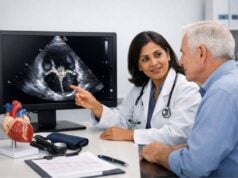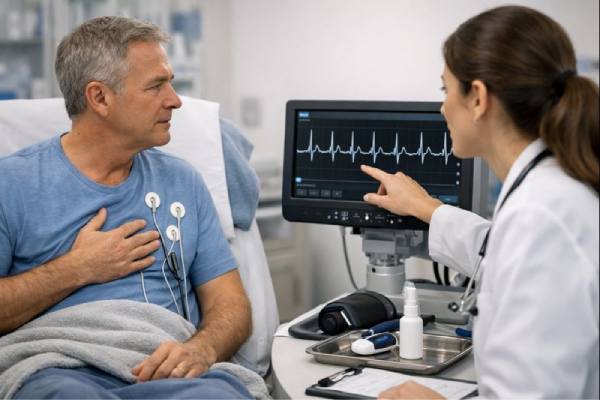
Coronary artery spasm is a sudden tightening of a coronary artery that briefly narrows the vessel and reduces blood flow to the heart muscle. It can feel like classic angina, but the pattern is often different—pain at rest, frequently at night or early morning, and sometimes with striking ECG changes that disappear once the spasm relaxes. Some people have normal-looking arteries on angiography and still experience severe symptoms; others have mild plaque plus a tendency for the artery to clamp down. Because episodes are intermittent, the condition is commonly missed unless testing captures the moment or a specialist looks specifically for spasm. With the right plan—fast-acting relief medicine, preventive therapy, and trigger control—most patients can reduce attacks and lower risk of serious rhythm problems.
Table of Contents
- What is coronary artery spasm?
- What causes spasm and who is at risk?
- Symptoms, patterns, and complications
- How doctors diagnose coronary spasm
- Treatments that relieve and prevent attacks
- Daily management, prevention, and when to get help
What is coronary artery spasm?
Coronary artery spasm is a temporary, intense narrowing of a coronary artery caused by over-contraction of the vessel’s muscular wall. When the artery tightens, oxygen delivery to the heart muscle drops, triggering ischemia. If the narrowing is severe—often described as near-total—it can create dramatic but reversible ECG changes and symptoms that mimic a heart attack. When the spasm relaxes, blood flow returns, and the ECG may normalize within minutes.
You will also hear related terms:
- Vasospastic angina: angina symptoms driven by coronary spasm.
- Variant (Prinzmetal) angina: a classic form of vasospastic angina, often occurring at rest with transient ST-segment elevation.
- Epicardial spasm: spasm in the larger surface coronary arteries.
- Microvascular spasm: spasm in smaller intramyocardial vessels; symptoms can be similar, but angiography may look “normal” unless specialized testing is done.
A key feature is that spasm is dynamic. Unlike a fixed blockage from cholesterol plaque, spasm can appear and disappear, sometimes shifting from one artery segment to another. That is why a person may have a normal stress test one day and severe chest pain another day, or a normal coronary angiogram yet ongoing episodes.
Coronary spasm can occur:
- In arteries that look normal on imaging.
- At the edge of atherosclerotic plaque, where the vessel is more irritable.
- After certain cardiac procedures, when the artery is temporarily reactive.
The mechanism is not “anxiety tightening the heart,” even though stress can be a trigger. It is a real vascular event involving endothelial dysfunction (the vessel lining not regulating tone well), hyperreactive smooth muscle, and autonomic nervous system influences.
Why it matters: repeated ischemia can impair quality of life and, in some patients, raise the risk of dangerous rhythm disturbances. The goal of care is twofold—stop attacks quickly and prevent recurrences by reducing vessel irritability and avoiding triggers.
What causes spasm and who is at risk?
Coronary artery spasm rarely has a single cause. It is better understood as a tendency of the coronary arteries to overreact—tightening too strongly to stimuli that would not affect most people. Several processes can contribute at the same time.
Common underlying contributors include:
- Endothelial dysfunction: the vessel lining releases less nitric oxide (a natural relaxant) and more constricting signals, tipping the balance toward narrowing.
- Smooth muscle hyperreactivity: the artery wall’s muscle cells contract more intensely, sometimes linked to heightened Rho-kinase activity (a pathway that increases contraction).
- Autonomic nervous system shifts: surges in sympathetic tone (adrenaline) or abrupt parasympathetic changes can precipitate spasm, which helps explain nighttime or early-morning clustering.
- Inflammation and oxidative stress: these can make vessels “irritable,” even without severe plaque.
Practical, real-world triggers are important because they are often modifiable:
- Cigarette smoking (one of the strongest and most consistent associations)
- Cold exposure or sudden temperature change
- Hyperventilation, intense emotion, or abrupt stress spikes
- Stimulants and vasoconstricting drugs, including cocaine, amphetamines, and certain decongestants
- Migraine medications with vasoconstrictive effects (for example, some triptan-type drugs)
- Alcohol binges or withdrawal in susceptible individuals
Risk patterns clinicians often recognize:
- Younger-to-middle-aged adults may present with spasm even when traditional cholesterol plaque is minimal.
- People with other “vasospastic” conditions such as Raynaud-like symptoms or migraines may have a higher tendency toward abnormal vessel tone.
- Certain ethnic patterns have been reported in research, with higher documented rates in some East Asian populations, though anyone can be affected.
- Coexisting plaque does not rule spasm out. In fact, mild-to-moderate plaque can be a “hot spot” where spasm occurs.
Importantly, many standard cardiovascular risks (blood pressure, cholesterol, diabetes) still matter for overall heart health, but they do not fully explain spasm. A person can exercise regularly, have excellent cholesterol numbers, and still experience coronary artery spasm. That mismatch often leaves patients feeling dismissed. A better framing is: spasm is a functional coronary problem—how the artery behaves—sometimes layered on top of structural disease like plaque.
Symptoms, patterns, and complications
The hallmark symptom is chest discomfort caused by short-lived ischemia. Patients often describe pressure, squeezing, tightness, or burning in the center or left chest, sometimes radiating to the arm, jaw, neck, or back. The episode may resolve quickly with rest or nitroglycerin, and many people feel completely normal between attacks.
Clues that point toward coronary spasm include:
- Rest pain, especially when it wakes you from sleep
- A circadian pattern, commonly late night to early morning
- Brief episodes (often 5–15 minutes, though some are shorter or longer)
- Strong response to fast-acting nitrates
- Variable triggers, including cold air, emotional surges, hyperventilation, or stimulants
Associated symptoms can reflect ischemia or rhythm effects:
- Shortness of breath during an episode
- Sweating, nausea, or a sense of doom (which can be misread as panic)
- Palpitations or fluttering in the chest
- Lightheadedness, near-fainting, or fainting
Spasm can also present as:
- Transient ECG changes during pain (sometimes ST elevation, sometimes ST depression)
- MINOCA-like events, where troponin rises but coronary arteries are not severely blocked
- Exercise-related symptoms in a subset of patients; spasm is not strictly a “rest-only” condition
Potential complications range from uncomfortable to life-threatening, which is why accurate diagnosis matters:
- Myocardial infarction (heart attack) can occur if a prolonged spasm causes sustained ischemia.
- Dangerous arrhythmias may be triggered during severe ischemia, including ventricular tachycardia or ventricular fibrillation.
- Sudden cardiac arrest is rare overall but is a known risk in patients with severe, recurrent, or multi-vessel spasm.
- Recurrent healthcare visits and reduced quality of life can become a major burden when attacks are frequent.
A practical way to think about risk is to separate symptoms from danger signals. Frequent attacks are disruptive, but the biggest concerns are episodes accompanied by fainting, documented serious arrhythmias, or evidence of heart muscle injury. Those features usually push clinicians toward more aggressive prevention, closer follow-up, and sometimes rhythm-protection strategies in high-risk cases.
How doctors diagnose coronary spasm
Diagnosis starts with a careful history, because timing and pattern are often the strongest clues. Many people have normal exams between episodes. The challenge is that spasm is intermittent—if you test when the artery is relaxed, results may look reassuring.
Common steps include:
1) ECG during symptoms
If possible, getting an ECG while pain is happening is valuable. Spasm can produce transient ST-segment elevation or depression that resolves when the episode passes. Because episodes can occur at night, clinicians may order ambulatory monitoring to capture changes outside the clinic.
2) Blood tests during an episode
Troponin may be normal in brief spasm. A mild rise can occur if the episode is longer or repeated. A normal troponin does not exclude clinically significant spasm; it mainly suggests there was no sustained injury that day.
3) Imaging to rule out fixed obstruction
Many patients undergo coronary CT angiography or invasive angiography to check for significant plaque. This step is important because fixed obstructions require their own treatment. But a “normal angiogram” does not end the investigation if symptoms and ECG features strongly suggest spasm.
4) Provocation testing during coronary angiography
When suspicion remains high, physicians may use controlled medications during angiography to intentionally provoke spasm and document it. The goal is not to “cause harm,” but to reproduce the spasm under monitored conditions, then reverse it promptly with nitrates. In experienced centers with appropriate protocols, this can clarify the diagnosis and guide treatment intensity.
5) Differentiating from look-alikes
Several conditions can mimic spasm, and more than one can exist at the same time:
- Microvascular angina or microvascular spasm
- Esophageal spasm or reflux disease
- Musculoskeletal chest wall pain
- Anxiety-related symptoms (which can coexist but should not be assumed)
- Plaque-related angina from fixed obstruction
Questions that often sharpen diagnosis:
- Does pain occur at rest, especially at night?
- How quickly does nitroglycerin relieve symptoms?
- Were there transient ECG changes during pain?
- Are attacks linked to smoking, cold exposure, hyperventilation, or stimulants?
- Is there a history of migraines or Raynaud-like symptoms?
If you are being evaluated, it helps to keep a brief attack log for 2–3 weeks: start time, duration, what you were doing, whether nitroglycerin helped, and any smartwatch rhythm alerts. That record often turns a vague story into a diagnosable pattern.
Treatments that relieve and prevent attacks
Treatment has two layers: rapid relief during an episode and daily prevention to reduce artery reactivity. Most patients improve significantly when therapy is matched to their pattern and triggers.
Acute relief
Fast-acting nitrates are commonly used to stop an attack by relaxing the artery.
- A typical approach is sublingual nitroglycerin at the onset of pain, with repeat dosing at short intervals if symptoms persist.
- If symptoms do not resolve quickly or feel different than usual, urgent evaluation is warranted, because spasm and heart attack symptoms can overlap.
First-line prevention
Calcium channel blockers (CCBs) are the backbone of prevention because they reduce coronary smooth muscle contraction.
- Common options include diltiazem, verapamil, amlodipine, or nifedipine extended release.
- Dosing is individualized, but typical adult ranges used in practice often fall roughly within:
- Amlodipine 5–10 mg daily
- Diltiazem extended release 120–360 mg daily
- Verapamil sustained release 120–480 mg daily
- Nifedipine extended release 30–90 mg daily
Your clinician chooses the drug and dose based on blood pressure, heart rate, constipation risk, swelling, and interactions.
Second-line add-ons
If symptoms continue:
- Long-acting nitrates may be added. To reduce nitrate tolerance, many regimens include a daily “nitrate-free” interval of about 10–12 hours.
- Nicorandil is used in some countries as an add-on for persistent symptoms, depending on availability and local practice.
Medication cautions
Some drugs can worsen spasm in certain patients or complicate management:
- Nonselective beta-blockers may aggravate spasm in susceptible individuals.
- Vasoconstrictive agents (some decongestants, stimulants, certain migraine drugs) may trigger episodes.
- Antiplatelet therapy decisions (like aspirin) should be individualized, especially when there is no significant obstructive plaque, because risk–benefit can differ from classic plaque angina.
Refractory or high-risk situations
When standard therapy does not control symptoms or when there is syncope, serious arrhythmia, or cardiac arrest:
- Clinicians may use higher-dose or combination CCB therapy (for example, a non-dihydropyridine plus a dihydropyridine under close supervision).
- Specialist centers may consider additional agents used in select settings for refractory spasm.
- Device therapy (such as an implantable cardioverter-defibrillator) may be considered in survivors of spasm-related life-threatening arrhythmias, alongside aggressive vasodilator therapy.
The most effective treatment plans feel “practical” to patients: a clear rescue plan, a daily prevention schedule, and a shortlist of triggers to avoid—rather than a vague instruction to “reduce stress.”
Daily management, prevention, and when to get help
Daily management focuses on reducing triggers, staying consistent with preventive therapy, and knowing when an episode is more than “typical spasm.” Many patients do best when they treat coronary spasm like a condition that benefits from routines: steady sleep, steady medications, and predictable habits.
Trigger control that actually helps
Start with the highest-yield changes:
- Stop smoking completely. Even “just a few” cigarettes can maintain vessel irritability.
- Avoid stimulants such as cocaine, amphetamines, and high-dose energy drinks.
- Be cautious with cold exposure: warm up gradually, cover the face in cold wind, and avoid sudden plunges into cold water.
- Moderate alcohol, especially avoiding binge drinking if it has ever preceded symptoms.
- Review medications with your clinician or pharmacist. Ask specifically about decongestants, weight-loss stimulants, and migraine drugs that constrict blood vessels.
Exercise and activity
Regular activity supports vascular health, but the approach should be steady, not extreme:
- Aim for about 150 minutes per week of moderate aerobic activity if your clinician agrees.
- Use longer warm-ups and avoid sudden maximal exertion, especially in cold air.
- If episodes occur with exercise, do not “push through.” That pattern should prompt reassessment of therapy and possibly additional testing.
A simple “episode plan”
Many patients find it calming to have a written plan such as:
- Stop activity, sit upright, and breathe slowly.
- Take your prescribed fast-acting nitrate.
- If symptoms do not improve promptly, recur repeatedly, or feel different than usual, seek urgent care.
Follow-up priorities
Follow-up is not only about symptom counts. It also includes:
- Checking for medication side effects (low blood pressure, swelling, constipation, slow heart rate)
- Reviewing rhythm symptoms and any monitor results
- Revisiting the diagnosis if attacks change character, frequency, or severity
When to seek urgent or emergency care
Seek emergency evaluation immediately for:
- Chest pain with sweating, fainting, severe shortness of breath, or a new sense that “something is very wrong”
- Symptoms lasting longer than your usual episodes
- New neurologic symptoms (face droop, arm weakness, speech difficulty)
- Sustained palpitations with dizziness or collapse
Seek same-day medical advice for:
- Increasing frequency of attacks despite medication adherence
- New nighttime episodes after a period of stability
- Side effects that lead you to skip preventive therapy
Living with coronary artery spasm often improves when the condition is named clearly and managed proactively. The combination of consistent preventive medication, a realistic rescue plan, and trigger awareness can turn a frightening pattern into something predictable—and, for many people, increasingly rare.
References
- JCS/CVIT/JCC 2023 Guideline Focused Update on Diagnosis and Treatment of Vasospastic Angina (Coronary Spastic Angina) and Coronary Microvascular Dysfunction – PubMed 2023 (Guideline)
- Management of Coronary Artery Spasm – PMC 2023 (Review)
- Vasospastic angina: a review on diagnostic approach and management – PMC 2024 (Review)
- Update on coronary artery spasm 2022 – A narrative review – PubMed 2022 (Review)
- Vasospastic angina: Pathophysiology, diagnosis, and emerging therapeutic approaches – PMC 2025 (Review)
Disclaimer
This article is for educational purposes only and does not provide medical advice, diagnosis, or treatment. Coronary artery spasm can resemble a heart attack and may be associated with serious rhythm disturbances in some people. If you have chest pain that is severe, new, lasts longer than usual, or comes with fainting, sweating, or shortness of breath, seek emergency care immediately. Always discuss symptoms, medications, and lifestyle changes with a qualified clinician who can evaluate your individual risks and test results.
If you found this article helpful, please share it on Facebook, X (formerly Twitter), or any platform you prefer, and follow us on social media. Your support through sharing helps our team continue producing accurate, practical health content.