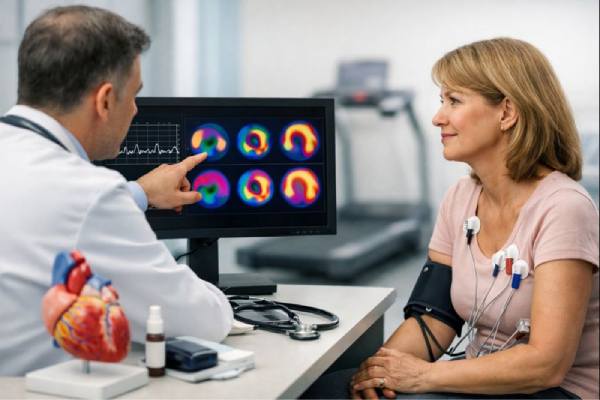
Coronary microvascular disease (sometimes called coronary microvascular dysfunction) is a problem of the heart’s smallest blood vessels—arterioles and capillaries that cannot be seen well on standard angiography. These vessels help match blood flow to the heart muscle’s needs minute by minute. When they fail to dilate appropriately, constrict too easily, or become structurally narrowed, the heart may not receive enough oxygen, especially during stress, exertion, or even at rest. Many people are told their coronary arteries are “normal,” yet they continue to have chest pain or shortness of breath. For them, microvascular disease can be the missing explanation. It is common, underdiagnosed, and treatable—especially when care focuses on symptom patterns, targeted testing, and steady risk-factor control.
Table of Contents
- What coronary microvascular disease means
- Why it happens and who is at risk
- Symptoms you might not expect
- How it is diagnosed
- Treatments that actually help
- Management, prevention, and when to seek care
What coronary microvascular disease means
Coronary microvascular disease (CMD) affects the smallest coronary vessels that regulate resistance and distribute blood within the heart muscle. Unlike large “epicardial” coronary arteries, these microvessels are too small to stent and may look normal on routine angiography. Yet they do most of the work of controlling flow. At rest, microvessels maintain tone; during exercise or emotional stress, they should widen quickly to deliver several times more blood. CMD is present when that response is impaired.
Many people encounter CMD through related labels that reflect the same core problem:
- INOCA (ischemia with no obstructive coronary artery disease): symptoms and evidence of ischemia, but no major blockages on angiography. CMD is a leading cause.
- Microvascular angina: angina-like chest pain driven by microvascular dysfunction rather than a fixed large-artery blockage.
- ANOCA (angina with no obstructive coronary artery disease): angina symptoms without obstructive plaque; may be CMD, vasospasm, or both.
CMD is not “imagined pain” and not simply anxiety. It is a biological problem with several possible mechanisms:
- Functional dysfunction: the microvessels fail to dilate (endothelial dysfunction), constrict too strongly, or show abnormal regulation by the autonomic nervous system.
- Structural remodeling: vessel walls thicken, the lumen narrows, or capillary density decreases, raising resistance even at baseline.
- Inflammatory and metabolic influences: insulin resistance, chronic inflammation, and oxidative stress can make microvessels less responsive.
A useful way to understand CMD is to think in “supply-and-demand” terms. The heart’s demand rises with activity, pain, fever, or stress hormones. If the microvessels cannot increase supply, ischemia can occur—even if large arteries are open. CMD can exist alone or alongside mild-to-moderate plaque, which may further reduce reserve.
CMD matters because it can be persistent, disruptive, and associated with higher long-term cardiovascular risk than previously assumed. The goal is not only to exclude a dangerous blockage, but to name the true cause of symptoms and treat it directly.
Why it happens and who is at risk
CMD usually develops from a combination of vessel-lining problems, smooth muscle overreactivity, and longer-term structural changes. Instead of one single trigger, most patients have a “stack” of contributors that gradually lowers coronary flow reserve—the extra flow the heart should be able to generate when needed.
Common biological drivers include:
- Endothelial dysfunction: the vessel lining releases less nitric oxide (a natural relaxant) and more constricting signals, so vessels do not widen properly.
- Microvascular spasm: small vessels can constrict abruptly, producing rest symptoms that resemble vasospastic angina but without large-vessel spasm.
- Structural narrowing: thickening of the arteriole wall, fibrosis around microvessels, or reduced capillary density increases resistance.
- Abnormal pain processing: in some patients, the heart’s ischemic signals are amplified, making symptoms more intense for the same degree of flow impairment.
Risk factors can be divided into “classic” cardiovascular risks and CMD-specific patterns.
Classic risks that strongly contribute:
- High blood pressure (especially long-standing)
- Diabetes or prediabetes
- High LDL cholesterol and metabolic syndrome
- Smoking and chronic exposure to secondhand smoke
- Obesity and physical inactivity
- Chronic kidney disease and sleep apnea
Patterns that are especially common in CMD:
- Women, particularly midlife and postmenopausal: hormonal and endothelial changes may influence microvascular tone and remodeling.
- History of pregnancy-related vascular stress: such as preeclampsia or gestational hypertension, which can signal long-term endothelial vulnerability.
- Autoimmune or inflammatory disease: systemic inflammation can impair microvascular function.
- Hypertrophic cardiomyopathy or heart failure with preserved ejection fraction: CMD can worsen exertional symptoms and exercise intolerance.
- Stress-related surges: not as a “cause,” but as a trigger that reveals reduced reserve.
CMD also overlaps with conditions like coronary artery spasm. Some patients have both epicardial spasm and microvascular dysfunction, and that mix can change which medications work best.
A practical insight: CMD is often suspected after a “normal angiogram,” but the most helpful framing is not “nothing is wrong.” It is “the large vessels are open; now we need to test how the small vessels behave.” Once the problem is described clearly, prevention becomes more focused: control blood pressure, improve insulin sensitivity, reduce inflammation, and protect endothelium—because those steps are not generic wellness advice; they directly address the biology of CMD.
Symptoms you might not expect
CMD can feel like classic angina, but many patients notice a less predictable pattern. Symptoms may be triggered by exertion, stress, cold exposure, or large meals. Episodes may also occur at rest. Because microvascular dysfunction affects flow regulation rather than a single fixed blockage, symptoms can fluctuate day to day.
Common symptoms include:
- Chest tightness, pressure, burning, or heaviness
- Shortness of breath, especially when climbing stairs or walking uphill
- Unusual fatigue during routine activity
- Discomfort in the jaw, neck, shoulder, back, or upper abdomen
- Nausea or sweating during episodes
Features that often surprise people:
- Symptoms can last longer than typical plaque angina, sometimes 10–30 minutes or more.
- Nitroglycerin may help slowly, partially, or not at all in some CMD subtypes, which can lead to confusion or dismissal.
- Symptoms may cluster with stress or poor sleep, reflecting autonomic influences.
- Breathlessness may be the dominant symptom, with little chest pain, especially in people with reduced exercise tolerance.
CMD is also associated with important complications and overlapping syndromes:
- Reduced quality of life from recurrent, unpredictable symptoms and repeat emergency visits.
- MINOCA-like presentations in some patients, where troponin rises without obstructive coronary disease; CMD can contribute alongside spasm or small thrombi.
- Heart failure with preserved ejection fraction (HFpEF) risk: chronic microvascular ischemia and inflammation may contribute to stiffness and impaired relaxation over time.
- Arrhythmia susceptibility: ischemia can trigger palpitations and, rarely, more serious rhythm problems, especially if combined with spasm.
- Anxiety and hypervigilance as consequences, not causes: repeated unexplained episodes can understandably heighten fear.
Because symptoms overlap with non-cardiac problems, clinicians usually consider “look-alikes”:
- Acid reflux or esophageal spasm
- Chest wall or spine pain
- Lung disease or anemia
- Panic episodes (which can coexist, but should not be assumed)
A practical step that improves accuracy is a short symptom log for 2–3 weeks:
- Start time and duration
- What you were doing just before it started
- Whether it improved with rest or medication
- Associated symptoms (breathlessness, sweating, palpitations)
This record often reveals patterns—like cold-air triggers or post-meal episodes—that guide testing and treatment selection.
How it is diagnosed
CMD diagnosis is most reliable when clinicians assess both anatomy (are there blockages?) and function (does blood flow increase appropriately?). Many patients have already had standard tests, so the diagnostic pathway often focuses on what those tests can miss.
Step 1: Rule out obstructive disease and other emergencies
Chest pain should be treated seriously until dangerous causes are excluded. Initial evaluation typically includes:
- ECG and cardiac troponin testing during symptoms
- Echocardiography to assess heart function and rule out structural causes
- Coronary CT angiography or invasive angiography if suspicion for obstructive disease is high
If obstructive plaque is present, CMD can still exist in the background, but management priorities may shift.
Step 2: Look for ischemia in a way that fits CMD
Standard treadmill testing may be normal even when CMD is present. Tests that estimate blood flow or perfusion are often more informative, such as:
- Stress cardiac MRI perfusion
- PET myocardial perfusion with flow quantification
- Stress echocardiography (sometimes supportive, though less specific for CMD)
- CT perfusion in select settings
The advantage of flow-based imaging is that it can detect impaired perfusion reserve even without a focal blockage.
Step 3: Coronary function testing to define the endotype
In specialized centers, invasive coronary function testing during angiography can identify CMD and separate it from (or combine it with) spasm. This may include:
- Coronary flow reserve (CFR): how much flow increases with vasodilation.
- Index of microcirculatory resistance (IMR) or similar measures: resistance within the microcirculation.
- Acetylcholine or similar provocation testing: assesses endothelial function and can provoke spasm, helping distinguish epicardial spasm from microvascular spasm.
Why the “endotype” matters: different patterns respond to different medications. For example, someone with microvascular spasm may benefit more from calcium channel blockers, while someone with impaired vasodilatory reserve may benefit more from therapies that improve endothelial function and reduce demand.
Questions that make results clearer
If you are undergoing evaluation, it helps to ask:
- Did my testing assess microvascular function, or only large-artery blockages?
- Do findings suggest impaired flow reserve, elevated microvascular resistance, spasm, or a mix?
- Is my symptom pattern consistent with microvascular angina, vasospasm, or both?
- What objective markers will we track to judge improvement?
A good diagnosis of CMD feels specific. It names the mechanism, explains why prior tests were “normal,” and gives a targeted treatment plan rather than a generic reassurance.
Treatments that actually help
CMD treatment usually combines symptom control with therapies that improve vessel function over time. Because CMD has subtypes, the best treatment is personalized, but several principles hold across most patients: reduce oxygen demand, improve endothelial health, and prevent triggers that provoke microvascular constriction.
Medications for symptom control
Common approaches include:
- Beta-blockers: often helpful when symptoms are exertional and the goal is to reduce heart rate and oxygen demand. They may be less helpful if spasm is prominent.
- Calcium channel blockers: especially useful when there is microvascular spasm or coexisting vasospastic tendencies.
- Long-acting nitrates: can help some patients, but benefit is variable; tolerance can develop, so dosing schedules are individualized.
- Ranolazine: may reduce angina frequency in some CMD patients, particularly when symptoms persist despite first-line therapy.
- Short-acting nitroglycerin: often prescribed as rescue therapy, though response may be inconsistent in CMD compared with plaque angina.
Medication selection is guided by blood pressure, heart rate, migraine history, spasm features, and side effects such as swelling, dizziness, constipation, or fatigue.
Therapies that target the vessel lining and risk biology
Even when cholesterol is not high, endothelial-protective therapy can matter:
- Statins may be used to stabilize vascular function and reduce inflammation.
- ACE inhibitors or ARBs can improve endothelial signaling and support blood pressure control.
- Diabetes medications that improve insulin sensitivity can indirectly improve microvascular health when diabetes or prediabetes is present.
Structured exercise and rehabilitation
Cardiac rehabilitation or supervised exercise programs can be particularly effective in CMD because they:
- Improve endothelial function and microvascular responsiveness
- Increase fitness so the same activity requires less cardiac demand
- Reduce symptom fear and improve pacing strategies
A practical goal for many patients is building toward about 150 minutes per week of moderate aerobic activity, using gradual progression and longer warm-ups. The key is consistency, not intensity spikes.
When symptoms persist
If symptoms remain frequent after a thoughtful regimen, clinicians often reassess:
- Whether spasm is present and undertreated
- Whether anemia, thyroid disease, sleep apnea, or lung disease is worsening demand
- Whether medication timing aligns with symptom clustering (for example, early-morning episodes)
- Whether invasive coronary function testing would refine the endotype and guide next steps
CMD often improves with a “layered” plan rather than a single medication. The aim is fewer episodes, better exercise tolerance, and clear guidance for what to do when symptoms occur.
Management, prevention, and when to seek care
Living well with CMD usually depends on predictable routines and trigger awareness. Many patients do best when they treat CMD as a long-term vascular condition—similar in seriousness to traditional coronary disease—while also recognizing that the day-to-day plan often looks different.
Daily management priorities
High-impact habits include:
- Blood pressure control with home monitoring if recommended
- Steady sleep and evaluation for sleep apnea when symptoms or snoring suggest it
- Regular meals and hydration, especially if large meals trigger symptoms
- Avoiding nicotine in all forms; nicotine can worsen vessel constriction
- Reviewing medications and stimulants: decongestants, high-caffeine energy drinks, and certain migraine drugs may aggravate symptoms in susceptible people
Stress management is not about blaming symptoms on stress. It is about reducing autonomic swings that can lower microvascular reserve. Practical options include paced breathing, structured therapy, and consistent physical activity.
How to use an “episode plan”
Many patients find it reassuring to have a simple written plan such as:
- Stop activity, sit upright, and note the time symptoms began.
- Use prescribed rescue medication if advised by your clinician.
- If symptoms do not improve promptly, feel different than usual, or are severe, seek urgent evaluation.
Because CMD symptoms can mimic a heart attack, your threshold for urgent care should be based on safety, not stoicism.
Prevention that matches CMD biology
Prevention often focuses on improving microvascular function over months:
- Aim for gradual weight loss if needed, prioritizing waist reduction and improved insulin sensitivity.
- Build aerobic capacity with frequent moderate sessions rather than rare intense workouts.
- Emphasize dietary patterns that reduce inflammation and support endothelial health (high fiber, unsalted nuts, legumes, vegetables; limited ultra-processed foods).
- Treat comorbid conditions that raise demand: anemia, thyroid imbalance, uncontrolled asthma, and chronic pain.
When to seek urgent or emergency care
Seek emergency care immediately for:
- Chest pain or pressure that is severe, new, or lasts more than a few minutes
- Symptoms with sweating, nausea, fainting, or severe shortness of breath
- New neurologic symptoms such as facial droop, weakness, or trouble speaking
- Sustained palpitations with dizziness or collapse
Seek same-day medical advice for:
- A clear increase in episode frequency or severity
- New nighttime symptoms after a stable period
- Medication side effects that lead you to skip doses
- Increasing breathlessness with routine activity
CMD is real, common, and manageable. The strongest outcomes come from a plan that combines accurate diagnosis, symptom-targeted therapy, and long-term vascular protection—so that “normal arteries” no longer means “no explanation.”
References
- 2024 ESC Guidelines for the management of chronic coronary syndromes – PubMed 2024 (Guideline)
- Coronary Microvascular Dysfunction: A Guide for Clinicians – PubMed 2024 (Review)
- Coronary Microvascular Disease in Contemporary Clinical Practice – PMC 2023 (Review)
- Coronary Microvascular Dysfunction: What Clinicians and Investigators Should Know – PMC 2023 (Review)
Disclaimer
This article is for educational purposes only and does not provide medical advice, diagnosis, or treatment. Coronary microvascular disease can cause symptoms that resemble a heart attack and may be associated with serious complications in some people. If you develop severe, new, or persistent chest pain; shortness of breath; fainting; or symptoms of stroke, seek emergency care immediately. Always discuss your symptoms, test results, and medications with a qualified clinician who can tailor evaluation and treatment to your individual risk profile.
If you found this article helpful, please share it on Facebook, X (formerly Twitter), or any platform you prefer, and follow us on social media. Your support through sharing helps our team continue producing accurate, practical health content.