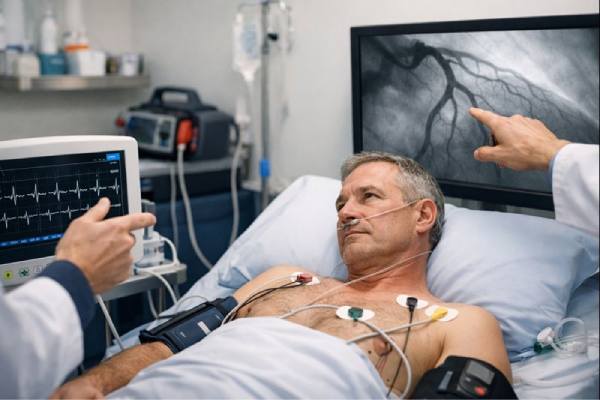
A coronary occlusion means a coronary artery has become blocked enough to stop—or nearly stop—blood flow to part of the heart muscle. When the blockage happens suddenly, it can cause a heart attack within minutes because heart tissue is extremely sensitive to oxygen loss. When the blockage develops slowly and becomes complete over months, the heart may build “detours” called collateral vessels, and symptoms can be quieter but still limiting. The same term, coronary occlusion, can therefore describe two very different realities: an emergency that demands immediate reperfusion, or a chronic condition that requires careful testing and a tailored plan for symptoms and long-term risk. This article explains what coronary occlusion is, why it happens, how it feels, how doctors confirm it, and what treatment and day-to-day management look like.
Table of Contents
- What is coronary occlusion?
- Why do coronary arteries become blocked?
- Symptoms and warning signs
- How coronary occlusion is diagnosed
- Emergency treatment for acute occlusion
- Long-term management and preventing recurrence
What is coronary occlusion?
Coronary occlusion is a blockage in one of the arteries that supply oxygen-rich blood to the heart muscle. The severity is defined by how much blood flow is reduced and how quickly the blockage formed.
Two clinical patterns matter most:
Acute coronary occlusion
This is a sudden blockage, usually from a blood clot that forms on top of a disrupted cholesterol plaque. If a large artery closes abruptly and collateral flow is not enough, the downstream heart muscle begins to suffer ischemia (oxygen deprivation) right away. Without rapid treatment, ischemia can progress to irreversible injury—a myocardial infarction (heart attack). Acute occlusion is often the mechanism behind many ST-elevation heart attacks, but it can also appear with more subtle ECG patterns.
Chronic total occlusion
A chronic total occlusion (CTO) is a complete blockage that has typically been present for at least three months. The blockage is often made of dense plaque, fibrous tissue, and older clot material. Because it develops over time, the body may create collateral vessels that partially supply the threatened territory. That can reduce the chance of a dramatic collapse, but it does not necessarily prevent symptoms or long-term strain on the heart.
A useful way to think about coronary occlusion is “flow plus time”:
- Flow: Is blood getting through at all? Some “near-occlusions” still allow trickle flow, while a true total occlusion does not.
- Time: Did this happen over minutes (acute) or months (chronic)? The heart’s ability to adapt depends heavily on this timeline.
Coronary occlusion can affect any major coronary artery, but symptoms and risk depend on the location, the size of the area at risk, existing heart function, and whether collaterals are present. A smaller branch occlusion may cause a limited infarct; an occlusion in a proximal large artery can be catastrophic.
The big takeaway is that “occlusion” is not one single diagnosis—it is an event or state that demands the next question: acute or chronic, and what is the best path to restore and protect blood flow?
Why do coronary arteries become blocked?
Most coronary occlusions develop from atherosclerosis—cholesterol-rich plaque building inside the artery wall—combined with clot formation. But the immediate cause differs between acute and chronic occlusion, and that difference shapes treatment.
The most common pathway: plaque disruption and clot
In many acute events, a plaque’s surface tears (rupture) or loses its protective lining (erosion). The blood sees this as an injury and forms a clot. If the clot becomes large enough, it can suddenly plug the artery.
Factors that make plaques more likely to disrupt include:
- Long-standing high LDL cholesterol
- Smoking and nicotine exposure
- Poorly controlled blood pressure
- Diabetes and insulin resistance
- Chronic inflammation and kidney disease
- Family history of premature coronary disease
Slow progression to complete blockage
Chronic total occlusions usually reflect gradual plaque growth plus repeated small clotting events that heal and harden over time. The vessel narrows, remodels, and may eventually seal completely. People can adapt with collaterals, which is why CTOs may be discovered incidentally during angiography for other reasons.
Less common causes you should still know
Not every occlusion is classic plaque disease. Other mechanisms can mimic or cause occlusion, especially in younger patients or those with atypical histories:
- Coronary embolism: a clot from elsewhere (often atrial fibrillation or a heart valve) lodges in a coronary artery.
- Coronary spasm with thrombosis: intense narrowing can reduce flow enough to promote clot formation in susceptible segments.
- Spontaneous coronary artery dissection (SCAD): a tear within the artery wall creates a “false channel” that compresses true flow.
- Procedure-related thrombosis: clots can form around catheters or stents, especially if antiplatelet therapy is interrupted.
Risk is not only about cholesterol
Classic risk factors are important, but “occlusion risk” also includes triggers that increase clotting or stress the vessel lining:
- Acute infection, major surgery, or severe dehydration
- Uncontrolled sleep apnea and sympathetic surges
- Cocaine or amphetamine use
- Stopping antiplatelet or anticoagulant medications without guidance
A practical insight: a coronary occlusion often reflects both vessel vulnerability (plaque and endothelial dysfunction) and blood vulnerability (a tendency to clot). Strong prevention addresses both sides—stabilizing plaque and reducing thrombosis risk.
Symptoms and warning signs
Symptoms depend on how fast the artery closes, how much heart muscle is threatened, and how much collateral flow exists. Many people expect “movie heart attack” pain, but coronary occlusion can be more variable.
Typical symptoms of acute occlusion
Common features include:
- Chest pressure, squeezing, heaviness, or burning
- Pain radiating to the left arm, both arms, jaw, neck, back, or upper abdomen
- Shortness of breath
- Sweating, nausea, or vomiting
- Sudden profound fatigue or weakness
Some people—especially older adults and those with diabetes—may have less chest pain and more breathlessness, nausea, or unexplained exhaustion. Symptoms can start at rest or with exertion.
Symptoms that suggest chronic total occlusion
Because CTOs develop gradually, symptoms often look like stable ischemia rather than a sudden crisis:
- Predictable chest discomfort with exertion, emotional stress, or cold exposure
- Shortness of breath with stairs or hills
- Reduced exercise tolerance that slowly worsens
- Symptoms that improve with rest and recur with similar effort
A key clue is “effort threshold”: you notice you can do less than you used to before symptoms start.
Complications to take seriously
Coronary occlusion can trigger complications in minutes or over months:
- Life-threatening arrhythmias during acute ischemia, including ventricular fibrillation
- Heart failure if a large area is injured or if repeated ischemia weakens the heart
- Mechanical complications after a major infarct (uncommon but severe)
- Recurrent ischemia and rehospitalization if the root cause is not treated (for example, ongoing plaque instability or uncontrolled risk factors)
When symptoms are an emergency
Treat these as urgent because they can signal ongoing occlusion or dangerous instability:
- Chest discomfort lasting more than a few minutes, especially if it is new or escalating
- Chest symptoms plus fainting, severe shortness of breath, or heavy sweating
- Sudden collapse, or palpitations with dizziness
- New neurologic symptoms such as facial droop, weakness, or trouble speaking
One practical rule: if symptoms feel different from your usual pattern—stronger, longer, more frequent, or occurring at rest—assume it could be an acute event until proven otherwise.
How coronary occlusion is diagnosed
Diagnosis aims to answer three questions quickly: Is the heart muscle being injured? Is there an artery that is blocked right now? And if the blockage is chronic, is it responsible for the patient’s symptoms?
Immediate assessment in suspected acute occlusion
In emergency settings, clinicians move fast because time affects salvageable heart muscle:
- ECG looks for patterns consistent with acute ischemia. Classic ST elevation is important, but clinicians also watch for “STEMI equivalents” and dynamic changes.
- Cardiac troponin detects myocardial injury. Early troponin can be normal in very early occlusion, so repeat testing is common.
- Bedside echocardiography can show new regional wall motion abnormalities that support acute ischemia and can identify complications.
Coronary imaging to identify the blockage
- Invasive coronary angiography is the gold standard when acute coronary syndrome is suspected and risk is high. It shows where flow stops and guides immediate treatment.
- Coronary CT angiography can be used in selected stable patients to evaluate anatomy, particularly when the diagnosis is uncertain, but it is not a substitute for urgent angiography in high-risk presentations.
How doctors recognize a chronic total occlusion
A CTO is typically identified during angiography when the artery shows complete blockage with no forward flow through the segment. Because CTOs can coexist with other lesions, the next step is determining whether the CTO is causing ischemia that explains symptoms.
Testing that helps decide clinical importance may include:
- Stress imaging (such as stress echo, nuclear perfusion, or stress MRI) to determine ischemia burden
- Viability assessment to estimate whether the downstream muscle is alive enough to benefit from revascularization
- Functional evaluation of symptoms, including the pattern of exertional limitation and response to anti-anginal therapy
Why “normal tests” can be misleading
Some patients have strong symptoms with mixed mechanisms:
- A CTO with good collaterals may produce subtle stress-test findings, yet still limit exercise capacity.
- Another lesion may be the main driver of symptoms while a CTO is an incidental finding.
- Microvascular disease or spasm can coexist and change symptom response to nitrates or beta-blockers.
A high-quality diagnosis ends with a clear statement, not just a picture:
- Is there an acute occlusion requiring immediate reperfusion?
- If chronic, does the occlusion explain symptoms and ischemia?
- What is the best strategy—medical therapy, PCI, surgery, or observation—and why?
Emergency treatment for acute occlusion
Acute coronary occlusion is a medical emergency. Treatment priorities are restoring blood flow, preventing clot extension, stabilizing heart rhythm, and protecting the heart muscle from further injury.
Reperfusion: reopening the artery
The most effective approach in many settings is primary percutaneous coronary intervention (PCI)—urgent catheter-based treatment to restore flow. PCI may include balloon angioplasty and usually stent placement when a plaque-related lesion is present.
When timely PCI is not available, fibrinolytic therapy may be considered in appropriate patients with suspected occlusive infarction, followed by transfer for further care. Clinicians weigh bleeding risks carefully and individualize decisions.
Antithrombotic therapy: limiting the clot
Because acute occlusion is typically thrombotic, medications are used early to reduce ongoing clot formation:
- Antiplatelet therapy to reduce platelet aggregation
- Anticoagulation during and after intervention based on the clinical scenario and strategy
The exact combination and duration depend on whether a stent is placed, bleeding risk, and comorbid needs (such as atrial fibrillation requiring anticoagulation).
Symptom and complication management
Acute care often includes:
- Oxygen only when needed for low oxygen saturation, not automatically
- Pain control and anti-ischemic therapy as clinically indicated
- Treatment of dangerous arrhythmias and close monitoring in a cardiac unit
- Management of heart failure signs if congestion or shock develops
What determines outcome
Several factors shape recovery:
- Time to reperfusion: earlier opening generally means less muscle loss
- Artery location: proximal large-artery occlusions threaten more myocardium
- Collateral circulation: can reduce infarct size in some patients
- Baseline heart function and comorbidities: influence resilience and complication risk
Before discharge, patients should leave with a simple, specific plan:
- Which medications are essential and why
- What symptoms should trigger emergency evaluation
- When follow-up occurs and what will be rechecked (lipids, blood pressure, rehab enrollment, and medication tolerance)
In acute occlusion care, clarity saves lives: patients do best when they understand that the emergency has passed, but the prevention phase is just beginning.
Long-term management and preventing recurrence
After a coronary occlusion—acute or chronic—long-term management aims to prevent another event, reduce symptoms, and protect heart function. The plan is usually layered: medication, lifestyle, structured follow-up, and sometimes elective revascularization.
Core prevention targets
For plaque-related disease, the most effective prevention aligns with a few measurable goals:
- Lower LDL cholesterol aggressively when recommended, often with high-intensity statin therapy and add-on agents in selected patients
- Control blood pressure consistently (home monitoring can help)
- Improve glucose control in diabetes and address insulin resistance
- Stop smoking completely; nicotine replacement strategies may be safer than continued smoking
- Build and maintain aerobic capacity with a gradual plan
Cardiac rehabilitation is often one of the highest-value interventions because it combines supervised exercise, education, and risk-factor coaching in a structured setting.
Medication adherence and safety
Long-term therapy commonly includes:
- Antiplatelet therapy after MI or stenting, for a duration matched to stent type and bleeding risk
- Cholesterol-lowering therapy and, when indicated, additional lipid agents
- Beta-blockers, ACE inhibitors/ARBs, and other agents depending on heart function, blood pressure, and symptoms
- Anti-anginal medications when chronic ischemia persists
Medication routines matter because “near misses” often occur when protective therapy is interrupted. Patients should have a plan for what to do if a dose is missed and should avoid stopping antiplatelets or anticoagulants without clinician guidance.
Chronic total occlusion decisions
CTO treatment is individualized. Not every CTO should be opened. PCI for CTO can improve symptoms and quality of life in selected patients, but it is technically complex and best considered when:
- Symptoms persist despite optimized medical therapy
- Stress imaging suggests a meaningful ischemia burden in that territory
- The downstream myocardium is viable
- Anatomy is suitable and the procedure is performed in experienced centers
Some patients are better served by continued medical therapy, while others benefit from revascularization as part of a broader strategy.
When to seek urgent care after an occlusion
Seek emergency evaluation for:
- New or worsening chest discomfort, especially at rest
- Shortness of breath that is sudden, severe, or progressively worsening
- Fainting, collapse, or sustained palpitations with dizziness
- Signs of stroke
The long-term goal is not just survival—it is predictable function: fewer symptoms, safer exertion, and confidence in a plan that reduces recurrence risk over years, not weeks.
References
- 2023 ESC Guidelines for the management of acute coronary syndromes – PubMed 2023 (Guideline)
- 2024 ESC Guidelines for the management of chronic coronary syndromes – PubMed 2024 (Guideline)
- Evaluation and management of patients with coronary chronic total occlusions considered for revascularisation. A clinical consensus statement of the European Association of Percutaneous Cardiovascular Interventions (EAPCI) of the ESC, the European Association of Cardiovascular Imaging (EACVI) of the ESC, and the ESC Working Group on Cardiovascular Surgery – PMC 2024 (Consensus Statement)
- Chronic Total Occlusions: Current Approaches, Evidence and Outcomes – PubMed 2025 (Review)
Disclaimer
This article is for educational purposes only and does not provide medical advice, diagnosis, or treatment. Coronary occlusion can cause a heart attack and may lead to life-threatening rhythm problems or heart failure. If you have severe, new, or persistent chest pain; shortness of breath; fainting; or symptoms of stroke, seek emergency care immediately. Do not start, stop, or change antiplatelet or anticoagulant medicines without guidance from a qualified clinician who understands your medical history and procedure details.
If you found this article helpful, please share it on Facebook, X (formerly Twitter), or any platform you prefer, and follow us on social media. Your support through sharing helps our team continue producing accurate, practical health content.