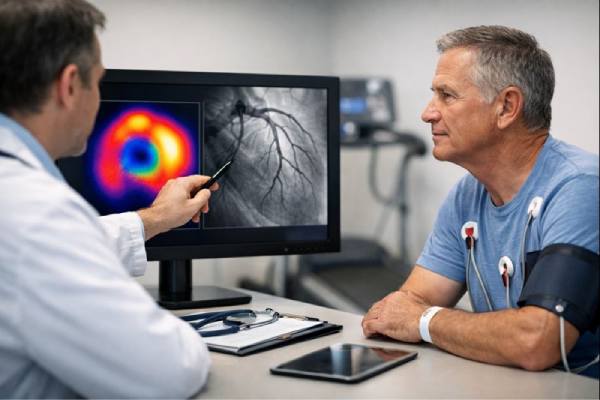
Coronary steal syndrome is a situation where part of the heart becomes under-supplied with blood because flow is “pulled” toward an easier pathway. The key word is syndrome: it implies symptoms or objective ischemia (reduced oxygen delivery), not just an interesting physiology finding. Many people first hear about steal when a stress test shows a perfusion defect, or after bypass surgery when chest pain returns despite “good-looking” grafts. Others encounter it through an abnormal connection, such as a coronary artery fistula, where blood escapes into a low-resistance circuit instead of nourishing heart muscle. The reassuring news is that coronary steal often has a fixable driver—an upstream narrowing, a shunt, or a pressure problem—and once that driver is addressed, symptoms can improve dramatically. The challenge is identifying which “steal pattern” you have, because treatment depends on the mechanism.
Table of Contents
- What coronary steal syndrome really means
- Causes and risk factors: six common steal scenarios
- Symptoms and complications: what people notice
- How coronary steal syndrome is diagnosed
- Treatment: what stops the steal
- Management, prevention, and when to seek care
What coronary steal syndrome really means
Coronary steal syndrome happens when the heart’s blood flow is redistributed in a way that harms the most vulnerable region. Under normal conditions, coronary blood flow is tightly regulated by tiny resistance vessels (arterioles). When demand rises—exercise, stress, fever—these arterioles widen so flow can increase several-fold. Problems begin when one region is already living on “maximum dilation” at baseline because its upstream supply is limited. That region has little or no flow reserve left. If another pathway suddenly becomes much easier (lower resistance), blood preferentially travels down the easier route. The vulnerable region can then receive less perfusion pressure and less flow precisely when it needs more.
It helps to distinguish two terms:
Coronary steal phenomenon vs coronary steal syndrome
- Phenomenon describes the physiology: measured redistribution, often during vasodilator stress testing or specialized flow studies.
- Syndrome describes the clinical impact: angina, shortness of breath from ischemia, ECG changes, imaging evidence of ischemia, or heart muscle dysfunction linked to the redistribution.
This distinction matters because not every perfusion “defect” means a dangerous syndrome. Some defects are relative (one region increases less than another), while true steal in a strict sense can involve an absolute drop in stress flow to an affected territory.
Why steal can feel surprising
Many people assume ischemia always comes from a fixed blockage that simply “gets tighter.” Steal is different: symptoms can appear because other vessels open wider, a shunt draws blood away, or a pressure gradient reverses flow through a bypass graft. In other words, the problem is not only the narrow segment—it is the network.
Why mechanism-first thinking helps
Coronary steal syndrome is best approached as a set of recognizable patterns:
- A donor artery feeding collaterals to an occluded territory
- A low-resistance “runoff” through a fistula
- A bypass graft whose inflow is compromised (classic coronary-subclavian steal)
- A stress-induced redistribution in advanced coronary disease
Once you identify the pattern, treatment becomes more logical: restore inflow, close the runoff, revascularize the threatened territory, or adjust triggers and medications that amplify mismatch.
Causes and risk factors: six common steal scenarios
Coronary steal syndrome requires an imbalance: one pathway can dramatically lower its resistance or create a “shortcut” that diverts flow. Below are six common, clinically useful scenarios. Many patients fit more than one.
1) Vasodilator stress–related steal in severe coronary disease
During pharmacologic stress testing, potent vasodilators open resistance vessels in healthier regions. A region supplied by a severely narrowed artery may already be maximally dilated at rest and cannot augment flow. The result is a marked stress perfusion mismatch, and in some cases an absolute drop in perfusion to the affected region. Risk rises with:
- Severe multivessel coronary disease
- Prior heart attack with impaired microvascular reserve
- Diffuse atherosclerosis that limits pressure transmission
2) Collateral-dependent myocardium beyond a chronic total occlusion
When a coronary artery is fully blocked for months, collateral vessels may supply the downstream myocardium. That collateral supply depends on a pressure gradient from a “donor” artery. Under stress, the donor territory dilates, donor pressure may fall, and collateral delivery can drop—creating ischemia in the collateral-fed region. Risk increases with:
- A large territory supplied by collaterals
- High-grade disease in the donor artery
- Limited collateral channels or long collateral routes
3) Coronary-subclavian steal after bypass surgery
This is the classic “steal syndrome” many clinicians mean: a significant narrowing in the proximal subclavian artery (before the internal mammary artery branch) lowers pressure so blood can be pulled away from the coronary circulation. People at higher risk include:
- Patients with a left internal mammary artery (LIMA) graft to the LAD
- Those with known peripheral artery disease or carotid disease
- People with a notable blood pressure difference between arms (often >10–15 mmHg)
4) Coronary artery fistula or other coronary shunt runoff
A fistula is an abnormal connection between a coronary artery and a heart chamber or great vessel. Because the receiving site is often low resistance, blood can preferentially run through the fistula—especially during exertion—reducing myocardial perfusion distal to the fistula’s origin.
5) Hemodialysis arteriovenous access competing with graft inflow
In some patients with a LIMA graft and an ipsilateral upper-extremity arteriovenous fistula, high access flow can contribute to pressure and flow competition. Not every patient experiences ischemia, but risk rises when access flow is very high, subclavian disease is present, or symptoms are reproducibly tied to arm exertion.
6) Less common “steal-like” states
Large cardiac tumors with high vascular demand, rare congenital coronary anomalies, or complex postsurgical anatomy can create localized runoff or pressure changes that mimic steal physiology.
A practical risk-factor summary: steal syndrome is most likely when you have (1) an anatomic bottleneck or an abnormal runoff pathway and (2) a trigger that amplifies flow differences—exercise, vasodilators, fever, anemia, dehydration, or stimulants.
Symptoms and complications: what people notice
Symptoms of coronary steal syndrome are symptoms of ischemia: the heart is not getting enough oxygenated blood for its workload. What makes steal distinctive is the pattern—symptoms may appear in situations that don’t fit a simple “one blockage, one threshold” story.
Common symptoms
- Chest pressure, tightness, heaviness, or burning (often exertional)
- Shortness of breath during activity or emotional stress
- Unusual fatigue, reduced stamina, or needing longer recovery after exertion
- Discomfort radiating to jaw, neck, shoulder, back, or upper abdomen
- Palpitations or a sense of an irregular heartbeat during episodes
Some people—especially older adults and those with diabetes—may feel little chest pain and more breathlessness, nausea, or profound fatigue.
Clues that point toward a specific steal mechanism
- Symptoms during vasodilator stress testing: chest discomfort, breathlessness, or ischemic ECG changes occurring during pharmacologic stress can reflect a severe perfusion mismatch.
- Angina linked to arm exertion after bypass surgery: chest symptoms that appear when using one arm (carrying bags, shoveling, repetitive overhead work) raise suspicion for coronary-subclavian steal, especially if arm fatigue or coolness accompanies it.
- Angina with otherwise “mild plaque” findings: if coronary arteries do not show severe obstructive lesions but ischemia is present, a coronary fistula or shunt runoff becomes more relevant.
- Symptoms that worsen abruptly without a new blockage: collateral-dependent territories can be sensitive to physiologic stressors like anemia, dehydration, infection, or uncontrolled thyroid disease.
Complications
Complications depend on the underlying driver and ischemia burden:
- Acute coronary syndromes can occur if severe atherosclerosis is present, even if steal physiology is part of the story.
- Arrhythmias may be triggered by ischemia, especially in people with prior infarction or scar.
- Heart failure symptoms can develop if ischemia is frequent or if a large territory remains under-perfused.
- Progressive limitation in daily life is common when exertional thresholds decline, leading to deconditioning and a worsening symptom cycle.
Red flags that warrant urgent evaluation
Seek emergency care immediately for:
- New, severe, or persistent chest pressure lasting more than a few minutes
- Chest symptoms with fainting, severe shortness of breath, heavy sweating, or confusion
- Sustained palpitations with dizziness or collapse
- New neurologic symptoms such as facial droop, weakness, or trouble speaking
Steal syndrome can be stable, but it can also signal that coronary reserve is exhausted. If symptoms are changing in intensity, duration, or frequency—especially at rest—assume an emergency until proven otherwise.
How coronary steal syndrome is diagnosed
Diagnosis has two goals: confirm ischemia and identify the pathway causing harmful redistribution. Clinicians often proceed in layers, moving from urgent rule-outs to mechanism-specific testing.
Step 1: Rule out acute injury when symptoms are concerning
If symptoms suggest an acute coronary syndrome, evaluation typically includes:
- ECG to look for active ischemia patterns
- Cardiac troponin testing to detect myocardial injury (often repeated if early results are normal)
- Echocardiography to assess heart function and regional wall motion changes
These tests do not prove steal, but they determine whether emergency treatment is needed.
Step 2: Map coronary and vascular anatomy
Anatomic definition is essential because steal is architecture-dependent:
- Coronary CT angiography can help in stable patients to identify plaque burden, some anomalies, and potential fistulas.
- Invasive coronary angiography is used when symptoms are significant, when high-risk anatomy is suspected, or when revascularization is being considered.
- If coronary-subclavian steal is suspected, clinicians evaluate subclavian patency and compare arm pressures. A meaningful systolic blood pressure difference between arms is a clue, but imaging is usually needed to confirm severity and plan treatment.
Step 3: Demonstrate stress-related perfusion mismatch or low flow reserve
Stress imaging is commonly how steal becomes visible:
- Perfusion imaging can show that one territory under-perfuses during stress compared with others.
- More advanced approaches quantify absolute myocardial blood flow and coronary flow reserve, which can help distinguish “relative defect” from a more severe physiologic drop in stress perfusion.
A practical interpretation point: a stress perfusion defect can come from (1) fixed severe stenosis, (2) microvascular dysfunction, (3) collateral dependence, (4) shunt runoff, or (5) a combination. The diagnosis is strongest when imaging results match anatomy and symptom patterns.
Step 4: Pin down the “steal pattern” with targeted clues
- For coronary-subclavian steal: symptoms tied to arm exertion, arm blood pressure asymmetry, and imaging showing significant proximal subclavian stenosis support the diagnosis.
- For fistula-related steal: identifying the fistula’s origin and drainage site matters, along with evidence of ischemia in the downstream territory.
- For collateral steal: a chronic total occlusion with robust collaterals plus ischemia in the collateral-fed region supports the mechanism; donor-vessel disease raises the likelihood that the collateral gradient collapses under stress.
The best diagnostic endpoint is a clear statement: where the vulnerable myocardium is, what diverts flow away, which triggers provoke it, and which fix is most likely to improve symptoms and reduce risk.
Treatment: what stops the steal
Because coronary steal syndrome is mechanism-driven, treatment works best when it targets the specific diversion pathway—while also stabilizing coronary disease and reducing myocardial oxygen demand. Many people benefit from a two-track plan: immediate symptom control plus definitive correction when appropriate.
1) Treat the underlying coronary artery disease foundation
When atherosclerosis is part of the picture, core therapy aims to stabilize plaque and improve vascular function:
- Intensive LDL cholesterol lowering when indicated
- Blood pressure control with consistent home monitoring
- Diabetes management and insulin resistance reduction
- Smoking cessation (including eliminating nicotine exposure)
- Structured exercise and cardiac rehabilitation when safe
This “foundation” matters even if the main steal driver is subclavian stenosis or a fistula, because vascular health influences coronary reserve and outcomes.
2) Reduce oxygen demand and improve symptom control
Anti-anginal therapy is individualized based on heart rate, blood pressure, and the suspected mechanism:
- Beta-blockers can reduce heart rate and demand in many ischemia patterns.
- Calcium channel blockers may be favored when vasospasm overlaps or when beta-blockers are not tolerated.
- Nitrates can relieve angina, but their role depends on blood pressure and the broader physiology.
- Additional anti-anginal options may be used when symptoms persist despite first-line therapy.
The goal is not to “mask pain,” but to reduce ischemic episodes while the definitive mechanism is addressed.
3) Fix the steal pathway when there is a correctable lesion
- Coronary-subclavian steal: restoring subclavian inflow is often decisive. Endovascular stenting is commonly used, with surgical bypass reserved for selected anatomy or failed endovascular approaches. When the inflow is corrected, LIMA graft perfusion typically improves and arm-exertion angina may resolve.
- Fistula-related steal: closure (catheter-based or surgical) may be recommended when the fistula is large, symptomatic, associated with ischemia, causing chamber enlargement, or creating other complications. Small, asymptomatic fistulas may be monitored.
- Collateral-dependent ischemia beyond a chronic total occlusion: optimized medical therapy is first-line for many. In selected patients with persistent symptoms, viable myocardium, and significant ischemia, CTO PCI performed in experienced centers can improve quality of life and exercise capacity.
- Dialysis access–related competition: the strategy depends on access flow, graft configuration, and concomitant subclavian disease. Options may include addressing subclavian stenosis, modifying access flow, or choosing alternative access strategies in complex cases.
4) Avoid common pitfalls
- Treating recurrent angina after bypass as “just progression” without checking arm pressures and subclavian patency can miss a highly treatable cause.
- Dismissing ischemic symptoms after “non-obstructive coronaries” without evaluating for fistula runoff or microvascular contributors can prolong suffering.
- Escalating vasodilators without recognizing a severe supply limitation can worsen mismatch in certain physiologies.
In short, effective treatment stops the steal by restoring inflow, eliminating runoff, or rebalancing supply and demand—then protects the heart long term through prevention.
Management, prevention, and when to seek care
Living well with coronary steal syndrome means reducing the triggers that provoke redistribution, building safer exercise capacity, and staying consistent with preventive therapy. A good plan also includes a clear “what to do when symptoms happen” script.
Daily management that reduces episodes
- Use a longer warm-up before exertion (often 5–10 minutes of easy movement) and increase intensity gradually.
- Avoid sudden heavy bursts, especially in cold weather or right after large meals.
- Maintain hydration during illness and seek medical advice if you cannot keep fluids down, since dehydration can worsen ischemia thresholds.
- Address reversible demand amplifiers such as anemia, uncontrolled thyroid disease, untreated sleep apnea, or persistent fever.
- Be cautious with stimulants and some over-the-counter decongestants that can raise heart rate and blood pressure.
Medication habits that protect you
- Take preventive and anti-anginal medications reliably; many work best when steady blood levels are maintained.
- Do not stop antiplatelet or anticoagulant therapy without clinician guidance, especially after stenting or if you have atrial fibrillation.
- Keep an updated medication list and a plan for what to do if a dose is missed.
Prevention that targets the long game
Even when a steal driver is corrected (such as subclavian stenting or fistula closure), prevention remains essential:
- Lipid control, blood pressure control, and glucose optimization reduce future plaque events and improve endothelial function.
- Cardiac rehabilitation can improve exercise tolerance, reduce symptom fear, and provide structured monitoring as you rebuild confidence.
- Periodic reassessment matters when anatomy can evolve—subclavian disease can progress, fistulas can enlarge, and coronary disease can change over time.
When to seek urgent care
Seek emergency care immediately for:
- New, severe, or persistent chest pressure or pain
- Chest symptoms with fainting, severe shortness of breath, heavy sweating, or confusion
- Sustained palpitations with dizziness or collapse
- Any stroke-like symptoms
Seek prompt medical evaluation (same day or urgent clinic) for:
- Angina that occurs at lower levels of activity than before
- New or worsening symptoms linked to arm exertion after bypass surgery
- A new, notable blood pressure difference between arms along with chest symptoms
- Declining exercise tolerance over weeks to months
Coronary steal syndrome can be unsettling because it feels counterintuitive—blood flow increases, yet the heart suffers. With a mechanism-based diagnosis and a targeted plan, many patients regain stability, reduce symptoms, and return to a more predictable life.
References
- Coronary Steal: Mechanisms of a Misnomer – PMC 2021 (Review)
- Coronary steal: how many thieves are out there? – PubMed 2023 (Review)
- Coronary Artery Fistulas: Algorithmic Approach to Diagnosis and Management – PubMed 2025 (Review)
- Endovascular Treatment for Subclavian Artery Stenosis and Occlusion: A Single-Center Retrospective Study – PMC 2023 (Clinical Study)
Disclaimer
This article is for educational purposes only and does not provide medical advice, diagnosis, or treatment. Coronary steal syndrome involves reduced blood flow to part of the heart and can mimic or accompany a heart attack. If you have severe, new, or persistent chest discomfort; shortness of breath; fainting; or symptoms of stroke, seek emergency care immediately. Do not start, stop, or change blood-thinning, heart, or blood pressure medications without guidance from a qualified clinician who can assess your personal risks, test results, and procedure history.
If you found this article helpful, please share it on Facebook, X (formerly Twitter), or any platform you prefer, and follow us on social media. Your support through sharing helps our team continue producing high-quality health content.