Coronary vasospasm is a sudden, temporary tightening of a heart artery. When that artery narrows, the heart muscle may not get enough oxygen-rich blood, and you can feel chest pain, shortness of breath, or a frightening “something is wrong” sensation—often at rest and sometimes in the middle of the night. Episodes may last minutes, come in clusters, and then disappear, which can make them easy to dismiss. But they deserve attention because the same spasm that causes pain can also trigger dangerous rhythm problems or, more rarely, a heart attack. The good news is that coronary vasospasm is often treatable, and many people do very well once it is recognized and the right plan is in place.
Table of Contents
- What coronary vasospasm is
- Why spasm happens and common triggers
- Risk factors and who should be alert
- Symptoms, complications, and red flags
- How coronary vasospasm is diagnosed
- Treatment, management, and prevention
What coronary vasospasm is
Coronary vasospasm means a coronary artery (a vessel that feeds the heart muscle) suddenly narrows because the muscular wall of the artery tightens. Unlike a blockage from cholesterol plaque that stays in place, a spasm is dynamic: it can be severe for a short time, then relax and look normal again.
You’ll also hear related terms:
- Vasospastic angina (often called Prinzmetal or variant angina): chest pain caused by spasm, typically occurring at rest.
- Epicardial spasm: spasm in the larger surface arteries of the heart (the ones seen on angiography).
- Microvascular spasm: spasm in smaller vessels that can’t be easily seen on routine angiography; symptoms can be similar, but testing and treatment nuances may differ.
A key point: coronary vasospasm can happen with or without underlying coronary artery disease. Some people have entirely “clean” arteries but still experience intense spasms. Others have mild or moderate plaque; the spasm may occur at or near those areas and can make symptoms more dramatic.
Because blood flow drops quickly during a spasm, the heart muscle may send strong warning signals—pain, pressure, nausea, sweating, or a sense of doom. If the spasm is brief, the heart recovers. If it lasts longer or is accompanied by a clot forming at the spasm site, it can lead to heart muscle damage. Spasm can also irritate the heart’s electrical system, raising the risk of rhythm disturbances in a subset of patients.
If you’ve ever felt chest symptoms that come in waves—especially at rest, at night, or early morning—coronary vasospasm is one of the important possibilities worth evaluating carefully.
Why spasm happens and common triggers
Coronary arteries are not rigid pipes. Their lining and muscle layers constantly adjust diameter to match the heart’s needs. In coronary vasospasm, that control system becomes “twitchy,” so the artery overreacts and clamps down.
What’s happening inside the artery
Several overlapping mechanisms can contribute:
- Overactive smooth muscle: The muscular layer of the artery constricts too strongly, even when it shouldn’t.
- Endothelial dysfunction: The inner lining of the artery normally helps the vessel relax. When it’s not working well, the balance shifts toward constriction.
- Autonomic nervous system swings: Changes in sympathetic and parasympathetic tone (often during sleep, early morning, or stress recovery) can set the stage for spasm.
- Inflammation and oxidative stress: These can make vessels more reactive and less able to relax.
- Medication or substance effects: Some agents directly provoke constriction or amplify vessel reactivity.
These drivers help explain why a person can have a normal stress test one day and severe chest pain at rest the next. Spasm can be intermittent, and it often has a circadian pattern.
Common triggers people actually notice
Not everyone can identify a trigger, but these are common:
- Smoking or nicotine exposure (including vaping or nicotine replacement used in high doses)
- Cold exposure (walking into cold air, sudden temperature shifts)
- Emotional stress, especially after a “let-down” period
- Hyperventilation (panic, intense anxiety, or certain breathing patterns)
- Stimulants: cocaine, amphetamines, and some high-caffeine or performance supplements
- Certain medicines that can tighten blood vessels in some people (for example, some migraine medications, decongestants, or stimulant-based ADHD medications—never stop a prescription without medical guidance)
- Alcohol (in some people, especially several hours after drinking)
- Sleep disruption and untreated sleep apnea, which can destabilize autonomic tone overnight
Knowing triggers is not about blame—it’s about control. If you can reduce the things that sensitize your arteries, you often reduce both symptoms and risk.
Risk factors and who should be alert
Coronary vasospasm can affect many types of people, including those who are young or appear low-risk by standard cholesterol-and-blood-pressure checklists. That said, certain patterns raise suspicion and help guide prevention.
Risk factors that matter most
- Cigarette smoking: One of the strongest and most consistent risk factors; even “light” smoking can be relevant.
- Exposure to vasoconstricting substances: cocaine, amphetamines, and certain supplements or medications that increase constriction.
- Other vasospasm conditions: a personal or family history of Raynaud-type symptoms (fingers turning white/blue in the cold) or migraine can signal a more reactive vascular system.
- Psychological and sleep factors: chronic stress, anxiety with hyperventilation episodes, and untreated sleep apnea.
- Underlying coronary artery disease: plaque doesn’t always cause spasm, but it can increase vulnerability and consequences when spasm occurs.
- Metabolic and inflammatory factors: uncontrolled blood pressure, diabetes, and chronic inflammatory states can worsen vessel function.
Who should consider evaluation sooner
Consider pushing for a careful work-up if any of these fit:
- Chest pain that occurs at rest, especially at night or early morning
- Episodes that respond quickly to a fast-acting nitrate (if you’ve ever been given one)
- Symptoms with transient ECG changes during an attack (even if the ECG later looks normal)
- Chest symptoms plus fainting, near-fainting, or palpitations
- A history of “normal angiogram” or “no blockage” but ongoing angina-like symptoms
A note on sex and age
Vasospasm can occur in both men and women. Women are also more likely to have angina symptoms without major blockages (sometimes involving microvascular dysfunction), which can overlap with spasm. Age ranges vary; many patients present in midlife, but spasm can occur earlier, especially with smoking or stimulant exposure.
The practical takeaway: if the pattern of symptoms fits, don’t let a low traditional risk score end the conversation. The evaluation should match the story.
Symptoms, complications, and red flags
Coronary vasospasm most often announces itself as chest discomfort that feels “cardiac,” but it can be surprisingly varied.
Typical symptoms
Many people describe:
- Chest pressure, tightness, or squeezing (sometimes burning)
- Pain that may spread to the left arm, jaw, neck, or back
- Symptoms occurring at rest, often between midnight and early morning
- Episodes lasting 5–15 minutes, sometimes shorter, occasionally longer
- Associated sweating, nausea, lightheadedness, or shortness of breath
Some people also notice that exercise is not the main trigger—yet once the vascular system is “primed,” exertion, stress, or cold can still provoke an episode.
Less typical presentations
Spasm can also show up as:
- Recurrent “indigestion-like” discomfort that appears in a predictable time window (for example, early morning)
- Breathlessness without obvious wheeze or infection
- Palpitations during pain (a clue that the heart rhythm is reacting)
- Chest pain after certain exposures (smoking, stimulants, migraine medications, decongestants)
Complications to understand (without panic)
Most episodes resolve without permanent damage, especially when treated promptly. However, coronary vasospasm can sometimes lead to:
- Arrhythmias (abnormal rhythms), including fast rhythms that can cause fainting
- Syncope (passing out), especially if spasm triggers a rhythm disturbance
- Myocardial infarction (heart attack), typically when prolonged spasm and clotting overlap
- Sudden cardiac arrest, rare but important—usually in higher-risk presentations such as prior fainting, documented dangerous rhythms, or prolonged untreated episodes
Red flags that need urgent care
Seek emergency care (or call emergency services) if:
- Chest pain lasts more than 5 minutes and does not improve with rest
- You have chest pain with fainting, severe shortness of breath, or new confusion
- Symptoms occur with a cold sweat, marked weakness, or a sense of impending collapse
- You’ve taken fast-acting nitroglycerin as prescribed and symptoms persist after recommended dosing
- This is a new type of chest pain, especially if you’ve never been evaluated
The safest rule: treat unexplained or severe chest pain as an emergency until proven otherwise.
How coronary vasospasm is diagnosed
Diagnosis is partly about proving a spasm occurred and partly about ruling out other dangerous causes of chest pain. Because spasm is intermittent, the “right test” is often the one performed close to an episode or designed to provoke spasm safely under supervision.
History and pattern recognition
Clinicians listen for a pattern:
- Rest pain, night/early morning clustering
- Rapid relief with nitrates (if tried)
- Triggers like smoking, cold, hyperventilation, or vasoconstricting substances
- Prior episodes with transient ECG changes
Keeping a simple log can help: time of day, duration, trigger, what relieved it, and whether you had palpitations or near-fainting.
ECG, labs, and monitoring
- A standard ECG may be normal between episodes.
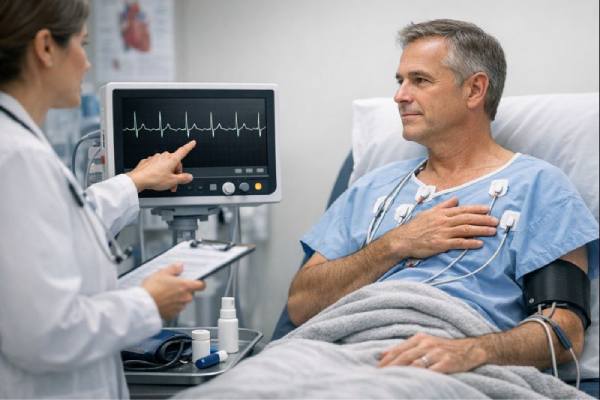
- During pain, ECG may show temporary changes (sometimes ST elevation or depression).
- Troponin blood tests may be normal in brief spasms; they can rise if spasm is prolonged or causes injury.
- Ambulatory rhythm monitoring (Holter or patch monitor) can catch rhythm issues that accompany episodes.
Imaging and coronary evaluation
If symptoms suggest angina or high-risk chest pain, clinicians often consider:
- Stress testing (exercise or pharmacologic): helpful for many heart conditions, but spasm can be missed if it doesn’t occur during the test.
- Coronary CT angiography or invasive coronary angiography: used to look for fixed narrowings and to guide safety decisions. Many people with vasospasm have little or no fixed obstruction, which is important to know.
Provocation testing (specialized but valuable)
In some centers, doctors perform coronary spasm provocation testing during angiography using medications that can trigger spasm in a controlled setting. The team watches symptoms, ECG changes, and vessel response, and they can reverse spasm quickly with intracoronary vasodilators. This approach can confirm the diagnosis when the story is strong but routine testing is inconclusive.
Conditions that can mimic vasospasm
A careful work-up also considers:
- Fixed coronary artery disease
- Microvascular angina (small-vessel dysfunction)
- Inflammation of the heart lining (pericarditis)
- Pulmonary embolism
- Gastroesophageal reflux or esophageal spasm
- Panic episodes with hyperventilation (which can also trigger true spasm)
Good diagnosis is not just “naming it”—it’s building a plan that matches the mechanism and your risk level.
Treatment, management, and prevention
Treatment has two goals: stop episodes quickly and prevent them from returning, while reducing the risk of complications.
What to do during an episode
Many patients are prescribed fast-acting nitroglycerin (often a sublingual tablet or spray). Typical guidance includes:
- Stop what you’re doing and sit down.
- Use nitroglycerin exactly as prescribed.
- If symptoms are not improving quickly—or if you have severe symptoms, fainting, or shortness of breath—treat it as an emergency.
If you’ve never been evaluated for chest pain, don’t self-diagnose: persistent or severe symptoms need urgent assessment.
Medications that prevent spasm
Long-term therapy is individualized, but common pillars include:
- Calcium channel blockers: often first-line for preventing spasm episodes. There are different types and dosing strategies; many people need a long-acting form, and sometimes dosing is timed to cover early-morning risk.
- Long-acting nitrates: may be added if symptoms persist; clinicians often plan dosing to avoid tolerance (a drop in effectiveness over time).
- Other anti-anginal options: in some regions, drugs like nicorandil may be used; in more refractory cases, specialists may consider additional strategies.
Medication choices also depend on whether you have coexisting plaque disease, high blood pressure, migraine therapies, or rhythm risk.
Important “avoid” and “be careful” points
- Stop smoking: this is often the single highest-impact step.
- Avoid cocaine and amphetamines completely; even occasional exposure can provoke severe spasm.
- Be cautious with decongestants and other vasoconstricting products; ask your clinician or pharmacist what is safer for you.
- Some people with vasospasm do poorly with certain beta-blockers, especially nonselective ones; this is a medication decision that should be made with your clinician based on your full cardiac picture.
Daily management that actually reduces episodes
- Trigger planning: dress for cold exposure, warm up gradually, and avoid sudden temperature shocks.
- Stress and breathing: if hyperventilation is part of your pattern, a structured approach (slow nasal breathing, paced breathing exercises, or therapy for panic) can reduce attacks.
- Sleep: prioritize consistent sleep; evaluate for sleep apnea if you snore loudly, have witnessed pauses, or wake unrefreshed.
- Cardiovascular prevention: control blood pressure, cholesterol, and diabetes. Even if spasm is the main issue, vessel health matters.
When to follow up and when to seek care
Follow up promptly if symptoms change, increase in frequency, or begin occurring with exertion or fainting. Seek urgent evaluation for any severe, new, or persistent chest pain, or if you experience syncope, near-syncope, or sustained palpitations.
With a clear diagnosis, good medication fit, and trigger control, many people achieve major symptom improvement and a safer long-term outlook.
References
- JCS/CVIT/JCC 2023 Guideline Focused Update on Diagnosis and Treatment of Vasospastic Angina (Coronary Spastic Angina) and Coronary Microvascular Dysfunction – PubMed 2023 (Guideline)
- Management of Coronary Artery Spasm – PMC 2023 (Review)
- Vasospastic angina: a review on diagnostic approach and management – PMC 2024 (Review)
- Management of vasospastic angina – PubMed 2022 (Review)
- International standardization of diagnostic criteria for vasospastic angina – PubMed 2017 (Consensus)
Disclaimer
This article is for educational purposes only and does not provide medical advice, diagnosis, or treatment. Chest pain can be life-threatening and should be assessed urgently, especially if it is new, severe, persistent, or accompanied by fainting, shortness of breath, sweating, or nausea. Medication decisions (including starting, stopping, or changing heart medicines) must be made with a licensed clinician who knows your medical history, exam findings, and test results. If you think you are having a heart emergency, contact local emergency services immediately.
If you found this helpful, please share it on Facebook, X (formerly Twitter), or any platform you prefer—and consider following us on social media. Your support through sharing helps our team keep producing practical, high-quality health content.