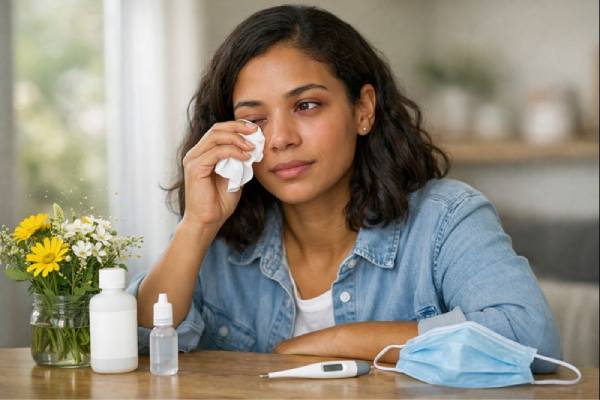
Red, watery eyes can look the same in the mirror, yet the “why” behind them matters. COVID-related conjunctivitis is a viral inflammation of the eye’s surface that can be contagious and may travel alongside fever, sore throat, or a new cough. Allergic pink eye, in contrast, is an immune overreaction to triggers like pollen, dust mites, or animal dander, and it tends to flare in patterns—after outdoor exposure, during certain seasons, or in specific indoor spaces.
Most cases of both are mild, but the right self-care depends on the cause. Viral conjunctivitis often improves with supportive comfort measures and careful hygiene to protect others. Allergic conjunctivitis responds best when you reduce exposure and calm the itch-inflammation cycle early. This guide offers a practical checklist for distinguishing them at home, knowing when an exam is warranted, and avoiding the common mistakes that prolong symptoms.
Key Facts to Differentiate Pink Eye Types
- Itching is the strongest clue for allergic pink eye, while a burning, gritty sensation is more typical with viral causes.
- COVID conjunctivitis is more likely to occur with recent respiratory symptoms or known exposure, and it can be contagious.
- Allergic pink eye often affects both eyes evenly and may recur in predictable seasons or environments.
- Thick discharge, significant pain, or notable vision change is not typical for either and should be evaluated.
- Use preservative-free lubricating drops and cool compresses; avoid contact lenses until eyes are white and comfortable again.
Table of Contents
- What COVID conjunctivitis and allergic pink eye are
- Symptoms that most reliably separate them
- Timing, triggers, and who else is sick
- What you can do at home right away
- When to get checked and what to avoid
- How clinicians confirm the cause
What COVID conjunctivitis and allergic pink eye are
“Pink eye” is a broad term for inflammation of the conjunctiva, the thin membrane that lines the white of the eye and the inside of the eyelids. The conjunctiva is rich in small blood vessels, so inflammation quickly makes the eye look red. The key difference between COVID conjunctivitis and allergic conjunctivitis is the underlying mechanism: infection and viral shedding versus immune hypersensitivity.
COVID conjunctivitis is a form of viral conjunctivitis that can occur during a SARS-CoV-2 infection. It may appear early, alongside respiratory symptoms, or later as the immune response evolves. Not everyone with COVID develops eye symptoms, and eye redness alone is not enough to diagnose COVID. Still, when conjunctivitis appears with systemic viral symptoms or a known exposure, it raises the likelihood that the eye redness is part of the same infection. Viral conjunctivitis can be contagious because viruses spread through respiratory droplets and through hands that touch the face, then surfaces.
Allergic pink eye is different: it is a non-infectious response to environmental triggers such as pollen, molds, dust mites, or animal dander. Allergies cause immune cells in the conjunctiva to release histamine and other mediators. That leads to itching, swelling, tearing, and redness. Unlike viral conjunctivitis, allergic conjunctivitis is not “caught” from someone else, but it can appear in multiple family members if they share the same environment or seasonal exposure.
Both conditions can coexist with other factors that muddy the picture. Dry eye can cause redness and watery tearing. Contact lens irritation can mimic conjunctivitis. Eye rubbing can worsen any type of conjunctival inflammation and create a cycle that keeps symptoms going.
A useful concept is that conjunctivitis is not only about the redness you see; it is about the surface balance you feel. Viral conjunctivitis tends to make the eye feel gritty, sore, or “raw.” Allergic conjunctivitis tends to produce itch, lid puffiness, and a strong urge to rub. That one difference—itch versus grit—is often the most practical starting point when you are trying to decide what is happening.
Symptoms that most reliably separate them
The fastest way to distinguish COVID conjunctivitis from allergic pink eye is to focus on the dominant sensation, the type of discharge, and whether symptoms are symmetrical.
Itching versus burning and grit
Itching is the hallmark of allergic conjunctivitis. People often describe an almost irresistible urge to rub, especially at the inner corners of the eyes. The lids may feel puffy, and the whites of the eyes can look swollen or “gel-like.” If itching is your main complaint, allergies move to the top of the list.
COVID conjunctivitis, like other viral conjunctivitides, more often causes:
- burning or stinging
- a gritty “sand” sensation
- soreness when blinking
- light sensitivity that is mild to moderate
It can itch too, but itching is usually not the dominant symptom.
Discharge patterns that matter
Allergic conjunctivitis typically causes watery tearing and sometimes stringy, clear mucus. The tears may blur vision briefly, but the eye usually does not produce thick pus. Viral conjunctivitis also tends to be watery, but it may create a slightly thicker, sticky film that crusts at the lashes, especially on waking. Crusting can happen in allergies too, but heavy crusting with ongoing discharge is less typical.
A key caution: thick yellow-green discharge, especially with eyelids stuck shut all day, suggests bacterial involvement or another issue and should be evaluated rather than assumed to be allergy or COVID.
One eye or both
Allergic conjunctivitis often affects both eyes fairly evenly because allergens reach both eyes at the same time. One eye can be worse, but symmetrical involvement is common.
Viral conjunctivitis often starts in one eye and spreads to the other within 1–3 days. That sequence—one eye first, then the second—fits many viral patterns. However, it is not a perfect rule.
Associated sensations
Allergies frequently come with:
- sneezing or a runny nose without fever
- itchy nose or palate
- known seasonal flares
- worsening after outdoor exposure or dust exposure
COVID conjunctivitis is more likely to accompany:
- fever, body aches, sore throat, cough, or fatigue
- recent close contact exposure
- a more “sick” feeling overall, not just eye discomfort
If your eyes are red and you also have significant eye pain, marked light sensitivity, or reduced vision that does not clear after blinking, treat that as a different category. Those symptoms are not typical of routine allergy or mild viral conjunctivitis and deserve prompt assessment.
Timing, triggers, and who else is sick
When symptoms overlap, timing often clarifies the diagnosis. Allergic pink eye usually behaves like a pattern. COVID conjunctivitis behaves more like an event.
How allergic pink eye tends to unfold
Allergic conjunctivitis commonly follows predictable rhythms:
- symptoms worsen in certain seasons (spring pollen, late-summer weeds, fall molds)
- symptoms flare after specific exposures (cleaning, pet contact, dusty rooms, mowing lawns)
- symptoms improve indoors with windows closed or after showering and changing clothes
Allergic symptoms often wax and wane across the day. Many people wake relatively comfortable and worsen as exposure accumulates. Others wake with puffy lids if allergens are present in bedding or the bedroom.
A helpful clue is recurrence. If you have had similar eye symptoms in prior years during the same season, allergies become a stronger suspect.
How COVID conjunctivitis often fits the illness timeline
COVID conjunctivitis may appear:
- early, alongside respiratory symptoms, as part of the initial viral phase
- mid-course, when congestion and face-touching increase
- less commonly, around the time other symptoms improve, reflecting an inflammatory “tail”
Unlike allergies, viral conjunctivitis usually has a more linear course: it starts, peaks, then slowly resolves over days to a couple of weeks. You may feel steadily better rather than cycling daily with exposures.
What other people’s symptoms can tell you
Allergies can appear in multiple people in a home because everyone shares the same air, but those people are not contagious. The clue is that each person’s symptoms correlate with shared exposures (windows open, pet dander, dust, pollen count days).
COVID conjunctivitis may be more likely if:
- others around you have respiratory symptoms or confirmed COVID
- your eye symptoms begin after close contact with someone ill
- you have systemic symptoms at the same time
However, household spread is not required. You can have COVID conjunctivitis with minimal respiratory symptoms, and you can have allergies that look dramatic but are not infectious.
Small details that meaningfully shift the odds
- Rubbing makes both worse, but it “feeds” allergies. If rubbing temporarily relieves itch then symptoms rebound strongly, allergies are likely driving the loop.
- Outdoor wind and sun exposure often intensify allergic symptoms and dryness, while viral irritation may feel more constant regardless of setting.
- Contact lenses can amplify both conditions. In allergies, lenses can trap allergens on the surface. In viral conjunctivitis, lenses increase handling and irritation.
If the timing is unclear, treat the first 48 hours as information gathering. Reduce exposures, stop contact lenses, use lubrication and cool compresses, and see whether symptoms behave like an allergy pattern or a viral event.
What you can do at home right away
The safest early approach is supportive care that helps both conditions while you watch the symptom pattern. Your goals are to calm inflammation, protect the surface, and avoid spreading infection if a virus is involved.
Steps that help both allergy and viral conjunctivitis
- Stop contact lenses until eyes are white, comfortable, and discharge-free. Lenses can worsen irritation and increase infection risk.
- Use preservative-free lubricating drops 4–6 times daily. These dilute irritants and stabilize the tear film.
- Apply cool compresses for 5–10 minutes, up to several times per day. Cooling reduces itching, swelling, and burning.
- Avoid rubbing. If you feel the urge, use a cool compress or lubricating drops instead.
- Wash hands frequently, and avoid touching the eyes during the day.
Best practices when COVID conjunctivitis is possible
If you have COVID symptoms or known exposure, assume your eye symptoms could be contagious:
- Do not share towels, pillowcases, eye makeup, or eye drops.
- Replace or wash pillowcases frequently during active symptoms.
- Clean commonly touched surfaces and wash hands after applying drops.
- Dispose of tissues immediately after wiping tears.
Viral conjunctivitis usually improves with time. The main job is comfort and preventing spread.
Best practices when allergy is likely
If itching dominates and you have classic allergy cues, exposure control matters as much as drops:
- Shower and change clothes after outdoor time during high pollen days.
- Keep windows closed and consider a clean air strategy in the bedroom.
- Avoid vigorous eye rubbing, which releases more inflammatory mediators.
- If you already use allergy medications, be consistent rather than sporadic.
Some people benefit from allergy-focused eye drops that reduce histamine activity. If you use any medicated drops, follow the label carefully and avoid combining multiple products without a plan.
A practical 48-hour home checklist
- Lubricating drops morning, midday, late afternoon, and bedtime.
- Cool compress 2–4 times daily, especially during itch surges.
- No contact lenses and no eye makeup.
- If allergies are suspected, reduce exposure and keep the bedroom air clean.
- Track which symptom is strongest: itch, burn, grit, or discharge.
If symptoms are clearly improving in 2–3 days, home care may be enough. If they worsen, become painful, or affect vision, move to a clinical evaluation.
When to get checked and what to avoid
Most cases of COVID conjunctivitis and allergic pink eye are mild, but certain symptoms require a lower threshold for evaluation because they can signal corneal involvement or a different diagnosis altogether.
Get checked promptly if you have
- moderate to severe eye pain
- significant light sensitivity that makes you avoid opening the eye
- blurred vision that does not clear with blinking or lubricating drops
- a white or gray spot on the clear front of the eye
- thick yellow-green discharge or swelling that rapidly worsens
- symptoms mainly in one eye that are escalating rather than improving
- contact lens wear with red eye, pain, or reduced vision
If you have these symptoms, do not wait to “see what happens.” Corneal problems can progress quickly, and early treatment matters.
When routine evaluation is still worthwhile
Schedule an eye exam if:
- symptoms last longer than 7–10 days without clear improvement
- you have repeated episodes that look like “pink eye” every season
- you have frequent flare-ups that interfere with work, driving, or contact lens tolerance
- you have underlying eye disease, immune suppression, or recent eye surgery
Persistent symptoms may reflect chronic allergy, dry eye, blepharitis, or a misdiagnosed infection.
Common mistakes that prolong symptoms
- Using leftover antibiotic drops “just in case.” Unnecessary antibiotics can irritate the surface and delay the right diagnosis.
- Using steroid eye drops without supervision. Steroids can worsen certain infections and can mask worsening disease.
- Wearing contacts too soon. Even when redness improves, the surface may still be reactive and more prone to irritation or infection.
- Rubbing to relieve itch. Rubbing can intensify allergy inflammation and can spread viral particles if present.
- Overusing redness-reliever drops. Some “get the red out” drops can cause rebound redness and dryness with repeated use.
How to protect others if COVID conjunctivitis is suspected
Treat it like any contagious viral eye illness: separate towels, avoid touching the eyes, wash hands after drop use, and avoid close face-to-face contact when tearing is heavy. If you are in a workplace setting, discuss return-to-work timing with a clinician if symptoms are significant, since eye discharge and frequent face-touching increase spread risk.
The guiding principle is simple: mild irritation can be managed at home, but pain, light sensitivity, and meaningful vision change should shift you toward professional care.
How clinicians confirm the cause
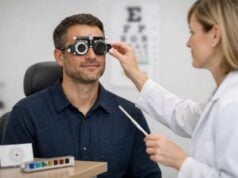
When you see a clinician for pink eye symptoms, the diagnosis is usually clinical—based on the history and the exam—rather than on a single definitive test. The goal is to identify the cause, rule out corneal involvement, and choose treatment that shortens the course rather than prolonging it.
What the eye exam focuses on
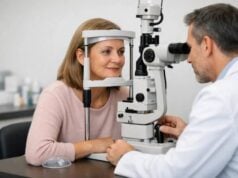
A slit-lamp exam allows the clinician to evaluate:
- the pattern of redness and swelling of the conjunctiva
- the eyelid margins and glands (a common hidden driver of chronic redness)
- the corneal surface for staining or early keratitis
- the type of discharge and whether the eye surface is unusually dry
- lymph node tenderness near the ear (more suggestive of viral conjunctivitis)
In allergic conjunctivitis, clinicians often see conjunctival swelling and a “glassy” watery appearance, sometimes with characteristic changes under the eyelid. In viral conjunctivitis, they may see a more diffuse injection and watery discharge, and symptoms often match a recent viral illness timeline.
Why corneal assessment matters
The cornea determines vision clarity. If the cornea is affected—by dryness, erosions, or infection—the management changes. Corneal involvement is more likely when there is significant light sensitivity, pain, or reduced vision. That is why clinicians may use fluorescein dye to detect subtle surface damage.
How testing fits in
Testing for COVID itself is separate from eye diagnosis, but if you have systemic symptoms, your clinician may recommend COVID testing based on public health guidance and your exposure history. Allergy testing is rarely needed for straightforward allergic conjunctivitis, but it can be useful for persistent or severe seasonal patterns, especially when multiple allergy symptoms are present.
What treatment decisions typically look like
- Viral conjunctivitis (including COVID-related) is often treated with comfort measures, surface protection, and hygiene guidance, with close follow-up if symptoms worsen.
- Allergic conjunctivitis treatment focuses on reducing itch and inflammation while minimizing exposure, with attention to coexisting dry eye or eyelid inflammation.
- If bacterial infection is suspected, treatment may be targeted, and contact lens wearers are often managed more cautiously.
A useful mindset is that the best treatment is not “the strongest drop.” It is the treatment that fits the cause and protects the cornea. If you leave an exam with a clear plan for what should improve within 48–72 hours and what symptoms should trigger re-check, you are set up for a smoother recovery.
References
- Ocular manifestations of COVID-19: A systematic review of current evidence 2024 (Systematic Review)
- Ophthalmic Presentations and Manifestations of COVID-19: A Systematic Review of Global Observations 2023 (Systematic Review)
- Pink Eye (Conjunctivitis) 2025 (Guidance)
- Allergic Conjunctivitis 2025 (Guidance)
Disclaimer
This article is for general educational purposes and does not provide medical advice, diagnosis, or treatment. Pink eye symptoms can overlap between allergies, viral infections (including COVID-19), bacterial infections, and corneal conditions that require urgent care. If you develop severe eye pain, significant light sensitivity, a sudden drop in vision, a white or gray spot on the eye, or thick discharge—especially if you wear contact lenses—seek prompt evaluation by a qualified eye care professional. Do not use leftover prescription eye drops, particularly steroid drops, unless directed by a clinician.
If you found this article helpful, please consider sharing it on Facebook, X (formerly Twitter), or any platform you prefer.