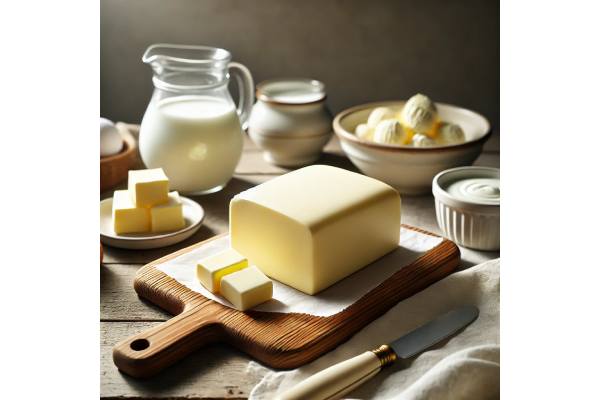
Butter from cow’s milk is one of the culinary world’s simplest ingredients—churned cream—yet it shapes flavor, texture, and pleasure in cooking like few foods can. Its rich profile of milk fat carries fat-soluble vitamins and a bouquet of dairy aromatics that bloom when melted, browned, or folded into doughs. In home kitchens, butter sears eggs without sticking, lifts sauces into glossy emulsions, and gives pastries their tender crumb. In nutrition, butter is energy dense and largely fat, with very little carbohydrate or protein; it supplies vitamin A and small amounts of vitamin E and vitamin K, while contributing mostly saturated fat. That mix is neither “good” nor “bad” in isolation—what matters is portion, context, and what you use butter to replace. This guide translates the science and craft into straightforward decisions: when butter can be part of a balanced pattern, how to choose quality and store it safely, the best ways to cook with it, and who should limit or avoid it.
Quick Overview
- Supplies vitamin A (≈684 µg RAE/100 g) and flavor that improves acceptance of vegetables and whole grains.
- High in saturated fat (≈50.5 g/100 g); keep portions modest and favor unsaturated oils for most cooking.
- Typical serving: 1 tablespoon (14 g), up to 1–2 tablespoons a day within calorie and saturated-fat limits.
- People with cow’s-milk allergy, familial hypercholesterolemia, or very high LDL cholesterol should limit or avoid butter.
Table of Contents
- Cow’s Milk Butter: Detailed Overview
- Butter Nutrition Profile (Per 100 g)
- Evidence-Based Health Benefits
- Risks, Allergies and Interactions
- Selecting, Quality, Sustainability and Storage
- Preparation, Cooking and Nutrient Retention
- Portions, Comparisons and FAQs
Cow’s Milk Butter: Detailed Overview
Butter is made by churning cream until fat globules coalesce, expelling most of the watery buttermilk and trapping microscopic water droplets in a continuous fat phase. By legal standards in many countries, finished butter contains at least about 80% milk fat, with the balance mostly water and tiny amounts of milk solids. European-style butter often contains a bit more fat (≈82%) and may be cultured (fermented) for tangy complexity. Unsalted butter shows the dairy’s flavor most transparently; salted butter has salt added for taste and preservation, with a sodium level that varies by brand.
From a culinary standpoint, butter is prized because milk fat is an excellent solvent for aromatic compounds. It carries flavors across your palate and helps fat-soluble seasonings—from garlic and pepper extracts to herbs sautéed in fat—bloom. Its structure also matters: solid fat crystals give laminated doughs lift and layers; the water portion generates steam for flakiness in pastries; the milk solids brown to form nutty notes (beurre noisette) and deep, savory complexity (beurre noir) when cooked beyond melting.
Nutritionally, butter is almost purely fat and calorie dense. It provides vitamin A (retinol) and small amounts of vitamin E and vitamin K. It contributes saturated fatty acids (notably palmitic and stearic acids), some monounsaturated oleic acid, a little polyunsaturated linoleic and alpha-linolenic acids, and naturally occurring minor fats such as conjugated linoleic acid (CLA) and short-chain butyrate. Butter contains very little lactose and almost no protein compared with other dairy foods. That means it doesn’t deliver the calcium or high-quality protein people expect from milk or yogurt.
How should you think about butter in a healthy pattern? Portion and substitution are key. Using a small amount of butter for flavor while relying on unsaturated oils (olive, canola, avocado) for most cooking is a practical approach. In baking, butter’s structural role is often irreplaceable; pairing it with fiber-rich flours, nuts, and fruits helps balance the plate. If your LDL cholesterol is elevated or you have familial hypercholesterolemia, keep butter portions modest and focus on swaps that bring in polyunsaturated fats.
Finally, butter is not the same as ghee. Ghee (clarified butter cooked until water and milk solids are removed) has a higher smoke point and almost no lactose or milk proteins, which changes both culinary behavior and allergenicity considerations. You’ll find specific advice on choosing between butter and ghee in the Portions and Comparisons section.
Butter Nutrition Profile (Per 100 g)
Below is a detailed, scannable profile for unsalted cow’s-milk butter, expressed per 100 g to standardize comparisons. Values are rounded sensibly. % Daily Value (%DV) uses U.S. DVs where applicable.
Macros & Electrolytes (per 100 g)
| Nutrient | Amount | %DV |
|---|---|---|
| Energy | 717 kcal | — |
| Total Fat | 81.1 g | 104% |
| Saturated Fat | 50.5 g | 252% |
| Monounsaturated Fat | 23.4 g | — |
| Polyunsaturated Fat | 3.0 g | — |
| Cholesterol | 215 mg | 72% |
| Protein | 0.85 g | 2% |
| Total Carbohydrate | 0.06 g | 0% |
| Total Sugars | 0.06 g | 0% |
| Sodium (unsalted) | 11 mg | 0% |
| Water | 16.2 g | — |
Fats & Fatty Acids (per 100 g)
(Selected components relevant to health and cooking)
| Component | Amount |
|---|---|
| Butyric Acid (C4:0) | 3.23 g |
| Myristic Acid (C14:0) | 7.44 g |
| Palmitic Acid (C16:0) | 21.7 g |
| Stearic Acid (C18:0) | 10.0 g |
| Oleic Acid (C18:1) | 20.4 g |
| Linoleic Acid (Omega-6) | 2.17 g |
| Alpha-Linolenic Acid (Omega-3) | 0.32 g |
| Conjugated Linoleic Acid (CLA) | ≈0.27 g |
Vitamins (per 100 g)
| Vitamin | Amount | %DV |
|---|---|---|
| Vitamin A (RAE) | 684 µg | 76% |
| Vitamin E (alpha-tocopherol) | 2.3 mg | 15% |
| Vitamin K (total) | 7 µg | 6% |
| Vitamin D | 0 µg | 0% |
| Vitamin B12 | 0.17 µg | 7% |
| Folate | 3 µg | 1% |
Minerals (per 100 g)
| Mineral | Amount | %DV |
|---|---|---|
| Calcium | 24 mg | 2% |
| Phosphorus | 24 mg | 2% |
| Potassium | 24 mg | 1% |
| Selenium | 1 µg | 2% |
| Sodium (unsalted) | 11 mg | 0% |
Allergens & Intolerance Markers
- Lactose: Minimal in butter; varies by type (ghee and butter oil have virtually none; butter contains trace amounts).
- Milk proteins: Present in butter (casein/whey traces) and removed when clarified to ghee; relevant for allergy.
Additives & Fortification
- Standard unsalted butter is not typically fortified in many markets. Some brands or countries may fortify with vitamin D—check labels.
Notes & Variants
- Salted butter: Similar macronutrients; sodium varies by brand (often ~80–100 mg per tablespoon).
- Cultured butter: Similar nutrition; tangy flavor from fermentation.
Evidence-Based Health Benefits
1) Flavor carrier that improves dietary quality in context
A small amount of butter can make vegetables and whole grains more palatable, which can support higher intake of fiber-rich foods. From a behavioral nutrition standpoint, acceptance drives adherence. The key is portion: using a teaspoon or two to finish a pan of greens or whole-grain pilaf adds satisfaction with minimal impact on saturated fat goals.
2) Fat-soluble vitamin A
Butter is a concentrated source of retinol (vitamin A), important for vision, immune function, and epithelial health. Per 100 g, unsalted butter provides roughly three-quarters of the daily value; per tablespoon, that’s about 11% of the DV. In practical terms, butter can contribute to vitamin A status, though many people meet needs through liver, eggs, fortified dairy, or colorful produce.
3) Short-chain and ruminant-specific fatty acids in small amounts
Butter naturally contains butyric acid (butyrate), a short-chain fatty acid studied for gut epithelial support in experimental models. It also contains minor ruminant fats (e.g., odd-chain C15:0 and C17:0, and CLA). Observational research using blood levels of odd-chain fatty acids as markers of dairy fat intake has found associations with lower cardiovascular risk in some cohorts. These compounds are present in butter, but at modest amounts; they may be signals of overall dairy fat intake rather than reasons to eat large quantities of butter.
4) Energy density for high-calorie needs
For people with high energy demands—athletes in heavy training, underweight individuals working to regain weight, or those with conditions requiring calorie-dense foods—butter offers compact calories and culinary versatility.
What these benefits do not mean
Butter’s virtues don’t negate the established relationship between saturated fat intake and LDL-cholesterol elevation. When choosing fats overall, dietary patterns that replace some saturated fat with polyunsaturated sources (e.g., oils, nuts, seeds, fatty fish) are consistently linked with better lipid profiles and cardiovascular outcomes. In practice, that means: enjoy butter for flavor or structure, but let unsaturated fats do most of the everyday cooking.
Practical examples
- Toss roasted carrots with 1 teaspoon butter and lemon zest; dress salads with olive oil.
- Finish seared fish with a knob of butter and herbs; poach or roast with canola or olive oil.
- In baking, pair butter-rich items with fruit, nuts, or whole-grain sides to balance the meal.
Risks, Allergies and Interactions
Saturated fat and cardiometabolic risk
Butter is predominantly saturated fat. High dietary saturated fat tends to raise LDL cholesterol, a causal factor in atherosclerotic cardiovascular disease. Clinical trials and guideline summaries conclude that lowering saturated fat—particularly when replaced with polyunsaturated fats—reduces cardiovascular events. This does not require eliminating butter; it does suggest using modest amounts and making smart swaps elsewhere (e.g., use olive oil for sautéing, reserve butter for finishing or baking where it’s irreplaceable).
Lactose intolerance
Butter contains very little lactose compared with milk or yogurt. Many people with lactose intolerance tolerate small portions of butter without symptoms, especially when eaten with meals. Clarified butter (ghee) and butter oil contain negligible lactose and are often better tolerated. Individual thresholds vary—start with small amounts and assess your response.
Milk allergy (cow’s-milk protein allergy)
Unlike lactose intolerance, milk allergy is an immune reaction to milk proteins. Because butter retains trace proteins, people with confirmed cow’s-milk allergy should discuss tolerance with an allergist before use. Ghee (which removes milk solids) may be better tolerated for some, but hypersensitive individuals may still react; medical guidance is essential.
Weight management
Butter is energy dense (≈100–102 kcal per tablespoon). In energy-restricted plans, portions can add up quickly. Strategies include measuring portions, swapping in flavorful acids (citrus, vinegar) and herbs, and choosing unsaturated oils for bulk cooking to manage both calories and fatty-acid quality.
Medication and condition considerations
- Lipid disorders / familial hypercholesterolemia: Keep butter minimal; emphasize unsaturated fats and fiber.
- Anticoagulation (warfarin): Butter contains only small amounts of vitamin K; still, aim for consistent overall vitamin K intake across the diet.
- Gallbladder disease or fat malabsorption: High-fat foods may trigger symptoms; follow clinician guidance on fat limits.
Food safety
- Butter made from pasteurized cream is low risk when refrigerated. Keep covered to minimize oxygen, light, and odors, and avoid cross-contamination. For long storage, freezing is effective (details in the Storage section). At room temperature, use covered crocks and portion small amounts; refresh frequently to maintain quality.
Selecting, Quality, Sustainability and Storage
How to choose butter at the store
- Fat content and style:
- Standard vs European-style: European-style typically has ~82% fat and lower moisture, yielding flakier pastries and a richer mouthfeel.
- Cultured vs sweet cream: Cultured butter (fermented cream) adds tang and complexity ideal for finishing sauces and spreading on bread.
- Salted or unsalted:
- Unsalted offers neutral flavor and precise control of seasoning in baking and sauces.
- Salted is convenient for table use. Sodium varies by brand; if you’re monitoring sodium, compare labels and measure portions.
- Grass-fed or pasture-raised:
These labels often reflect seasonal, regional feeding practices. Grass-fed butters can show deeper yellow color (more carotenoids) and slightly different fatty-acid profiles (often a bit more CLA and omega-3 ALA), but differences are modest relative to total fat content. Buy for flavor first, and enjoy variety.
Quality cues
- Color: Uniform pale to deep yellow depending on cow diet; avoid gray or mottled surfaces.
- Aroma: Clean, creamy, with no sour or rancid notes (unless intentionally cultured).
- Packaging: Opaque wraps or foil protect against light and odor pickup. Blocks or sticks with tight seals keep oxygen out.
Sustainability notes
- Dairy production has environmental impacts, including greenhouse gases and land use. Practical steps to reduce waste: buy sizes you can finish while fresh; freeze extras; use every scrap (brown butter, compound butters). Consider balancing butter enjoyment with plant-forward meals and oils from sustainable producers.
Storage and handling
- Refrigeration: Store butter tightly wrapped at 0–4°C. Keep in the coldest part of the fridge, not the door.
- Freezing: Butter freezes well; portion, wrap airtight, and freeze. Recommended freezer shelf life is about 6 to 9 months for best quality.
- Room temperature: For spreadability, keep a small amount in a covered dish; replace frequently to maintain freshness. Keep away from heat and sunlight.
- Rancidity prevention: Limit light, heat, oxygen, and time. Rewrap neatly after each use; consider dividing sticks to reduce repeated warmups.
Troubleshooting
- Off-flavors or sour notes: Discard if you notice rancid, soapy, or cheesy odors not attributable to cultured butter.
- Oily melting or poor baking results: Check fat percentage (European-style vs standard) and dough temperature; too-warm butter collapses layers.
Preparation, Cooking and Nutrient Retention
How butter behaves in the pan
- Melting (≈30–35°C): Butter softens, then melts; water begins to steam.
- Foaming and browning: As water cooks off, milk solids settle and brown, creating nutty compounds (beurre noisette). This is ideal for finishing vegetables, fish, and pasta.
- Burning: Whole butter scorches at relatively low temperatures because of milk solids. For high-heat searing, use clarified butter or ghee.
Clarified butter and ghee—why and when
- Clarified butter: Gently melt butter, skim foam, and pour off the clear fat, leaving milk solids behind. This raises heat tolerance and removes most lactose/proteins.
- Ghee: Clarified butter cooked longer until the milk solids gently brown before straining. Ghee develops deeper, toasty flavors and a higher resistance to scorching—excellent for stir-fries and roasted vegetables.
Techniques that protect flavor and nutrients
- Add late: Stir in a small knob of butter off heat to finish sauces (monter au beurre). This preserves delicate dairy aromatics and helps emulsify without breaking.
- Use as a carrier: Melt butter with herbs, spices, or citrus zest to extract fat-soluble flavors; toss with cooked vegetables or grains so smaller amounts coat more surface area.
- Mind the light and air: Retinol (vitamin A) is light sensitive; store butter wrapped and away from direct light to minimize degradation over time.
Baking with precision
- Temperature: For creaming, use room-temperature butter (pliable, not greasy); for flaky pastry, keep butter cold to trap steam and form layers.
- Salt control: Bake with unsalted butter and add salt by recipe; sodium in salted butter varies by brand and can throw off delicate doughs.
- Substitutions:
- Part-swap with oil: In quick breads or muffins, replacing part of the butter with neutral oil can reduce saturated fat while keeping tenderness.
- Dairy-free needs: Refined coconut oil mimics some solid-fat behavior but is also high in saturated fat; liquid vegetable oils change texture. Test recipes before scaling.
Kitchen safety and quality
- Avoid overheating: If butter smokes aggressively, it has overheated; discard if it smells acrid.
- Clean cookware: Milk solids can scorch and become bitter; deglaze promptly or soak pans to prevent residues from tainting the next dish.
Portions, Comparisons and FAQs
Reasonable portions and frequency
- A typical serving is 1 tablespoon (14 g), ≈100–102 kcal. For most adults, 1–2 tablespoons per day can fit within calorie needs if overall saturated fat remains within recommended limits and you emphasize unsaturated fats elsewhere. If you have high LDL cholesterol, keep butter toward the lower end and make more swaps to oils, nuts, and seeds.
Butter vs ghee vs oils vs spreads
- Butter: Rich dairy flavor and structure for baking; lower heat tolerance; trace lactose and milk proteins; vitamin A source; predominantly saturated fat.
- Ghee (clarified butter): Higher heat tolerance; nutty flavor; almost no lactose or milk solids; still largely saturated fat.
- Olive oil / canola oil: Excellent for everyday cooking; richer in unsaturated fats that support healthier lipid profiles; neutral to distinctive flavors.
- Soft plant-oil spreads: Often lower in saturated fat and include added plant sterols or omega-3s; choose minimally hydrogenated, low-trans-fat products and read labels carefully.
Smart swaps that preserve joy
- Finish vegetables with 1 teaspoon butter plus lemon instead of 1 tablespoon butter alone.
- In pan sauces, whisk a teaspoon of butter into reduced stock and wine instead of using several tablespoons of fat at the outset.
- In sautéing, start with olive oil; add a teaspoon of butter at the end for aroma.
FAQs
- Is butter low in lactose?
Yes. Butter contains minimal lactose compared with milk or yogurt. Many people with lactose intolerance tolerate small amounts, especially with meals. Ghee contains negligible lactose. People with milk allergy should seek medical guidance before using either. - Can butter be left out?
For spreadability, keep a small amount in a covered dish and refresh often; store the bulk in the refrigerator. For long storage, freeze well-wrapped portions for several months. - Does grass-fed butter have “better” fats?
Grass-fed butter may have slightly more CLA and a different omega-3 to omega-6 balance, but total amounts are still small relative to overall fat. The bigger health impact comes from your overall fat pattern—use butter sparingly and rely on unsaturated oils for most cooking. - Is brown butter unhealthy?
Browning develops flavorful compounds by cooking milk solids; the fat profile remains similar. Use modest portions, as with any butter preparation. - What if my LDL cholesterol is high?
Keep butter minimal, choose unsaturated oils for most cooking, and emphasize fiber-rich foods (beans, oats, seeds). Work with your clinician to tailor targets.
References
- Nutrition Facts for Unsalted Butter 2025.
- Dietary Fats and Cardiovascular Disease: A Presidential Advisory From the American Heart Association 2017 (Guideline).
- Biomarkers of dairy fat intake, incident cardiovascular disease, and all-cause mortality: A cohort study, systematic review, and meta-analysis 2021 (Systematic Review).
- Reduction in saturated fat intake for cardiovascular disease 2020 (Cochrane Review).
- Dietary Guidelines for Americans, 2020-2025 2020 (Guideline).
- Freezing Butter 2014 (Food Preservation Guidance).
Disclaimer
This article provides general information about cow’s-milk butter for educational purposes and is not a substitute for personalized medical advice, diagnosis, or treatment. Nutrition and health needs vary; if you have high LDL cholesterol, familial hypercholesterolemia, cow’s-milk allergy, lactose intolerance, or other medical conditions, consult a qualified health professional or registered dietitian before changing your diet.
If you found this guide helpful, please consider sharing it with friends or on Facebook or X to support our work in creating clear, trustworthy nutrition resources.