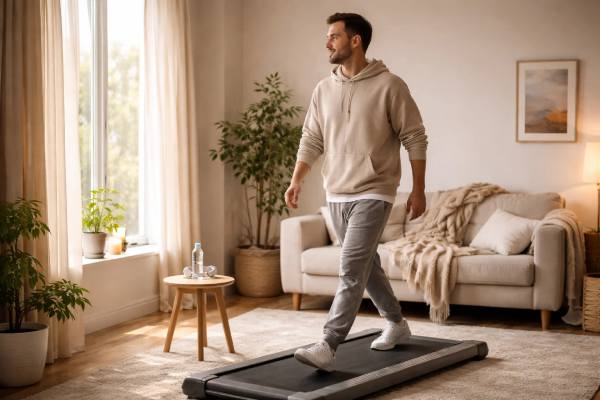
“Cozy cardio” is a workout trend built around a simple idea: movement is easier to sustain when it feels welcoming. Instead of chasing intensity, it prioritizes comfort—walking on a treadmill or outside, cycling at an easy pace, light dancing, or a gentle cardio circuit—often paired with a pleasant environment like music, a show, soft lighting, or a favorite playlist. The point is not to avoid effort forever. The point is to remove friction so you show up consistently.
That consistency matters. Regular low-to-moderate cardio improves mood, sleep quality, cardiovascular health, and stress recovery, even when the sessions are not exhausting. It can also be a practical bridge for people who feel intimidated by gyms, are returning after injury, or struggle with anxiety around exercise. Cozy cardio works best when it becomes a repeatable routine: realistic frequency, manageable intensity, and a plan to progress gradually.
This article explains what cozy cardio is, why it can be surprisingly effective, how to structure it, and how to keep it safe and meaningful over time.
Top Highlights
- Low-to-moderate cardio done consistently can improve fitness, mood, and sleep without requiring punishing workouts.
- Cozy cardio reduces the “activation cost” of exercise by pairing movement with comfort and predictability.
- It is not ideal as a stand-alone plan if your goals require higher intensity or strength, but it is an excellent base habit.
- People with heart, lung, or metabolic conditions should choose intensity targets with a clinician and start more gradually.
- Aim for 20–40 minutes, 3–5 days per week, at a pace where you can speak in sentences.
Table of Contents
- What cozy cardio means and why it catches on
- Why low-pressure cardio works for the brain
- How to do cozy cardio the right intensity
- The best cozy cardio options
- Make it a habit without motivation
- How to progress without losing the cozy
- Safety and who should modify it
What cozy cardio means and why it catches on
Cozy cardio is not a specific program; it is a style of doing cardio that lowers psychological resistance. It usually looks like steady, low-to-moderate movement—walking, easy cycling, elliptical, stair stepping at a gentle pace, or light dance—done in a way that feels safe and pleasant. People often add a “cozy layer”: a favorite show, warm socks, a comfortable outfit, a calm playlist, or a small ritual like making tea beforehand. The environment matters because it changes your willingness to begin.
That willingness is the hidden problem in many fitness plans. The barrier is rarely knowledge. Most people know exercise is good for them. The barrier is that life is busy, stress is high, and intense workouts can feel like another demand. Cozy cardio reframes movement as recovery rather than punishment. It makes exercise feel like something you get to do instead of something you have to do.
It also appeals because it respects where people are starting. A person with anxiety, chronic stress, a history of overtraining, or a negative gym experience may associate cardio with embarrassment or discomfort. Cozy cardio reduces those threat cues. It makes the first steps easier, which is often the difference between “I tried” and “this is part of my life now.”
Another reason it catches on is that it fits into real schedules. It can be done at home, outside, or in small pockets of time. It requires minimal equipment. And because it does not drain you, it is less likely to disrupt sleep or leave you sore enough to avoid the next session.
Still, it is important to be clear about what cozy cardio is and is not. It is not a magic shortcut, and it is not an excuse to avoid all challenge. Its strength is that it builds a stable base: a habit of moving most days. Once that base exists, you can add intensity or strength work as needed. But without the base, even the best plan stays theoretical.
In other words, cozy cardio is the “entry point” many people have been missing: a way to make consistency more likely than perfection.
Why low-pressure cardio works for the brain
The brain is a habit machine. It repeats what feels rewarding and avoids what feels costly. Intense workouts can be rewarding for some people, but for others they carry a high cost: dread, time pressure, joint discomfort, fear of judgment, or post-exercise fatigue that makes the rest of the day harder. Cozy cardio works because it lowers the perceived cost while keeping the reward.
Consistency changes stress reactivity
Steady aerobic movement supports stress recovery by improving how quickly your body returns to baseline after arousal. If your nervous system lives in a high-alert state, gentle cardio can be a “safe stress”—a controlled challenge that teaches the body it can activate and then settle. Over time, many people notice fewer spikes of tension, better sleep onset, and less restless energy.
Movement improves mood through multiple channels
Cardio can improve mood not only through brain chemistry, but also through behavior and attention. When you walk or cycle at a manageable pace, you often:
- Shift attention away from rumination and toward sensation and environment
- Create a predictable daily structure, which reduces mental noise
- Get a sense of completion and competence that counters helplessness
- Sleep more deeply, which reduces next-day irritability and anxiety sensitivity
These changes compound. The first week may feel subtle; by week three or four, the “baseline” often shifts.
Cozy cardio reduces the all-or-nothing trap
A common mental pattern is: “If I cannot do a full workout, it is not worth doing.” Cozy cardio challenges that directly. A 15-minute easy session counts. Showing up in a low-pressure way trains identity: you become someone who moves regularly. That identity tends to survive busy weeks and mood dips.
It can support body image without making it the point
Because cozy cardio emphasizes comfort and routine, it can help people move in a way that feels kind rather than critical. That is valuable for anyone with a history of punishing exercise, disordered eating patterns, or shame-based motivation. When the nervous system feels safer, it is easier to choose healthy behaviors consistently.
The takeaway is simple: cozy cardio works because it aligns with how the brain adopts habits. It is not only about calories or steps. It is about reducing friction, increasing reward, and building a sustainable rhythm that supports both mental and physical health.
How to do cozy cardio the right intensity
Cozy cardio is most effective when it stays in a low-to-moderate intensity zone. Too easy and it becomes a stroll that never challenges the heart and lungs. Too hard and it stops being cozy, which undermines consistency. The goal is “comfortable effort” that you can repeat often.
Use the talk test
The simplest intensity tool is the talk test:
- Cozy zone: you can speak in full sentences without gasping.
- Too hard for cozy: you can only say a few words at a time.
- Too easy to matter (for some people): you can sing with no change in breathing.
If you are new to exercise or returning after a break, start on the easier side and gradually build time. If you are already active, keep most cozy sessions in the sentence-speaking range and add occasional short bursts if you want more fitness gains.
Use a perceived exertion scale
On a 0–10 scale where 0 is rest and 10 is maximal effort, cozy cardio usually sits around 3 to 5. You feel warm, breathing is deeper, and your mind is clearer, but you do not feel destroyed.
Pick a duration you can repeat
A sustainable starting range is 20–40 minutes per session. If 40 minutes feels like too much, begin with 10–15 minutes and add 5 minutes every few sessions. Your body adapts quickly to time when the intensity is manageable.
Frequency matters more than perfection
Most people do best with 3–5 sessions per week. If you are using cozy cardio as a mental health anchor, shorter daily sessions can be effective because they create regular nervous system downshifts.
Warm-up and cool-down keep it comfortable
Two minutes of easy movement at the start and end reduce discomfort and make the session feel smoother. If you tend to feel anxious when your heart rate rises, a longer warm-up helps your body interpret the change as safe rather than alarming.
The measure of success is not how hard you pushed. It is whether you feel better after and whether you are willing to do it again tomorrow.
The best cozy cardio options
The best cozy cardio is the one you will actually do. That said, different options have different benefits for joints, enjoyment, and consistency. Choose based on your body and your environment rather than what looks best online.
Walking indoors or outdoors
Walking is the classic cozy cardio because it is accessible and easy to scale. Outdoors adds light and a change of scenery, which can improve mood. Indoors adds predictability, which helps if weather or safety are barriers. A slight incline can increase training effect without turning it into a grind.
Stationary bike or easy cycling
Cycling is joint-friendly and lets you control intensity precisely. It is often a good option for people with knee discomfort, higher body weight, or those who prefer a seated format. Many people find it easier to stay in a steady, cozy zone on a bike than on a treadmill.
Elliptical or low-impact machines
Ellipticals reduce impact and can feel smoother than running or brisk walking. They can be useful if you want a slightly higher heart rate without higher joint load.
Light dance and rhythmic movement
For some people, “cozy” is playful rather than quiet. A 20-minute dance session at a manageable pace can be a powerful mood shift because it combines movement with music and expression. Keep it low-pressure and choose songs that match the effort you want.
Stair stepping and incline walking
These options raise heart rate quickly, so they can stop feeling cozy if the pace is too fast. If you like them, use a slower tempo and shorter sessions at first.
Cozy cardio at home without equipment
A simple circuit can work if you keep it gentle: marching in place, step touches, low-impact jacks, light shadow boxing, and easy mobility flows. The key is steady movement, not maximal effort.
If you are deciding, use a simple filter: pick the option that feels most pleasant at the intensity you can repeat. Cozy cardio is less about the perfect modality and more about making movement a reliable part of your week.
Make it a habit without motivation
Cozy cardio’s real superpower is habit formation. To build a habit, you need a cue, a routine, and a reward. Motivation can help at the start, but habits survive the weeks when motivation is low.
Reduce the “start cost”
Make beginning as easy as possible:
- Keep shoes and clothing ready
- Choose a default time window (for example, after lunch or after work)
- Start with a minimum that feels almost too easy (10 minutes counts)
A small minimum creates consistency. Once you start, you often keep going. If you do not, you still win because the habit remains intact.
Stack it with something you already do
Attach cozy cardio to an existing routine:
- Walk right after morning coffee
- Bike after your last meeting
- Walk after dinner before you sit down
This reduces decision fatigue. You are not deciding whether to work out; you are following a script.
Use environment as a reward
Cozy cardio often includes a “pairing” reward: a playlist, an audiobook, a show, or a favorite route. The reward is not sugary snacks or punishment-free permission. It is a pleasant experience that makes movement feel like a break.
Plan for low-energy days
Have a fallback plan:
- If you feel good: 30–40 minutes
- If you feel neutral: 20 minutes
- If you feel depleted: 10 minutes easy
This removes the all-or-nothing trap. The goal is always some version of the routine.
Track the right outcome
Instead of focusing only on weight or performance, track:
- Sleep quality
- Mood stability
- Stress recovery
- Energy after the session
When you see these benefits, your brain assigns meaning to the habit. Meaning is what makes it stick.
Cozy cardio is not a hack. It is a practical behavior design: make the habit easy to start, pleasant to do, and rewarding enough to repeat.
How to progress without losing the cozy
A common worry is that cozy cardio will keep you “stuck” at an easy level. It does not have to. The trick is to progress in ways that preserve the low-pressure feel while still challenging your body over time.
Progress time first, then intensity
For most people, increasing duration is the least disruptive progression. Add 5 minutes to one or two sessions per week until your typical session is 30–45 minutes. Once that feels normal, you can add small intensity changes.
Use gentle interval “sprinkles”
If you want more fitness benefit without a harsh workout, add short intervals:
- After warming up, do 4 rounds of 30 seconds slightly faster, then 90 seconds easy
- Keep the “faster” part in a pace where you can still talk, just more breathy
This keeps the session cozy while nudging cardiovascular adaptation.
Add incline or resistance in small steps
One notch of incline or one small increase in bike resistance can raise heart rate without feeling dramatic. Your signal that it is too much is when you dread the session or your sleep worsens.
Protect recovery
If your cozy cardio starts making you wired at night, sore for days, or hungrier in a way that feels chaotic, scale back. Cozy cardio should improve your life, not compete with it.
Combine with strength for balance
If your goals include long-term health, body composition, and injury prevention, adding two short strength sessions per week can be a strong complement. It does not have to be intense. Even basic resistance work supports joints and posture, making cardio feel better.
Progress is not about abandoning cozy. It is about letting “cozy” become your base and layering challenge in small, sustainable amounts.
Safety and who should modify it
Cozy cardio is generally safe, but “low pressure” should not mean “ignore warning signs.” The safest plan is one that matches your current fitness, medical history, and symptom profile.
Start more gradually if
- You have been sedentary for months
- You have joint pain that flares with impact
- You are recovering from illness or injury
- You experience panic sensations with increased heart rate
In these cases, begin with 5–10 minutes at an easy pace and add time slowly. A longer warm-up and cool-down can reduce discomfort and anxiety sensitivity.
Talk with a clinician first if
- You have known heart disease, uncontrolled high blood pressure, or unexplained chest pain
- You have severe shortness of breath with mild exertion
- You have uncontrolled diabetes or frequent low blood sugar episodes
- You are pregnant with complications or have significant anemia symptoms
- You have new dizziness, fainting, or heart rhythm symptoms
Stop and seek medical assessment if
- You develop chest pressure, radiating pain, or severe shortness of breath
- You faint or feel close to fainting
- You have sudden severe headache with neurological symptoms
- You have pain that is sharp, worsening, and does not improve with rest
Cozy does not mean careless
Use supportive shoes, choose low-impact options if your joints need it, and build consistency before chasing intensity. If your goal includes significant fitness improvement, weight management, or metabolic changes, cozy cardio can be an excellent foundation, but it often works best when paired with strength training and nutrition routines.
The broader point is simple: the safest and most effective workout is the one you can sustain. Cozy cardio makes sustainability more likely by aligning exercise with comfort, predictability, and self-trust.
References
- WHO guidelines on physical activity and sedentary behaviour 2020 (Guideline)
- Physical Activity Guidelines for Americans, 2nd edition 2018 (Guideline)
- Exercise for mental health: A systematic review and meta-analysis of randomised controlled trials 2024 (Systematic Review and Meta-analysis)
- Effects of aerobic exercise on sleep quality: A systematic review and meta-analysis 2023 (Systematic Review and Meta-analysis)
- Dose-response associations between physical activity and mortality: a systematic review and meta-analysis 2023 (Systematic Review and Meta-analysis)
Disclaimer
This article is for educational purposes and does not provide medical advice, diagnosis, or treatment. Exercise affects individuals differently, and the right intensity depends on your health status, medications, and fitness level. If you have heart disease, uncontrolled blood pressure, significant lung disease, pregnancy complications, dizziness or fainting, chest pain, or new or worsening symptoms with activity, consult a licensed clinician before starting or changing your exercise routine. Stop exercising and seek urgent care if you develop chest pressure, severe shortness of breath, fainting, or other alarming symptoms.
If you found this helpful, please consider sharing it on Facebook, X (formerly Twitter), or any platform you prefer.