Critical limb ischemia (CLI) describes the most dangerous end of poor leg blood flow, when the foot or toes no longer receive enough oxygen to stay healthy. People often notice it as constant rest pain, a sore that will not heal, or blackened tissue that seems to spread despite careful home care. This is not “just bad circulation.” It is a time-sensitive threat to both the limb and the person, because severe artery disease also raises the risk of heart attack and stroke. Many clinicians now prefer the term chronic limb-threatening ischemia—a broader phrase that better fits real life, where risk rises along a spectrum. Whatever you call it, the goal is the same: restore blood flow, treat wounds and infection, control risk factors, and protect mobility. This guide walks through the causes, warning signs, testing, and the treatments that most often prevent amputation.
Table of Contents
- What critical limb ischemia means
- What causes blood flow to drop so low
- Risk factors and who needs urgent attention
- Symptoms, wounds, and dangerous complications
- How clinicians diagnose and stage severity
- Treatments that save limbs and function
- Daily management, prevention, and when to seek help
What critical limb ischemia means
Critical limb ischemia is severe, long-lasting lack of blood flow to the lower limb. In day-to-day practice, it usually means one of three situations caused by peripheral artery disease:
- Ischemic rest pain: burning, aching, or deep pain in the foot or toes that persists at rest, often worse at night.
- Non-healing ulcer: a sore on the toes, foot, or ankle that has not healed after about 2 weeks and shows signs of poor blood supply.
- Gangrene: dead tissue, often black or gray, sometimes with a foul odor or drainage.
You may also hear “chronic limb-threatening ischemia” (CLTI). This newer term matters because older definitions of CLI sometimes relied on fixed test cutoffs (like ankle pressure) that do not capture the full range of risk—especially in people with diabetes or kidney disease, where ankle readings can be misleading. CLTI emphasizes the clinical reality: rest pain, wounds, or gangrene plus objectively reduced perfusion equals a limb at risk.
CLI/CLTI is different from claudication, the cramping calf pain that happens with walking and improves with rest. Claudication is serious, but CLI/CLTI means the tissues are threatened even when you are not walking. That shift changes priorities: walking programs and gradual medication changes are not enough. You need an urgent plan that addresses blood flow, wounds, and infection risk.
Why the urgency? Without adequate blood supply, the skin cannot repair itself, the immune system cannot fight bacteria effectively in the foot, and minor pressure points can turn into ulcers. The condition also signals advanced atherosclerosis throughout the body. On average, people with CLI/CLTI face high risks within a year—both for amputation and for cardiovascular events—so treatment targets the whole person, not just the foot.
A helpful mental model is to think of CLI/CLTI as a “three-part emergency” that often unfolds together: circulation problem + wound problem + infection risk. The best outcomes come when all three are treated as one coordinated problem.
What causes blood flow to drop so low
In most cases, critical limb ischemia happens when plaque builds up inside leg arteries over years and then reaches a tipping point. Plaque narrows the channel for blood, and the artery’s lining becomes less able to widen when tissues need more oxygen. Over time, the body tries to compensate by growing small “detour” vessels, but those detours often cannot keep up—especially in the foot, where vessels are smaller and pressure demands are higher.
The main cause: atherosclerotic peripheral artery disease
Atherosclerosis tends to affect different segments:
- Aorto-iliac disease (abdomen/pelvis arteries) can reduce inflow to the whole leg.
- Femoral-popliteal disease (thigh/knee region) often drives walking limitation and can contribute to CLTI.
- Tibial and pedal disease (below the knee and in the foot) is strongly linked to ulcers and gangrene, particularly in diabetes.
CLI/CLTI is not always a slow decline. A person can have borderline flow for months, then develop a foot ulcer, infection, or small clot that suddenly overwhelms the remaining circulation.
Common “push factors” that turn severe PAD into tissue loss
Several events often trigger the final step:
- A small wound from tight shoes, toenail trimming, or a blister that would heal in a person with normal flow.
- Foot infection, which raises oxygen demand in tissue that already has too little supply.
- Swelling or pressure, which reduces microcirculation and worsens skin breakdown.
- Acute-on-chronic thrombosis, where a clot forms on top of plaque and abruptly decreases flow.
Less common but important alternative causes
Not all limb-threatening ischemia is classic plaque disease. Clinicians also consider:
- Embolism: a clot traveling from the heart or aorta to the leg.
- Vasculitis: inflammation of blood vessels.
- Thromboangiitis obliterans (Buerger disease): strongly linked to tobacco exposure, often in younger people.
- Popliteal artery entrapment or other anatomic compression, usually in younger, athletic patients.
- Radiation- or trauma-related artery injury.
These causes matter because they change treatment choices. For example, a traveling clot may need urgent clot removal and a search for a heart rhythm problem, while Buerger disease demands complete nicotine cessation as the cornerstone.
The key takeaway: CLI/CLTI is usually the endpoint of long-standing artery disease, but the limb is often lost because of a short chain of events—wound, infection, swelling—layered on top of poor circulation. Breaking that chain early saves tissue.
Risk factors and who needs urgent attention
CLI/CLTI rarely arrives out of nowhere. It most often develops in people with long exposure to vascular risk factors—especially those that damage small vessels in the foot or blunt healing.
Highest-impact risk factors
These factors consistently raise risk and worsen outcomes:
- Diabetes: increases tibial/pedal artery disease, nerve damage (reduced pain warning), and wound risk.
- Smoking or nicotine exposure: accelerates plaque buildup, reduces oxygen delivery, and impairs wound healing. Even “a few per day” can matter.
- Chronic kidney disease (especially on dialysis): linked to severe calcified arteries and high rates of ulcers and amputation.
- High LDL cholesterol and high blood pressure: drive plaque progression and stiffen vessels.
- Older age, particularly with multiple comorbidities.
- Prior PAD symptoms: claudication, prior revascularization, or known low ankle-brachial index.
- History of cardiovascular disease: heart attack, stroke, or carotid disease signals widespread atherosclerosis.
Why some people present late
CLI/CLTI is often discovered later than it should be because early warning signals are muted:
- Neuropathy in diabetes can reduce pain, so ulcers expand quietly.
- Social barriers (limited access to wound care, inability to take time off work, transportation) delay evaluation.
- Misleading tests can occur when ankle arteries are stiff and calcified, producing falsely normal ankle pressures.
- Self-treatment with ointments, soaking, or “letting it air out” can worsen tissue drying and cracking when blood flow is poor.
Who needs faster escalation, even if the wound looks “small”
Size can be deceptive. Urgent specialist evaluation is especially important when any of these are present:
- Rest pain that wakes you from sleep or forces you to hang the foot down for relief
- Black tissue, rapidly expanding discoloration, or a cold, pale foot
- Ulcer with drainage, odor, redness spreading up the foot, or fever (infection plus ischemia is a dangerous pairing)
- Diabetes or kidney disease plus any foot wound
- Prior amputation or revascularization, because recurrence risk is higher
- Inability to feel the foot well, since injury can progress unnoticed
A practical rule: if someone has diabetes and a foot ulcer, clinicians often treat it as limb-threatening until proven otherwise. That does not mean panic; it means moving quickly and methodically—confirm blood flow, treat infection, protect the wound, and plan revascularization when needed.
Symptoms, wounds, and dangerous complications
CLI/CLTI symptoms often fit a pattern, but they can still surprise people—especially those who expected leg artery disease to look like calf cramps only.
Core symptoms
Many people experience one or more of the following:
- Foot or toe pain at rest, often worse at night when the leg is level with the heart
- People may sleep in a chair or dangle the foot for relief because gravity increases blood flow.
- Non-healing sore or ulcer, often on the toes, heel, outer foot, or over pressure points
- Color and temperature changes
- The foot may look pale, bluish, or mottled; it may feel cool compared with the other side.
- Reduced hair growth, shiny skin, thickened nails, and slow capillary refill (slow “pink return” after pressing the toe)
With neuropathy, pain may be minimal even while tissue is dying. In those cases, the first clear sign may be a wound, drainage, or a sudden change in skin color.
What ischemic wounds often look like
Ischemic ulcers tend to have:
- A punched-out appearance with a pale or gray base
- Minimal bleeding when cleaned
- Pain that may be severe (unless neuropathy reduces sensation)
- Location at the toes, forefoot, heel, or edges of the foot where pressure and low flow combine
When infection is present, the wound may look “too wet,” with pus, swelling, redness, warmth (sometimes only around the wound), or an odor. Infection in an ischemic foot can spread quickly because immune cells cannot reach the tissue effectively.
Complications that change the risk level
CLI/CLTI is dangerous not only because of amputation risk but because it signals fragile overall vascular health. Complications include:
- Major amputation, especially when revascularization is delayed or not feasible
- Sepsis from severe foot infection
- Heart attack and stroke, reflecting widespread atherosclerosis
- Loss of mobility, which can cascade into falls, frailty, depression, and loss of independence
- Chronic pain, including ischemic pain and post-procedure pain syndromes
Red flags that require same-day evaluation
Seek urgent care if you notice:
- New black or rapidly spreading discoloration
- A wound with spreading redness, fever, or worsening drainage
- Sudden severe foot pain with a cold, pale limb (could be acute arterial blockage on top of chronic disease)
- Increasing rest pain that no longer improves by dangling the foot
When in doubt, treat “foot + poor circulation + wound” as urgent. Early intervention can mean the difference between a small procedure and a life-altering amputation.
How clinicians diagnose and stage severity
Diagnosis has two jobs: confirm that blood flow is truly inadequate, and map where the blockages are so the team can plan the most effective way to restore perfusion.
Bedside evaluation that still matters
Clinicians start with:
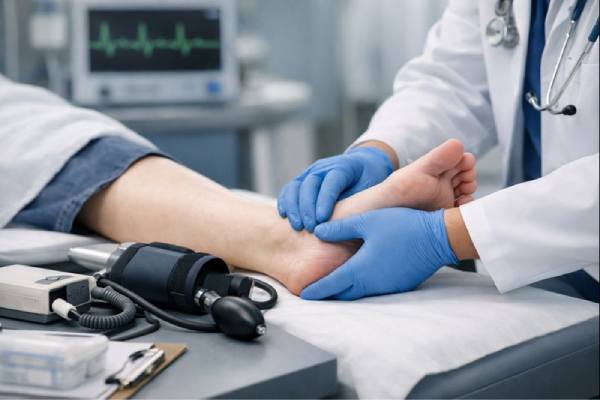
- Pulse exam in the groin, behind the knee, and at the ankle/foot
- Handheld Doppler signals to assess whether flow sounds strong, weak, or absent
- Skin assessment for temperature, capillary refill, ulcer features, and tissue loss
- Neuropathy screening in people with diabetes, because loss of sensation changes wound strategy
Perfusion testing
Common tests include:
- Ankle-brachial index (ABI): compares ankle and arm pressures
- Useful, but can be falsely normal in calcified arteries.
- Toe pressure and toe-brachial index: often more reliable than ABI in diabetes and kidney disease.
- Transcutaneous oxygen pressure (TcPO2) or skin perfusion pressure: helps estimate whether a wound can heal and whether revascularization is needed.
- Segmental pressures and pulse volume recordings: help localize disease and assess overall limb perfusion.
No single number makes the decision alone. Clinicians combine test results with the real-world problem: rest pain, ulcer duration, depth, infection, and tissue loss.
Staging systems that guide urgency and strategy
Modern care often uses structured staging, such as:
- WIfI: Wound, Ischemia, and foot Infection
- This approach clarifies limb threat level and helps prioritize revascularization and wound care intensity.
- Anatomic mapping concepts that describe where disease sits (inflow vs outflow, below-knee involvement) and whether endovascular, bypass, or hybrid approaches are realistic.
Staging is not just paperwork. It helps answer practical questions: How urgent is this? Is limb salvage likely? Which approach best matches the patient’s risk and anatomy?
Imaging to plan revascularization
Once CLI/CLTI is suspected, imaging often follows:
- Duplex ultrasound: noninvasive, shows flow and narrowing in real time.
- CT angiography (CTA): detailed arterial roadmap; requires contrast and radiation.
- MR angiography (MRA): alternative imaging route; may be limited by kidney function or implanted devices in some cases.
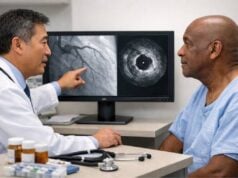
- Catheter angiography: invasive but highly detailed; often used when a procedure is likely because treatment can sometimes happen in the same setting.
A parallel track runs at the same time: evaluate the heart and kidneys, check blood counts, assess infection, and coordinate wound care. CLI/CLTI is a systems problem, and diagnosis succeeds best when vascular, wound, and medical teams work from the same plan.
Treatments that save limbs and function
Treatment is typically urgent and layered. The goal is not only to “open an artery,” but to restore enough blood flow for healing while controlling infection, protecting the wound, and reducing future cardiovascular risk.
Core principle: revascularization when feasible
For many patients with CLI/CLTI, revascularization is the limb-saving step. Options include:
- Endovascular therapy: minimally invasive approaches such as balloon angioplasty, stents, atherectomy, or drug-coated devices in selected settings.
- Surgical bypass: creating a new route for blood, often using the patient’s own vein; especially valuable when long segments are blocked and a good vein conduit is available.
- Hybrid approaches: combining open and endovascular techniques during the same treatment course.
Choosing between strategies depends on anatomy (where disease is and how long it is), the quality of available vein, infection status, patient frailty, and the urgency of tissue loss. Recent large trials have shown that “best” strategy can differ by patient group, anatomy, and conduit availability—so individualized planning matters.
Wound care and infection control are not optional
Revascularization alone does not heal a wound if pressure, bacteria, or dead tissue remain. Effective care often includes:
- Offloading: reducing pressure on the ulcer (special shoes, boots, or casts), especially in diabetic foot ulcers.
- Debridement: removing dead tissue when appropriate and safe, sometimes staged around revascularization.
- Culture-guided antibiotics when infection is suspected or confirmed.
- Drainage or minor amputation of nonviable toes/forefoot tissue when needed to control infection and allow healing.
- Moisture-balanced dressings chosen for drainage level; overly dry or overly wet environments can both slow healing.
Medical therapy that protects the whole person
Because CLI/CLTI signals advanced atherosclerosis, clinicians typically address:
- High-intensity statin therapy to reduce cardiovascular risk and slow plaque progression.
- Antiplatelet therapy (and, in selected patients, intensified antithrombotic approaches) to reduce vascular events.
- Blood pressure and diabetes optimization with realistic targets and follow-up.
- Smoking cessation support with counseling and pharmacotherapy when appropriate, because limb outcomes are far worse with ongoing nicotine exposure.
- Pain control that allows sleep and function, while avoiding overly sedating regimens when possible.
When revascularization is not possible
Some patients have “no-option” anatomy, severe frailty, or medical conditions that make procedures too risky. In those cases, care focuses on:
- Maximizing medical therapy and wound protection
- Aggressive infection prevention and early treatment
- Comfort-focused pain care
- Clear goals-of-care discussions that respect quality of life and mobility priorities
Even when limb salvage is not achievable, thoughtful care can reduce suffering and prevent emergency amputations under crisis conditions.
Daily management, prevention, and when to seek help
Living with CLI/CLTI requires a plan that extends beyond the procedure. The weeks after revascularization are often when small mistakes—tight shoes, missed dressing changes, uncontrolled swelling—undo progress. A practical routine protects healing and reduces recurrence.
Daily foot protection habits that matter
These are high-yield steps many people underestimate:
- Inspect feet daily, including between toes and the heel. Use a mirror or ask a family member if bending is difficult.
- Keep skin clean and gently moisturized, but avoid soaking feet for long periods, which can macerate skin.
- Choose footwear deliberately: wide toe box, no friction seams, and never “break in” new shoes on an at-risk foot.
- Protect from heat and cold: reduced sensation can lead to burns from heating pads or frost injury in cold weather.
If you have diabetes, treat any blister or cut as time-sensitive. Waiting “to see if it improves” can allow a small problem to become limb-threatening.
Wound care follow-through
Healing is usually measured in weeks to months, not days. Consider these practical anchors:
- If a wound is not clearly improving over 2–4 weeks, the plan should be reassessed.
- If dressings are repeatedly soaked through, odor increases, or redness expands, assume infection is worsening until proven otherwise.
- Elevate the leg for swelling control as recommended, but if elevation sharply worsens ischemic pain, discuss positioning guidance with the care team.
Risk-factor control that prevents the next crisis
Long-term prevention is about slowing plaque progression and protecting the heart and brain:
- Stop smoking and avoid nicotine in all forms if possible; relapse is common, so structured support is often needed.
- Stay on vascular-protective medications unless your clinician changes them.
- Treat blood pressure, cholesterol, and diabetes with consistent follow-up.
- Move safely: after wounds stabilize, structured walking and strength work can improve function, but intensity should match perfusion status and wound healing stage.
When to call your clinician urgently
Contact your care team promptly if you notice:
- New rest pain or sudden increase in pain
- New wound, blister, or crack that does not improve within a few days
- Black tissue, blue toes, or a foot that suddenly feels colder
- Drainage, odor, fever, or spreading redness
- Loss of pulse signals you previously had (if you have been taught to check)
If symptoms are severe—rapidly spreading discoloration, uncontrolled pain, fever with a foot wound, or a suddenly cold and pale limb—seek emergency care. With CLI/CLTI, time protects tissue. Early evaluation often prevents major surgery later.
References
- 2024 ACC/AHA/AACVPR/APMA/ABC/SCAI/SVM/SVN/SVS/SIR/VESS Guideline for the Management of Lower Extremity Peripheral Artery Disease: A Report of the American College of Cardiology/American Heart Association Joint Committee on Clinical Practice Guidelines – PubMed 2024 (Guideline)
- 2024 ESC Guidelines for the management of peripheral arterial and aortic diseases – PubMed 2024 (Guideline)
- Surgery or Endovascular Therapy for Chronic Limb-Threatening Ischemia – PubMed 2022 (RCT)
- A vein bypass first versus a best endovascular treatment first revascularisation strategy for patients with chronic limb threatening ischaemia who required an infra-popliteal, with or without an additional more proximal infra-inguinal revascularisation procedure to restore limb perfusion (BASIL-2): an open-label, randomised, multicentre, phase 3 trial – PubMed 2023 (RCT)
- Global vascular guidelines on the management of chronic limb-threatening ischemia – PubMed 2019 (Guideline, seminal)
Disclaimer
This article is for educational purposes only and does not provide medical advice, diagnosis, or treatment. Critical limb ischemia is a serious condition that can lead to limb loss and can signal high risk of heart attack or stroke. If you have rest pain in the foot, a non-healing wound, black or rapidly changing skin, fever with a foot ulcer, or a suddenly cold and pale limb, seek urgent medical care. Do not start, stop, or change prescription medicines or wound treatments without guidance from a licensed clinician who can evaluate your symptoms, exam findings, and test results.
If you found this article useful, please share it on Facebook, X (formerly Twitter), or any platform you prefer, and follow us on social media. Your support through sharing helps our team continue producing clear, practical health content.