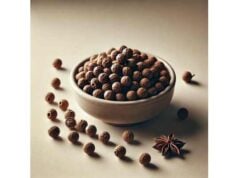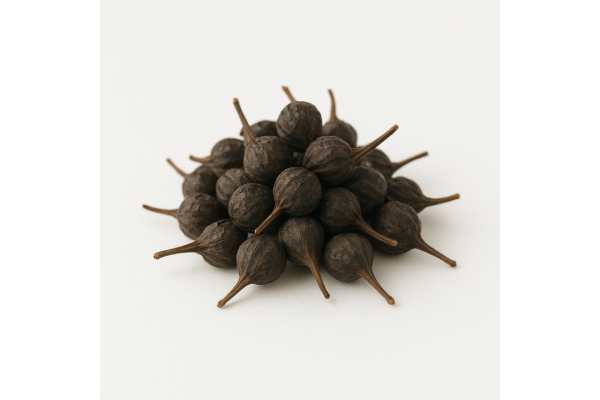
Cubeb, often called tailed pepper or kabab chini, is a small aromatic berry with a surprisingly rich story. Once traded along the same routes as black pepper and cloves, cubeb is now a niche spice, best known in Indonesian, North African, and some Middle Eastern cuisines. The dried berries look like tiny peppercorns with a short stem “tail,” and they deliver a flavor that is peppery, resinous, and slightly camphor-like.
Beyond its culinary role, cubeb has a long history in traditional medicine for digestive, respiratory, urinary, and reproductive complaints. Modern laboratory and animal research has started to explore these uses, focusing on its essential oil, lignans, and polyphenols, which show antioxidant, antimicrobial, and anti-inflammatory activity. At the same time, cubeb is potent enough that concentrated extracts and essential oils raise real questions about safe doses and interactions.
This article explains what cubeb is, how it is used in the kitchen, what is known about its potential health effects, and how to use it thoughtfully and safely.
Key Takeaways for Cubeb
- Cubeb is an aromatic “tailed” pepper with a peppery, resinous flavor used in Indonesian, North African, and herbal traditions.
- Laboratory and animal studies suggest antioxidant, antimicrobial, and organ-protective actions, but human evidence is still limited and preliminary.
- A practical culinary amount is about 0.5–2 g of ground cubeb per day (roughly a pinch up to 1/2 teaspoon), used a few times per week.
- People who are pregnant, breastfeeding, have kidney, liver, or active digestive disease, or who take multiple medications should avoid medicinal cubeb and stay within small culinary amounts.
Table of Contents
- Cubeb Spice Detailed Overview
- Cubeb Nutrition and Key Compounds
- Evidence-Based Health Benefits of Cubeb
- Cubeb Risks Allergies and Interactions
- Selecting Cubeb Quality and Storage
- Cubeb Preparation Cooking and Retention
- Cubeb Portions Comparisons and FAQs
Cubeb Spice Detailed Overview
Cubeb (Piper cubeba) is a climbing vine in the pepper family. It produces small, round berries that are harvested unripe and dried. Each berry keeps a short stalk attached, giving the characteristic “tail” that distinguishes it from ordinary black pepper. Once dried, cubeb berries turn dark brown to black, with a wrinkled surface and a firm, slightly woody texture.
The aroma of cubeb is complex and somewhat surprising if you expect simple heat. Crushing the berries releases notes of black pepper, pine resin, and a hint of camphor or incense. On the palate, cubeb tastes warm and peppery but not as sharp as black pepper, with a lingering, slightly bitter finish. That layered profile is why chefs often place cubeb somewhere between black pepper and allspice in the flavor landscape.
Historically, cubeb has been part of the global spice trade for centuries. It was used in medieval European cookery in meat dishes, sauces, and sweets, often alongside cinnamon, cloves, and ginger. Later, political and economic shifts in spice production and trade reduced its presence in European kitchens, while black pepper and new seasonings took center stage. Cubeb, however, remained important in Indonesia, parts of India, North Africa, and some Middle Eastern traditions.
Today, cubeb is still used in:
- Indonesian curries and gulai dishes
- Some versions of North African ras el hanout and other complex spice blends
- Specialty gins and liqueurs, where it adds a peppery, resinous top note
- Traditional herbal mixtures for digestive and urinary complaints, often under the name kabab chini
In many of these uses, cubeb is not the star but a supporting player. A small handful of berries in a spice blend can subtly deepen aroma and complexity without announcing itself. This quiet versatility also means cubeb can be introduced into modern cooking without dramatically changing a dish’s character.
Understanding cubeb as both a culinary and traditional medicinal spice helps frame the rest of the discussion. It is not just another pepper; it brings a distinct volatile oil profile and long-standing ethnobotanical uses that deserve respect and careful application.
Cubeb Nutrition and Key Compounds
Like most spices, cubeb is used in small amounts, so it adds far more flavor and phytochemicals than calories or macronutrients. On a per-gram basis, dried cubeb contains carbohydrates (including fiber), small amounts of protein and fat, and a variety of minerals. Yet a typical culinary portion of about 0.5–2 g contributes only a few calories and modest amounts of micronutrients.
What makes cubeb nutritionally interesting is its concentration of specialized plant compounds. The berries contain:
- Essential oil: Often around 10–15% of the dried weight. This is dominated by aromatic terpenes such as sabinene, 1,8-cineole, and various sesquiterpenes like β-caryophyllene and cubebene. These molecules are responsible for the peppery, resinous, and slightly camphor-like aroma.
- Lignans: Including cubebin, hinokinin, and related compounds. These have been studied in experimental models for potential effects on inflammation, vascular tone, and tumor cell biology.
- Phenolic compounds and flavonoids: A range of phenolic acids and flavonoids contribute antioxidant activity by helping to neutralize free radicals and support endogenous defense systems.
- Minor fatty acids and amino acids: Analyses of cubeb show the presence of polyunsaturated fatty acids such as linoleic acid and small amounts of essential amino acids like isoleucine and phenylalanine, though again, culinary amounts are small.
These components work together rather than in isolation. For example, antioxidant capacity does not come from one single “active,” but from the combined actions of phenolics, flavonoids, and some of the volatile terpenes. Likewise, any digestive or respiratory effect likely reflects multiple compounds acting on nerves, smooth muscle, and local immune cells.
Compared with black pepper, which is dominated by the alkaloid piperine, cubeb shifts emphasis toward essential oils and lignans. This helps explain why cubeb’s flavor is more perfumed and resinous, and why research has focused on antioxidant, antimicrobial, and potential organ-protective effects rather than only on pungency and absorption-enhancing properties.
From a practical nutrition standpoint, the key point is that cubeb behaves like many aromatic spices: it is a tiny, dense package of bioactive molecules with the potential to influence oxidative stress, inflammation, and microbial balance, even though it contributes very little energy or basic nutrients. Used in small amounts, it can gently support a diet already built on whole grains, legumes, vegetables, fruits, and healthy fats.
Evidence-Based Health Benefits of Cubeb
Research on cubeb is still relatively young compared with better-known herbs and spices, but the available data suggest several promising lines of action. Most findings come from laboratory and animal models, with far fewer human studies. This means the following benefits should be viewed as possibilities rather than proven clinical effects.
Antioxidant and anti-inflammatory actions
Experiments using cubeb extracts repeatedly show strong antioxidant capacity in standard laboratory tests. These extracts can neutralize reactive oxygen species and help preserve the activity of internal antioxidant enzymes. In animal models exposed to chemical toxins, cubeb preparations have reduced markers of oxidative damage and improved levels of protective enzymes, suggesting a genuine organ-protective effect in stressful conditions.
At the same time, cubeb appears to modulate inflammatory signaling. Extracts and isolated lignans influence cytokines and pathways involved in inflammation, sometimes reducing pro-inflammatory markers and supporting anti-inflammatory mediators. These dual antioxidant and anti-inflammatory actions are relevant to chronic conditions in which low-grade inflammation and oxidative stress are central.
Liver and kidney support in experimental models
Several animal studies suggest that cubeb may help protect the liver and kidneys from specific toxic insults. In chemically induced liver injury models, cubeb extracts have reduced enzyme markers of damage, limited lipid peroxidation, and improved the microscopic appearance of liver tissue. Similar patterns have been reported in kidneys exposed to certain drugs known to cause nephrotoxicity, with cubeb-containing preparations mitigating functional and structural injury.
These findings are encouraging, especially given cubeb’s traditional use in formulations aimed at urinary and systemic health. However, the doses used in animals are often high relative to typical human dietary intake, and they are usually delivered as concentrated extracts rather than as simple culinary spice. Translating these results into day-to-day dietary advice requires caution.
Metabolic and digestive effects
Cubeb has shown activity in laboratory models related to carbohydrate handling and digestion. Extracts can inhibit enzymes such as alpha-amylase, which are involved in breaking down complex carbohydrates, and can influence glucose uptake in simple cell systems. These results suggest a possible role in moderating blood sugar rises after meals, but they have not yet been thoroughly tested in human trials.
Digestively, cubeb has been used traditionally as a carminative and stomachic, meaning it is thought to reduce gas and support digestive comfort. Culinary uses in rich or legume-heavy dishes align with this role. Warm, aromatic compounds often stimulate saliva and gastric secretions, which can make heavy foods feel easier to digest. Nevertheless, at higher doses, cubeb may irritate the stomach or intestines, so more is not necessarily better.
Antimicrobial and respiratory roles
The essential oil of cubeb has demonstrated activity against several bacteria, fungi, and parasites in laboratory studies. In traditional contexts, cubeb has been included in mixtures for respiratory complaints and urinary tract discomfort, likely drawing on these antimicrobial and expectorant properties. Modern interest includes possible applications in oral care and topical preparations, though this remains mostly experimental.
In sum, cubeb appears to offer genuine biological activity in several domains. The most consistent themes are antioxidant, anti-inflammatory, antimicrobial, and potential liver and kidney protection in experimental settings. Until more human studies are conducted, its most appropriate role is as a supportive culinary spice, not as a stand-alone treatment for any disease.
Cubeb Risks Allergies and Interactions
Despite the promising findings, cubeb is not risk free. Like many potent spices, it can irritate sensitive tissues and may interact with medications or underlying health conditions, especially at doses beyond normal culinary use.
Digestive and urinary irritation
Cubeb’s essential oils and related compounds are pungent and resinous. In susceptible people or at high doses, they may irritate the stomach and intestines, causing burning, nausea, or discomfort. Individuals with active gastritis, peptic ulcers, or inflammatory bowel disease are more likely to experience adverse effects and should treat cubeb as a potential trigger, especially in concentrated forms.
Traditional medical texts and some modern safety summaries also warn that cubeb can irritate the kidneys and bladder when used in excess. While some experimental work suggests that specific cubeb-based preparations may protect the kidneys under certain conditions, those findings do not cancel out the risk of irritation in everyday use. People with chronic kidney disease, recurrent urinary problems, or a history of kidney stones should be especially cautious and avoid self-prescribing cubeb for urinary symptoms.
Liver health and high-dose exposure
Most culinary use of cubeb is unlikely to harm the liver. However, experimental data show that very high doses of cubeb extracts and certain isolated compounds can cause genetic and cellular damage in animals. There are also concerns about potential liver stress at sustained high intakes of concentrated preparations.
Because the liver is responsible for processing many of cubeb’s active constituents, people with existing liver disease, unexplained elevation of liver enzymes, or heavy alcohol use should avoid medicinal doses of cubeb and stay within small culinary amounts, if they use it at all. Any consideration of cubeb supplements in these situations should involve direct supervision by a clinician.
Allergy and sensitivity
Some individuals may experience allergic or sensitivity reactions to cubeb, ranging from skin irritation to respiratory symptoms. As with other spices, true allergy is probably uncommon but can be serious when it occurs. Signs might include rash, itching, swelling, wheezing, or difficulty breathing after exposure. Anyone who notices consistent symptoms after consuming or handling cubeb should stop using it and seek medical evaluation.
Medication interactions
Certain lignans and related compounds in cubeb have been identified in experimental work as inhibitors of key drug-metabolizing enzymes, particularly CYP3A4. This enzyme helps process many common medications, including some statins, blood pressure drugs, immunosuppressants, and antidepressants. Inhibiting it could, in theory, increase levels of these drugs in the body, potentially heightening effects or side effects.
Although real-world interaction data are limited, the possibility is significant enough that people taking multiple medications, especially those known to rely on CYP3A4, should avoid high-dose cubeb supplements and limit themselves to occasional culinary use unless their prescribing clinician advises otherwise.
Special populations
Pregnant and breastfeeding individuals, infants, and young children are particularly vulnerable to the effects of concentrated herbal products. There is little direct safety data for cubeb in these groups. Given its potency, potential for organ irritation, and possible drug interactions, medicinal use of cubeb in pregnancy or early life is not recommended without specialist guidance. Small amounts in occasional family dishes are unlikely to have been studied formally, so many practitioners advise erring on the side of caution.
The underlying principle is straightforward: as a spice, cubeb can be part of varied cooking in small amounts for most healthy adults. As a concentrated extract or medicinal remedy, it requires the same caution and professional oversight you would expect for any pharmacologically active substance.
Selecting Cubeb Quality and Storage
The quality of cubeb you buy has a direct impact on flavor, potency, and how much you need to use. Good-quality cubeb allows you to season effectively with less, which can support both safety and enjoyment.
Choosing whole versus ground cubeb
Whole cubeb berries are usually the best choice for freshness and flexibility. When examining them:
- Look for small, round, dark brown to black berries each with a short stem “tail.”
- Avoid berries that are pale, excessively dusty, moldy, or broken into many fragments.
- Crush a berry between your fingers or in a mortar; it should release a clear, peppery, resinous aroma.
Ground cubeb is more convenient but loses volatile oils more quickly. If you opt for pre-ground cubeb, choose a supplier with a reputation for freshness and consider buying smaller amounts more often rather than a large container that will sit for years.
Reading labels and understanding blends
Pure cubeb should appear on the ingredient list simply as cubeb, cubeb pepper, tailed pepper, or Piper cubeba. In spice blends, especially those marketed as ras el hanout, curry powders, or “mixed pepper” seasonings, cubeb may or may not be present, and other spices can dominate the flavor and nutritional impact.
Because cubeb is quite potent, it is sometimes used sparingly in blends, which means the overall risk from those products is generally lower than from using pure cubeb in large amounts. Still, if you have health concerns that make you cautious, it is worth checking the ingredient list or asking the supplier about cubeb’s presence and proportion.
Storage for maximum aroma and stability
To preserve both flavor and functional compounds:
- Store cubeb in an airtight container, ideally a glass jar with a tight lid.
- Keep it in a cool, dark, dry cupboard away from the stove, oven, or dishwasher.
- Avoid exposure to sunlight and humidity, which accelerate loss of aroma and can encourage spoilage.
Whole cubeb can often maintain good quality for a year or more if stored properly. Ground cubeb usually peaks within six to twelve months. As a simple test, open the container and smell: if the aroma is faint or flat, the spice is past its prime. While aged cubeb is not necessarily unsafe, it may be tempting to use more to compensate, which could push intake higher than intended.
Sustainability and sourcing
Cubeb is mainly grown in parts of Indonesia and South Asia, often by smallholder farmers. When possible, choosing products from suppliers that emphasize fair prices, transparent supply chains, and responsible cultivation practices can support both human and environmental sustainability. Organic certification may indicate reduced pesticide use, though it does not guarantee anything about social conditions or cubeb’s specific phytochemical profile.
By paying attention to quality and storage, you not only enhance the flavor of your dishes but also help ensure that you are using cubeb in a way that respects the people and ecosystems involved in its production.
Cubeb Preparation Cooking and Retention
Cubeb’s strength means it should be handled with a light touch. A little can transform a dish; too much can make it resinous and overwhelming. Understanding basic preparation techniques helps you get the best from this spice while preserving its aromatic and functional components.
Working with whole berries
Whole cubeb berries are ideal for dishes that cook for some time and for situations where you want to remove the spice before serving. Common approaches include:
- Lightly crushing a few berries and adding them to stews, braises, or rice dishes.
- Including a small handful in marinades for meats or robust vegetables.
- Using whole cubeb in pickling brines or spiced syrups, then straining them out.
Gently toasting the berries in a dry skillet over low heat for a minute or two can deepen their aroma. The goal is to warm and awaken the essential oils, not burn them; if the berries smoke or turn very dark, they have gone too far and will taste bitter.
Grinding and blending
For even distribution, especially in dry rubs and baking, grinding cubeb is helpful. A clean coffee grinder or dedicated spice mill works well. Many cooks like to grind cubeb along with other spices to create custom blends, such as:
- A warm pepper blend combining black pepper, cubeb, and allspice.
- A curry-style mix with cubeb, coriander, cumin, cloves, and cinnamon.
- A baking spice mix pairing small amounts of cubeb with cinnamon, nutmeg, and ginger.
Because ground spices lose aroma faster, grind only what you expect to use within a few weeks. In recipes, start with very modest amounts, such as 1/8 teaspoon of ground cubeb in a dish serving several people, and adjust in future batches according to taste.
Cooking methods and compound retention
Cubeb’s key compounds include both volatile terpenes (responsible for aroma) and less volatile phenolics and lignans. To make good use of both:
- Add some cubeb earlier in cooking, so its flavors integrate into the dish.
- Consider reserving a small amount to add toward the end to refresh the aroma.
- For drinks or broths, steep lightly crushed berries in hot (just off-boiling) liquid with a lid on to capture rising vapors.
Prolonged high-heat dry frying can damage both flavor and beneficial compounds. Gentle simmering, braising, and infusion methods are usually better choices. As with many spices, a covered pot or teapot helps keep volatile components in the final dish rather than letting them escape into the kitchen air.
Avoiding overuse and managing mistakes
Because cubeb is strong, it is easy to overshoot, especially when experimenting. Helpful habits include:
- Measuring rather than eyeballing when you are still learning your preferred level.
- Starting with half the amount you think you might like and adjusting in future batches.
- Combining cubeb with milder spices so its intensity is balanced.
If a dish ends up too heavy on cubeb, you can often rescue it by increasing the base ingredients (more broth, vegetables, grains, or legumes) to dilute the concentration. In very intense cases, splitting the dish into two pots and extending each with neutral components can salvage the flavors.
Handled thoughtfully, cubeb can become a distinctive but harmonious member of your spice collection, contributing depth and intrigue without dominating the plate.
Cubeb Portions Comparisons and FAQs
Because cubeb is less familiar than black pepper or cinnamon, many people are unsure how much is reasonable, how it compares to other spices, and when it might be better to avoid it. This section offers practical guidance and answers to common questions.
Typical portions and safe ranges
There are no official dietary intake guidelines for cubeb. Drawing from traditional culinary practice and the limited research available, reasonable culinary use for most healthy adults might look like:
- Roughly 0.5–2 g of ground cubeb per day in food (about a pinch up to 1/2 teaspoon),
- Used on some days but not necessarily every single day,
- Spread across dishes rather than concentrated into a single large dose.
In the context of a diverse diet, such levels are likely to stay well below doses used in experimental extracts while still providing aroma and phytochemicals. Heavier, long-term use in teas, tinctures, or capsules should be reserved for settings where a qualified practitioner can evaluate potential risks and interactions.
Comparison with black pepper and long pepper
Cubeb often gets grouped with other “peppers,” but it behaves differently:
- Black pepper (Piper nigrum) is primarily defined by piperine, which is sharply pungent and known to influence drug metabolism and nutrient absorption.
- Long pepper (Piper longum) shares piperine with black pepper and has its own traditional uses and hot, deep flavor.
- Cubeb (Piper cubeba) has a milder heat but a more perfumed, resinous, and slightly bitter edge, driven by its essential oil and lignan profile.
Practically, this means you can often substitute a small amount of cubeb for black pepper to add complexity, but you should not assume they are interchangeable in either flavor or health effects. Each brings a different set of active compounds and interaction possibilities.
Frequently asked questions
Can cubeb help treat specific diseases such as diabetes, liver disease, or kidney disease?
Evidence from laboratory and animal studies suggests that cubeb extracts may influence oxidative stress, inflammatory pathways, and certain metabolic enzymes, and may protect organs from specific experimental insults. However, there are very few controlled human trials, and those that exist often use cubeb as part of multi-ingredient traditional formulas. Cubeb should not be used as a stand-alone treatment for any disease or as a reason to change prescribed medication without medical guidance.
Is cubeb safe during pregnancy or while breastfeeding?
Human safety data for cubeb in pregnancy and lactation are limited. Because it is pharmacologically active, can irritate the urinary and digestive tracts, and may interact with medications, medicinal use during these life stages is not recommended without specialist advice. Occasional small culinary amounts in shared family dishes may be acceptable for some, but prudent practice is to keep use minimal and consult a health professional if in doubt.
Can I use cubeb if I have kidney or bladder problems?
People with chronic kidney disease, recurrent urinary tract infections, kidney stones, or inflammatory conditions of the urinary tract should be cautious. While some experimental work suggests potential protective effects under specific conditions, there are also traditional and modern warnings about cubeb’s ability to irritate renal and bladder tissues. Avoiding self-treatment and discussing any herbal use with a nephrologist or primary care clinician is the safest course.
What about interactions with prescription medications?
Cubeb’s lignans and related compounds may inhibit certain drug-metabolizing enzymes, especially those responsible for handling many common medications. While the exact clinical significance is not yet clear, anyone taking multiple drugs, or medications with a narrow safety margin, should treat high-dose cubeb or concentrated extracts as potentially interactive. Occasional culinary use in small amounts is less likely to pose a problem, but discussing all herb and supplement use with your prescribing clinician remains important.
Should I use cubeb essential oil internally?
Internal use of cubeb essential oil is not recommended without expert supervision. Essential oil is far more concentrated than the whole spice and carries a higher risk of irritation, toxicity, and interactions. For most people, the safest and most enjoyable way to experience cubeb is as a culinary spice and, where appropriate, as part of professionally formulated herbal preparations rather than as neat oil.
By treating cubeb as a potent seasoning that belongs within a broader pattern of whole-food eating and professional care, you can explore its unique flavor and potential benefits while staying on the safe side of its considerable power.
References
- Cubeb (Piper cubeba L.f.): A comprehensive review of its botany, phytochemistry, traditional uses, and pharmacological properties 2022 (Systematic Review)
- Cubeb (Piper cubeba L.): nutritional value, phytochemical profiling and dermacosmeceutical properties 2024 (Systematic Review)
- Evaluation of the effectiveness of Piper cubeba extract in the amelioration of CCl4-induced liver injuries and oxidative damage in the rodent model 2015 (Experimental Study)
- Antioxidant and in vitro antidiabetic activity of methanol extract of Piper cubeba L. 2018 (Experimental Study)
- Potent CYP3A4 inhibitory constituents of Piper cubeba 2005 (Experimental Study)
Medical Disclaimer
The information in this article is intended for general educational purposes only and does not constitute medical advice, diagnosis, or treatment. Cubeb and other herbal products can interact with medications, laboratory tests, and underlying health conditions, and their effects vary widely between individuals. Always consult a qualified healthcare professional before using cubeb or any supplement for health-related purposes, especially if you are pregnant, breastfeeding, taking prescription or over-the-counter medicines, or living with chronic illness. Never ignore or delay seeking professional medical advice because of something you have read online.
If you found this overview of cubeb useful, you are welcome to share it with others on Facebook, X (formerly Twitter), or any platform you prefer. Sharing thoughtful, evidence-informed content helps more people access balanced information and supports the continued creation of high-quality health and nutrition resources.