Cystic adventitial disease is a rare cause of reduced blood flow in an artery, most often behind the knee. Instead of plaque building up inside the vessel, a jelly-like cyst forms in the outer wall and squeezes the artery from the outside—like a tight ring around a garden hose. Many people first notice it as intermittent claudication (leg pain with walking), especially when they are otherwise healthy and active. Because the symptoms can resemble more common circulation problems, diagnosis is sometimes delayed until imaging is done.
This guide explains what the condition is, why it happens, what symptoms to watch for, how doctors confirm it, and which treatments tend to work best. You’ll also find practical recovery and self-management tips, plus clear “when to seek care” signals.
Table of Contents
- What is cystic adventitial disease?
- Why does it happen and who gets it?
- Symptoms, red flags, and complications
- How doctors diagnose it
- Treatment options and what to expect
- Recovery, prevention, and when to seek care
What is cystic adventitial disease?
Cystic adventitial disease (often shortened to CAD or called “adventitial cystic disease”) is an uncommon condition where a fluid-filled cyst develops in the outer layer of a blood vessel wall. In most cases, it affects an artery in the leg—classically the popliteal artery behind the knee. The key idea is where the blockage comes from: the cyst grows in the vessel wall and presses inward, narrowing the channel that carries blood.
That difference matters because it changes how symptoms show up and how treatment works. In atherosclerosis (typical “hardening of the arteries”), narrowing is caused by plaque inside the artery. In cystic adventitial disease, the inside lining may be relatively normal, but the artery still gets pinched. People can have significant walking pain even if they have no history of smoking, diabetes, or high cholesterol.
The cyst contents are often thick and gelatin-like, similar to joint fluid. Some cysts are single-chamber; others have multiple small pockets. The compression can be mild and intermittent, or severe enough to block the artery. In a few cases, symptoms can fluctuate—better for weeks, then worse again—because the cyst’s pressure changes.
Although the popliteal artery is the best-known location, cystic adventitial disease can appear in other arteries (and more rarely in veins). Wherever it occurs, the pattern is similar: external compression causes reduced flow, especially during activity when muscles need more oxygen.
A helpful mental image is this: plaque is like buildup inside a pipe; cystic adventitial disease is like a clamp around the pipe. That’s why a stent alone often fails—because the force is coming from outside.
Why does it happen and who gets it?
No single cause explains every case, but several theories help make sense of why this condition tends to appear near joints and in otherwise healthy people.
Leading theories doctors use
- Joint-connection (articular) theory: Many specialists think the cyst may be linked to the nearby joint capsule. The idea is that joint fluid tracks along a small channel and collects in the vessel’s outer wall, forming a cyst that can refill over time. This theory fits the “near the knee” pattern and helps explain recurrences when the joint connection is not addressed.
- Developmental (embryologic) theory: Another explanation is that during early development, certain cells destined for joint structures end up near the vessel wall and later produce cyst material.
- Repetitive microtrauma: Repeated bending and stress around the knee may play a role, not as the sole cause, but as a trigger that encourages cyst formation or expansion in someone who is predisposed.
In practice, more than one factor may contribute: anatomy, joint proximity, and local mechanical stress can line up in the same person.
Typical risk profile
Cystic adventitial disease is unusual because it often shows up in people who don’t have classic cardiovascular risk factors. Many patients are:
- Middle-aged, though it can occur outside this range
- Active or physically demanding in work or sport
- Otherwise low-risk for plaque-related peripheral artery disease
That said, having common risk factors (like smoking or diabetes) does not rule it out—it just makes the diagnostic puzzle harder, because clinicians may assume plaque is the only explanation.
Why the popliteal artery is a common target
The popliteal artery sits in a tight space behind the knee and moves with every step. It is also close to joint structures that could plausibly supply fluid to a cyst. That combination—limited room, frequent bending, and joint proximity—helps explain why even a small cyst can cause noticeable symptoms.
A practical takeaway: when a person has calf pain with walking but lacks the usual “plaque” story, cystic adventitial disease should stay on the short list, alongside other non-plaque causes like popliteal artery entrapment.
Symptoms, red flags, and complications
The most common symptom is exercise-related leg discomfort caused by reduced blood flow past the compressed segment. Many people describe it as a deep ache, tightness, or cramp in the calf that starts after a predictable walking distance and improves with rest.
Common symptoms
- Intermittent claudication (leg pain with walking): Often the first sign. It may begin subtly—only during hills or faster pace—then progress.
- Symptoms linked to knee position: Some people notice symptoms worsen with knee flexion or certain leg positions, because bending can increase compression.
- Coldness, fatigue, or heaviness in the foot: Especially after exertion.
- Reduced pulses during certain maneuvers: A clinician may find foot pulses fade when the knee is bent or after exercise.
A notable pattern is the “healthy-but-suddenly-limited” story: someone who could previously walk or run without trouble now develops consistent calf pain, despite normal heart and lung fitness.
When symptoms can look confusing
Cystic adventitial disease can mimic:
- Typical peripheral artery disease (plaque-related narrowing)
- Nerve or spine problems (pain radiating down the leg)
- Muscle strain or compartment-related pain
- Popliteal artery entrapment (another knee-area cause of reduced flow)
The difference is often in the details: predictable exertional pain, minimal risk factors, and imaging that shows a cystic structure compressing the vessel.
Red flags that need urgent care
Seek urgent medical attention if any of these occur, especially if they are new:
- Rest pain (foot pain even when lying down)
- Sudden worsening of symptoms over hours to days
- Pale, cool, or numb foot
- Weakness or inability to move the foot
- Non-healing sores or toe discoloration
These can suggest severe flow reduction or acute blockage. While rare in cystic adventitial disease, severe narrowing can become limb-threatening if blood supply drops enough.
Potential complications
- Progressive narrowing or occlusion of the artery if the cyst expands
- Recurrence after treatment, particularly when the cyst is drained but the underlying source remains
- Misdiagnosis and delayed care, leading to prolonged disability or unnecessary treatments
The good news is that once correctly identified, many people recover well because the underlying artery is often otherwise healthy.
How doctors diagnose it
Diagnosis usually starts with the story: exertional calf pain in someone who doesn’t “fit” typical plaque-related disease. From there, the goal is to confirm reduced blood flow and identify the cause of compression.
Step 1: Exam and simple circulation tests
A clinician will check:
- Pulses in the groin, behind the knee, and at the ankle/foot
- Skin temperature and color differences between legs
- Whether symptoms or pulses change with knee position
They may also use the ankle-brachial index (ABI), which compares blood pressure at the ankle to the arm. In cystic adventitial disease, ABI can be normal at rest and drop after exercise. Some centers use treadmill or toe-pressure testing to provoke and measure that change.
Step 2: Ultrasound (often the first imaging test)
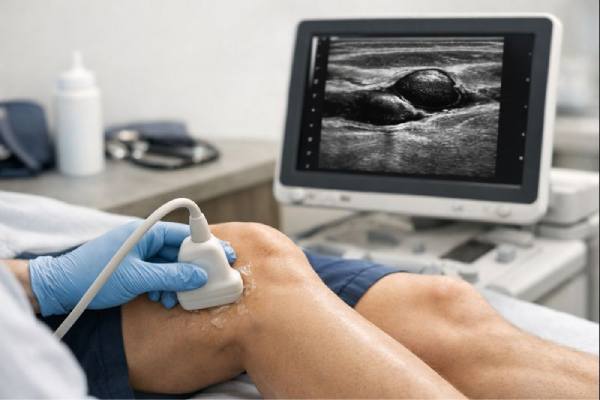
Duplex ultrasound can show:
- A narrowed segment with increased flow velocity
- A cystic-appearing structure in or near the vessel wall
- Evidence of external compression rather than internal plaque
Ultrasound is useful because it is quick and can be repeated. In experienced hands, it can also evaluate changes during foot or knee movement.
Step 3: Cross-sectional imaging to map the cyst
Many clinicians rely on MRI or CT angiography to define:
- The cyst’s size, shape, and exact location
- The length of the affected vessel segment
- Whether there may be a connection toward the nearby joint
- Other diagnoses that could mimic the problem
MRI is particularly good at characterizing fluid-filled structures and can be helpful when planning surgery.
Step 4: Angiography or intravascular imaging in select cases
Catheter angiography may show a smooth, tapered narrowing rather than a rough, irregular plaque pattern. However, angiography mainly outlines the inside of the vessel and may miss the true cause if the narrowing changes with position or pressure.
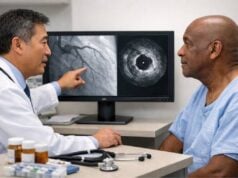
In more complex cases, intravascular ultrasound (IVUS) can help distinguish a cyst compressing the artery wall from plaque inside the wall. This can be valuable when initial tests suggest peripheral artery disease but the picture does not fully fit.
A practical point: diagnosis is often less about one “perfect” test and more about combining the history, flow measurements, and imaging that reveals a cystic lesion.
Treatment options and what to expect
Treatment depends on symptom severity, degree of narrowing, and local expertise. Because the problem is external compression, the most durable treatments usually remove the cyst or replace the affected segment—rather than simply widening the artery from the inside.
When observation can be reasonable
If symptoms are mild and blood flow is acceptable, a clinician may recommend monitoring, especially if symptoms fluctuate. Follow-up typically includes repeat ultrasound and symptom tracking. This approach requires a low threshold to escalate if pain worsens or walking distance declines.
Procedures that drain the cyst
- Percutaneous aspiration (needle drainage): This can provide relief, but recurrence is common because the cyst lining or any joint connection may remain. Thick, gelatinous material can also be difficult to fully aspirate.
- Image-guided puncture with or without injection: Sometimes attempted, but long-term success is variable.
These options may be considered when surgery is high-risk or as a temporary measure, but they are not usually the first choice for durable cure in a healthy patient.
Surgical options with better durability
- Cyst excision (removal of the cyst wall): If the artery itself is intact and the cyst can be removed cleanly, this may restore flow while preserving the native vessel.
- Resection of the affected artery segment with reconstruction: If the artery is severely narrowed, damaged, or the cyst involves a long segment, surgeons may remove that portion and reconstruct flow—often using the patient’s own vein as a graft.
- Addressing a joint connection when present: If imaging or surgical exploration suggests a track toward the joint, treating that connection can reduce the chance of the cyst refilling.
In many reported cases, surgical treatment leads to strong symptom relief because the artery is otherwise healthy and can carry normal flow once decompressed.
Why stents and balloon angioplasty often disappoint
A stent pushes outward from inside the artery, but the cyst pushes inward from outside. That “tug-of-war” is not favorable. Even if flow improves briefly, the external compression can persist or recur, and the stent can become compromised. For this reason, endovascular approaches are usually reserved for unusual situations or as part of a broader plan.
What recovery typically looks like
Recovery varies by procedure:
- After a smaller incision and cyst removal, some people return to daily walking within weeks.
- After bypass or more extensive reconstruction, recovery can take longer and includes wound care, gradual activity progression, and follow-up imaging to confirm the repair stays open.
Your care team will usually schedule repeat ultrasound and symptom checks, because early detection of recurrence makes treatment simpler.
Recovery, prevention, and when to seek care
Living with cystic adventitial disease can feel frustrating because it limits movement in people who often value activity. The most helpful approach is to pair symptom awareness with a clear plan for follow-up and safe return to exercise.
After treatment: a practical recovery roadmap
Most clinicians emphasize three phases:
- Protect the repair (first 1–2 weeks): Focus on wound care, short frequent walks, and leg elevation when resting. Report increasing swelling, drainage, fever, or sudden pain.
- Rebuild capacity (weeks 2–6): Increase walking distance gradually. Many teams suggest adding time in small steps (for example, 5–10 minutes every few days) as long as pain stays minimal and symptoms do not regress.
- Return to sport or demanding work (after clearance): Higher-load activities—running, heavy lifting, or kneeling work—often resume only after follow-up imaging confirms stable flow.
The exact timeline depends on whether your treatment was cyst excision, reconstruction, or bypass.
How to reduce recurrence risk
You cannot fully “lifestyle-prevent” a cyst from forming, but you can reduce avoidable delays and catch problems early:
- Keep follow-up imaging appointments even if you feel better. Recurrence can begin silently.
- Track a simple walking metric: your comfortable walking distance before pain starts. A consistent drop is a useful early warning.
- Discuss joint-related findings with your clinician. If imaging suggests a joint connection, addressing it can matter.
- Avoid self-treating new claudication as a muscle strain if it follows a predictable exertional pattern.
When to see a clinician promptly
Contact your healthcare team if you notice:
- A return of exertional calf pain after improvement
- A new reduction in walking distance over 1–2 weeks
- New foot coolness or color change after activity
- New numbness, tingling, or weakness in the foot
When to seek urgent or emergency care
Go urgently if you develop:
- Rest pain in the foot, especially at night
- Sudden severe leg pain, pale or cold foot, or loss of sensation
- Rapidly worsening symptoms over hours to days
- New sores, black discoloration, or signs of infection
These symptoms can signal severe loss of blood flow and should be treated as time-sensitive.
For many people, the outlook is favorable once the correct diagnosis is made and the cyst is treated definitively. The key is choosing an approach that fits the anatomy and then committing to follow-up so recurrence does not steal months of function.
References
- The etiology and management of cystic adventitial disease 2014 (Systematic Review)
- Cystic adventitial disease of the popliteal artery: A case report with review of literature 2024 (Case Report)
- Cystic adventitial disease 2024 (Imaging)
- Cystic adventitial disease of the popliteal artery with unusual spontaneous regression: A case report with literature review 2022 (Case Report)
- Adventitial Cystic Disease in the Popliteal Artery Diagnosed by Intravascular Ultrasound Imaging 2023 (Case Report)
Disclaimer
This article is for educational purposes and does not provide medical advice, diagnosis, or treatment. Cystic adventitial disease can mimic other conditions that reduce blood flow, some of which require urgent care. If you have new leg pain with walking, foot coolness, numbness, color change, or non-healing sores, seek medical evaluation promptly. Always follow the guidance of your licensed clinician, especially regarding imaging choices, procedure options, medications, and activity restrictions after treatment.
If you found this article helpful, please consider sharing it on Facebook, X (formerly Twitter), or any platform you prefer, and follow us on social media. Your support through sharing helps our team continue producing clear, trustworthy health content.