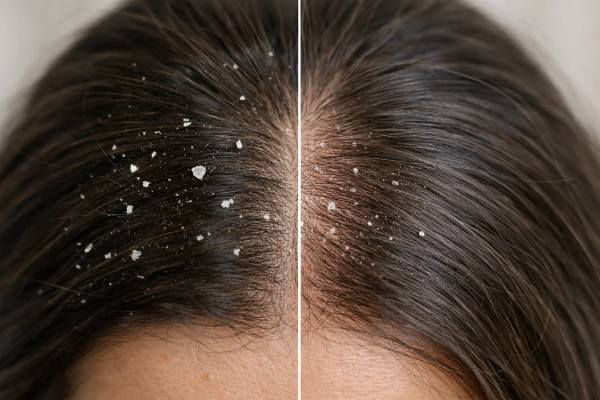
Flakes on your shoulders can feel like a simple nuisance—until the itching starts, your scalp feels tight, or every new shampoo seems to make things worse. The confusion is understandable: dandruff and a dry scalp can both look like “white bits,” yet they behave differently and respond to different care. Treating dandruff as dryness often adds oils that feed the wrong problem. Treating dryness as dandruff can leave your scalp stripped, irritated, and even flakier.
The most useful starting point is to think like a detective. What do the flakes look like up close? Does your scalp feel oily, tight, sore, or itchy? Do symptoms improve after washing, or worsen? Once you identify the pattern, you can choose treatments that match the cause—whether that means an antifungal shampoo for dandruff, barrier support for true dryness, or a medical evaluation when the scalp is signaling something more complex than either.
Fast Facts
- Dandruff is usually driven by an inflammatory reaction to scalp yeast and oil, while dry scalp is often a barrier and moisture problem.
- Greasy, larger, yellowish flakes point toward dandruff; small, powdery flakes with tightness point toward dryness.
- Medicated shampoos work best with consistent use and adequate contact time on the scalp.
- Heavy oils can worsen dandruff-like flaking, while overly harsh cleansing can worsen true dryness.
- Reassess after 2–4 weeks of a targeted plan, and escalate sooner if there is pain, oozing, or patchy hair loss.
Table of Contents
- How to tell dandruff and dry scalp
- Why dandruff happens on the scalp
- Why a scalp becomes truly dry
- Best treatments for dandruff control
- Best treatments for a dry scalp
- When to get a diagnosis
How to tell dandruff and dry scalp
If you only remember one thing, make it this: dandruff is usually an inflammation-and-yeast pattern, and dry scalp is usually a barrier-and-moisture pattern. Both can flake, both can itch, and both can coexist—especially if you have dandruff and then overcorrect with harsh washing, or if you have a dry scalp and then overapply heavy oils that create buildup.
Here is a practical way to separate them without guesswork.
What the flakes look and feel like
- Dandruff flakes tend to be larger and more “clumpy,” often off-white to yellowish, and may feel slightly oily or waxy when rubbed between fingers. You may notice scale collecting along the part line, crown, or around the hairline.
- Dry scalp flakes are often smaller, whiter, and more powdery. They may shed like dust when you scratch lightly. The scalp can look dull or ashy rather than greasy.
A helpful clue is what happens after you wash. Dandruff often looks better right after washing and then returns within a day or two. Dry scalp may feel temporarily calmer after washing but then quickly becomes tight, prickly, or irritated—especially if the cleanser is strong.
How your scalp behaves between washes
Ask yourself these questions:
- Do you feel oily at the roots but still flake? That leans toward dandruff.
- Do you feel tightness, stinging, or “paper-dry” sensitivity that worsens with frequent washing? That leans toward dryness or irritation.
- Does itching get worse with sweat, hats, or heavy styling products? That often leans toward dandruff-like inflammation.
- Does itching flare after new products, hair dye, fragrance, or essential oils? That suggests irritation or contact sensitivity, which can mimic either pattern.
The quick home “pattern check”
Try this for one week:
- Wash with a gentle shampoo, then take a clear photo of your part line and crown in bright, indirect light.
- Note itch and tightness on a 0–10 scale each night.
- If flakes return quickly with mild oiliness and itch, you are likely dealing with dandruff or scalp seborrheic dermatitis (a close relative of dandruff). If you want to understand that spectrum, seborrheic dermatitis symptoms and shampoo strategies can help you spot overlaps.
If you cannot place your symptoms cleanly into one pattern, that is not a failure. It often means you have two drivers at once—for example, dandruff plus irritation from harsh products—or another condition like psoriasis or eczema that needs a different plan.
Why dandruff happens on the scalp
Dandruff is not simply “dirty hair,” and it is not always about washing less or washing more. It is best understood as a scalp ecosystem problem: oil production, yeast activity, skin barrier function, and immune sensitivity interacting in a way that produces visible scale and itch.
The yeast and oil connection
Most adult dandruff is associated with Malassezia, a yeast that naturally lives on skin. In many people, it coexists peacefully. In others, Malassezia interacts with scalp oil (sebum) and contributes to irritation and faster skin turnover. When scalp cells shed too quickly, they clump together into flakes you can see. That is why dandruff often shows up most in areas with higher oil output: crown, hairline, and behind the ears.
This also explains a common surprise: you can have dandruff even if your scalp does not feel greasy. “Normal-feeling” scalps can still have enough oil for Malassezia to thrive.
Barrier disruption and sensitivity
Dandruff-prone scalps frequently have a more reactive barrier. That means the scalp can respond strongly to routine stressors—heat, sweat, friction, harsh surfactants, and product buildup. Once irritated, the scalp becomes itchier, scratching increases inflammation, and the cycle intensifies. This is why “scrub harder” often backfires.
A useful way to visualize it is as a loop:
- yeast and oil byproducts irritate a sensitive barrier
- inflammation increases shedding
- flakes and itch encourage scratching
- scratching worsens barrier injury and inflammation
Common triggers that make dandruff flare
Dandruff often fluctuates. These triggers can amplify it:
- seasonal shifts (often worse in colder months for some people)
- stress and poor sleep
- heavy occlusive styling products applied directly to the scalp
- infrequent cleansing in people who layer gels, oils, and creams
- washing with very hot water or aggressive scrubbing
- irritation from fragranced products or harsh surfactants
If you frequently switch products to “chase” a flare, it becomes hard to identify what is driving symptoms. Learning how the scalp ecosystem behaves can help you simplify the approach. how the scalp microbiome and barrier work together is a helpful deep dive if your dandruff feels stubborn or unpredictable.
Why dandruff treatment needs consistency
Because dandruff is driven by ongoing biology, treatment is usually not a one-time fix. Many people do best with two phases:
- Control phase: reduce yeast activity and calm inflammation (often 2–4 weeks).
- Maintenance phase: prevent relapse with a lighter but consistent routine (often 1–2 times weekly medicated shampoo use, adjusted to your scalp).
This approach is more reliable than bouncing between “strong” products whenever flakes appear.
Why a scalp becomes truly dry
A truly dry scalp is less about yeast and more about moisture retention and barrier integrity. When the scalp barrier is compromised, it loses water more easily, becomes sensitive, and sheds tiny flakes. The scalp may feel tight, itchy, or even mildly sore—especially after washing.
Dry scalp is often a process, not a personality
Many people assume they “just have dry skin.” In reality, dryness often develops from a mix of environment, habits, and product choices. Common contributors include:
- low humidity and cold weather
- hot showers and frequent exposure to heat styling
- harsh shampoos, frequent clarifying, or scalp scrubs
- washing too often for your skin type, especially with strong surfactants
- aging-related changes in skin lipid composition
- scalp sun exposure in people who part hair in the same place daily
Dryness can also be reactive, meaning the scalp becomes dry because something irritated it first—like fragrance, hair dye, or strong actives.
Conditions that can masquerade as “dry scalp”
Not all flaking is simple dryness. A scalp can look dry when the real driver is inflammation:
- Eczema-like patterns: redness, itch, and sensitivity that flare with stress or product exposure.
- Contact dermatitis: burning or stinging after specific products, often with redness near the hairline, ears, neck, or face.
- Psoriasis: thicker scale, soreness, and sharply defined plaques.
- Overtreated dandruff: frequent antifungal or medicated shampoos can strip the scalp and create a dryness overlay.
This matters because the “wrong” treatment can keep the scalp reactive. For example, strong anti-dandruff shampoos used daily can make a dry scalp more inflamed. On the other hand, heavy oils used to “moisturize” can worsen dandruff-like flaking in someone who actually has an inflammation-and-yeast pattern.
What barrier support looks like on the scalp
Barrier support is not just “add oil.” The scalp barrier relies on skin lipids, water-binding ingredients, and gentle cleansing. Many people with dry scalp do better with:
- a mild shampoo that cleans without leaving the scalp squeaky
- warm, not hot, water
- shorter wash time and less friction
- targeted scalp moisturizers rather than coating the entire scalp in heavy oils
Ingredients that commonly support barrier function in leave-on scalp products include ceramides, glycerin, panthenol, and urea at appropriate concentrations. If you want a focused guide to that approach, ceramides and scalp barrier support explains how lipid-based barrier repair differs from simply adding shine or slip to hair.
Dry scalp treatment works best when you treat it like facial skin: calm, protect, and rebuild—then reassess once the barrier is stable.
Best treatments for dandruff control
The most effective dandruff treatments target two things: yeast activity and inflammation. For most people, medicated shampoos are the backbone, but technique matters as much as the ingredient list. A powerful shampoo that is rinsed off too quickly often underperforms a simpler shampoo used correctly.
Medicated shampoo ingredients with the best track record
Most dandruff routines rely on one or more of these categories:
- Antifungals: ketoconazole, ciclopirox, and related agents reduce Malassezia activity.
- Anti-proliferative agents: selenium sulfide helps slow excessive scaling and has antifungal effects.
- Keratolytics: salicylic acid helps lift and loosen thick scale so treatments can reach the scalp.
- Anti-inflammatory options: short courses of topical steroids may be used for severe itch and redness under clinician guidance.
Because scalps adapt, many people do best alternating two actives rather than relying on one shampoo indefinitely.
The “contact time” rule that changes results
For medicated shampoos, think of them like a scalp treatment mask:
- Wet scalp thoroughly.
- Apply shampoo to the scalp (not the hair lengths), then massage gently with fingertips.
- Leave on 3–5 minutes before rinsing.
- Use conditioner on hair lengths as needed, keeping heavy conditioners off the scalp if you are dandruff-prone.
If you have thick scale, add a keratolytic wash one to two times per week so antifungals can reach the skin more effectively. how to use salicylic acid for scalp flakes is especially useful if you get “stuck-on” scale at the crown or hairline.
A stepwise dandruff plan for most adults
Try this structured approach before you decide you are “treatment resistant”:
- Weeks 1–2 (control): medicated antifungal shampoo 2–3 times per week, with 3–5 minute contact time.
- Weeks 3–4 (stabilize): reduce to 1–2 times per week if symptoms improve, and use a gentle non-medicated shampoo on other wash days.
- Maintenance: once weekly medicated use is often enough, increasing temporarily during flares.
If you wash infrequently because of hair texture or styling needs, you can still treat dandruff effectively by focusing product on the scalp, using adequate contact time, and avoiding heavy scalp oils and pomades during active flares.
Common mistakes that prolong dandruff
- treating only the hair lengths and not the scalp
- switching products every few days instead of giving a regimen 2–4 weeks
- “oiling the flakes” with heavy oils that increase buildup
- scratching aggressively, which worsens inflammation and barrier injury
If dandruff does not improve with a well-executed plan, it may not be simple dandruff—and that is a reason to pivot, not to escalate intensity without a diagnosis.
Best treatments for a dry scalp
Dry scalp responds best to a routine that reduces stripping and rebuilds the barrier. The goal is not to eliminate every tiny flake overnight. The goal is to reduce tightness and itch, normalize shedding, and make your scalp less reactive so it stays comfortable between washes.
Start by making cleansing gentler
If your scalp feels tight within hours of washing, treat that as information. Consider:
- switching to a mild shampoo (especially if you currently use strong clarifiers frequently)
- washing with warm water and shortening wash time
- using fingertips, not nails, and avoiding abrasive scalp tools
- spacing clarifying shampoo to only when you truly have buildup
If you have both dryness and buildup, you can alternate: a gentle cleanser most washes, and a clarifier only when your scalp feels coated or itchy from product layering.
Add moisture in a scalp-appropriate way
“Moisturizing the scalp” is different from greasing it. The most helpful options tend to be lightweight and designed to sit on skin rather than coat hair. Look for leave-on scalp products that use:
- humectants such as glycerin or hyaluronic acid
- barrier helpers such as ceramides or panthenol
- gentle keratolytics or softeners such as low-percentage urea in products intended for scalp use
Apply a small amount to the scalp after washing (or to damp scalp) and reassess after one week. Too much product can cause buildup that feels like worsening flaking, so start sparingly.
Watch for irritation disguised as dryness
If flaking worsens after new products—especially dyes, fragranced leave-ins, essential oils, and “tingly” scalp tonics—your dryness may actually be irritant or allergic dermatitis. In that case, removing the trigger and calming inflammation matters more than adding oils. If color services are part of your routine, scalp contact dermatitis from hair dye can help you recognize patterns that deserve patch testing and targeted avoidance.
A simple dry scalp reset plan
Try this for 2–3 weeks:
- Use a gentle shampoo for most washes and avoid aggressive scrubs.
- Keep water warm, not hot, and minimize friction.
- Apply a lightweight scalp moisturizer 3–4 times per week, using the smallest amount that relieves tightness.
- Avoid heavy oils on the scalp during the reset; if you use oils, keep them on hair lengths.
- Track symptoms (tightness and itch) twice weekly to see whether the trend is improving.
If tightness and itch improve but flakes persist mildly, you may simply be in the “barrier rebuilding” phase. If symptoms do not improve, the driver may be inflammatory (eczema, psoriasis, seborrheic dermatitis) rather than straightforward dryness.
When to get a diagnosis
Most mild dandruff and mild dryness can improve with a well-matched routine. But persistent flaking is sometimes a signal that the scalp needs medical diagnosis, not stronger products. The earlier you identify the true cause, the faster you can stop experimenting and start improving.
Signs it is not simple dandruff or dryness
Consider professional evaluation if you have:
- thick plaques, bleeding, or cracks in the skin
- oozing, crusting, pustules, or a strong odor (possible infection)
- severe burning or pain, especially with hair loss
- patchy hair loss or widening areas of thinning
- rash beyond the scalp (ears, eyebrows, eyelids, neck, or face)
- no meaningful improvement after 4 weeks of a targeted plan used correctly
These patterns can point toward psoriasis, eczema, allergic contact dermatitis, folliculitis, or other inflammatory conditions that require different treatments.
What a clinician may do differently
A good scalp evaluation can include:
- a close visual exam and symptom history (what triggers flares, what makes it better)
- dermoscopy or magnified inspection to assess scale type and inflammation
- consideration of patch testing if product allergy is suspected
- prescription options such as stronger anti-inflammatories or antifungals when needed
If flaking is accompanied by noticeable shedding or thinning, it is especially worth escalating. when to see a dermatologist for hair loss outlines practical thresholds so you do not wait until symptoms become harder to reverse.
How to prepare so you get a clear answer
You can make the appointment more productive by bringing:
- a list of current products (shampoos, oils, leave-ins, dyes, styling products)
- photos of the scalp on a “bad” day and a “good” day
- a brief timeline of what you tried and how long you tried it
- notes about itch (0–10), tightness (0–10), and whether flaking is oily or powdery
If you need relief while you wait
When symptoms are intense, the safest interim move is usually to reduce irritation: avoid scratching, avoid harsh scrubs, keep products minimal, and use a gentle cleanser. Avoid adding multiple new actives at once, because it can muddy the picture and sometimes worsen irritation.
A diagnosis is not an admission that home care failed. It is often the fastest route to a calmer scalp and a routine you can actually maintain.
References
- A comprehensive literature review and an international expert consensus on the management of scalp seborrheic dermatitis in adults 2024 (Consensus)
- When Patient Diversity Informs Formulation: Reimagining Treatment for Seborrheic Dermatitis 2024 (Review)
- Seborrheic Dermatitis Revisited: Pathophysiology, Diagnosis, and Emerging Therapies—A Narrative Review 2025 (Review)
- Ketoconazole Shampoo for Seborrheic Dermatitis of the Scalp 2024 (Review)
- Allergic contact dermatitis of the scalp: a review of an underdiagnosed entity 2024 (Review)
Disclaimer
This article is for educational purposes only and does not provide medical advice, diagnosis, or treatment. Dandruff and dry scalp can share symptoms, but persistent flaking and itching may also reflect conditions such as seborrheic dermatitis, psoriasis, eczema, allergic contact dermatitis, or infection, which may require professional evaluation and prescription treatment. Do not start, stop, or change prescription medications without guidance from a qualified clinician. Seek medical care promptly for severe pain, oozing or crusting, pustules, rapidly worsening symptoms, patchy hair loss, or signs of allergic reaction (swelling, blistering, or widespread rash). If you are pregnant, breastfeeding, immunocompromised, or managing chronic health conditions, consult a healthcare professional before using medicated products or supplements.
If you found this guide helpful, consider sharing it on Facebook, X (formerly Twitter), or another platform you use so others can make clearer, safer choices about scalp flaking and itch.