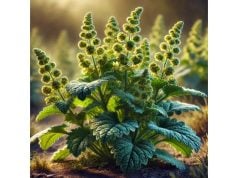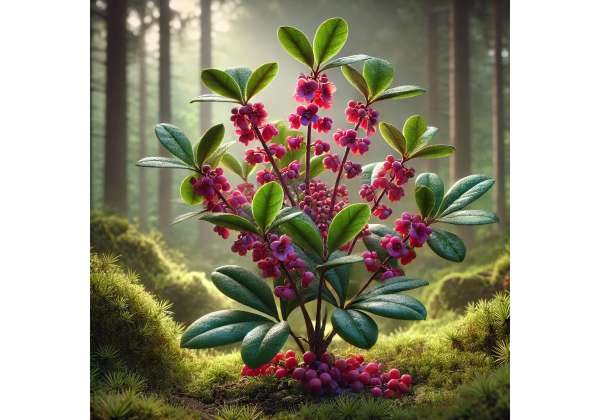
Daphne-berry, better known botanically as Daphne mezereum and commonly called mezereon or February daphne, is a striking plant with fragrant early flowers and bright berries. It also has a serious reputation in herbal history and toxicology. Older European folk medicine records describe medicinal use of the bark, but modern readers need a careful, safety-first view: this is not a gentle home remedy herb. The same chemistry that makes Daphne mezereum pharmacologically interesting also makes it potentially dangerous when handled or ingested incorrectly. Today, most of the strongest evidence is about its compounds, toxic effects, and laboratory activity rather than proven consumer health benefits. This guide explains what Daphne-berry is, what key compounds have been identified, what traditional uses existed, what current research actually shows, and why dosage and safety discussions for this plant must be handled with more caution than with typical herbal products.
Key Facts
- Daphne mezereum has a long folk-medicine history, but current evidence is strongest for phytochemistry and lab-based activity, not routine self-care use.
- Its bark and berries contain potent compounds linked to strong biological effects and significant toxicity risk.
- For unsupervised oral herbal use, the practical dose is 0 g per day because there is no established safe home-use botanical dose.
- All parts are considered highly toxic if eaten, and fresh plant contact can irritate skin.
- Children, pregnant or breastfeeding people, and anyone with gastrointestinal, liver, or kidney disease should avoid any self-use.
Table of Contents
- What is Daphne-berry and why it matters
- Key ingredients and active compounds
- Benefits and realistic uses
- How Daphne-berry is used
- How much Daphne-berry is safe
- Side effects interactions and who should avoid
- What the evidence actually shows
What is Daphne-berry and why it matters
Daphne-berry usually refers to Daphne mezereum, a deciduous shrub in the Thymelaeaceae family. It is often grown as an ornamental plant because it flowers early, smells strongly sweet, and produces vivid red or yellow fruit. That attractive look is exactly why this plant causes confusion. People see a beautiful garden shrub and assume it must be harmless or at least “natural enough” for casual herbal use. With Daphne mezereum, that assumption can be dangerous.
From a plant ID perspective, it helps to know a few common features. Daphne mezereum is typically a small shrub, often around 3 to 5 feet tall, with fragrant purple, pink, or white flowers that appear before or as the leaves emerge. The fruits are small drupes that ripen red or yellow. These details matter because accidental exposure often happens when people handle or taste ornamental plants in yards, parks, or older gardens without realizing they are toxic.
The second reason it matters is the name problem. “Daphne” is a genus, not a single herb. Different Daphne species have different traditional uses, different compound profiles, and different risk levels. Many herbal articles blend species together, especially Daphne genkwa and Daphne mezereum, which leads to poor guidance. Daphne genkwa has a more established role in East Asian materia medica, while Daphne mezereum appears more in European folk medicine and toxicology discussions. They are not interchangeable.
Historically, Daphne mezereum bark was used in some regional folk medicine traditions, including Scandinavian settings, for conditions such as swelling and stomach pain. But historical use does not equal modern safety. In fact, Daphne mezereum is a good example of a plant where historical use and toxicity warnings coexist. That tension is what makes it important to discuss honestly.
For readers deciding what to do with this information, the best framing is simple:
- Daphne-berry is a botanically interesting and historically used plant.
- It is also a high-risk toxic plant for unsupervised use.
- Most modern relevance is in research and toxicology awareness, not self-treatment.
If you are reading this because you found the plant in your garden, the most practical takeaway is identification and safe handling. If you are reading it as an herb, the most practical takeaway is caution: Daphne mezereum is not a beginner herb, not a culinary herb, and not a safe “try it and see” option. Understanding that early prevents the most common mistake, which is treating a toxic ornamental and a medicinal herb as if they were the same kind of product.
Key ingredients and active compounds
Daphne mezereum is chemically potent, and that is the core reason it appears in both medicinal history and poisoning references. Its best-known compounds include mezerein and related diterpenoid constituents, along with coumarin-type compounds such as daphnin. These molecules are not just plant “nutrients” or mild phytochemicals. They are biologically active compounds that can produce strong tissue effects, which is why this plant must be handled carefully.
A useful way to understand Daphne-berry chemistry is to separate it into three practical groups:
- Toxic and irritant compounds: These are the compounds most closely tied to poisoning symptoms, burning, irritation, and systemic toxicity risk.
- Phenolic and coumarin compounds: These attract interest for antioxidant, signaling, and immune-related effects, but they can still contribute to a complex safety profile.
- Research compounds with mixed effects: Some isolated molecules show anti-inflammatory or immune-modulating effects in lab work, while other fractions can show pro-inflammatory activity.
That last point is especially important. Recent research on Daphne mezereum has identified new phenolic compounds and measured biological effects such as inhibition of TNF-alpha secretion in immune-cell experiments. At the same time, separate work on polysaccharide fractions from the bark found pro-inflammatory effects. This is a strong reminder that a plant is not one ingredient. Different extracts, different fractions, and different preparation methods can behave in very different ways.
Older and broader Daphne genus chemistry research also helps explain the risk side. Daphnane-type diterpenoids are a major chemical theme across the genus, and the genus has been central in diterpenoid research. These compounds are often pharmacologically active, but they are also linked to toxicity. That is why Daphne chemistry cannot be summarized as simply “anti-inflammatory” or “good for immunity.” The truth is more nuanced: the plant contains compounds that are highly active, and activity can mean harm or benefit depending on dose, extract type, and exposure route.
For practical readers, the key compound-related lessons are:
- Do not assume one Daphne mezereum product equals another.
- Bark, berries, and other parts may differ in compound balance and risk.
- Whole-plant use is not safer than isolate research just because it is “natural.”
- Lab activity does not automatically translate into safe human use.
This compound profile is also why homemade preparations are a bad idea. In many herbs, rough extraction mainly affects potency. In Daphne mezereum, it can also shift toxicity. When the chemistry is this strong, precision becomes a safety requirement, not a technical preference.
Benefits and realistic uses
When people search for Daphne-berry benefits, they usually mean one of three things: historical folk uses, modern lab findings, or current approved therapeutic uses. For Daphne mezereum, these are very different categories, and mixing them together is how misinformation spreads.
In historical European and Scandinavian folk medicine, Daphne mezereum was used for conditions such as swelling, stomach pain, diarrhea, and other difficult complaints. These records are valuable because they show the plant was considered medicinal, not just ornamental. They also help researchers decide which plant parts and preparations are worth studying. But historical use does not prove modern efficacy or modern safety standards. Many historically used plants were strong, harsh, or toxic by today’s risk thresholds.
Modern research gives Daphne mezereum a different kind of relevance. Recent phytochemistry studies have isolated phenolic compounds, coumarins, and biflavonoids from bark extracts and then tested some of them in lab systems. Some of these compounds showed immune-related activity, including reduced TNF-alpha secretion in stimulated cells at tested concentrations. This is scientifically interesting and may help explain why the plant was used in inflammatory or swelling-related conditions in the past.
However, there is an equally important caution built into the newer evidence: not all fractions move in the same direction. Research on bark polysaccharide fractions found pro-inflammatory effects, which means the plant cannot be casually described as broadly anti-inflammatory. This is a rare but important example of why “active” does not mean “beneficial” in every extract type.
So what are the realistic “advantages” of Daphne-berry today?
- It is a useful research plant for studying potent natural products.
- It has documented historical medicinal use worth preserving and analyzing.
- It offers insight into how complex herbal chemistry can produce mixed biological effects.
What it is not well suited for is casual wellness use. There is no strong consumer-level evidence that supports routine self-treatment with Daphne mezereum bark, berries, or homemade preparations. The plant’s most consistent modern message is not a benefit claim. It is a risk-management message.
A practical way to think about benefits is this: Daphne-berry’s value is mostly in the knowledge it offers, not in self-administration. It helps researchers understand bioactive plant compounds, and it helps clinicians and educators explain why species-level identification matters in herbal medicine. If you are looking for a daily herb for digestion, inflammation, or respiratory comfort, there are far safer options with better human evidence. Daphne mezereum is relevant, but mostly as a specialist plant that requires strict boundaries.
How Daphne-berry is used
Daphne-berry use today falls into three very different buckets, and separating them clearly can prevent serious mistakes.
1. Ornamental plant use
This is the most common real-world use. Daphne mezereum is planted for its fragrance and early-season flowers. In that context, “use” means gardening, not herbal medicine. Safe handling matters because the plant can irritate skin and is toxic if ingested. Gloves are a sensible default when pruning or handling sap, and fallen berries should not be left where children or pets can reach them.
2. Historical and ethnomedical use
Older records describe medicinal use of Daphne mezereum bark in regional folk medicine. These uses are important historically, but they do not function as modern dosing instructions. The missing pieces are exactly the ones modern readers need most: standardized preparation, contaminant testing, reproducible dosing, and clinical safety monitoring. This is why historical use should be treated as context, not a home-use recipe.
3. Commercial homeopathic labeling
Some modern products use “mezereum” on the label in homeopathic form. This often creates confusion because consumers read the plant name and assume it is a conventional botanical extract. It is not the same thing. Homeopathic products use dilution systems and labeling conventions that do not translate into herbal bark or berry dosing. If a product lists mezereum in homeopathic potency terms, it should never be treated as guidance for using the raw plant.
The most common unsafe use patterns are easy to spot:
- Making tinctures from ornamental bark or berries
- Trying to dry and powder the plant for capsules
- Assuming “just a small amount” is safe
- Copying species-level advice from another Daphne plant
- Using homeopathic labels as a raw-herb dosing guide
If you are trying to decide whether Daphne-berry belongs in personal herbal practice, the safest answer is usually no. This is not because the plant lacks interesting biology. It is because the risk control needed for meaningful use is too high for normal home preparation.
A better “practical use” for most people is risk literacy:
- Learn to identify the plant.
- Keep it away from unsupervised children and pets.
- Avoid ingesting any part.
- Avoid do-it-yourself medicinal extraction.
- Treat online benefit claims with skepticism unless they clearly identify the species and preparation type.
Daphne mezereum is a plant where responsible use often means not using it internally. That may sound disappointing in an herb guide, but it is exactly the kind of clear boundary that protects readers.
How much Daphne-berry is safe
This is the question many readers ask first, and for Daphne mezereum the answer is unusual but important: there is no established safe oral botanical dose for home use. That is why the most honest dosage advice for unsupervised internal use is 0 g per day.
Unlike common herbal teas or standardized extracts, Daphne-berry does not have a widely accepted modern herbal dosage range supported by reliable human data. The plant is better documented for toxicity risk, irritant effects, and compound research than for safe therapeutic dosing. That is not a gap you can solve with a smaller spoon or a shorter course.
Another source of confusion is homeopathic labeling. Some OTC homeopathic products list mezereum (Daphne mezereum bark) and provide pellet-based directions, such as 5 pellets taken multiple times daily. Those instructions apply to a homeopathic dilution format, not to the raw bark, fresh berries, or a homemade extract. They are not interchangeable dosing systems.
This distinction matters for three reasons:
- Dose units are different. “Pellets” in a homeopathic product are not equivalent to grams of bark or berry.
- Potency labeling is different. Homeopathic dilution labels do not translate into herbal extract strength.
- Evidence standards are different. Homeopathic product labels may include explicit statements that claims are based on traditional homeopathic practice and not accepted medical evidence.
If you are evaluating a product with mezereum on the label, read the form first:
- Raw plant material (bark, berries, powder): Not appropriate for self-use.
- Unclear extract type: Avoid, especially if species and plant part are not clearly listed.
- Homeopathic pellets: Follow the product label only as labeled, but do not treat it as proof of herbal efficacy or as a safe reference for the raw plant.
Timing and duration are also important. There is no evidence-based “best time of day” or standard course for botanical Daphne mezereum because routine internal herbal use is not established. For homeopathic products, timing and frequency follow the label, but that still should not be confused with a validated herbal protocol.
A practical dosage summary for readers:
- Raw bark or berries: Do not self-dose.
- Homemade teas, tinctures, or powders: Do not use.
- Homeopathic labeled products: Use only as labeled, and understand this is a separate product category.
Daphne-berry is one of the few plants where the dosage conversation is mostly a safety boundary. The smartest dose is avoidance unless you are in a tightly controlled, specialist context.
Side effects interactions and who should avoid
Daphne mezereum is a high-risk plant for poisoning, and this is the most important section of the guide. The side-effect profile is not limited to mild stomach upset. Reported poisoning symptoms include severe mouth and throat irritation, swelling of the lips and tongue, difficulty swallowing, nausea, vomiting, bloody diarrhea, weakness, and in severe cases coma. Skin contact can also cause irritation and blistering in some people.
These effects fit the plant’s known toxic chemistry. In simple terms, Daphne-berry is an irritant and toxic plant first, and a medicinal plant only in narrow historical or specialist contexts. This is why “trying a small amount” is not a safe experiment.
Common exposure routes
- Accidental ingestion of berries, especially by children
- Handling bark, leaves, or sap during pruning or cleanup
- DIY medicinal preparation from garden plants
- Confusion with other Daphne species or with non-toxic ornamentals
Who should avoid it completely
The following groups should avoid any self-use of Daphne mezereum:
- Children — bright berries create a real accidental-ingestion risk, and small body size increases severity.
- Pregnant people — a toxic plant with strong bioactive chemistry should not be used during pregnancy.
- Breastfeeding people — there is no safe modern oral herbal use framework for this plant.
- People with digestive disease — the plant’s irritant profile can worsen gastrointestinal injury.
- People with liver or kidney disease — toxic exposures may be harder to tolerate or clear.
- People taking multiple medicines — interaction data are limited, and unpredictable toxicity is the larger concern.
What about interactions
High-quality herb-drug interaction data for Daphne mezereum are limited, which actually argues for more caution, not less. When a plant is both chemically active and toxic, lack of interaction studies does not mean it is safe with medications. It means the risk is poorly mapped.
The safest interaction rule is straightforward: if you take prescription medicines, especially for heart, seizure, liver, kidney, or gastrointestinal conditions, do not experiment with Daphne-berry.
What to do after exposure
- Remove any plant material from the mouth or skin.
- Rinse exposed skin with water.
- Do not induce vomiting unless a medical professional tells you to.
- Contact a poison center or urgent medical service right away, especially for a child.
- Bring a photo or plant sample for identification if safe to do so.
Daphne mezereum should be treated like a poisoning risk in accidental exposure situations, not like a routine herb that just “causes a detox reaction.” That one mindset shift can prevent delayed care and serious harm.
What the evidence actually shows
The research story for Daphne mezereum is strong in chemistry and weak in direct clinical guidance. That does not make the plant unimportant. It means the right conclusions are narrower than many online summaries suggest.
Recent studies have added real depth to the chemical profile of Daphne mezereum bark. Researchers have isolated previously undescribed phenolic compounds and identified major secondary metabolites, including compounds linked to immune-cell signaling effects in laboratory testing. In one study, specific compounds showed measurable inhibition of TNF-alpha secretion in stimulated immune cells at tested concentrations. That is a meaningful pharmacology signal and supports continued research interest.
At the same time, another study on Daphne mezereum bark polysaccharides reported pro-inflammatory effects rather than calming immune effects. This is a crucial finding for readers because it shows why simplistic “anti-inflammatory herb” marketing can be misleading. Different fractions of the same plant can behave in opposite ways.
Broader Daphne genus reviews add context by showing how central daphnane-type diterpenoids are to the genus and why Daphne plants are both scientifically valuable and toxicologically important. These reviews also help place Daphne mezereum in a bigger framework: the genus has a rich history of traditional use and a long record of potent compounds, but potency is not the same as a proven modern therapeutic product.
What is still missing for consumers is just as important:
- Well-designed human clinical trials for Daphne mezereum as a botanical treatment
- Standardized, safe, reproducible dosing protocols for bark or berry preparations
- Clear interaction data with common medications
- Long-term safety studies for internal use
This evidence gap is why responsible guidance sounds conservative. It is not because the plant is uninteresting. It is because the current evidence supports research and toxicology awareness more strongly than it supports self-treatment.
The most accurate bottom line is this:
- Historically used: Yes.
- Chemically active: Absolutely.
- Promising in lab studies: Yes, in selected compounds and models.
- Ready for casual herbal use: No.
If you want a practical takeaway, it is this: Daphne-berry is best approached as a toxic medicinal-history plant with research value, not as a home remedy. The safest and most useful choice for most readers is to learn from the evidence, not ingest the plant.
References
- Biflavonoids and bi- and tricoumarins from Daphne mezereum and inhibition of TNF-α secretion – PubMed 2025 (Phytochemistry Study) ([PubMed][1])
- Structural elucidation of novel pro-inflammatory polysaccharides from Daphne mezereum L – PubMed 2024 (Phytochemistry Study) ([PubMed][2])
- Phytochemistry and Pharmacological Activities of the Diterpenoids from the Genus Daphne – PMC 2021 (Review) ([PMC][3])
- Daphne mezereum (Daphne, February Daphne, Mezereon, Spurge Laurel) | North Carolina Extension Gardener Plant Toolbox 2026 (Extension Plant Database, accessed 2026) ([Plant Toolbox][4])
- DailyMed – MEZEREUM- daphne mezereum bark pellet 2023 (OTC Homeopathic Label) ([DailyMed][5])
Disclaimer
This article is for educational purposes only and is not medical advice. Daphne mezereum is a toxic plant, and accidental or intentional ingestion can cause serious harm. Historical medicinal use and laboratory findings do not make the raw plant safe for home treatment. Do not use Daphne-berry internally, and seek immediate medical or poison-center guidance after any suspected exposure, especially in children. Always consult a qualified healthcare professional before using any plant-based product for a health condition.
If you found this guide useful, please share it on Facebook, X (formerly Twitter), or any platform you prefer.